Coastal Region – Christiana Huss
- Vegetables can still be planted in November in the coastal region:
- Other cold tolerant vegetables like lettuce, mustards, and other greens can still be planted, but may need to be covered if there is early hard frost.
- Most plants, except seedlings, new transplants and potted plants, likely will not need regular irrigation for the rest of the year.
- Now is a good time to build new garden beds while the weather is cool and there is plenty of free organic matter to fill the bottoms of beds.
- Avoid chop-mulching or removing fallen leaves since they are the homes for caterpillar pupae, beetles, fireflies, bees, and more. Instead, leave them where they are or use them as free mulch under shrubs or trees.
- Do not fertilize or prune live branches this time of year. This may stimulate new growth which will be more sensitive to frost damage. Wait to prune shrubs and trees until January or February while the plants are fully dormant. Do not fertilize until spring.
- Butterflies will continue to be abundant in November until there is a hard frost. Take some time now to appreciate a butterfly garden and the beautiful blooms before they go dormant.
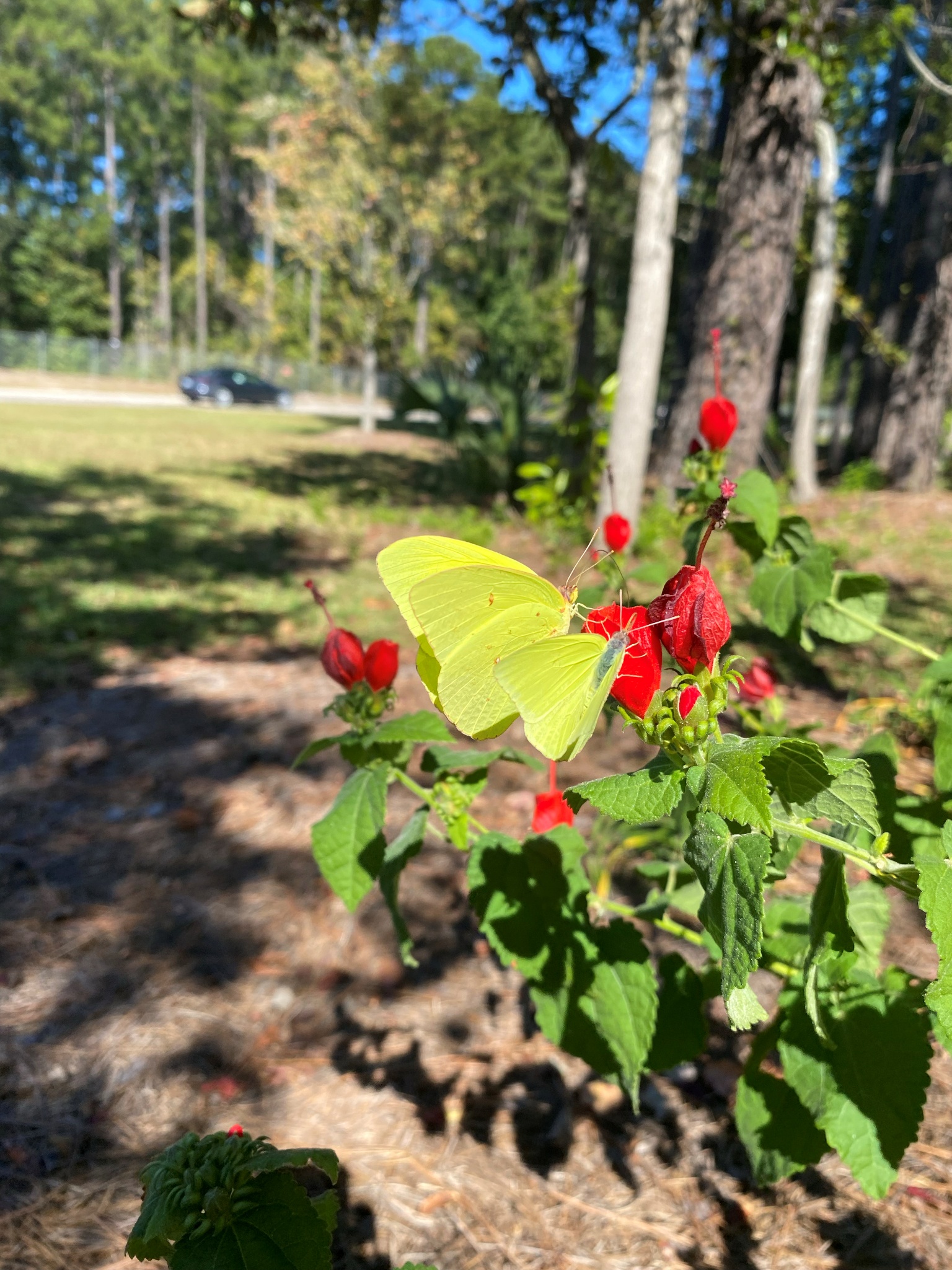
Two cloudless Sulphur butterflies (Phoebis sennae) share a turk’s cap (Malvaviscus arboreus) flower.
Christiana Huss, ©2026, Clemson Extension
Midlands Region – Jennifer Weaver
Fall and Winter Container Gardens
- Combine perennials, ornamental vegetables, herbs and annuals in containers to serve as the ultimate cool-season anchor providing striking color from late fall through winter. Water plants in containers; they dry out even when the weather is cool.
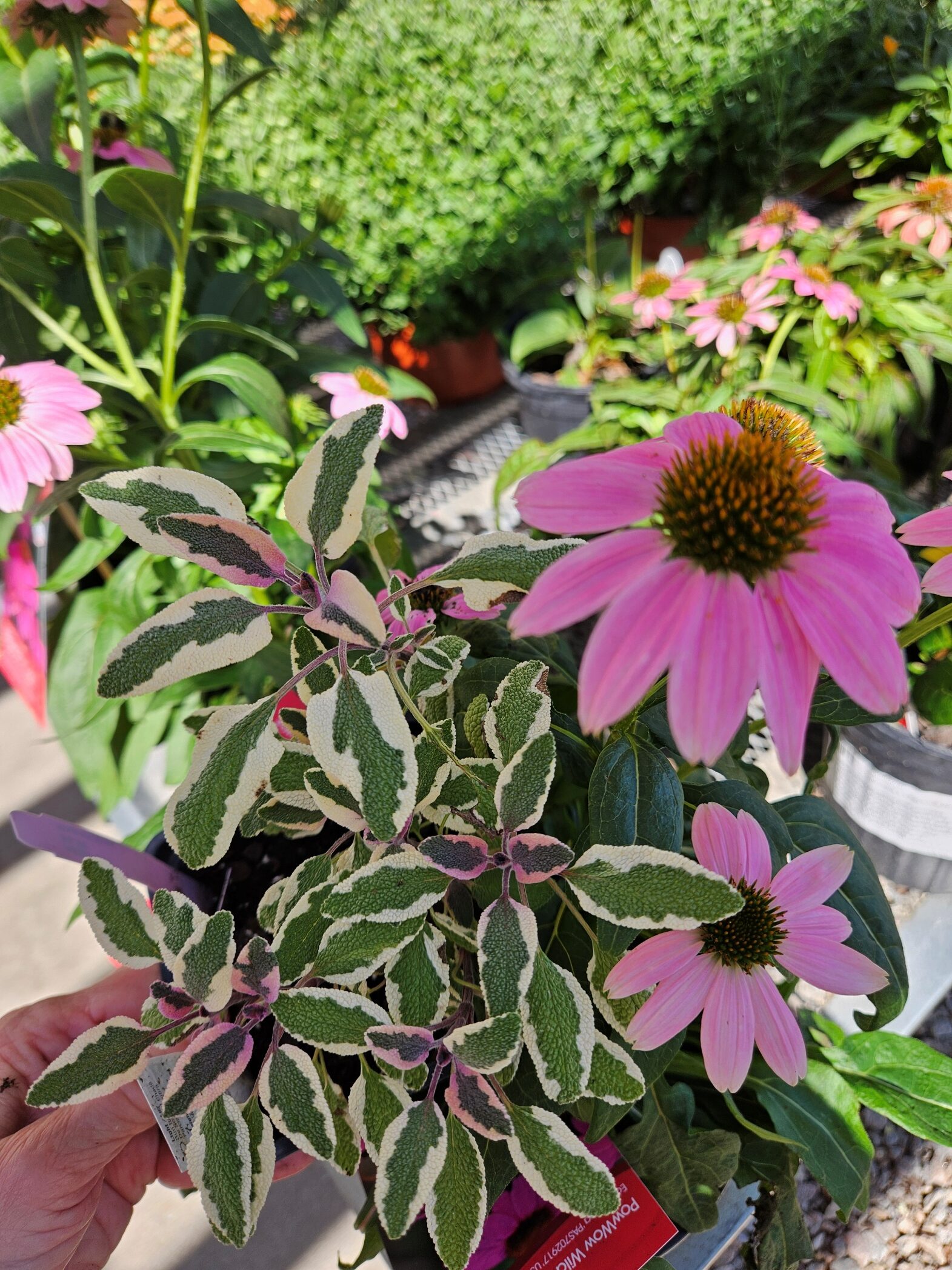
Tricolor sage with coneflower.
Jennifer Weaver, ©2026, Clemson Extension

Ornamental peppers with cabbage.
Jennifer Weaver, ©2026, Clemson Extension
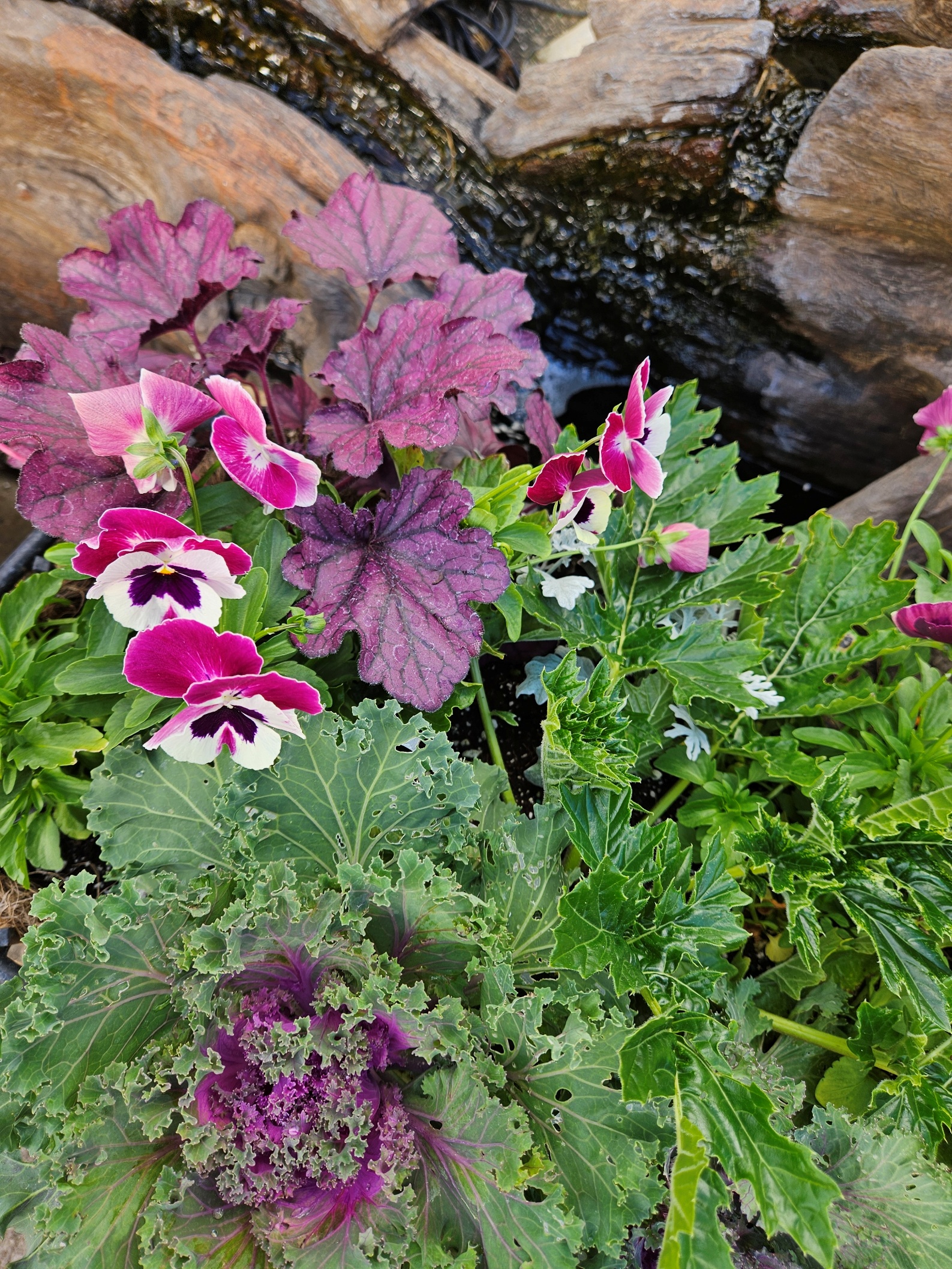
Container garden with heuchera.
Jennifer Weaver, ©2026, Clemson Extension
Fall Planting and Wildlife Habitat
- The advantage of fall planting is plants are provided a few extra months of moisture and moderate temperatures that are optimum for root growth. This allows plants to establish their root systems before the arrival of hot, dry weather next summer.
- Create a habitat of native trees, shrubs, perennials or ground covers in the landscape to promote diversity where all plants work together to form an intricate web to maintain and support wildlife.
- Many native plants offer outstanding fall color as well as flowers and fruits during other seasons. This is an important aspect of landscape design – providing interest for all seasons of the year. Listed below are a few plants for inspiration:
- Franklin tree (Franklinia alatamaha) is a small specimen tree with white, camellia-like flowers. These fragrant flowers appear in late August and continue into October just as the foliage turns a rich red-orange to burgundy. The bark is smooth with light gray striations providing another interesting feature to observe in the landscape.
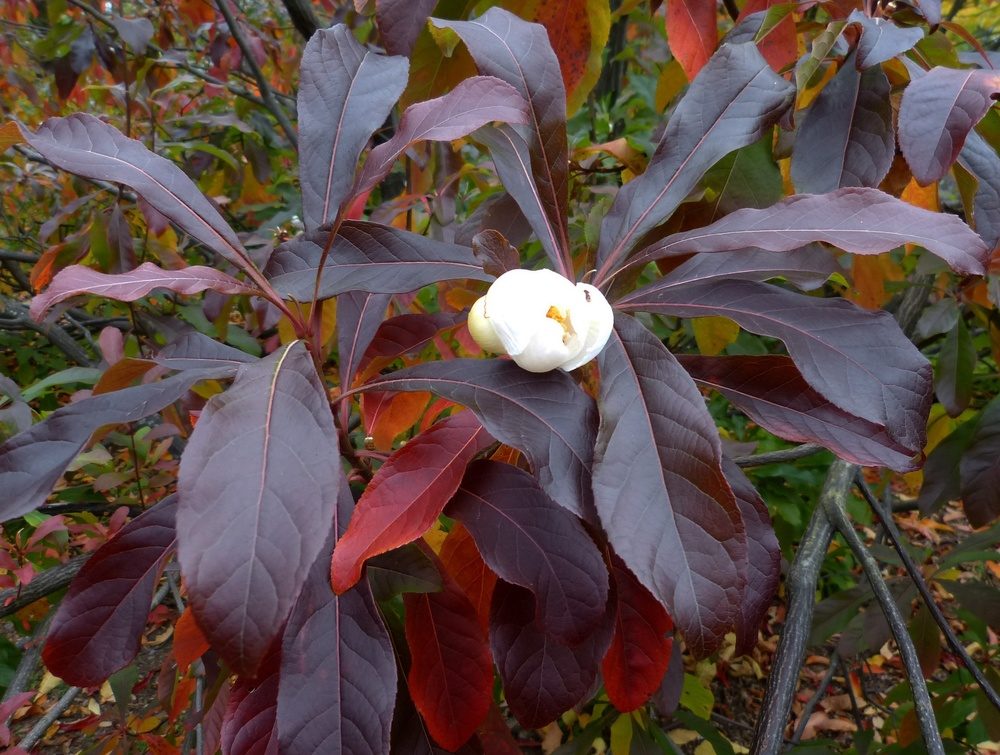
Franklin tree in fall (Arnold Arboretum).
Jennifer Weaver, ©2026, Clemson Extension
- Arrowwood viburnum (Viburnum dentatum) has creamy-white flowers in the spring followed by blue drupes (fruit) that mature in late summer. Also exhibits beautiful fall orange-red color.
- Little Bluestem (Schizachyrium scoparium) is a prairie grass featuring upright clumps of blue-green stems and leaves in the summer. In the fall, leaves and seed heads turn purplish-bronze and persist through fall and winter providing excellent seasonal interest. The seeds, available July through November, are eaten by many species of birds and small mammals.
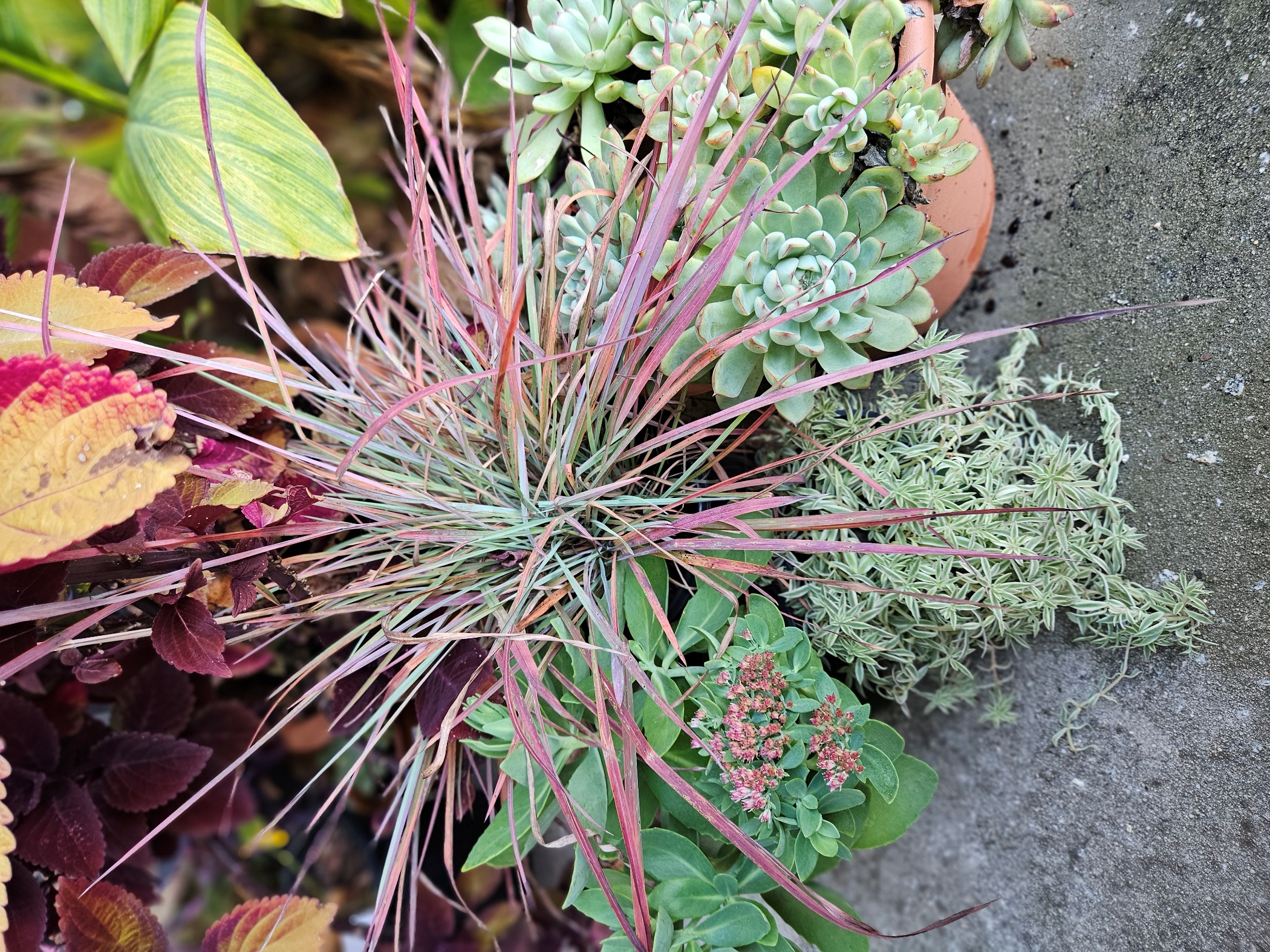
Little bluestem in container.
Jennifer Weaver, ©2026, Clemson Extension
- Mountain doghobble (Leucothoe fontanesiana) – has small, white, fragrant bell-shaped flowers which appear in mid-Spring and are a great nectar/pollen source for pollinating insects. Leathery evergreen leaves turn red-green and purple in winter. Good for stabilizing shady banks.
Watering Landscape Plants and Lawns
- If dry weather persists, provide supplemental water to the root system of landscape plants and water lawns to keep the turfgrass roots and crowns alive.
Planting Spring Bulbs and Sowing Flower Seeds
- Plant anemone, wood hyacinth, crocus and daffodils this fall.
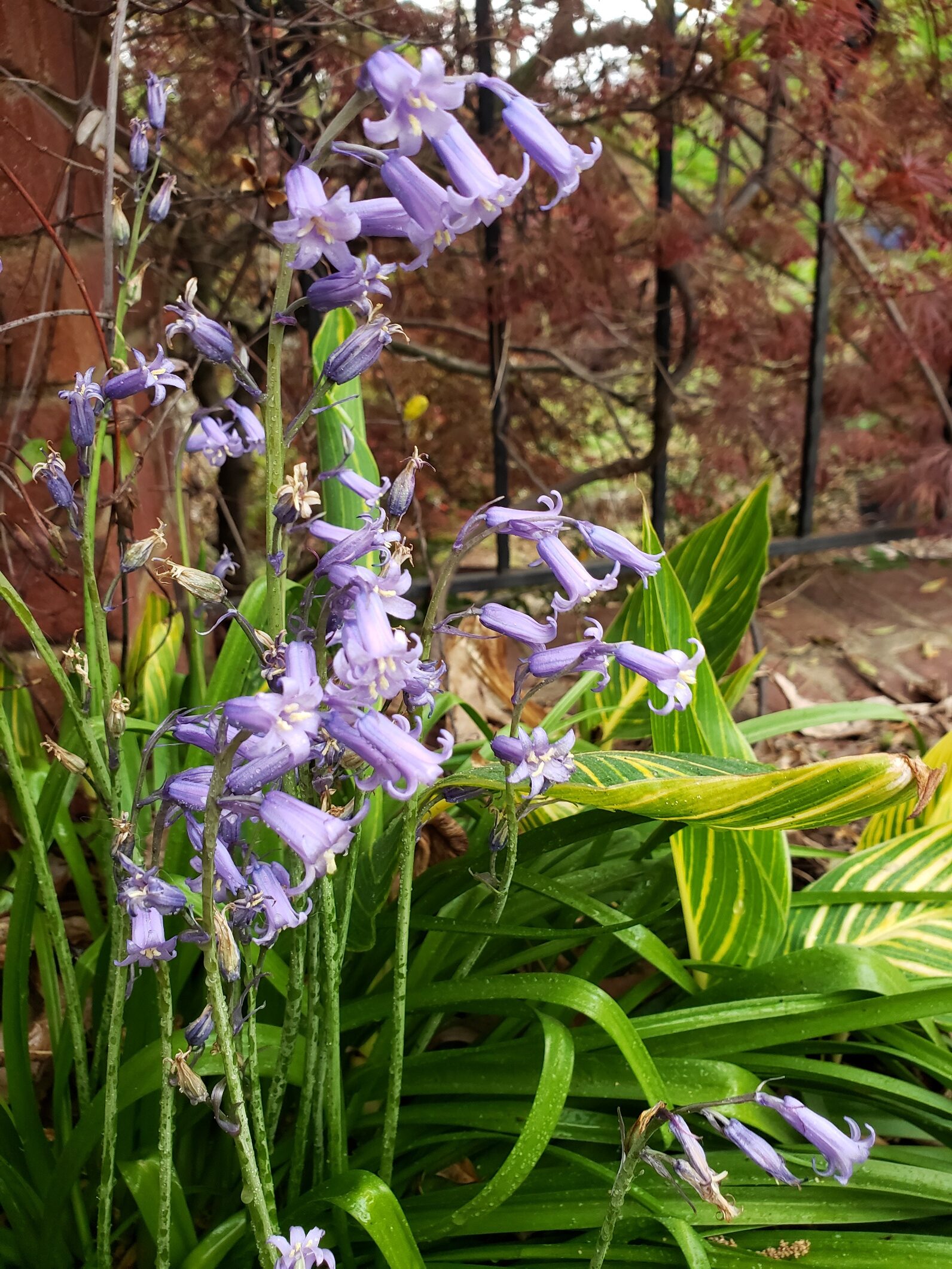
Wood hyacinth.
Jennifer Weaver, ©2026, Clemson Extension
- Mimic nature’s cycle and direct seed annuals and perennials in the fall to expose the seeds to the moist, cold requirements they need to germinate in the spring. Popular choices are Butterfly weed, agastache, blackberry lily, purple coneflower and Black-eyed Susan.
Preparing Warm-Season Lawns for Winter
- Raise mowing height for warm seasons lawns ½ inch to provide protection from winter kill, encourage deeper rooting and to suppress winter weeds.
Upstate Region – Samantha Brown
November Flower Garden Care
- Is your flower garden overrun from years of growth? Before we head into the cold weather, you can dig, divide, and share your favorite perennials with neighbors. Daylilies, black-eyed Susans, and purple coneflowers are examples of plants that can be divided.
- Wintertime can be dreary, but you can add some color back into the garden with pansies, Johnny Jump-Ups, violas, and ornamental kale/cabbage.
- Enjoy the last little bit of our summer blooms; the Upstate is known to get our first frost around the beginning of November.
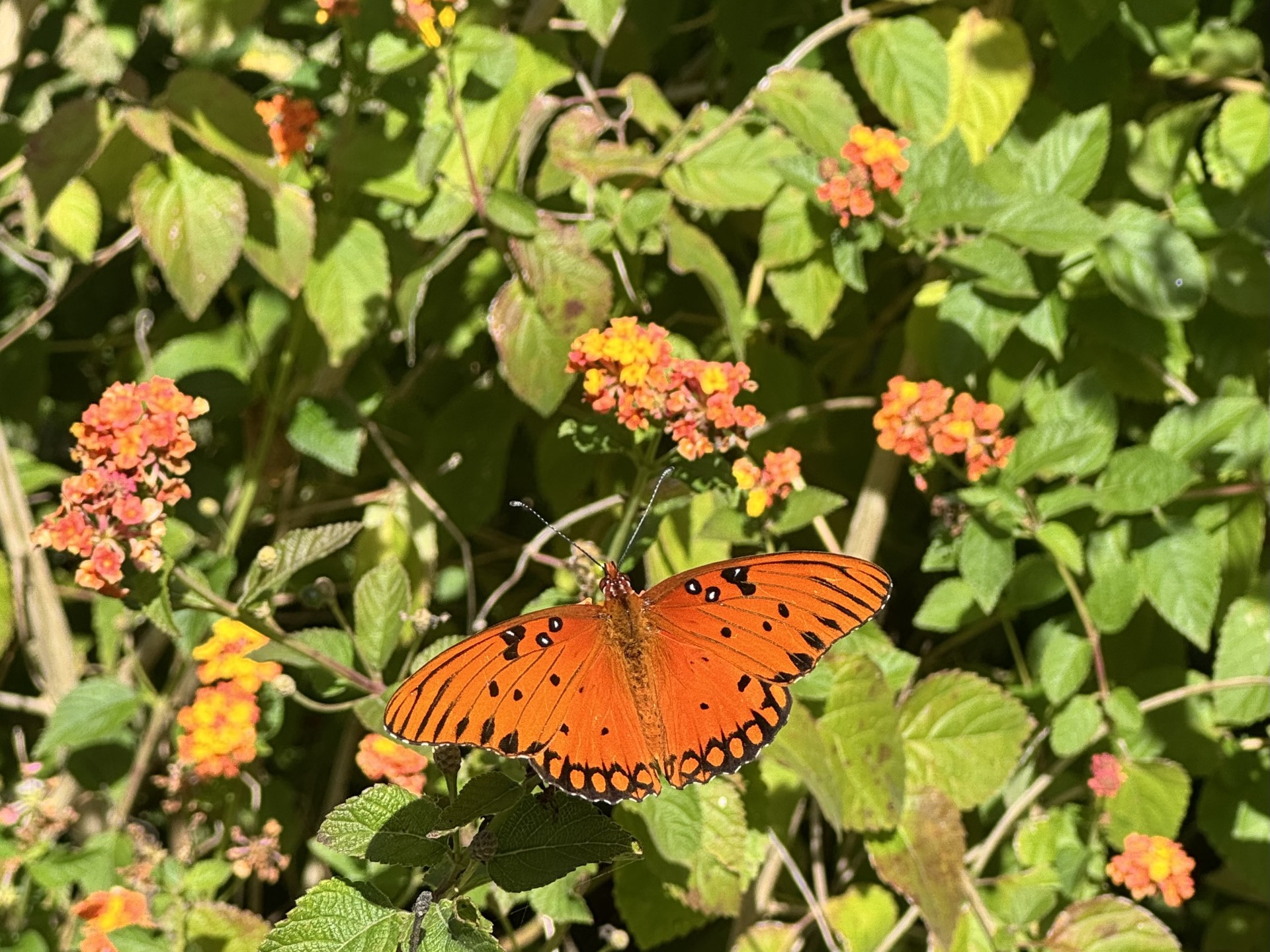
A butterfly enjoying Lantana before the cool November air sets in.
Samantha Brown, ©2026, Clemson Extension
November Vegetable Garden Care
- Collards, Kale, and Broccoli oh-my! As the temperatures begin to drop, our cool-season crops will continue to produce. Protect tender crops when a hard freeze is in the forecast.
- If you have a garden bed that is not being used this season, plan to cover it with a sustainable winter cover crop such as winter wheat or crimson clover. Other options include covering the bed with shredded leaves, straw, or mulch.
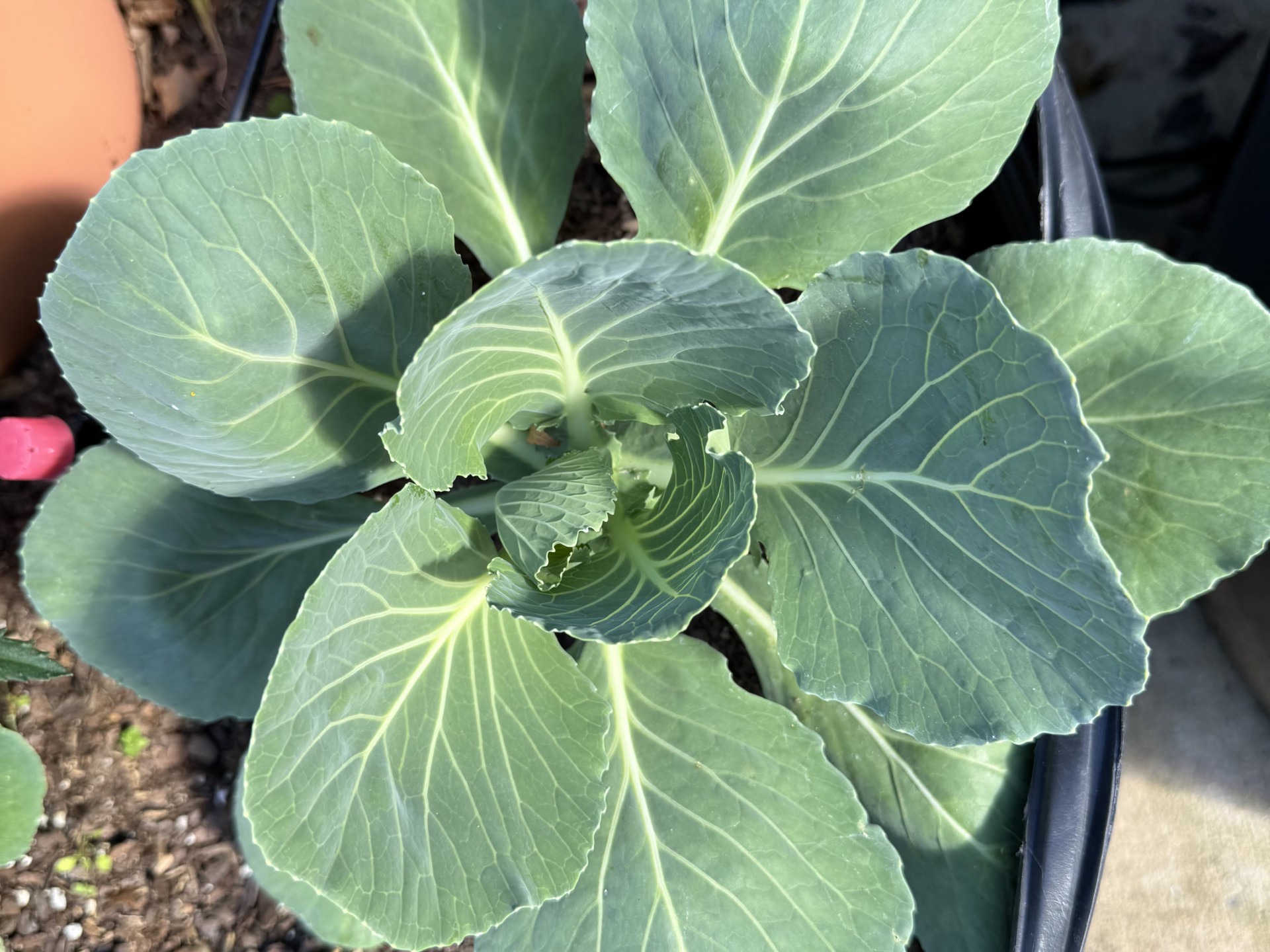
Collard Greens are patiently waiting for the first frost to sweeten them up.
Samantha Brown, ©2026, Clemson Extension
November Lawn Care
- Watch for large patch disease. Cool, wet fall weather is the perfect storm for it to appear just as your turf is going dormant. Circular areas of yellow/brown spots that are expanding can be an indication.
- Cool season grasses such as fescue are beginning to thrive. Mowing height should be around 2.5-3 inches. Mow frequently enough so that no more than 1/3 of the grass blade is removed.
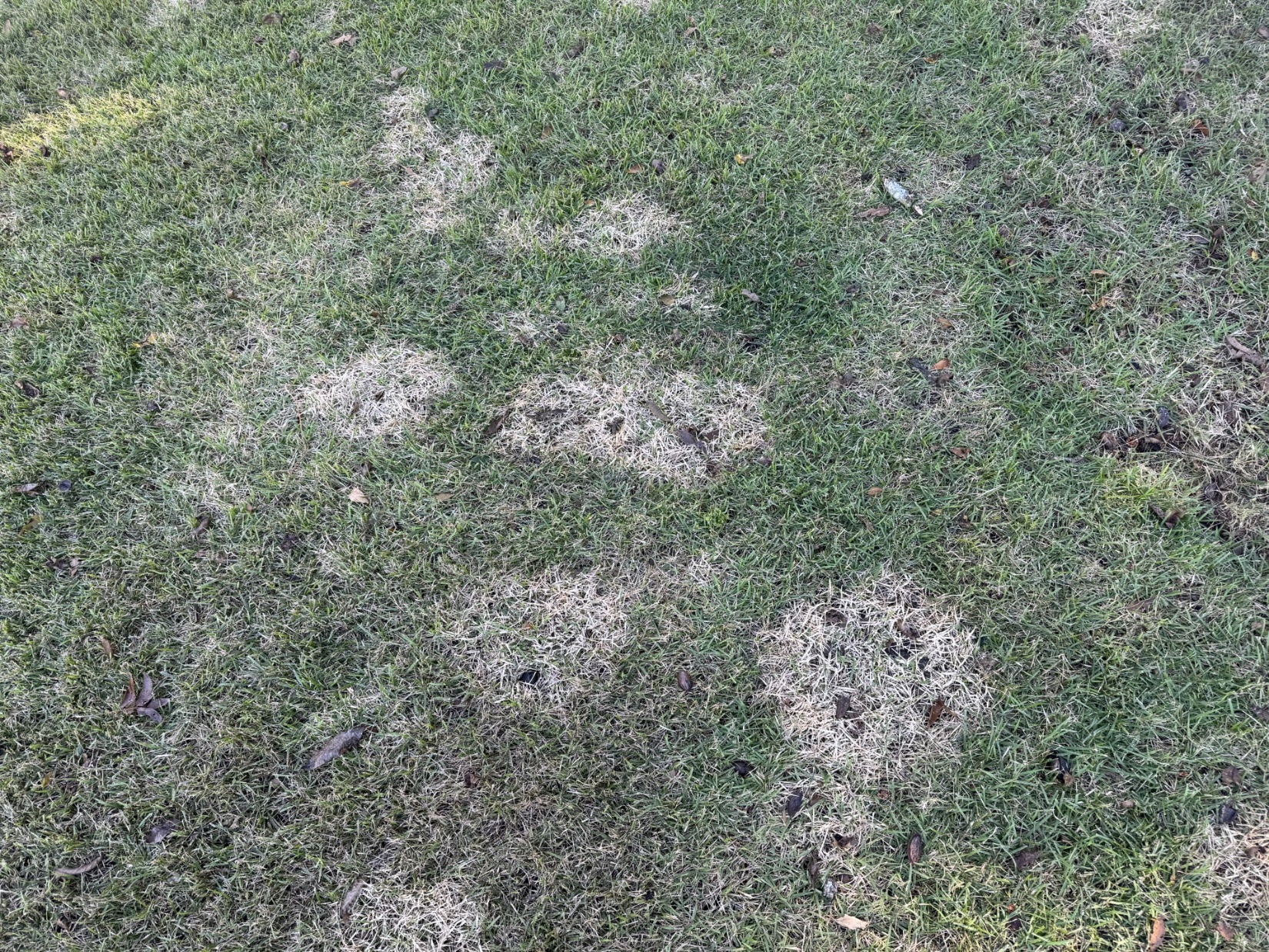
Large Patch in Palisades Zoysia lawn.
Samantha Brown, ©2026, Clemson Extension
Fall Care for Trees and Shrubs
- Enjoy the fall foliage but understand that fallen leaves have their place. Dispose of heavily diseased leaves where necessary, but consider leaving some in beds to provide an overwintering habitat for our beneficial insects. Fallen leaves can also provide a natural layer of insulation, helping regulate soil temperatures and protect plant roots during colder weather.
- Applying 2-3 inches of mulch will also insulate roots and protect them from colder temperatures.
- Fall is a great time to plant many woody landscape plants. Cooler temperatures reduce heat stress while the roots are developing as long as soil conditions allow.
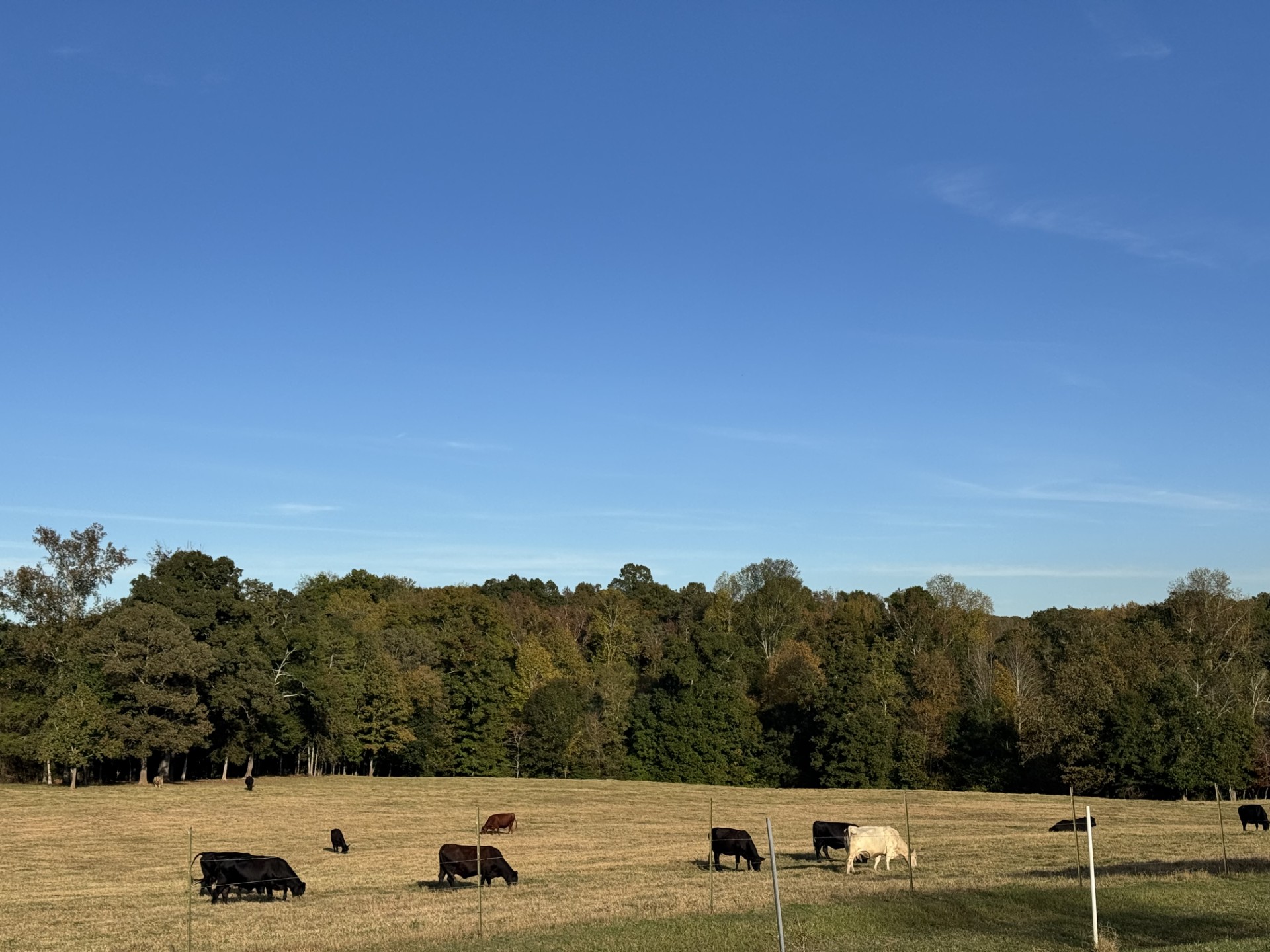
Fall Foliage is starting to present itself in Iva, SC
Samantha Brown, ©2026, Clemson Extension
Bringing Sensitive Plants Indoors
- Remember to bring sensitive plants indoors before the temperature drops. Tropical plants, ferns, and herbs like basil can be damaged when left outside.
- Inspect the plants before bringing them in to avoid unwanted guests in your home. Check the underside of leaves, stems, and the soil. Treat the problem outside to avoid introducing them to your houseplants.
- Place plants in areas with appropriate sunlight and away from heating vents and cold drafts. Reduce watering as the growth slows down for these plants.

Ferns can be a costly investment once they have reached this size; bring them inside.
Samantha Brown, ©2026, Clemson Extension