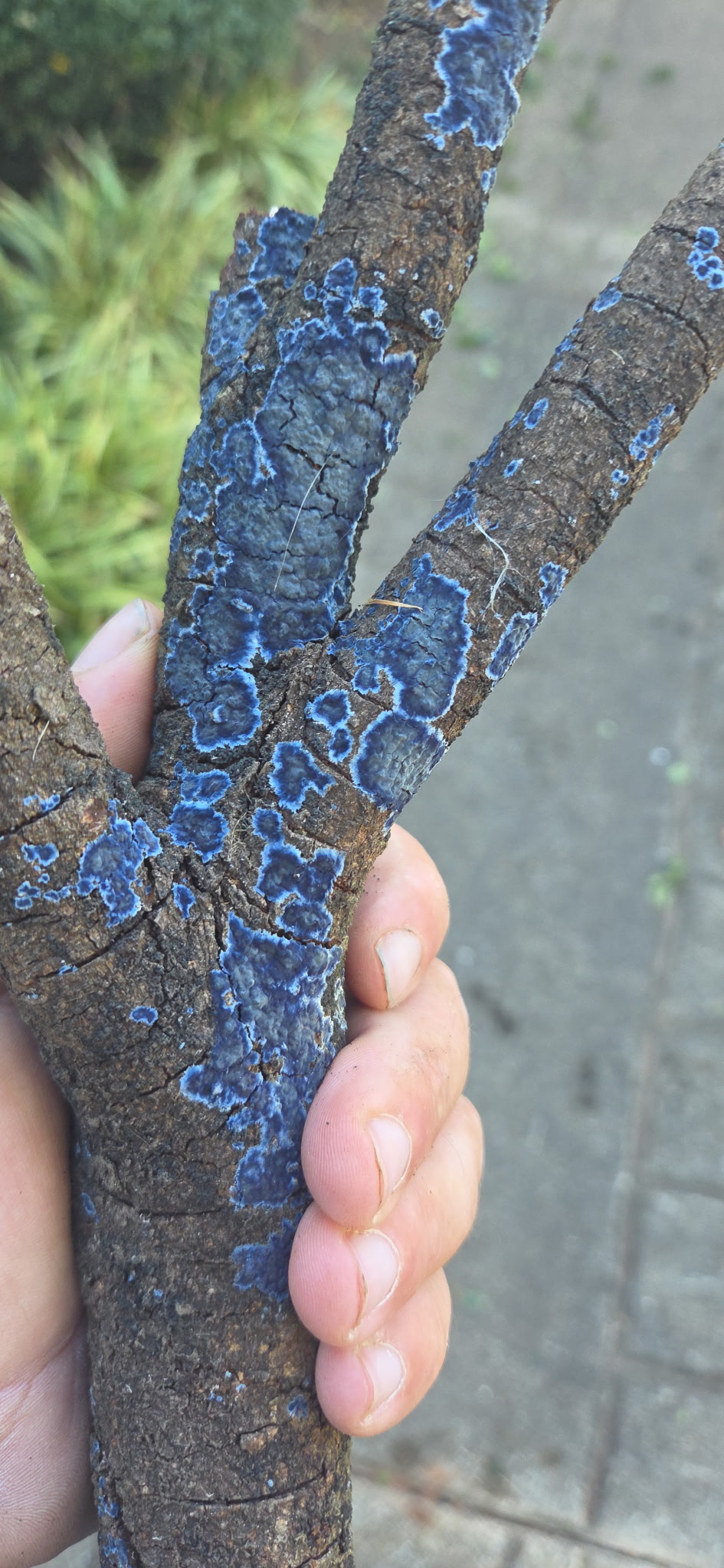
Cobalt crust on a dead Cherry Laurel (Prunus laurocerasus).
Photo credit: Dustan Lawson, Pauline’s Native Landscaping. Spartanburg County, South Carolina. Picture used with permission.
What Is Cobalt Crust Fungus?
As gardeners, we are often wary when we see fungal growth on our plants. But not all fungi are bad! This stunning blue fungus is cobalt crust (Terana caerulea), formerly known scientifically as Pulcherricium caeruleum, a saprobic crust fungus that breaks down already-dead wood.
Does Cobalt Crust Cause Plant Decline?
While it is found on a dead branch, its presence doesn’t mean it caused your plant’s decline. This is just the clean-up crew. Saprobic fungi excrete enzymes that break down dead organic matter to digest it – and clean up.
Where to Find Cobalt Crust Fungus
Cobalt Crust is found throughout the Eastern United States and many other parts of the world. You will find it in damp hardwood forests, especially in warm, humid areas on the underside of fallen hardwood branches and logs.
So next time you’re hiking, maybe take a closer look at a fallen log to see if you can find this pretty fungus!