What Does a Wool Sower Gall Look Like?
Have you ever noticed what looked like a cotton ball with pink spots at the end of a tree branch?
It’s a very strange sight to see, but if you have, you may have seen a wool sower gall. In the springtime, they are typically found on white oak trees (Quercus alba).
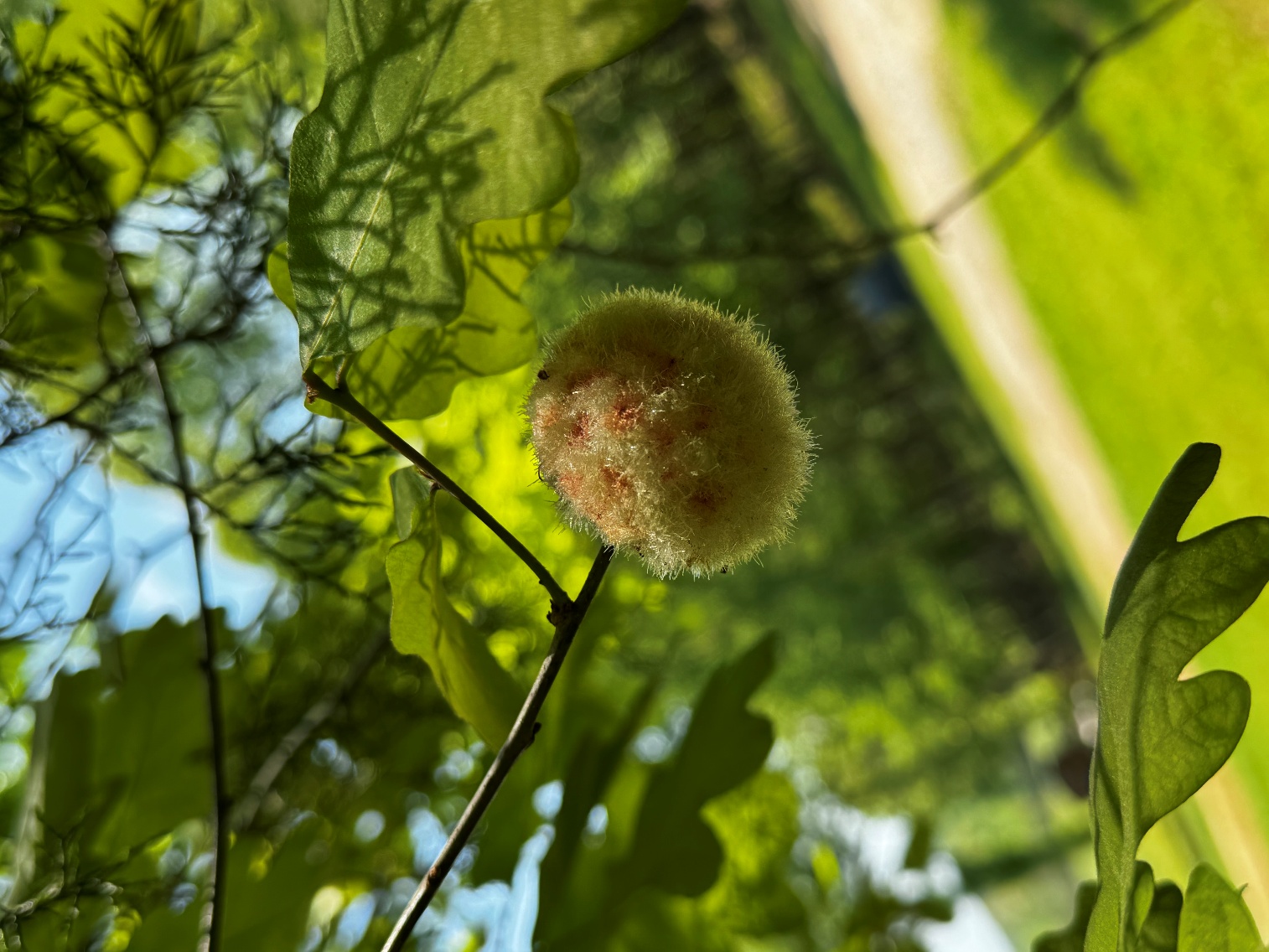
A wool sower gall was found attached to a white oak tree branch in April.
Samantha McGaha Brown, © 2025, Clemson Extension
What Causes Wool Sower Galls?
Wool Sower gall wasp (Callirhytis seminator) are 1/8 inch long, brown, and have a flattened abdomen. A female gall wasp will lay her eggs in young plant tissue, whether that be a leaf or stem tissue, and the tree reacts to the larvae’s secretion and produces an abnormal growth.
The gall provides a safe environment and food source for the developing larvae.
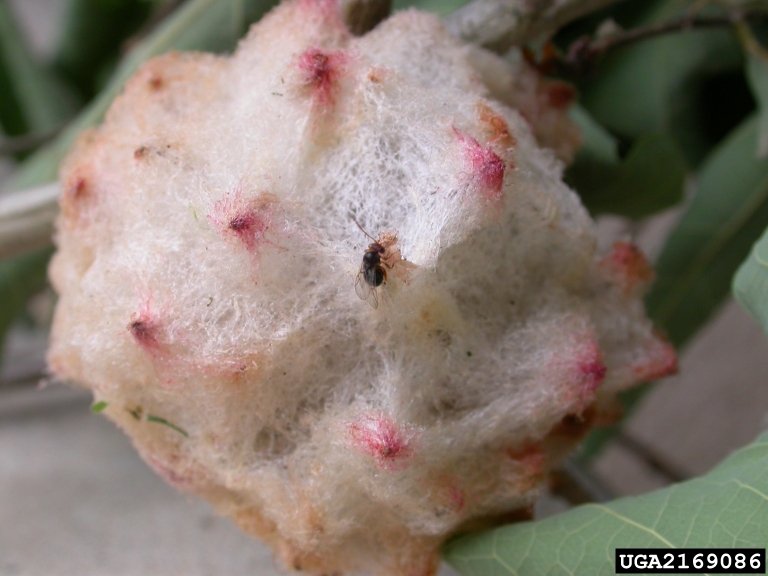
An adult Gall wasp will tunnel through and usually emerge in June/July.
Lisa Ames, University of Georgia, Bugwood.org
Wool Sower Gall Wasp Life Cycle
Gall wasps have an alternation of generations:
- Year 1: Larvae develop in leaf galls
- Year 2: Their offspring grow inside stem tissue like the wool sower gall.
The larvae are translucent to white in color and legless. When pulling apart a wool sower gall, you will find tan seeds that house the wasp to mature and pupate.
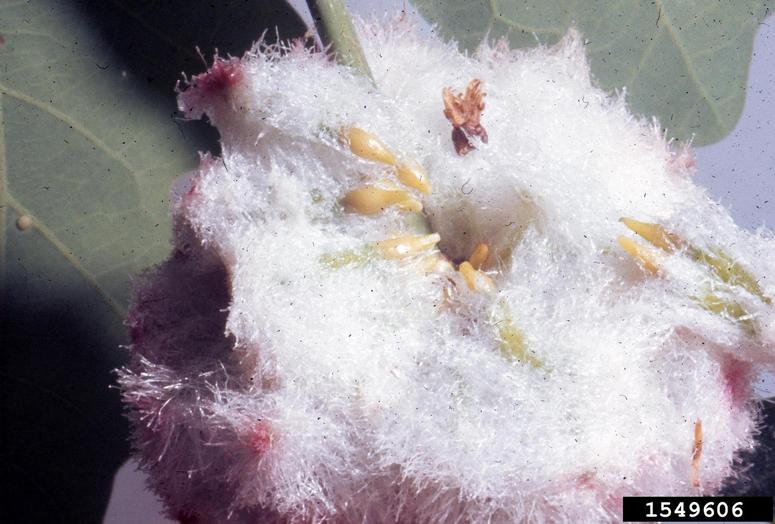
Small tan seeds host the larvae until the mature wasp forms.
Jim Baker, North Carolina State University, Bugwood.org
Should You Worry About Wool Sower Galls?
Galls do not typically harm the tree’s growth as they seem to coexist well with each other.
However, if you see an abundance of galls on a tree, applying a pyrethroid insecticide in June may be used to help lower the amount of gall wasps the following year.
Learn More About Tree Galls
Wool Sower Gall Wasp | NC State Extension Publications
Fuzzy growth on oak trees: Wool sower galls | Good Growing | Illinois Extension | UIUC