
Quick Guide: Understanding Chill Hours
Definition: Number of hours of cold (32 °F to 45 °F) a plant experiences during dormancy
Purpose: Allows buds to develop properly for spring growth and flowering
Tracking Period (South Carolina): October 15 to early spring
Importance: Too few chill hours lead to poor leafing, bloom, or fruit yield
Applies To: Peaches, apples, plums, blueberries, pecans, azaleas, lilacs, and more
How Chill Hours Affect Plant Growth
Fruit and nut trees undergo many seasonal changes throughout the calendar year, such as dormancy, growth, fruiting, and senescence (the natural aging of plant cells).
Dormancy and Cold Exposure in Fruit Trees
In late fall, when cold temperatures arrive and leaves fall, plants enter a period known as dormancy. Dormancy is a resting phase that protects them from winter stress.
During dormancy, plants must be exposed to a specific amount of cold exposure (chilling hours) to ensure buds can properly develop into leaves and flowers in early spring.
Transition From Chill Hours to Spring Growth
Buds do not leaf out or bloom immediately after their chill requirements are fulfilled because they additionally need a period of warm temperatures to guarantee that conditions are safe for blooming and leaf production.
Seasonal Growth Cycle of Fruit and Nut Trees
Growth, flowering, and fruiting resume in early spring and continue into the summer. In early to mid-fall, plant growth slows down until the senescence process begins. Dormancy and chill accumulation return in late fall.
Measuring Chill Hours and Temperature Requirements
Cold temperatures are used to measure chill hours, while warm temperatures determine growing degree hours (or days).
Without the proper number of chill hours, the plant’s life cycle is interrupted. Depending on how many hours are missing, it can result in:
- No leafing out or delayed leafing out
- Poor bloom and yield
- Low fruit quality that season
Plants with Chill Hour Requirements
Many fruit and ornamental plants depend on chill hours, including:
- Apples, peaches, cherries, pears, plums, apricots, and nectarines
- Nut trees, strawberries (specific varieties), blueberries
- Ornamental shrubs such as lilacs, azaleas, and forsythias
Each plant species—and even each variety—requires a specific number of chill hours suited to its native or adapted climate zone.
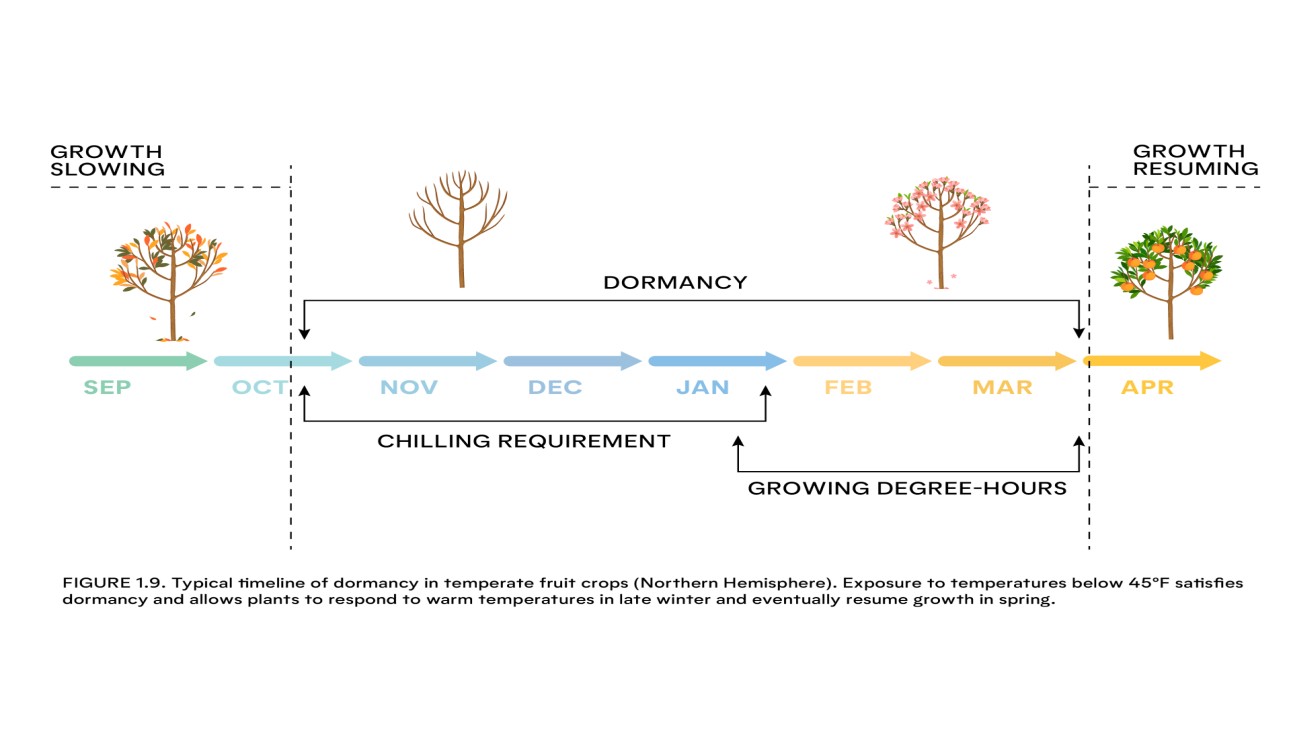
Typical timeline of dormancy in temperate fruit crops (Northern Hemisphere). Exposure to temperatures below 45°F triggers dormancy, allowing plants to respond to warm temperatures in late winter and eventually resume growth in spring.
Tina LeMay, ©2025. Clemson University
How to Calculate Chill Hours for Home Gardeners
Understanding chill hour accumulation can be complicated, as several models exist to describe it. The easiest model considers one chill hour for every hour below 45 °F. For most home gardeners, tracking the number of hours below 45 °F is sufficient.
When Chill Hours Are Tracked in South Carolina
Most models begin tracking chill hours in the fall and quit when temperatures warm up in the spring.
In South Carolina, many begin tracking hours around October 15 to November 1, depending on the crop and stop tracking hours as temperatures warm in early spring.
Chill Hour Models and Temperature Ranges
Below are a few common chill hour tracking models:
If temperatures warm significantly when plants are accumulating chill hours, it could impact the overall number of chill hours accumulated (specifically, negating some of the accumulated hours).
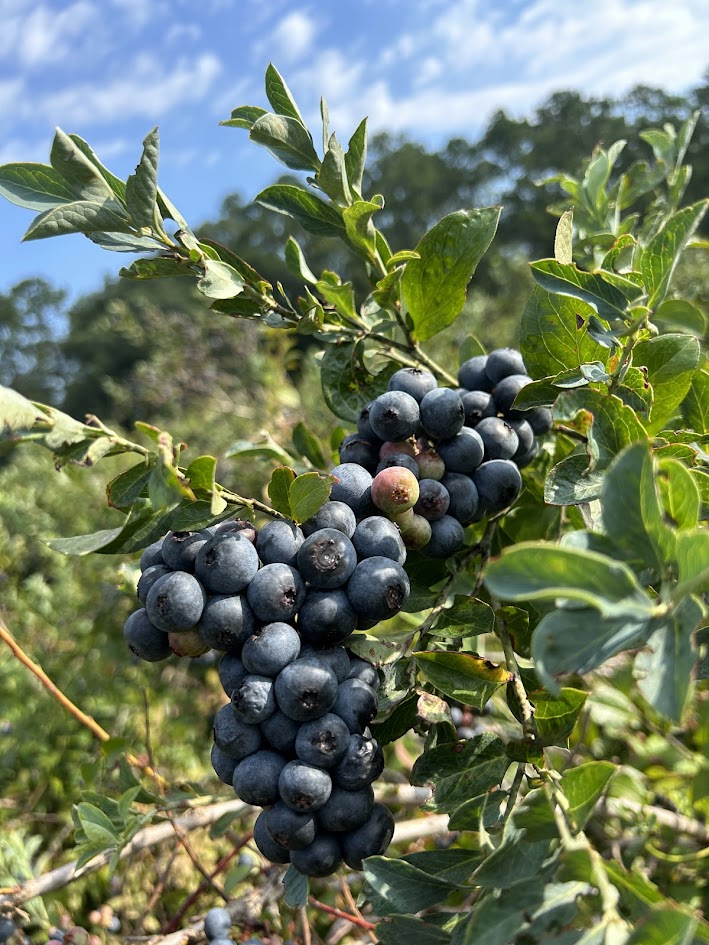
Selecting the correct cultivar of blueberry with appropriate chill hours can be very rewarding for gardeners.
Zack Snipes, ©2024, Clemson Extension
Why Chill Hour Estimation Matters
It is important to note that calculating is a mathematical model, an estimate that correlates well with plant performance under field conditions.
Why Location Matters for Chill Hours in South Carolina
Knowing the exact location and the estimated average chill hours of a particular site is crucial for the success of a crop.
South Carolina Regional Chill Hour Differences
Chill hours can vary from site to site in South Carolina:
- Lower State: 400 to 800 chill hours
- Upper State: 800 to 1000 chill hours
Influence of Microclimates on Chill Hour Accumulation
In many areas of the state, microclimates may receive varying chill hours based on geographical features such as elevation, large bodies of water, and proximity to urban areas.
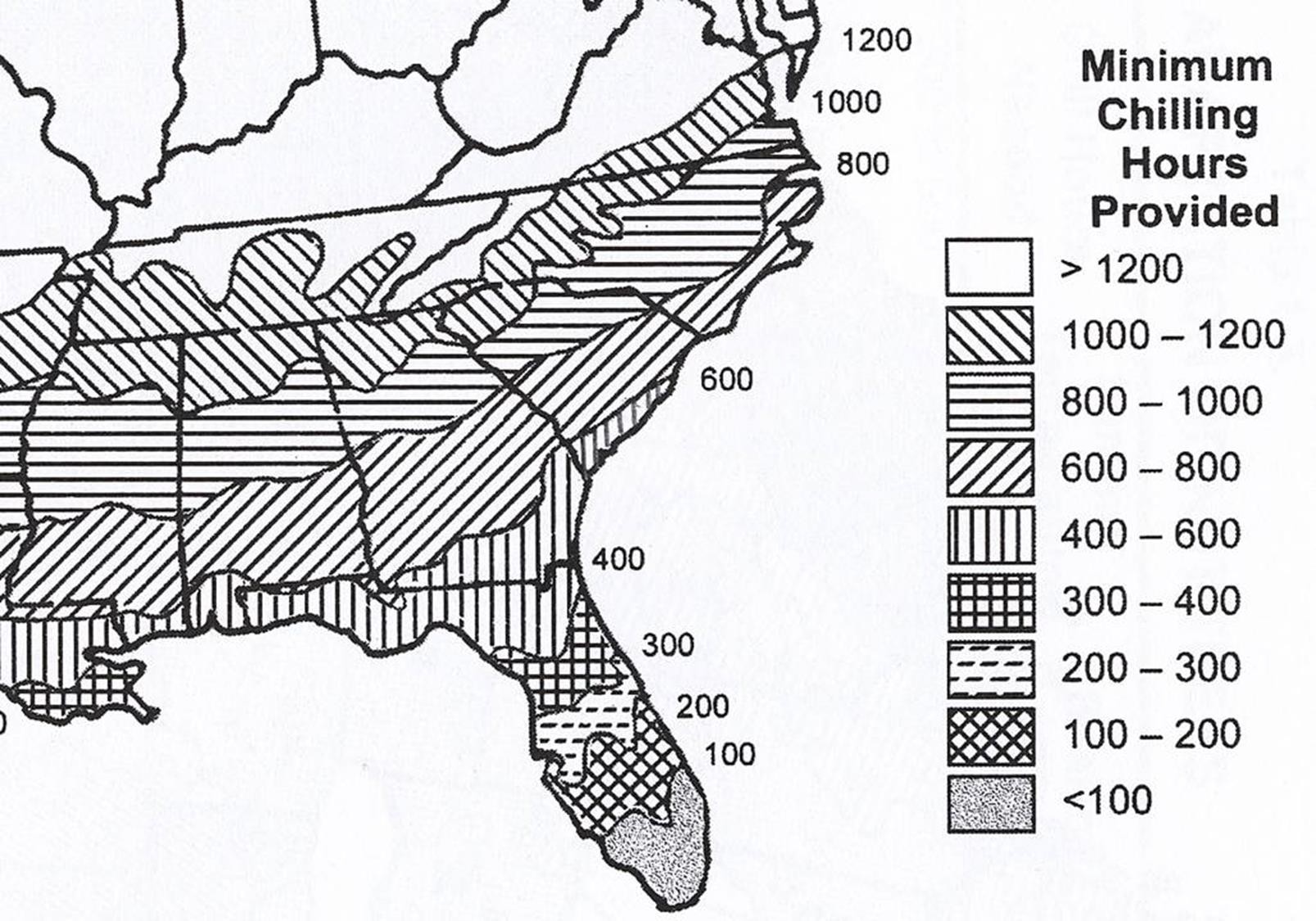
The average number of chill hours in the Southeast United States varies by location and typically ranges from about 400 to 1,200 hours per year.
Olcott-Reid, B., & Reid, W. 2007
Checking Local Chill Hour Data
Prospective gardeners should check historical chill hour records for a particular site.
Clemson Extension has a statewide weather station network, with a weather station in every county throughout the state. Check current chill hours using the website’s chill hour calculator. This feature calculates chill hours within a specific and selected date range. However, it does not reflect the historical average of a region.
Some years are colder than others; therefore, historical ranges are provided for an area.
Selecting the Right Plants for South Carolina Chill Hours
Selecting plants that match the local chill hour range is crucial for ensuring reliable flowering and fruit production.
Local vs. Non-Local Nursery Sources
Local nurseries often grow, source, and sell cultivars that are region-specific and chill hour appropriate. Trees grown and sourced from faraway nurseries may have more or fewer chill hours than needed for a particular region.
Problems When Plants Need More Chill Hours
For example, plants sourced from northern nurseries may need more chill hours than those South Carolina receives. If purchased, these trees may never receive the chill hours needed to enter dormancy. As a result, they would most likely never bear fruit as flowering would not be initiated properly, and bud break would be poorly timed.
Problems When Plants Need Fewer Chill Hours
Similarly, plants sourced from nurseries in the southernmost parts of the United States may need little to no chill hours. If grown in South Carolina, the plants would bloom immediately after a few days of warm temperatures, even if that happens in January or February. In this situation, the blooms of these plants are killed by frost each year, preventing them from ever producing fruit.
References
- Bakken, A. (2024, November). Understanding Dormancy and Chilling for Fruit Crops. University of Minnesota Extension. https://blog-fruit-vegetableipm.extension.umn.edu/2024/11/understanding-dormancy-and-chilling.html
- Harrington, C. A., & Gould, P. J. (2011). Modeling the effects of climate change on forest vegetation. In R. K. Dumroese, T. M. Stanturf, & L. E. Riley (Eds.), National proceedings: Forest and conservation nursery associations (pp. 3–10). U.S. Department of Agriculture, Forest Service, Rocky Mountain Research Station. https://www.fs.usda.gov/rm/pubs/rmrs_p069/rmrs_p069_003_010.pdf
- Landry, D. (2022, February 10). Chill hours: What are they and why do they matter? UF/IFAS Extension Northwest District. https://nwdistrict.ifas.ufl.edu/hort/2022/02/10/chill-hourswhat-are-they-and-why-do-they-matter/
- Olcott-Reid, B., & Reid, W. (2007). Fruit and Nut Production. Stipes Publishing, LLC.
Originally published 01/26


