Coastal Region – Christiana Huss
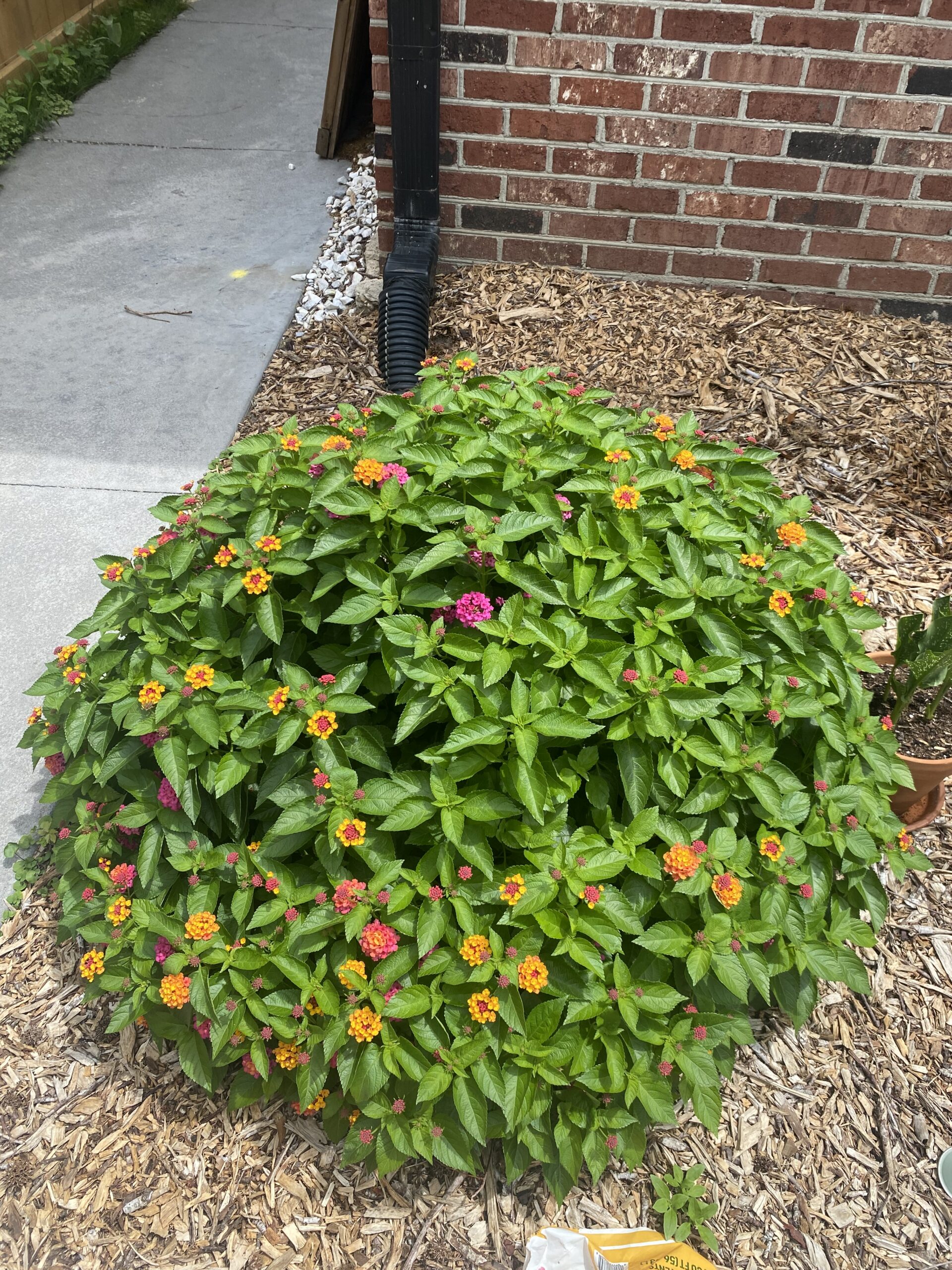
Lantana provides continuous summer color and attracts pollinators while thriving in South Carolina’s heat and drought conditions.
Christiana Huss, ©2026, Clemson Extension
Weed Control in June Gardens
- Now is a critical time to keep up with weed control in your garden beds.
- Weed pressure is low because of the dry spring we’ve had, but warm summer rain will cause them to get out of control quickly.
- Keep up with hand pulling now while roots are fragile and easy to pull.
- If you are already overwhelmed with weeds, focus your efforts on grass and sedge control since they are the most difficult to kill once established.
Prevent Blossom End Rot on Tomatoes and Peppers

Roma tomatoes developing on a healthy tomato plant in a home vegetable garden. Consistent watering helps prevent blossom end rot as fruit matures.
Christiana Huss, ©2026, Clemson Extension
- Tomatoes, eggplant, squash, and peppers are prone to blossom end rot.
- Blossom end rot occurs when water is inconsistent, preventing calcium from being absorbed by the plants.
- Keep steady irrigation on these vegetables while the fruits grow to help prevent blossom end rot.
- If irrigation is consistent and blossom end rot persists, consider a soil test to determine whether the soil is calcium-deficient.
Buy and Preserve Fresh South Carolina Produce
You don’t have to grow your own garden to enjoy fresh produce.
- Many fruits and vegetables are coming into seasonright now. You can buy these vegetables in bulk directly from farmers.
- Visit the Certified SC Grownwebsite to find local farmers or visit your closest farmers’ market.
- Consider learning how to preserveyour fresh produce so you can enjoy it throughout the year.
Reduce Mosquito Populations Around the Home
With rain in the forecast, mosquitoes will be in full force.
- Empty sources of standing water often to eliminate breeding habitat.
- In situations where standing water can’t be eliminated, a Bt dunk can be purchased to kill larvae.
- Screened porches, fans, or a topical insect repellent can also help keep mosquitoes away.
Midlands Region – Carmen Ketron
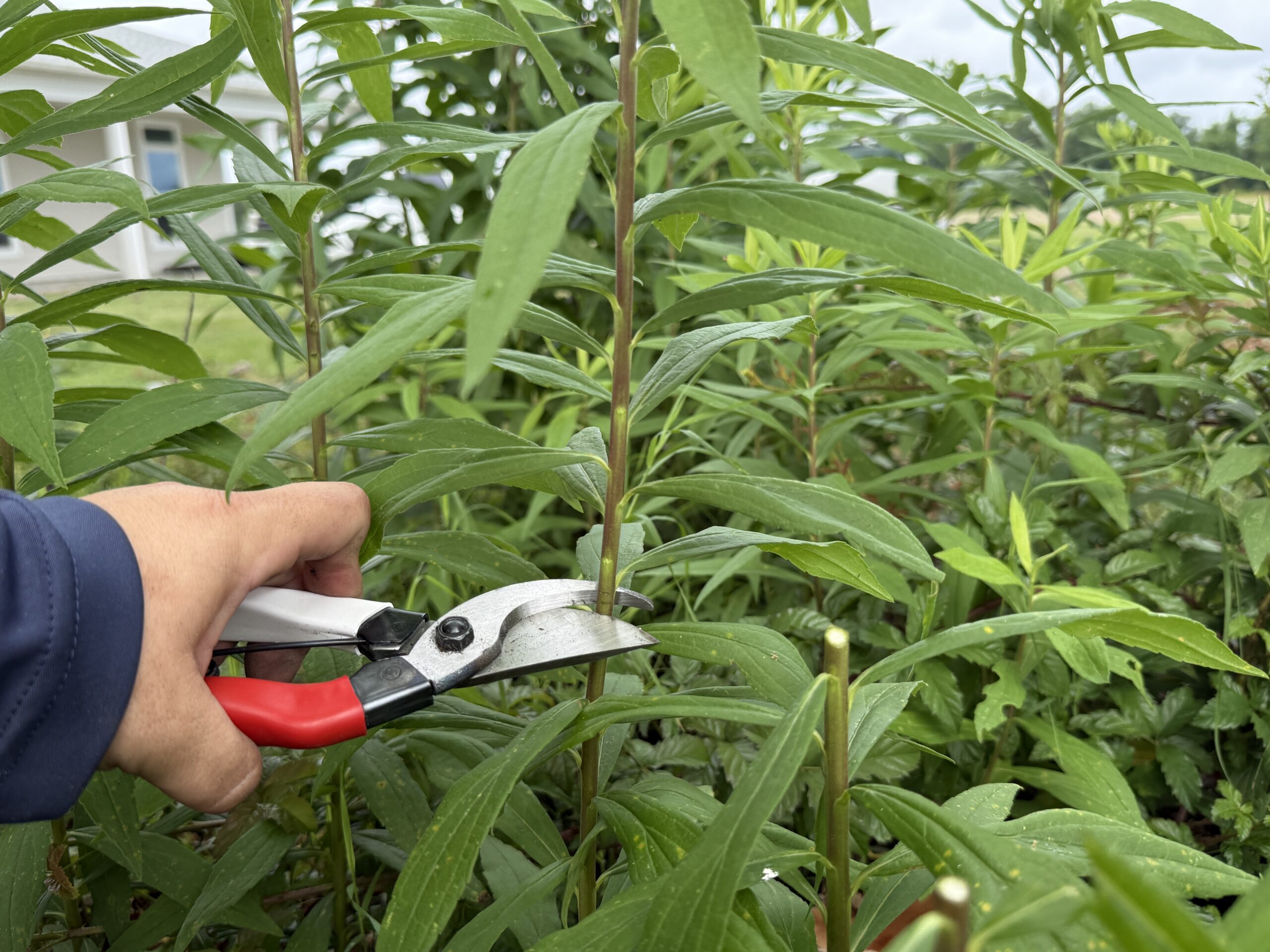
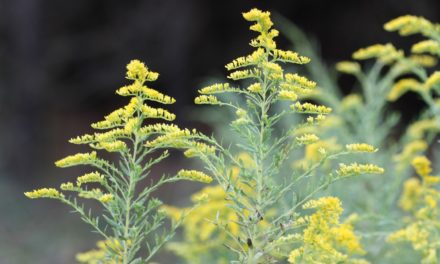
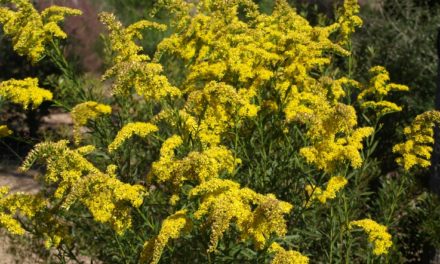
Cutting goldenrod (Solidago spp.) down by half to encourage more bushy growth and reduce tall leggy plants in the garden.
Carmen Ketron, ©2026, Clemson Extension
Prune Shrubs and Perennials in June
- Prune early spring bloomers that have finished flowering, such as azaleas and camellias. These set their flower buds on old wood over the summer, so pruning soon after blooms is imperative.
- Wait too long and you’ll cut off next year’s flowers.
- June is also a good time for light shearing and shaping of woody shrubs including boxwood, privet, and holly hedges.
- If you grow tall, late-flowering herbaceous plants such as goldenrod, asters, Joe Pye weed, or other native flowering plants, there is still time to prune to manage tall unwieldly growth with a “Chelsea chop”. Cut the stems back by one-third to one-half. This forces bushier, sturdier growth that is less likely to flop over.
Planting Vegetables and Fall Crops in June
- Plant late-summer vegetables like okra and sweet potatoes.
- Begin planting fall crops such as pumpkins and other winter squash.
- As heat builds, a 2-3 inch layer of mulch helps retain soil moisture and keep roots cool.
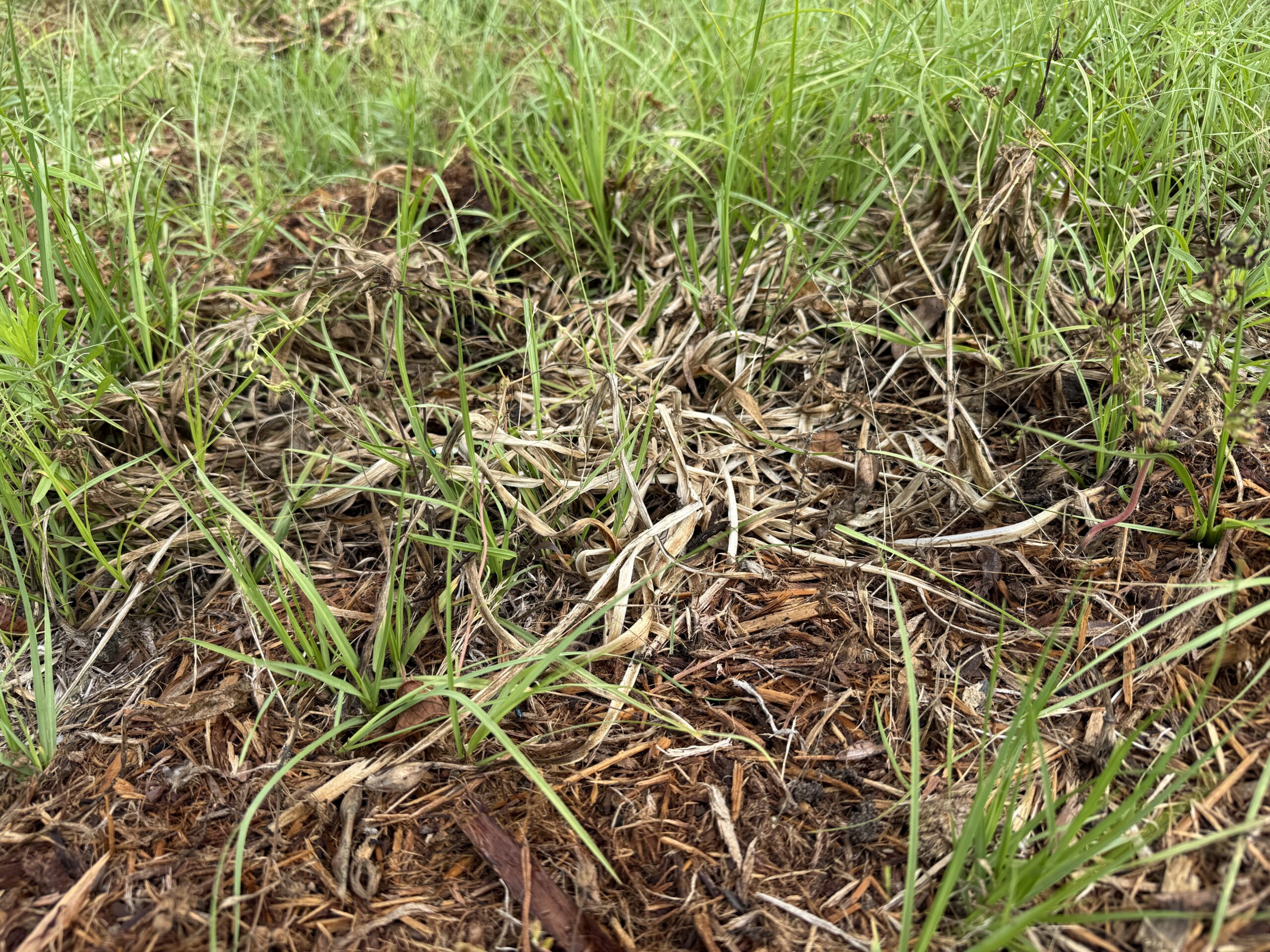
When digging up spring bulbs, wait until the tops have fallen over and turned brown.
Carmen Ketron, ©2026, Clemson Extension
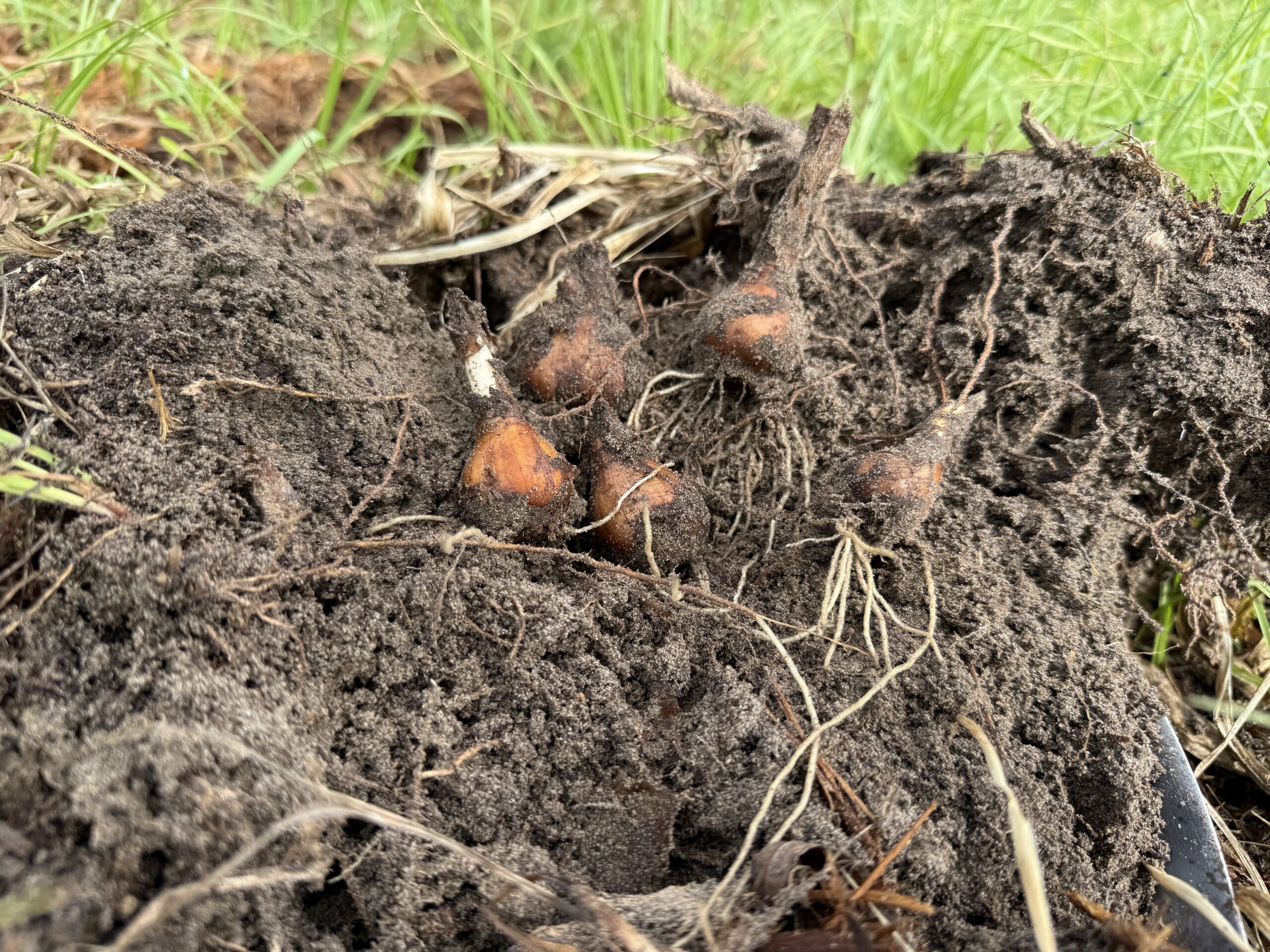
Daffodil bulbs are being dug up to move and thin out.
Carmen Ketron, ©2026, Clemson Extension
Divide and Store Garden Bulbs
How you handle bulbs depends on when they bloom:
- Plant summer- and fall-blooming bulbs, corms, and rhizomes, such as:
- Gladiolus
- Agapanthus
- Dahlia
- Colchicum
- Lycoris
- Spider lily
- Divide spring bloomers like daffodils, hyacinths, and crocus, after the foliage has yellowed and died back, but is still visible enough to mark each clump’s location.
- To divide or relocate them, dig them now, and replant immediately
- If storing over summer, trim the foliage to about 1 inch above the bulb:
- Brush off the soil (don’t wash)
- Cure on newspaper in a shaded, well-ventilated spot for 7 to 10 days.
- Store in a cool, dark, dry place, preferably in a mesh bag or cardboard box, until you replant in autumn.
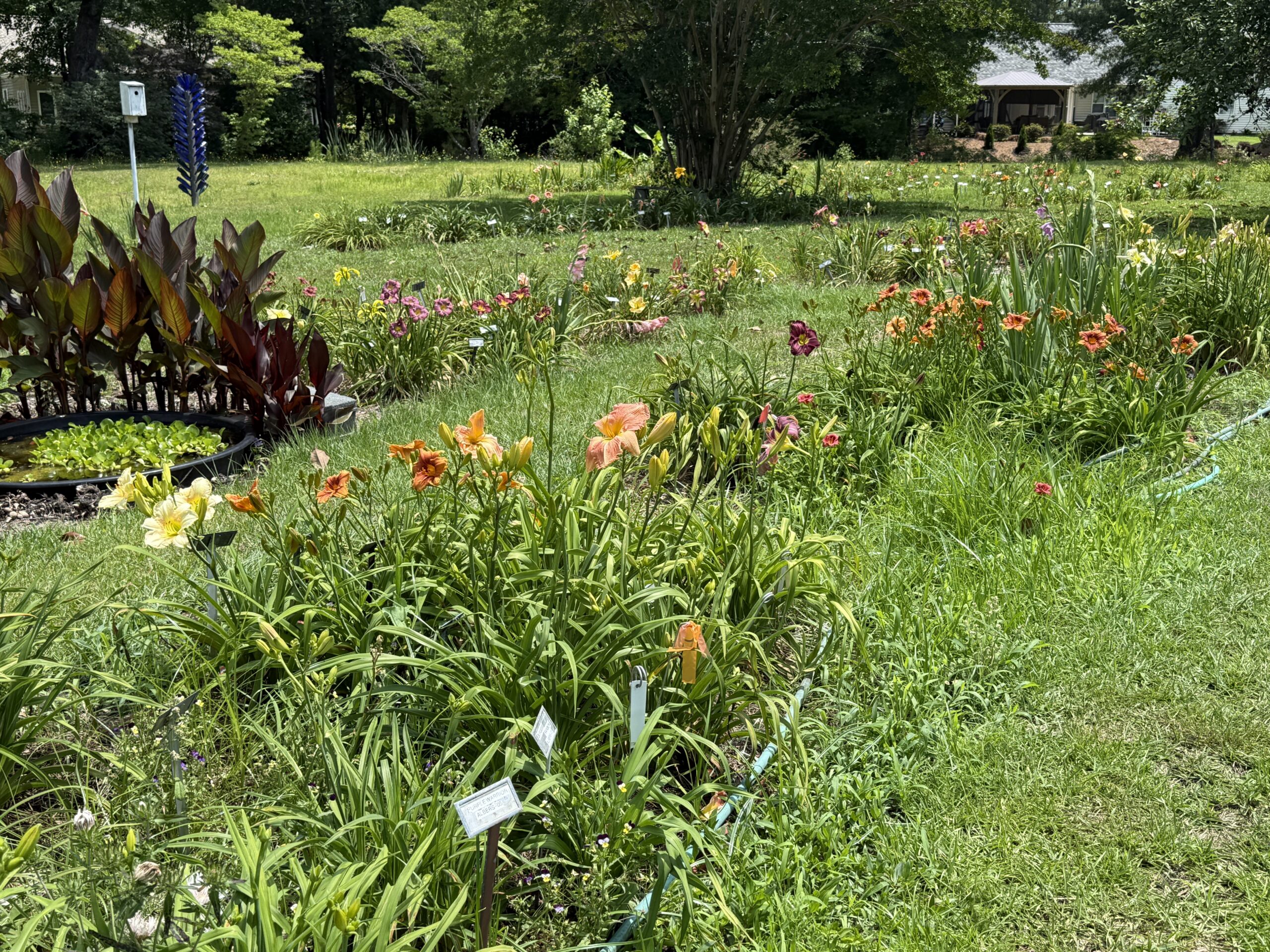
Daylillies in bloom.
Carmen Ketron, ©2026, Clemson Extension
Watering During Drought Conditions
The drought that persisted last summer and winter has continued through to the growing season.
- Most lawns and landscapes need 1 inch of water per week, usually relying on rainfall.
- This year even long-lived trees and shrubs that do not have regular irrigation will need supplemental water to stay happy.
Maintain Warm-Season Lawns in June
- Apply your second round of fire ant bait this month, ideally in the morning or evening when ants are actively foraging.
- Mow warm season grasses to their recommended height.
- If you go away for a vacation this summer make sure when you come back adjust the mowing to only remove 1/3 of the leaf blade.
- Slowly adjust the height the next mow to get it back down to the recommended height.
- Scout for, correctly identify, and treat chinch bugs and mole crickets.
- Late June to early July is prime time for a second fertilizer application on warm-season turfgrasses. This is about .5 to 1 pound of actual nitrogen per 1,000 square feet or follow the recommendations from your soil test.
- Avoidcontrolling weeds with post-emergent herbicides once temperatures regularly climb above 85°F. This is especially critical for drought-stressed grass like we’re seeing this year.
Upstate Region – Briana Naumuk
Water Lawns and Landscapes During Drought Conditions
- We are unfortunately currently in extreme drought across the upstate.
- This means that anything you want to keep alive, you should be watering.
- Lawns need about an inch of water per week.
- The best way to water your trees and shrubs is by distributing water evenly throughout the root ball and within the plant’s dripline.
- Make sure the soil is moist and not oversaturated.
Plant Summer Flowers for Continued Color
- Cut and come again flower favorites like zinnias, cosmos, and marigolds make excellent plant choices for adding color to the summer landscape and lend themselves well to beautiful flower arrangements!
- There is still time to direct seed them in the garden.
- Direct seed coneflowers, goldenrod, and coreopsis to extend bloom into the fall.
Plant a Second Round of Vegetable Crops
- There is still time to plant vegetable transplants.
- Crops that can still be planted include:
- Cantaloupe
- Collards
- Cucumbers
- Eggplant
- Okra
- Mustard
- Summer squash
- Tomatoes
- If you have already planted a first round of any of these, planting a second round lengthens your harvest season.
Scout for Garden Pests and Encourage Beneficial Insects
- Dry weather can bring increased pest pressure.
- Be sure to scout your garden regularly for the bad bugs.
- Remember not all bugs are our enemy.
- Encouraging beneficials can help with the health of your garden and your pest issues.
Dethatch Warm-Season Lawns When Needed
- If the thatch layer in your warm-season lawn is more than half an inch, it may be time to dethatch.
- Use a vertical mower to remove excessive thatch.
- Mow over the turfgrass to remove the remaining debris.
- Follow up with adequate irrigation.