
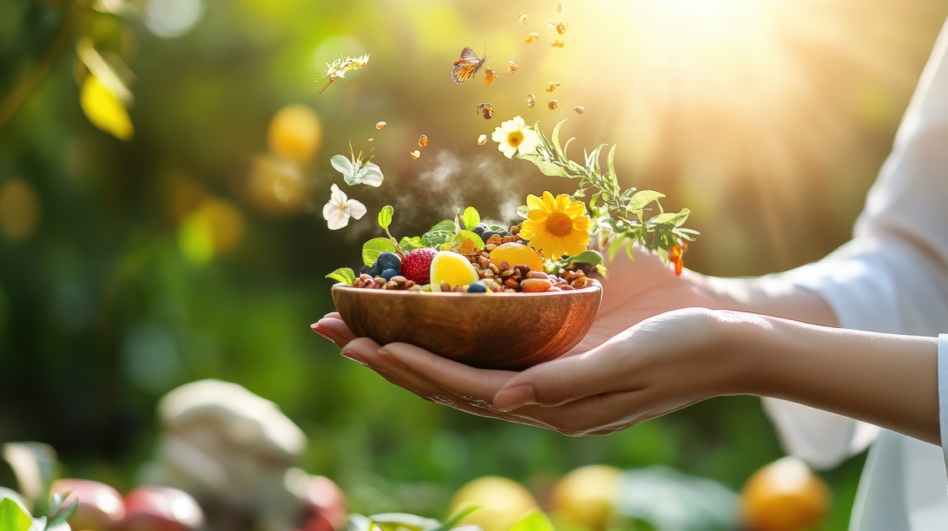
Fresh, colorful bowl of fruits, grains, and flowers representing the connection between nature and healthy eating. nengredeye -stock.adobe.com
Why the Natural Environment Matters for Healthy Eating
When we think about healthy eating, we often focus on individual choices, such as what to cook, what to buy, and what to avoid.
But our health and nutrition are influenced by much more than what’s on our plate. The natural environment around us plays a big role in how we eat, feel, and function every day. Things like access to food, clean water, fresh air, and safe outdoor spaces all shape our health in ways we don’t always notice.
Where Does Healthy Food Come From? Why Environment Matters
Healthy food doesn’t just start at the grocery store; it starts with the environment. Clean soil and water help grow fruits, vegetables, and grains that support good health.
When environmental conditions are poor, food can become harder to grow, more expensive, or less available. This can affect people’s ability to buy fresh foods.
The reality is that many families must rely on convenience stores or shelf-stable foods to feed themselves. The good news is that frozen, canned, and packaged foods, often found in convenience stores, can still be part of a healthy diet when used wisely.
Small actions like using leftovers, planning meals, or choosing seasonal foods can also reduce food waste and help stretch a food budget. Sustainability doesn’t have to be all-or-nothing; even small changes can make a difference!
How Spending Time Outdoors Affects Eating Habits
Spending time outside, whether it’s walking, sitting in the sun, or playing with your kids, can lower stress and improve mood.
When stress is lower, it’s often easier to listen to hunger cues, prepare meals, and make food choices that feel good.
Unfortunately, living in an area with poor air quality can affect people’s desire or ability to go outside. Air quality affects breathing, energy levels, and chronic conditions like asthma.
When your health is affected, cooking, shopping, or eating regular meals can feel harder, which is important to recognize when making lifestyle changes.
Environmental challenges don’t affect all communities equally. Many low-income and marginalized communities experience greater environmental stress, which can directly impact health and nutrition.
Simple, Practical Tips for Healthier Eating in Any Environment
- Identify healthier options in any store, even if the only option is a convenience store
- Wash fruits and vegetables before eating
- Choose water to drink when possibleUse frozen or canned produce to save money
- Spend time outdoors when it feels safe and accessible
- Plan meals to reduce food waste
Final Thoughts: Healthy Eating Is About More Than Choice
Healthy eating isn’t just about motivation or willpower. Access, environment, stress, and resources all matter.
Understanding this helps us move away from blame and toward realistic, supportive strategies. Meeting people where they are and building on what they’re already doing is key!
References
- National Institute of Environmental Health Sciences. 2024. “Nutrition, Health, and Your Environment.” National Institute of Environmental Health Sciences. 2024. https://www.niehs.nih.gov/health/topics/nutrition.
- US EPA. 2000. “Climate Impacts on Human Health | Climate Change Impacts | US EPA.” Epa.gov. 2000. https://19january2017snapshot.epa.gov/climate-impacts/climate-impacts-human-health_.html.
- Aspen Valley Hospital. 2024. “How Environment Can Have a Positive Impact on Health.” Aspen Valley Health. May 3, 2024. https://aspenvalleyhealth.org/healthy-journey/how-environment-can-have-a-positive-impact-on-health/.


