Why Create Wildlife Habitat on Your Porch?
I have always loved the idea of having wildlife in my backyard and creating a space for them to rest and refuel; however, I live on the third floor of an apartment complex. Having a small porch does not give me much space to work with when building wildlife habitat.
While I may not be attracting deer to my third-story porch, there are plenty of smaller species I can welcome into this space.
How to Create Wildlife Habitat on Your Porch
If you are interested in creating a porch that is sure to attract wildlife and provide the best habitat possible, here are some easy steps to get started:
- Determine the Wildlife You Want to Attract
Start by determining what species you would like to attract to your home. The practices and habitat we implement will be determined by what we want to see on our patio or porch.
Some small wildlife you can easily introduce to your porch include:
- Birds
- Pollinators
- Amphibians (depending on your porch’s altitude)
- Reptiles
While some practices overlap, certain implementations are better suited to specific groups. If your space allows, you can implement wildlife habitat for many different species!
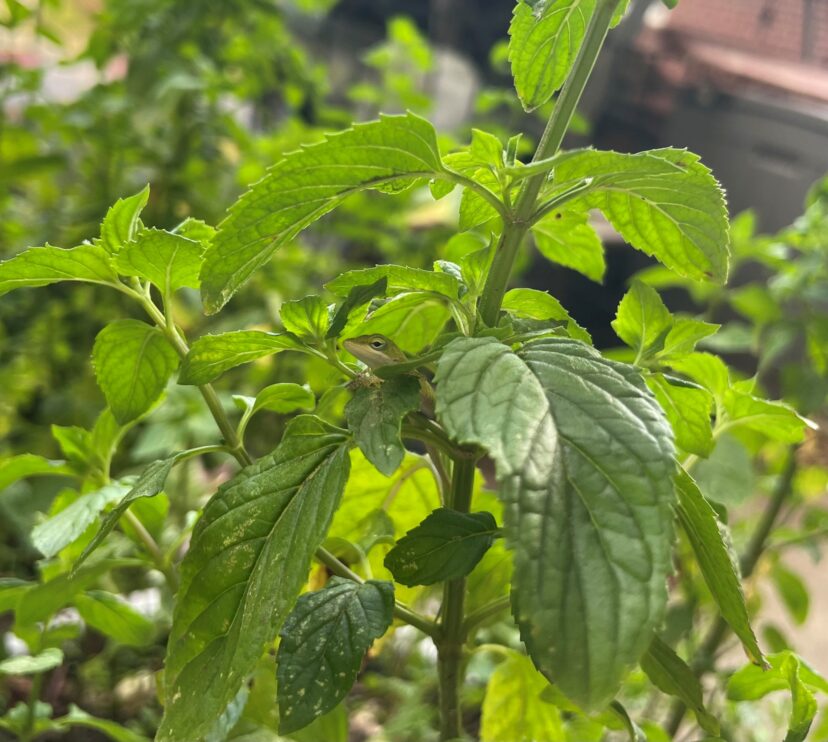
A Green Anole taking advantage of the habitat created by a container garden.
Mallory Maher, ©2026, Clemson Extension
2. Survey the Resources Available on Your Porch
Next, survey what materials you already have to work with. Resources may include existing habitats such as planters and bird feeders.
You should also assess the space you have available to devote to wildlife, as well as the species that already visit your porch. For example, my apartment complex is surrounded by trees, so I frequently see various birds and squirrels visit my porch.
3. Implement Wildlife Habitat Features and Attractants
Lastly, after determining your desired wildlife and the materials you have available, it is time to implement practices to attract wildlife to your small paradise.
The key to any good wildlife habitat is providing food, water and shelter.
How to Attract Pollinators and Beneficial Insects to Your Porch
Pollinators can benefit from the addition of bee cups, bee houses, and a variety of native flowers on your porch. Bee cups provide small water stations where pollinators can land and drink, while bee houses offer nesting spaces and a place to rest.
Incorporating native flowers such as bee balm or purple coneflower can help attract pollinators by providing a food source.
If you don’t have room for larger planters, consider adding a few herbs to your space. Herb gardens that contain parsley, dill, and cilantro are host plants for butterfly species, and other herbs like basil, mint, and chives are great for pollinators when they flower.
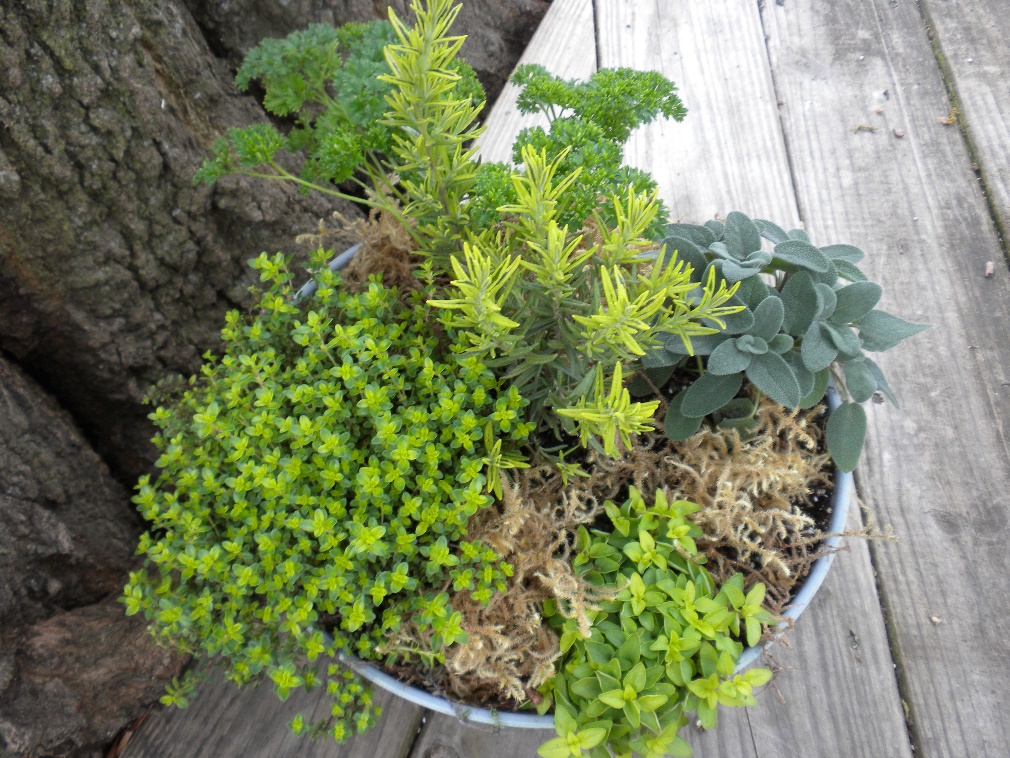
A combination of herbs can be easily grown in a container.
S. Cory Tanner, ©2017, Clemson Extension
Consider adding a bug hotel, a structure made from various natural materials that provides shelter and nesting spaces for beneficial insects.
How to Create Reptile Habitat on Your Porch
Reptiles, like the Carolina anole, can benefit from the addition of potted plants, native flowers, or small container gardens that provide food and shelter.
These plants attract insects, which are a crucial food source for reptiles.
How to Attract Birds to Your Porch
Birds can benefit from the implementation of bird feeders and bird baths. Feeders can attract a variety of species, while baths provide a source of water for bathing and drinking.
When choosing a feeder, consider both the type of feeder and the type of seed you use. Sunflower seeds can attract birds such as cardinals and chickadees, while mixed seeds may attract a wider range of species.
Be sure to clean your feeders at least four times a year (if not more), using a 1 part chlorine to 10 parts water solution.
Additional Resources
HGIC 2900, Backyard Wildlife Enhancement
Attracting Wildlife to Your Backyard
HGIC 2903, Seasonal Wildlife Gardening: Garden Maintenance to Benefit Wildlife Year-Round
HGIC 1727, Pollinator Gardening
HGIC 1734, Urban Wildlife – Butterflies