Quick Guide to Seasonal Wildlife Gardening Maintenance
- Goal: Support wildlife year-round with food, water, shelter, and space
- Best Practice: Treat the landscape as a changing habitat across seasons
- Top Strategy: Plant native species and maintain seasonal structure
- Spring: Plant, prep soil, and delay pruning
- Summer: Monitor plants and provide water
- Fall: Leave leaves, build habitat, plant natives
- Winter: Plan, prune lightly, and maintain habitat
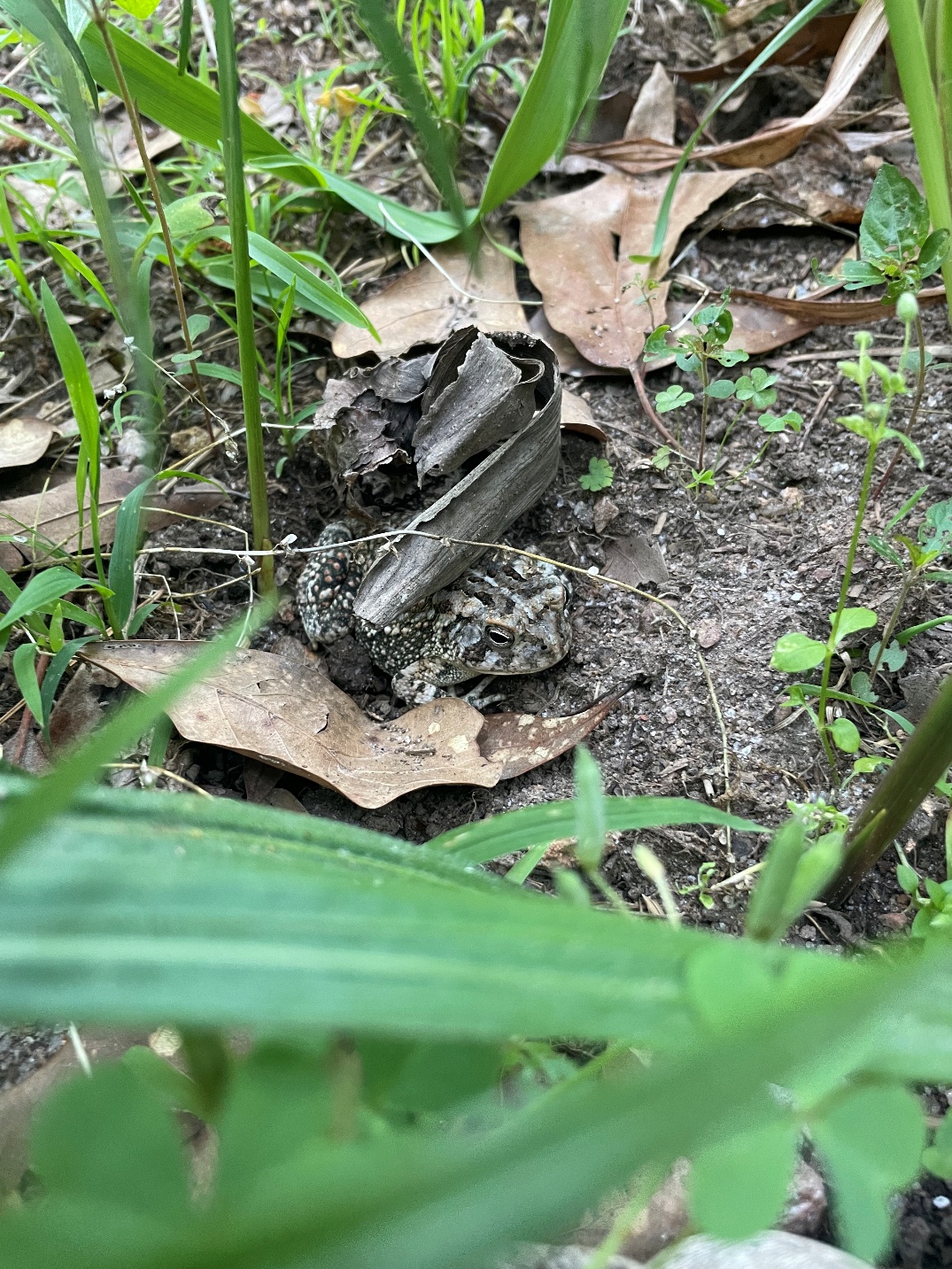
Toad (Anaxyrus spp.) under cover
Mallory Maher, ©2026, Clemson Extension
How Seasonal Wildlife Gardening Supports Wildlife Habitat
There is a growing desire among homeowners and small landowners to make yards more wildlife-friendly.
However, maintaining a yard to benefit wildlife may require a slightly different maintenance schedule from that of an average garden.
In wildlife gardening, the yard should be viewed as a habitat that may change with the seasons while still meeting animals’ needs throughout the year.
All wildlife requires four elements to survive: food, shelter (cover), water, and space to reproduce and raise young.
An animal’s basic needs may change throughout different life stages, so it is essential to consider these changes when managing backyard habitat.
For example, attracting butterflies to a garden requires not only nectar-producing plants for adults, but also larval host plants for their young (i.e., caterpillars).
In general, the greater the diversity of habitat present on a landscape, the greater the diversity of wildlife it will attract.
Wildlife Habitat Needs in Seasonal Wildlife Gardening
Food for Wildlife in Seasonal Gardens
When considering providing food for wildlife, it is best to have a year-round food supply to meet the diverse needs of various species.
Berries, such as blackberries or hollies, nuts like hickory, pecans, and acorns, as well as buds, nectar, and seeds, all benefit wildlife.
Shelter and Cover for Wildlife in Gardens
Shelter/Cover provides wildlife with protection from predators and the elements, a safe place to raise young, and a secure resting area.
Types of shelter include evergreen shrubs or trees, cavities, holes, or even artificial nest boxes.
Water Sources for Wildlife in the Garden
Wildlife obtain water through their diet and/or through open water sources such as ponds, lakes, and streams.
Even raindrops on leaves may be used.
Space Requirements for Wildlife Habitat
Wildlife need a space that allows them to reproduce, raise young, and find food to thrive.
Overcrowding can lead to increased stress levels and conflict between animals.
Why Native Plants Matter in Seasonal Wildlife Gardening
Plant Natives to Benefit Wildlife
To support wildlife successfully, it is best to plant natives.
While some non-native plants may benefit wildlife, others can be invasive and cause long-term damage.
An invasive species is a plant or animal that is non-native to the area under consideration and that causes or is likely to cause economic or environmental harm.
Invasive species outcompete native species due to their aggressive nature and their ability to adapt to disturbance, among other advantages.
They also tend to be closely associated with humans, which is why invasive species have such an easy time adapting to urban areas.
Unfortunately, many invasive plants are attractive to wildlife but may not be the best choice for them due to poor nutritional value, or by limiting native foraging options for wildlife.
If there are invasive plants in the yard, make every effort to remove them.
The South Carolina Invasive Pest Plant Council or local Extension Office can assist with invasive species removal recommendations.
It is also important to note that not all non-native plants are invasive; some can be safely planted in the yard without causing harm.
However, it is best to research any plants selected for introduction into the landscape.
Native plants refer to plants that have evolved naturally in a region without human intervention.
Native plants have developed and adapted to local soil and climate conditions.
Benefits of Native Plants for Wildlife
- Naturally more disease-resistant
- Drought-resistant
- Require less maintenance
- Require fewer fertilizers or pesticides.
Most importantly, when it comes to benefiting wildlife, native plants and wildlife have evolved side-by-side.
The wildlife that is native to a particular area is familiar with the native species and the food or shelter they may provide.
For example, some species of wildlife even migrate at times based on when a plant blooms or produces fruit.
Native plants are preferred to benefit wildlife, but regardless of whether the landscape contains native or non-invasive, non-native plants, following the seasonal maintenance calendar outlined below can help ensure that the yard is maintained in a way that allows wildlife to thrive.
Spring Wildlife Gardening Maintenance (March-May)
How to Prepare the Garden for Wildlife in Spring
Spring can be an excellent time to add new plants to the garden when the weather is cool to avoid transplant shock.
When adding new plants to garden spaces, take time to observe site conditions.
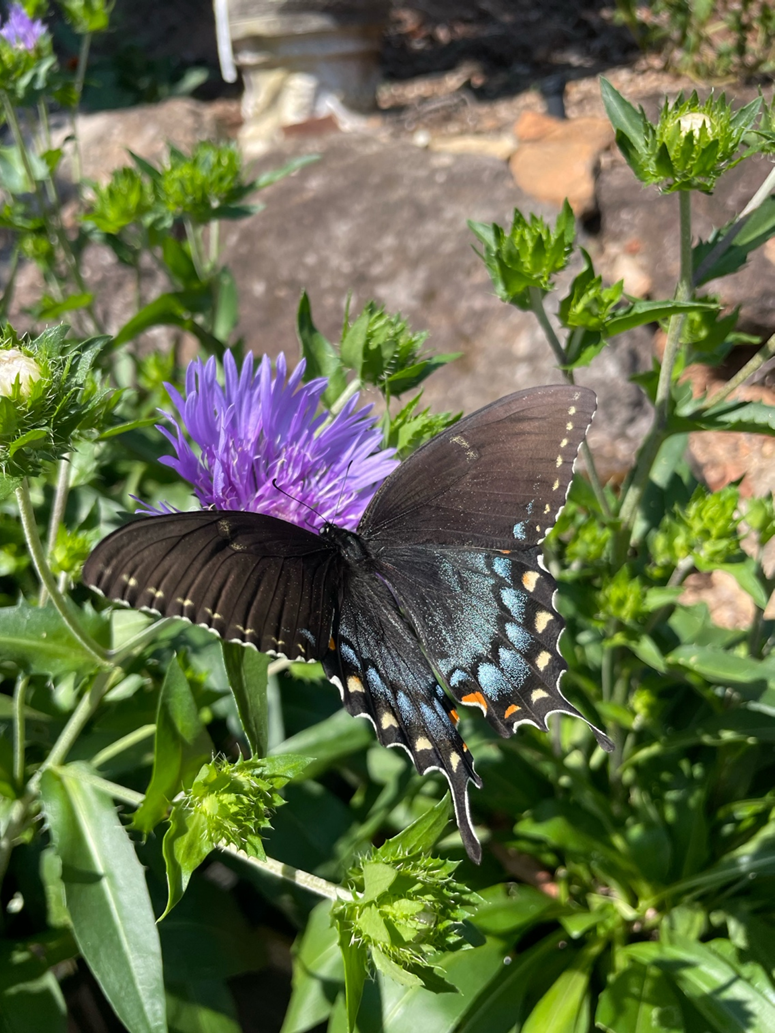
Eastern Tiger swallowtail butterfly (Papilio glaucus) visiting Stokes aster (Stokesia laevis).
Mallory Maher, ©2026, Clemson Extension
Sunlight Conditions for Wildlife Gardens
Note how many hours of direct sun the garden receives to determine whether conditions are full sun (at least 6 hours), part-sun (4-6 hours), or shade (less than 4 hours).
Noting whether the space receives morning or afternoon sun can be an important observation, as some plants, such as oak leaf hydrangea (Hydrangea quercifolia), are sensitive to afternoon sun.
Soil Moisture and Texture for Wildlife Gardening
Determine soil moisture level (dry, moist, or wet) and texture (sandy, loamy, or clay).
Soil Testing for Wildlife Gardens
Another way to understand soil conditions is to submit a soil sample to the local Cooperative Extension office.
Following recommendations based on soil sample results can help avoid accidental over-fertilization, which can negatively affect downstream waterways.
Many native plants thrive without fertilizer, but in urban settings where soil is often compacted, low in organic matter, or made up of fill dirt from construction, adding fertilizer and compost can help prepare the garden for successful planting.
Another important soil characteristic is acidity (pH). Correcting the soil pH prior to fertilizing is essential. If pH is too high or too low, nutrients may not be available to plants.
How to Choose Plants for Wildlife Gardening
Once soil conditions have been assessed and prepared, it’s time to start researching the best plant options for the space.
Choosing the right plant for the right place will support a successful growing season.
When learning about new plants, note their soil moisture requirements, light requirements, and soil pH tolerances to ensure they match site conditions.
Utilize search engines to find recommendations for the location and conditions:
- South Carolina Native Plant Society Plant Directory, in partnership with Clemson Extension
- Lady Bird Johnson Wildlife Center Plant Database
- North Carolina Extension Gardener Plant Toolbox
- Pollinator Partnership https://www.pollinator.org/guides
The South Carolina Native Plant Society also has an interactive nursery map that provides information on nurseries in the area.
Local Extension agents and native plant nursery staff can be a source of knowledge to help when selecting plants.
Be sure to choose nursery plants that appear healthy.
How to Increase Plant Diversity for Wildlife
Add various colors and bloom seasons to attract and support a diverse range of pollinators in the garden.
Consider a mixture of native grasses, trees, shrubs, annuals, perennials, and evergreen and deciduous options to provide year-round interest and structure.
How to Plant for Wildlife in Spring
When installing a new plant, dig a hole the same depth as the pot and slightly wider, then gently pull the plant out of the nursery pot.
If there are excessive roots, they may need to be lightly teased to encourage new outward growth.
Otherwise, place them into the excavated hole.
Some plants, such as wild blue indigo (Baptisia sp.) and rattlesnake master (Eryngium yuccifolium), have sensitive roots and should be planted with extra care.
How to Water Plants in Wildlife Gardens
Irrigate newly planted plants every other day throughout the spring, and reduce to once or twice a week throughout the summer.
If selected plants match existing soil conditions, they should be independent by the fall and will not need supplemental irrigation unless there is a prolonged drought.
Utilizing captured rainwater can be an excellent water source for irrigating new plants and help reduce stormwater runoff.
When adding new pathways between garden beds, consider selecting pervious materials such as gravel, pavers, or mowed turfgrass for infiltration.
How to Prune Plants for Wildlife Habitat
Herbaceous Perennial and Grasses
In the spring, delay cutting back perennial plants until nighttime temperatures consistently reach 50°F to avoid disturbing overwintering insects.
Remove the previous year’s dormant growth from deciduous grasses and perennials in early spring by cutting stems to approximately 18 inches above the ground.
Hollow plant stems can serve as nesting sites for cavity-nesting bees.
Consider also leaving small cut stalks on the ground to contribute to natural mulch and habitat.
Larger pruning materials can be repurposed into brush piles or arranged in a designated “bug snug” to decompose naturally, providing shelter for insects and small animals.
Shrubs
If shrub pruning is planned, be sure to do so prior to songbird nesting season, which typically begins mid-March.
Trees and Snags for Wildlife
Standing dead trees, or “snags,” are often removed in spring when no new growth appears.
However, consider leaving them standing or trimming to a safe height if safety permits.
Snags offer vital habitat for various species, especially cavity-nesting birds such as woodpeckers, owls, and bluebirds.
Skinks, snakes, tree frogs, and insects also find refuge in snags.
Similarly, fallen logs serve as essential resources for insects, can provide cover for various species of amphibians and reptiles, and contribute to a healthy, biodiverse garden ecosystem.
How to Mulch Plants for Wildlife-Friendly Gardens
Applying mulch to garden beds offers multiple benefits, including suppressing weeds, conserving soil moisture, and enriching the soil as the mulch breaks down.
It is best to leave the leaves in place in the fall to serve as natural mulch.
If trees are not present, apply mulch in the spring.
Aim to maintain a 2–4 inch layer of mulch in planting areas until plants have filled the bed.
Recommended mulch materials include compost, shredded wood mulch, pine straw, and pine bark.
Be sure to keep mulch a few inches away from plant stems to maintain airflow and prevent rot at the base of plants.
Leaving a few small areas of bare ground can benefit ground-nesting native bees.
Avoid using plastic mulch or landscape fabric, as these materials can restrict soil-dwelling wildlife and contribute to microplastic pollution.
Thoughtful mulching supports plant health while promoting a more sustainable and biodiverse garden environment.
Summer Wildlife Gardening Maintenance (July-August)
How to Care for Wildlife Gardens in Summer
Summer is a tough time of year for both plants and wildlife due to high temperatures and lack of rainfall.
But it can also be a great time to view wildlife, while they are utilizing backyard habitat.
Monitor & Inspect Plants for Wildlife Health
In the summer, monitor newly planted native species to ensure successful establishment.
Regularly inspect plants for signs of disease, and consult a local Extension agent for guidance on diagnosis and treatment.
Avoid using pesticides on native plants, as many are host plants for native insects and pollinators.
When addressing pests, proper identification is key.
If necessary, remove pests manually.
To learn which native plant species function as host plants in the region, visit the National Wildlife Federation’s Native Plant Finder.
Be proactive in identifying and removing invasive plant species and unwanted weeds by hand or with a garden tool.
Provide Water for Wildlife During Drought
During periods of prolonged drought, provide supplemental water as needed.
Installing a butterfly puddle dish is an easy and cost-effective way to introduce water to the landscape.
Wildlife often obtain water through their diet, so plants like pokeweed (Phytolacca americana), blackberries (Rubus spp.), blueberries (Vaccinium spp.), and other fleshy fruits take on additional importance during dry periods.
Additional Summer Plant Maintenance for Wildlife
Summertime maintenance can also include cutting back spent flower heads to promote repeat blooming and prolong flowering throughout the season.
After garden maintenance is complete, the resulting blooms, foliage, and wildlife activity can be enjoyed.
Observing and identifying the birds, bees, butterflies, and caterpillars visiting the garden can be a fun and educational summer pastime.
Fall Wildlife Gardening Maintenance (September – November)
Autumn is an ideal time to begin thinking proactively about how the garden can support local wildlife through the winter months.
As the season transitions, temperatures drop, daylight hours shorten, and many plants – including perennial wildflowers and grasses – enter dormancy or die back.
These natural changes signal to wildlife that it is time to begin preparing for the colder months ahead, often leading to increased activity as animals seek out reliable sources of food, water, shelter, and space.
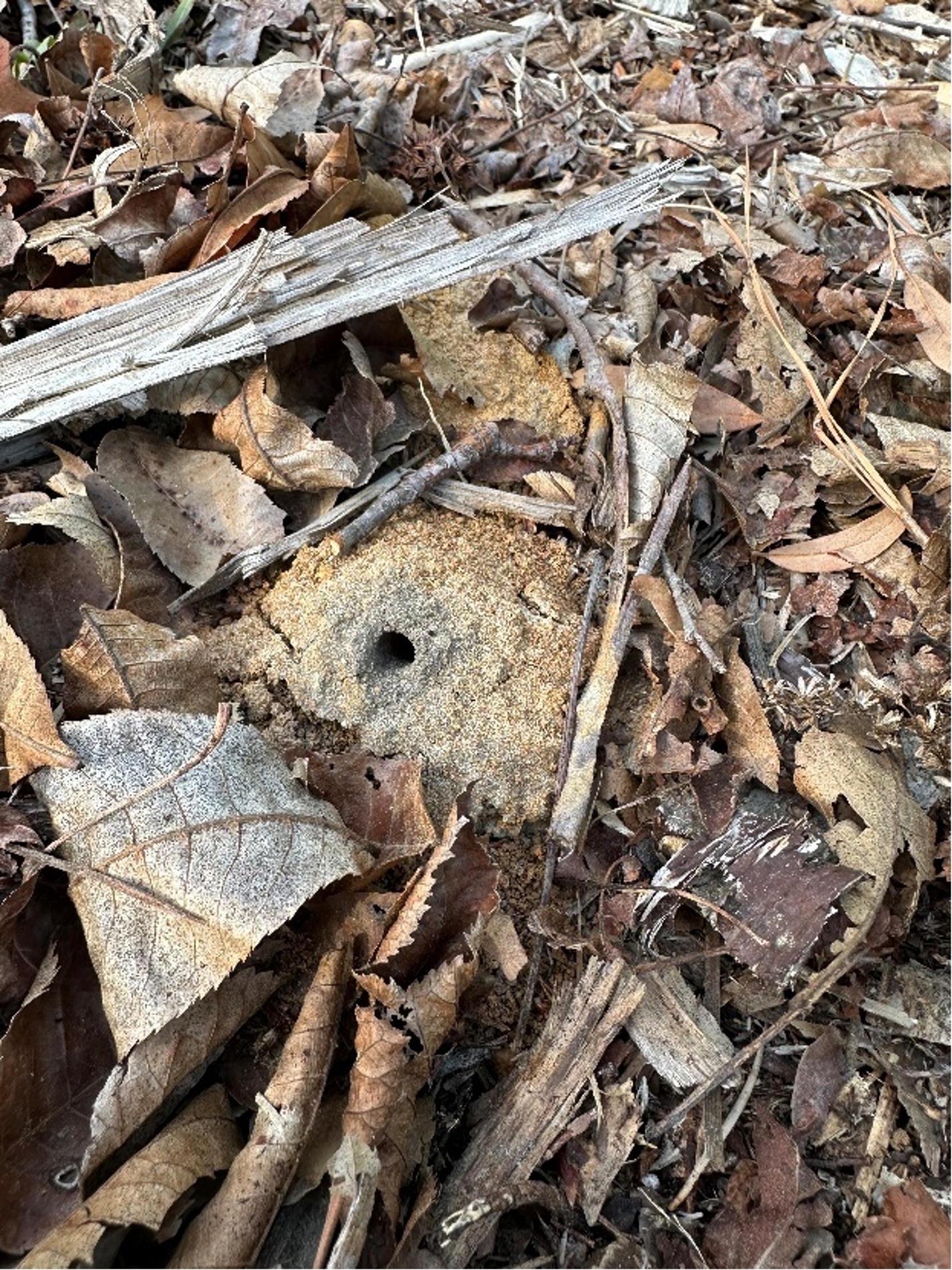
Ground nesting bee site.
Samantha Porzelt, ©2025, Clemson Extension
Why Leave the Leaves and Seedheads for Wildlife
As perennial plants begin to go dormant and die back in the fall, the resulting brown foliage, dried stems, and fallen leaves may appear untidy or unkempt in a cultivated landscape.
However, these natural materials are essential components of a healthy wildlife habitat. To support native species effectively, it is important to take cues from the ecosystems they depend on – places that are unmanaged, diverse, and not routinely “cleaned up.”
Leaf litter, dried seedheads, and decaying plant matter provide critical shelter and overwintering sites for a variety of wildlife, including insects, reptiles, amphibians and small mammals.
Many native solitary bees nest in bare soil or in cavities of dead wood, while fallen leaves offer insulation and protection for overwintering insects such as butterflies and moths in larval or pupal stages. Hollow plant stems and grasses serve as a refuge for young insects developing through the winter.
For example, the Carolina mantis (Stagmomantis Carolina), a native species to South Carolina, lays its egg cases on dried plant stems and woody debris in late summer and fall. These egg cases overwinter outdoors, relying on the surrounding plant material for camouflage and temperature regulation until they hatch in the spring.
By leaving seedheads and leaf litter in place, gardeners can help conserve species like the Carolina mantis and many others that depend on these natural structures for survival.
How to Create Brush Piles and Wildlife Shelters
If tidying is desired, carefully creating brush piles and building shelters with debris can create habitat for wildlife in the fall.
It is okay to rake the leaves to keep pathways clear, but consider leaving them on the edges of the yard or even moving them near the compost station.
Creating “insect hotels’ or “log pile lodges” with natural materials such as cut-up limbs, leaf litter, and trimmings can be a great way to add shelter for insects and to tidy up the space in the yard. Insect houses can also be purchased and added to the garden.
How to Plant Fall-Blooming Native Plants for Wildlife
Traditionally, spring is considered the ideal season for planting, but early fall also presents excellent conditions for adding new plants to the garden.
Cooler temperatures, increased rainfall, and residual warmth in the soil from summer help minimize transplant shock and support healthy establishment. During the fall, plants naturally shift their energy toward root development, which is essential for long-term growth and resilience.
If planting evergreen trees or shrubs, aim to do so before mid-October to allow sufficient time for root establishment, as these plants are more vulnerable to moisture loss during unseasonably warm fall periods.
A great example of a plant that blooms in the fall and provides ample benefits for wildlife is the American Beauty Berry (Callicarpa americana). This bush blooms light purple/lavender flowers and produces vibrant purple berries in the fall. The berries provide fruit and seeds for birds as well as nectar/pollen sources for pollinating insects.
Species like winterberry, goldenrod, and asters are also great additions to those late-fall plantings.
How to Maintain Water Sources for Wildlife in Fall
As winter approaches and the summer heat moderates, continued maintenance of water sources is crucial in supporting wildlife.
Simple solutions, such as bird baths, shallow dishes, and even shallow, mosquito-free puddles, can make a significant difference in backyard habitat.
If a pond is present on the property, be sure to inspect the water body regularly and maintain its health by monitoring excessive aquatic plant growth, removing invasive plants, and testing the water as needed.
Those interested in learning more about pond management can explore Clemson Extension’s Master Pond Manager course.
Winter Wildlife Gardening Maintenance (December – February)
In the winter, maintenance needs tend to be on the lighter side, but there are still things that can be done to maintain the backyard habitat.
Many bird species migrate during the winter months. Even though they may not be in sight, they can still be supported by providing food sources, habitat, shelter, and water.
How to Plan the Wildlife Garden in Winter
Winter is an excellent time to take a step back and assess the garden. The National Wildlife Federation has a Certified Wildlife Habitat Checklist with steps that can be followed to enhance the wildlife habitat in the garden.
Consider making a list of the native plant species to add in the spring or fall, reviewing garden design and layout, and evaluating the vertical and horizontal diversity that is present.
Consider whether additional layering spaces are needed to increase potential habitat.
Different wildlife species live in different vertical and horizontal layers naturally – for those looking to increase species diversity, this may be an effective place to start.
How to Prune and Protect Plants for Wildlife
Winter pruning and care are essential for maintaining a backyard garden that supports wildlife in South Carolina.
Focus on pruning only dead or damaged branches to prevent disease and promote healthy regrowth, leaving most perennials and seed-bearing plants intact to serve as food and shelter for birds and overwintering insects.
Adding mulch around the base of delicate or young plants helps insulate roots against harsh temperatures, preserving their vitality through the season.
This careful maintenance not only protects plants but also ensures that the garden remains a viable habitat as birds return, pollinators emerge, and other wildlife come out of hibernation in the spring.
Meadow Mowing for Wildlife Habitat Management
For those managing a large-scale backyard meadow with wildlife in mind, late winter is an appropriate time for limited mowing to help maintain the area.
- Cut vegetation to a height of 12 to 16 inches to preserve overwintering habitat for insects and small mammals while still reducing excess thatch.
- Avoid mowing more than one-third of the site in any given year to allow native plant species to reseed and repopulate from unmown areas, ensuring plant diversity and ecosystem resilience. It also reduces disruption to wildlife such as ground-nesting bees, amphibians, and overwintering butterflies, which may be taking refuge just above or slightly below the soil surface.
Maintaining some undisturbed sections provides critical shelter and continuity of habitat for these species throughout the colder months.
If space allows, consider incorporating strip mowing and random pattern mowing on the property. This type of practice would be utilized in properties with several acres, as opposed to smaller backyards.
Strip mowing creates variable or fixed-width strips that can be mowed rotationally at least every 3 to 5 years.
Keeping this in mind, other management practices, such as prescribed burning or light disking, may need to be utilized to reduce thatch build-up if this rotation is followed.
Disking or burning works the thatch into the soil and promotes the incorporation of organic materials, and may also promote seed scarification and germination.
Random pattern mowing involves randomly cutting areas to create an irregular pattern across the field. This type of mowing can increase movement corridors for wildlife and islands of seclusion for hiding and places to raise young.
Continuing the Wildlife Gardening Journey
Once a consistent garden routine has been established, consider deepening knowledge of native plants and exploring new species to incorporate into the landscape.
Expanding knowledge of native plants strengthens the garden’s role in supporting local ecosystems. South Carolina offers a variety of native plant education resources and wildlife workshops.
Remember that creating habitat takes time, and every backyard is different. When maintaining the backyard habitat, it is essential to reevaluate practices annually to ensure that the desired effect on wildlife is being achieved and that backyard goals are being met. Following these maintenance guidelines should help keep backyard habitat on track to thrive.
Additional Resources
- Clemson’s Wildlife Habitat Backyard Short Course
- Certify Your Fall Habitat through National Wildlife Federation
- South Carolina Native Plant Certificate Studies
- Clemson Extension workshops
- Carolina Yards
- Master Rain Gardener
- Clemson Extension Master Gardener
- South Carolina Native Plant Society lectures, field trips, symposiums, and plant sales
- SCNPS Winter Gardening for Wildlife
Originally published 4/26