Quick Guide to Cicadas
Scientific Order: Hemiptera, Suborder Auchenorrhyncha
Common Names: Annual (Dog-Day) Cicada, Periodical Cicada
Size: 1–2 inches long
Emergence Cycles: Annual (1–3 years underground) | Periodical (13 or 17 years underground)
Hosts: Deciduous trees (oak, hickory, pear) and shrubs
Geographic Range: Southeastern and Eastern United States, including South Carolina
Notable Feature: Shrill mating call produced by males
Pest Status: Usually harmless; minor twig dieback (flagging) possible
Frequently Asked Questions
- When Will Cicadas Emerge in South Carolina?
The next periodical cicada emergence, known as Brood XIX, is predicted for 2037. This 13-year brood will appear across several Upstate South Carolina counties.
- Are Cicadas Harmful to Trees or Shrubs?
Cicadas rarely cause long-term damage. Egg-laying may result in minor branch flagging on young trees, but established trees recover naturally.
- Do Cicadas Bite or Sting?
No. Cicadas do not bite, sting, or pose any risk to humans or pets. Their mouthparts are adapted for sap feeding, not biting.
- Why Are Cicadas So Loud?
Male cicadas produce their famous mating calls using a structure called a tymbal—a thin vibrating membrane in their abdomen that acts like a drum.
- What Should I Do to Protect New Plants?
During mass emergences, protect young trees and shrubs with fine mesh netting to prevent cicadas from laying eggs in twigs or stems.
How to Identify and Understand Cicadas
Cicadas are large, plant-feeding insects known for their loud, shrill noise and discarded shells (called exoskeletons) that cling to trees and vegetation. They belong to the suborder Auchenorrhyncha, along with leafhoppers and spittlebugs. Cicadas are found worldwide but occur mainly in the southern and eastern regions of the U.S.
Physical Description of Cicadas
Cicadas are thick-bodied insects, measuring about 1 to 2 inches long. Their large compound eyes come in shades of black and red, though they sometimes emerge with white or blue eyes. Cicadas also have three simple eyes (called ocelli) in the middle of their head. Their wings are large and have thick, prominent veins. Despite their size, cicadas have relatively small antennae.
Annual and Periodical Cicadas
Annual, or dog-day, cicadas are often green or camouflaged in color. These cicadas feed up to five years as nymphs underground, but populations emerge every 1 to 3 years.
Periodical cicadas have a black body and spend 13 or 17 years underground.
Cicada adults die shortly after mating.
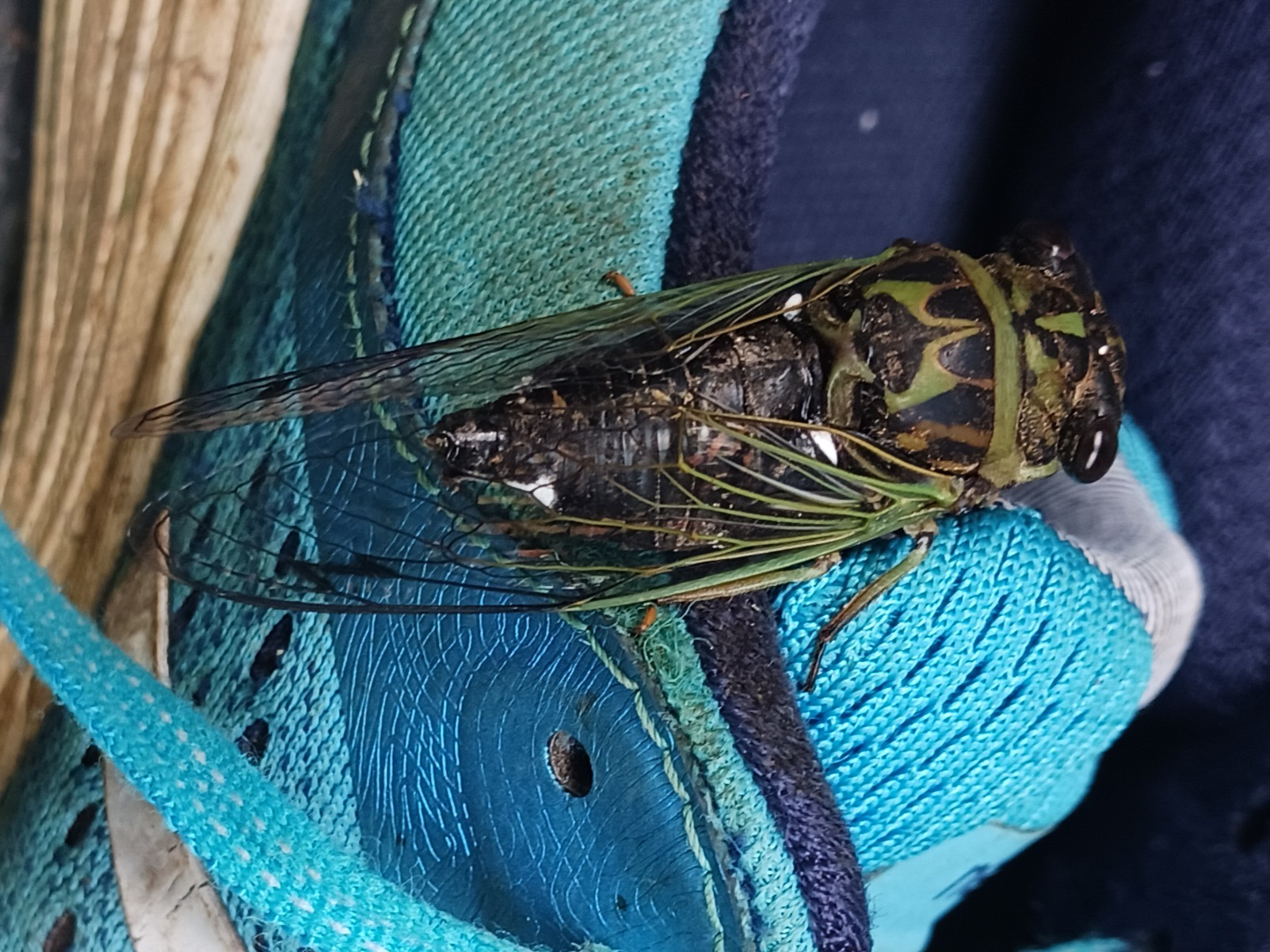
Annual cicadas have large, wide-set black eyes and a camouflage pattern on their bodies.
Ginger E. Long, ©2023 HGIC, Clemson Extension
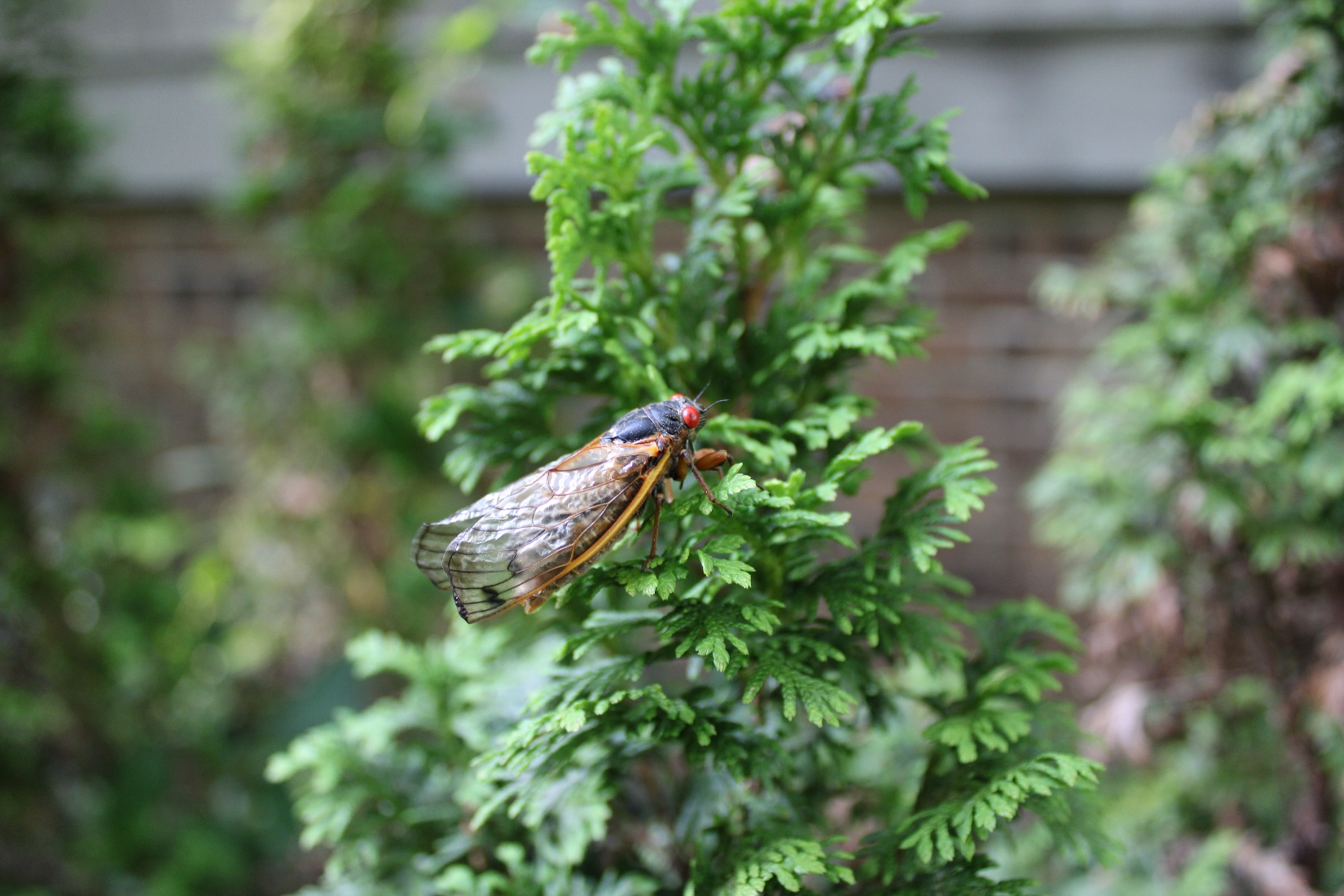
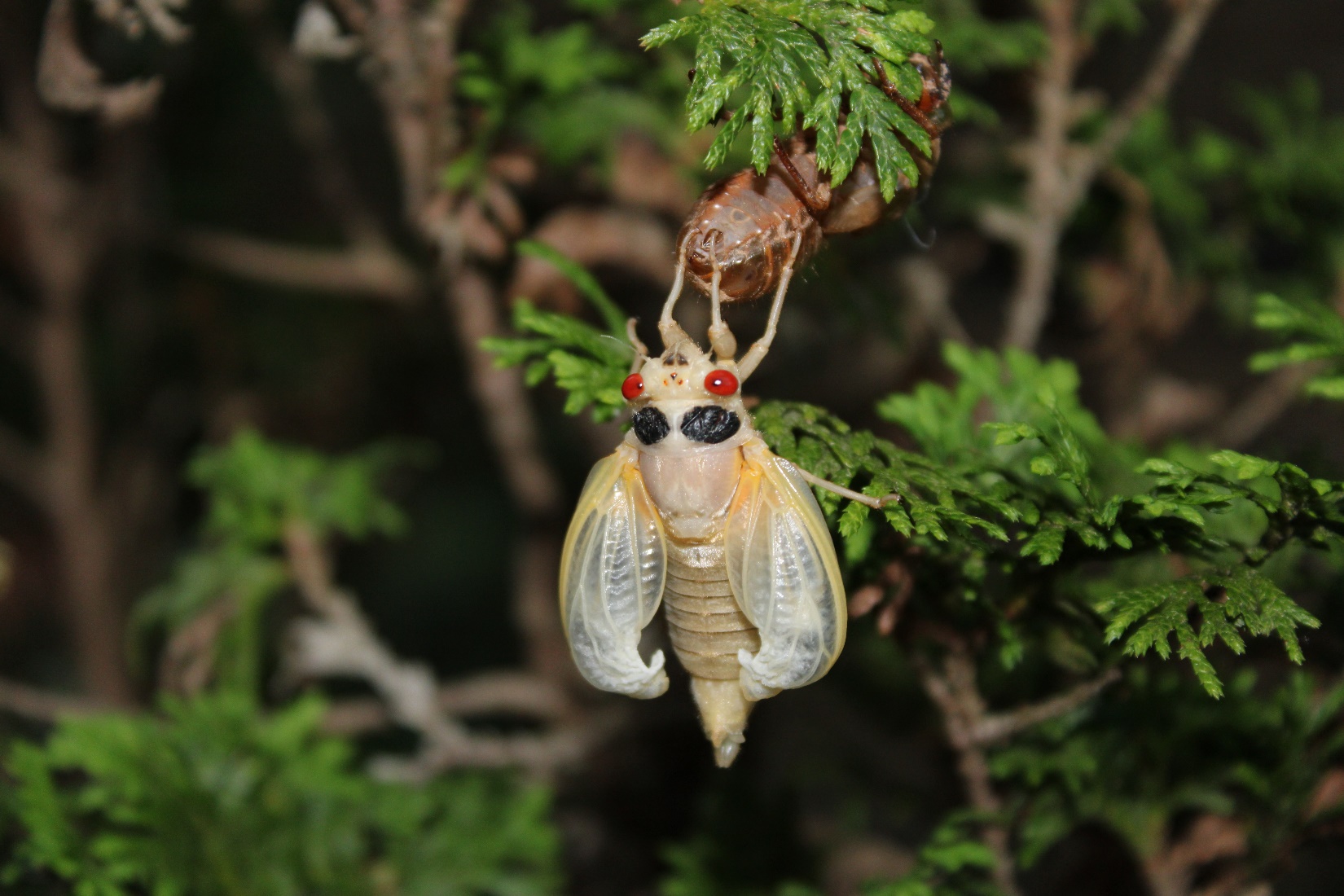
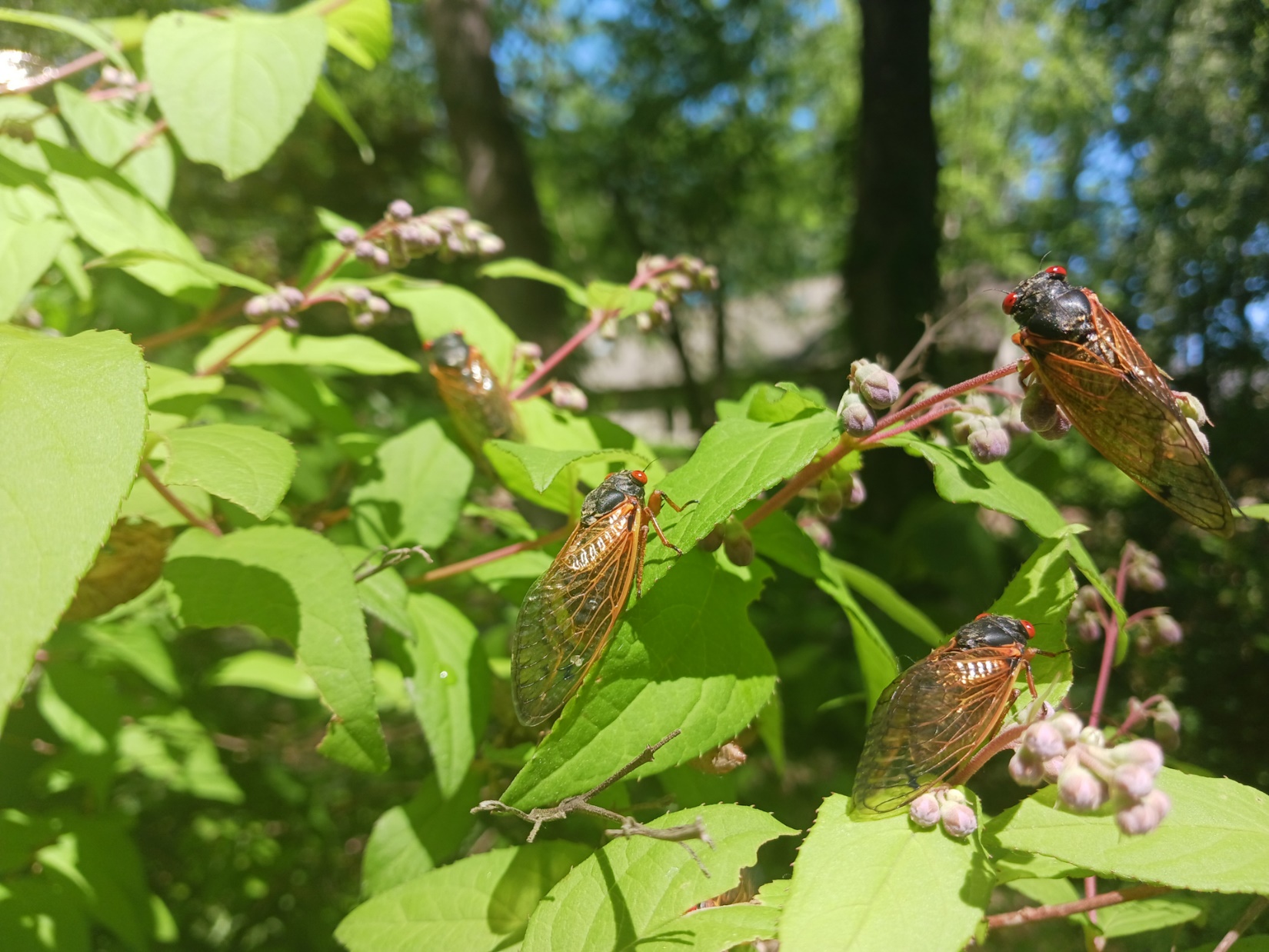
This adult periodical cicada from Brood XIX emerged in 2024. Note the red eyes, black body, and orange-veined translucent wings.
Ginger E. Long, ©2024 HGIC, Clemson Extension
Cicada Nymph Stages
Cicadas have an incomplete metamorphosis, meaning eggs hatch into nymphs, which then turn into adults.
Cicada nymphs go through four instars, or life stages, before the adult stage. Cicada nymphs bear some resemblance to adults but, at the same time, look quite different.
They are cream or tan in color and do not have wings; instead, they have six legs, the front two of which are large and used for digging their way through the soil.
Young nymphs appear almost translucent and look a little bit like termites. As they mature, they look more like their adult form but more subdued in color, keeping the nymphal cream hue.
Cicadas undergo incomplete metamorphosis—eggs → nymphs → adults. Nymphs go through four instars and feed underground on tree roots. They are cream to tan in color and lack wings; their front legs are adapted for digging.
- Early instars: Translucent, ant-like appearance
- Later instars: Up to 1 inch long, cream-colored, soil-dwelling
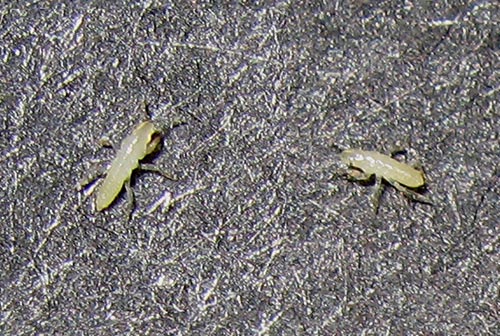
Newly hatched cicada nymphs are translucent or cream-colored and look like ants or termites.
Photo by Roy Troutman, https://www.cicadamania.com/cicadas/cicada-larvae-pictures/.
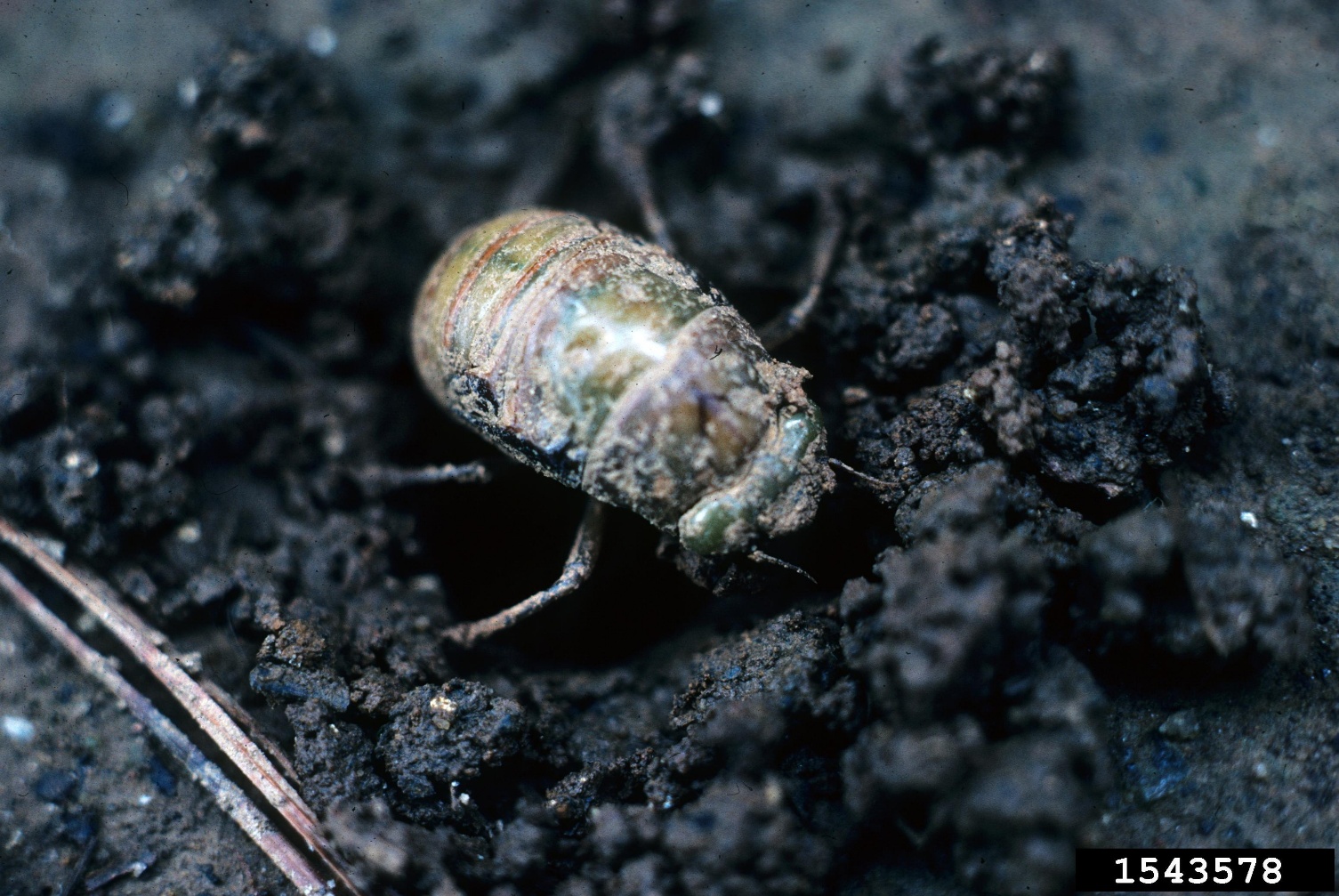
Older cicada nymphs can be over 1 inch long and move through the soil, feeding on plant roots.
Photo by Jim Baker, North Carolina State University, Bugwood.org.
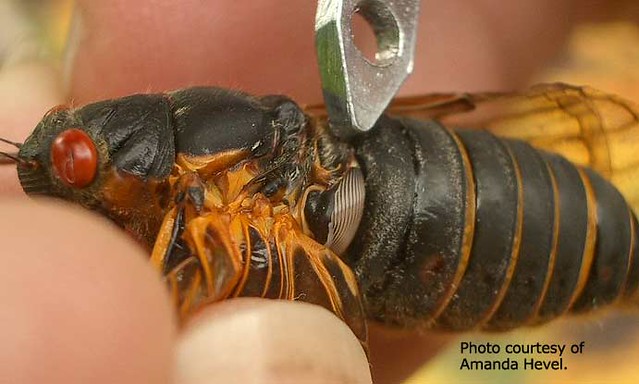
Cicadas have a membrane known as a tymbal, which they use to make their well-known shrill calling sound.
Photo courtesy of Amanda Hevel, https://www.flickr.com/photos/nmnh/2607912292.
Life Cycle of Cicadas
The cicada life cycle starts with the well-known characteristic mating call.
Males call females using a special body part known as a tymbal. By moving tiny muscles in the abdomen, the tymbal, made of a thin membrane, vibrates and creates a shrill-sounding noise to attract females.
After mating, females insert their eggs into small twigs on a tree. Eggs hatch after six to ten weeks and fall to the ground.
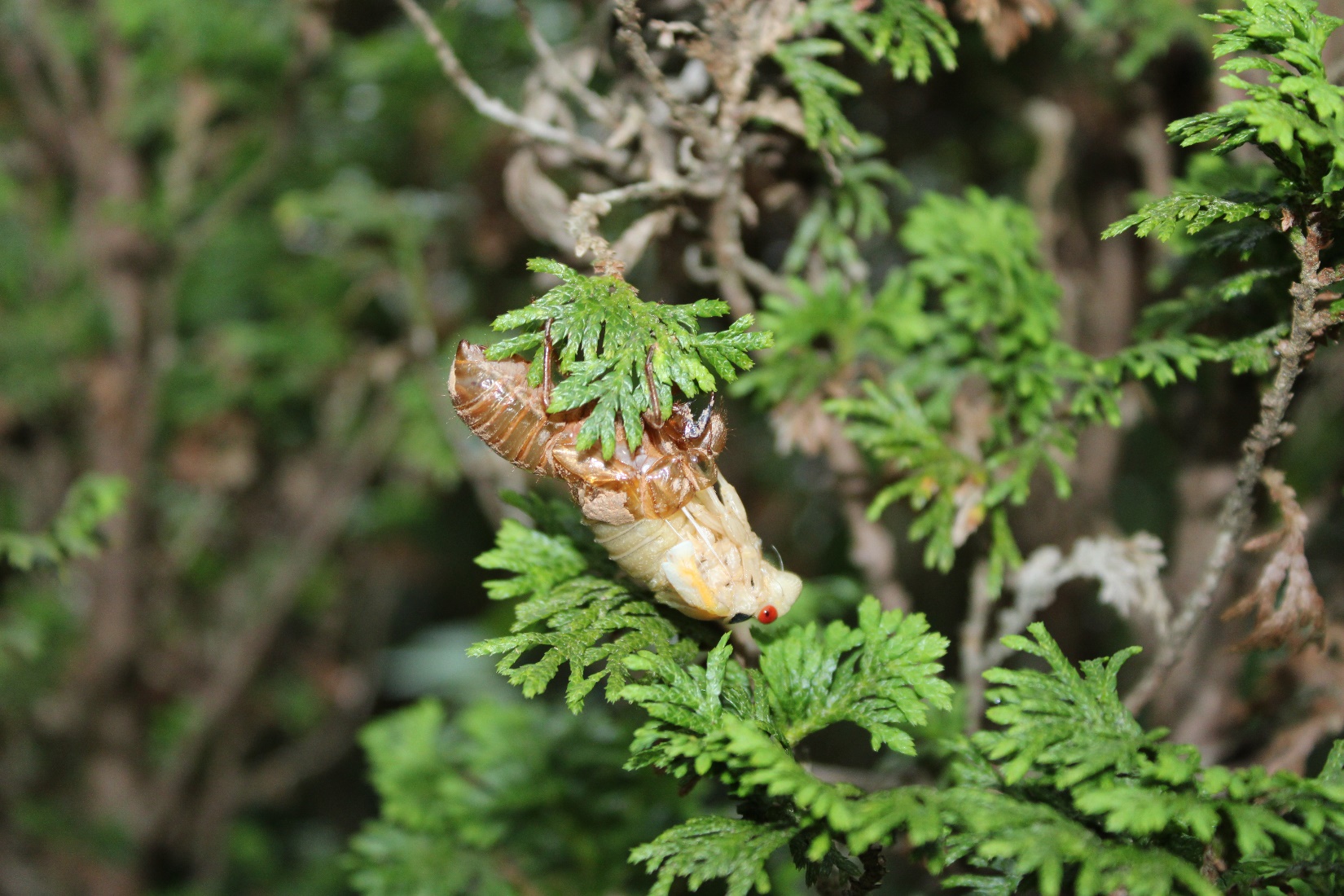
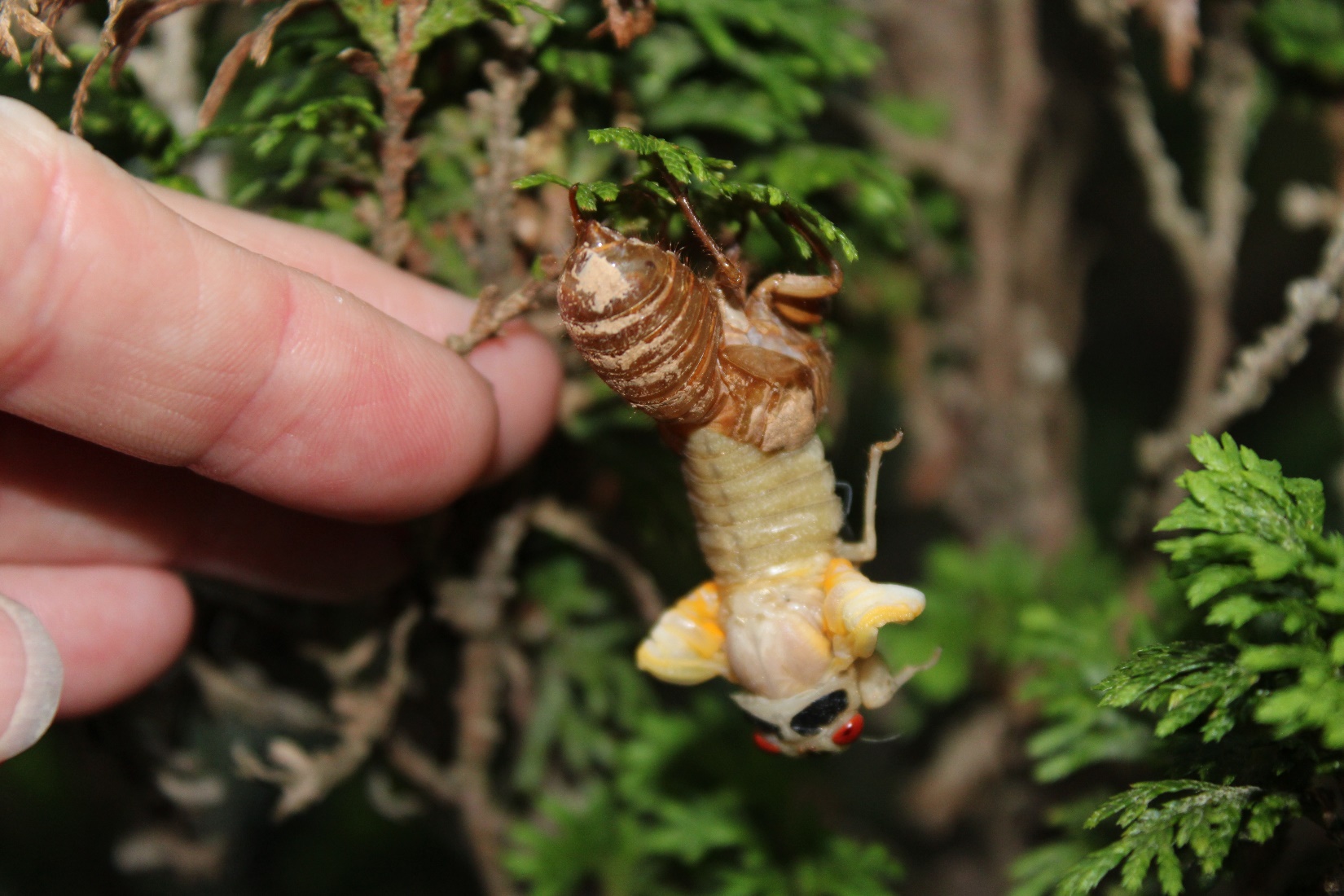
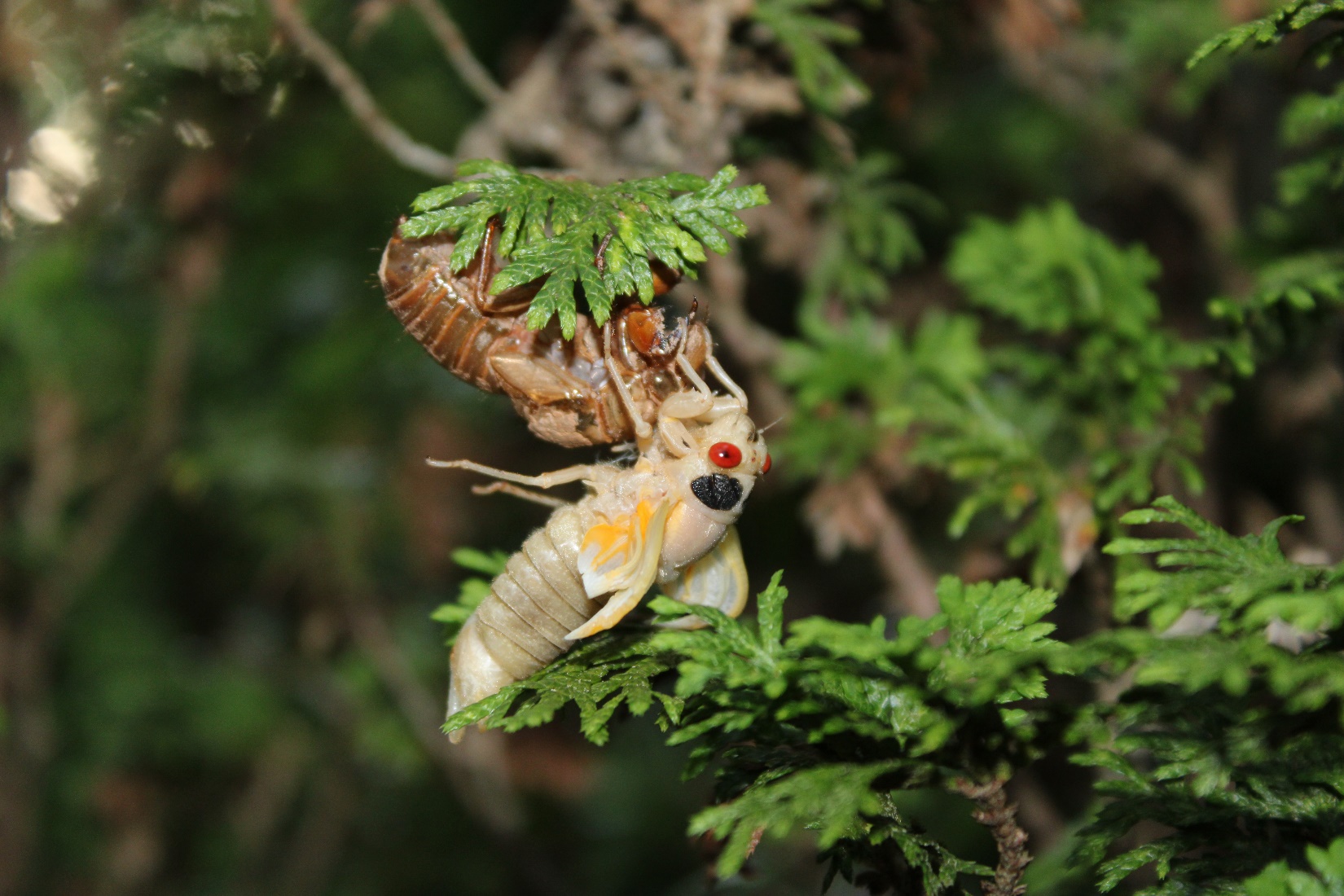
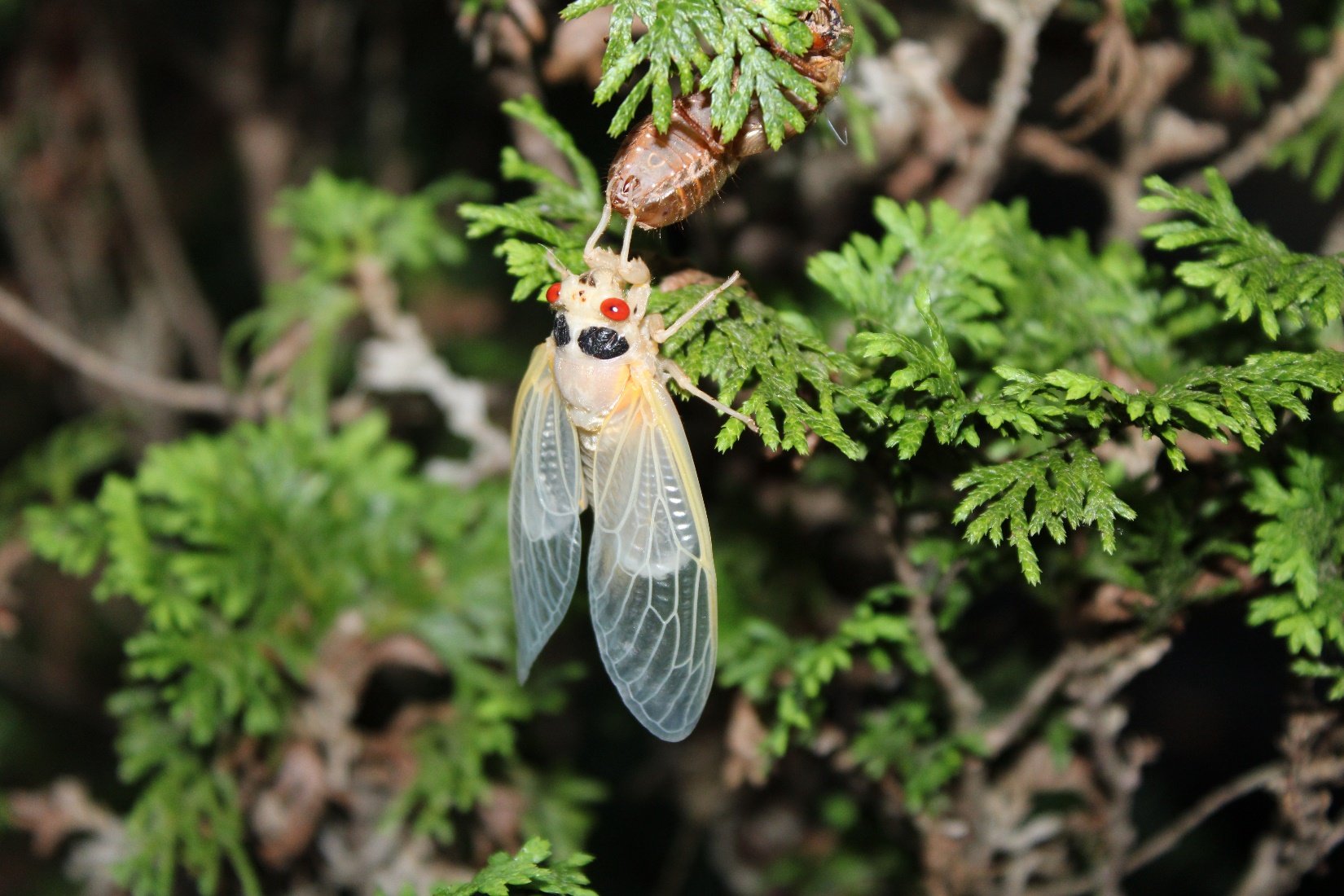
Nymphs burrow into the ground and make an underground network where they feed on fluids in tree roots. When ready, cicada nymphs crawl out of the ground and grab onto a tree or other nearby plant. The back of their exoskeleton splits open, and the winged adult emerges.
Cicada Emergence Cycles in South Carolina
Annual cicadas appear every year, though some cohorts may spend several years underground. Periodical cicadas only emerge every 13 or 17 years.
In South Carolina, the next cohort of periodic cicadas is expected to emerge in 2037. This cohort, known as Brood XIX, is a 13-year group and will appear in several Upstate counties.
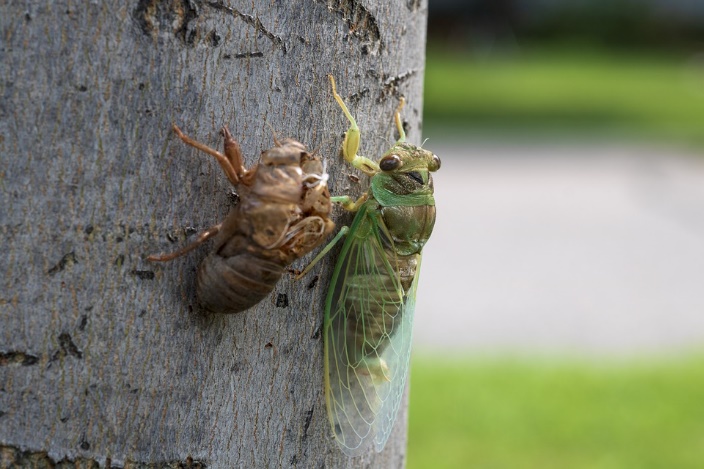
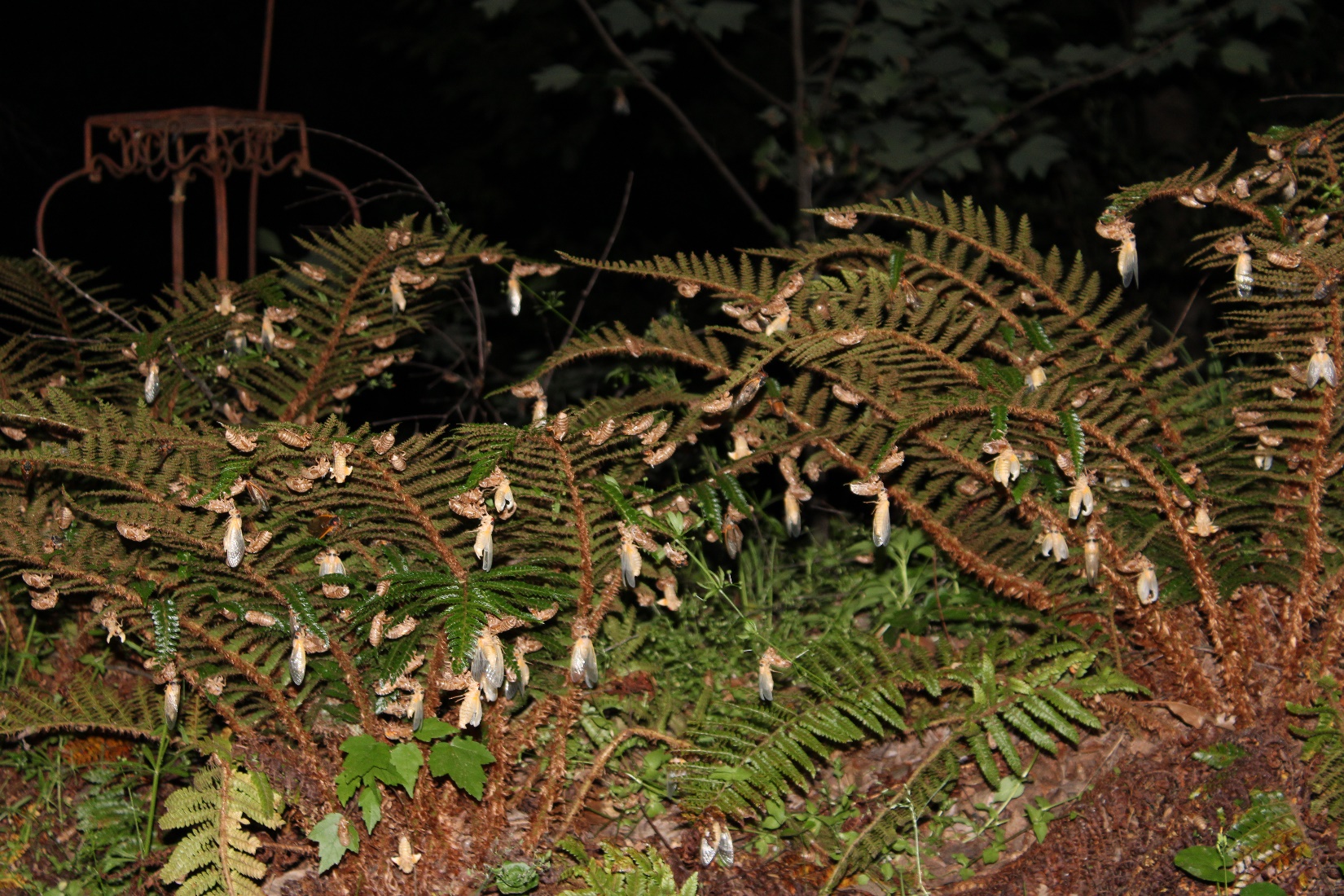
Adult cicadas crawl out of the last larval exoskeleton. These exoskeletons are often found clinging to trees and other vertical objects.
Image courtesy of Bob Doblina, https://pixabay.com/photos/cicada-insect-bug-nature-molt-4242624/.
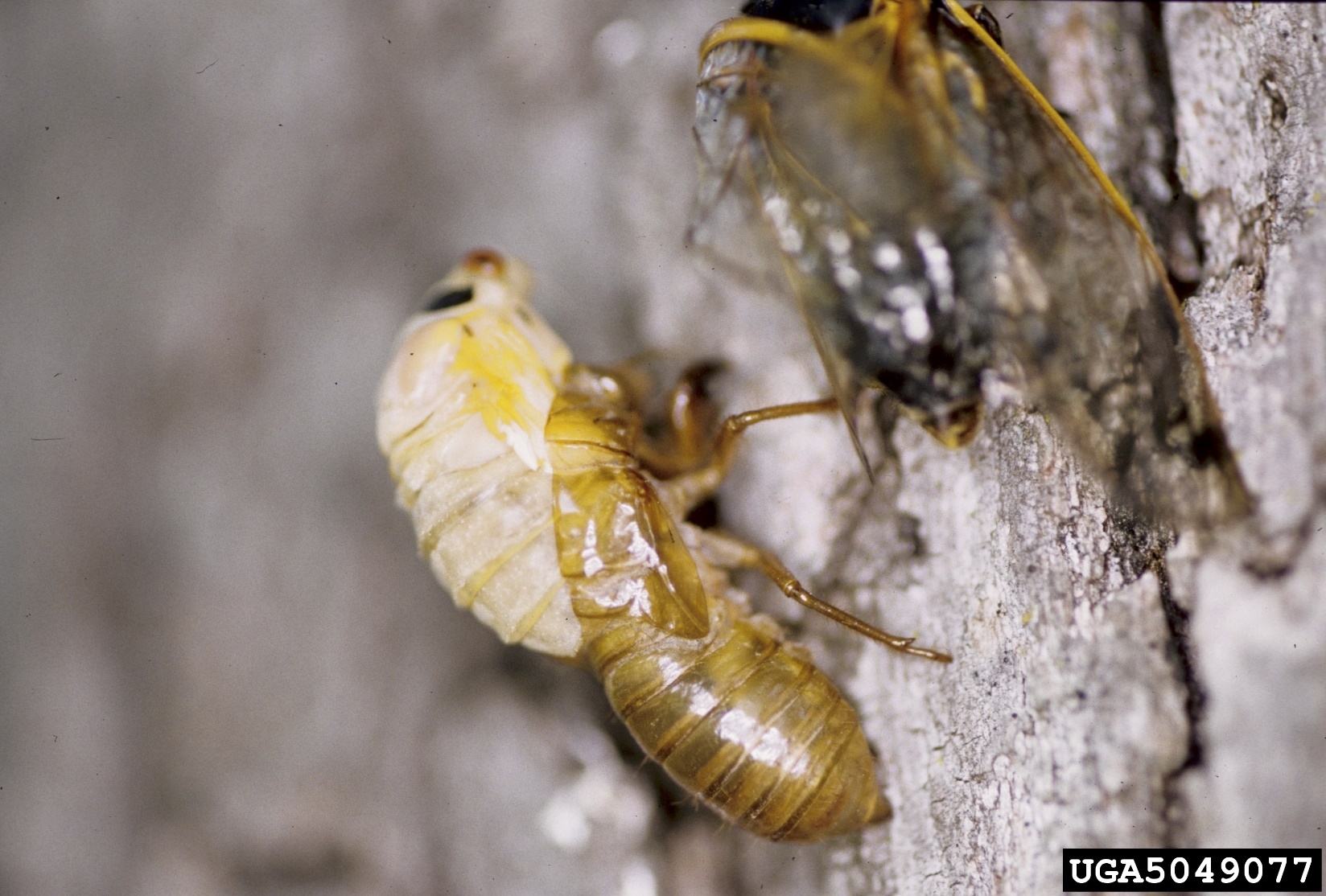
An adult cicada emerges from its exoskeleton after crawling out of the soil onto a tree.
Photo by Joseph O’Brien, USDA Forest Service, Bugwood.org.
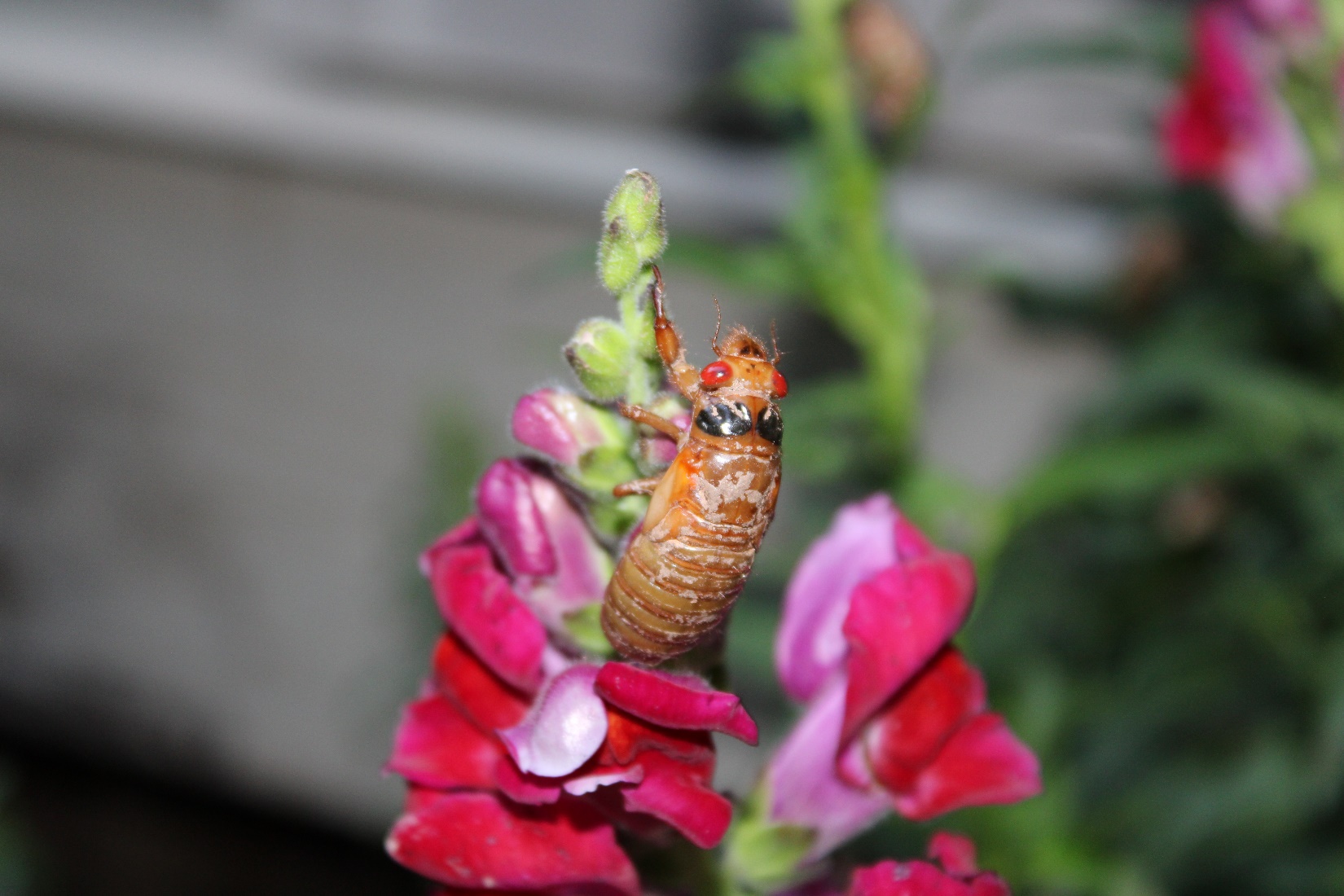
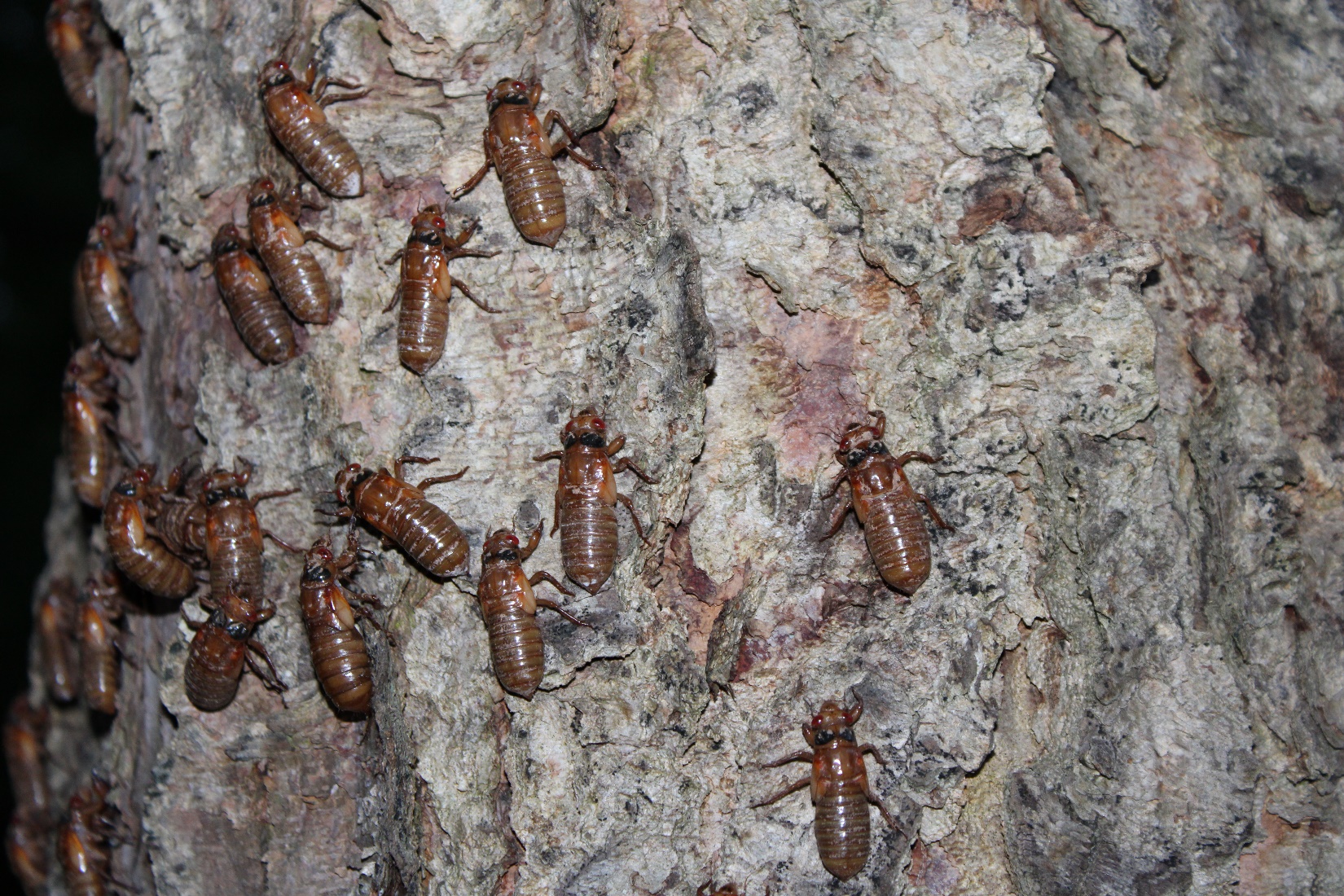
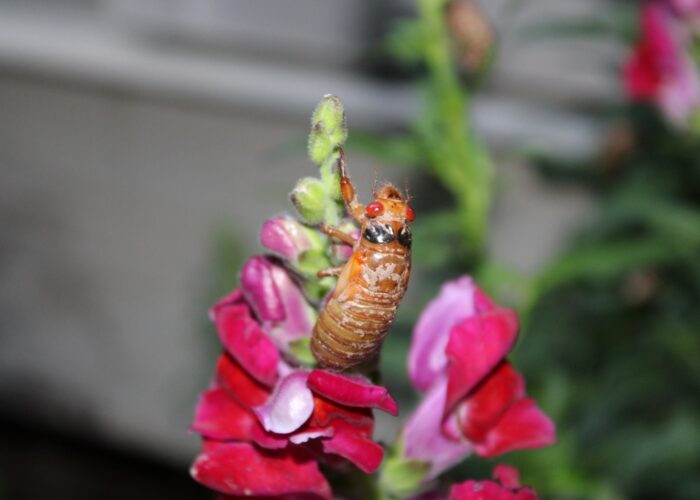 Periodical cicada nymphs from Brood XIX emerge from underground every 13 years. Ginger E. Long, ©2024 HGIC, Clemson Extension
Cicada Hosts and Egg-Laying Behavior
Cicadas use deciduous trees, such as hickory, oak, and pear, and shrubs as hosts.
When choosing a specific host for egg-laying (oviposition), light and the architecture of a host plant’s branches influence their selection.
Plants with longer and broader branches are favored by cicadas looking for a place to lay their eggs.
It is unknown if nymphs have any host preference for feeding.
Ecological Role and Impacts of Cicadas
Ecological Importance
Cicadas, especially periodical species, are an important ecosystem resource.
The mass emergence of cicadas provides a food source for many other animals in the ecosystem, and their dead bodies serve as a significant nutrient addition to plants.
Are Cicadas Harmful to Trees?
Feeding by cicada nymphs is not known to cause significant damage to the host plant.
Adult oviposition results in branch flagging, where the end of the branch dies and breaks off. This type of damage generally will not harm the tree.
However, during the mass emergence of periodical cicada, damage can be severe, and young trees and shrubs may be seriously impacted.
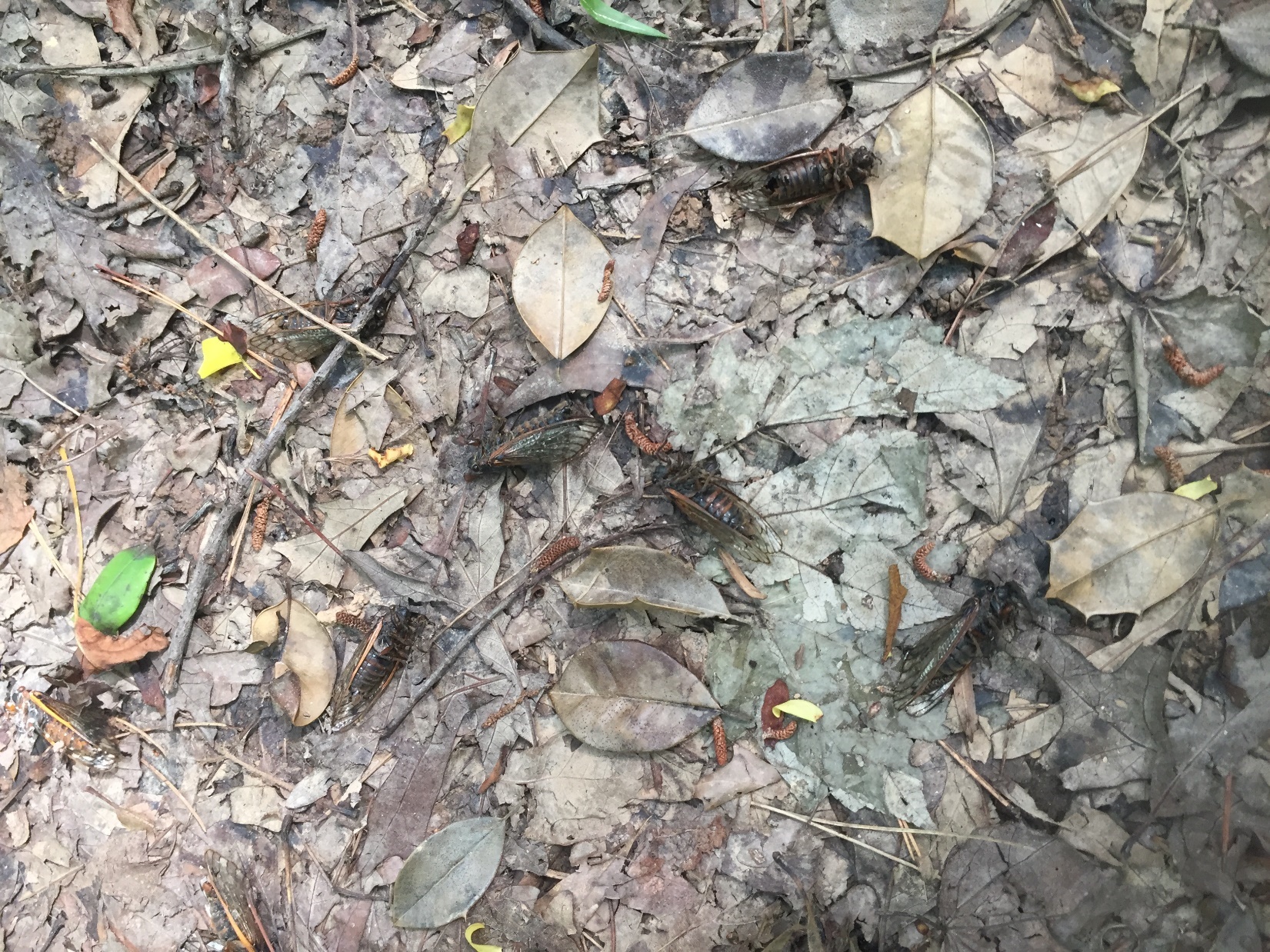
Cicada carcasses add nutrients to the soil.
Photo by David Coyle, Clemson University
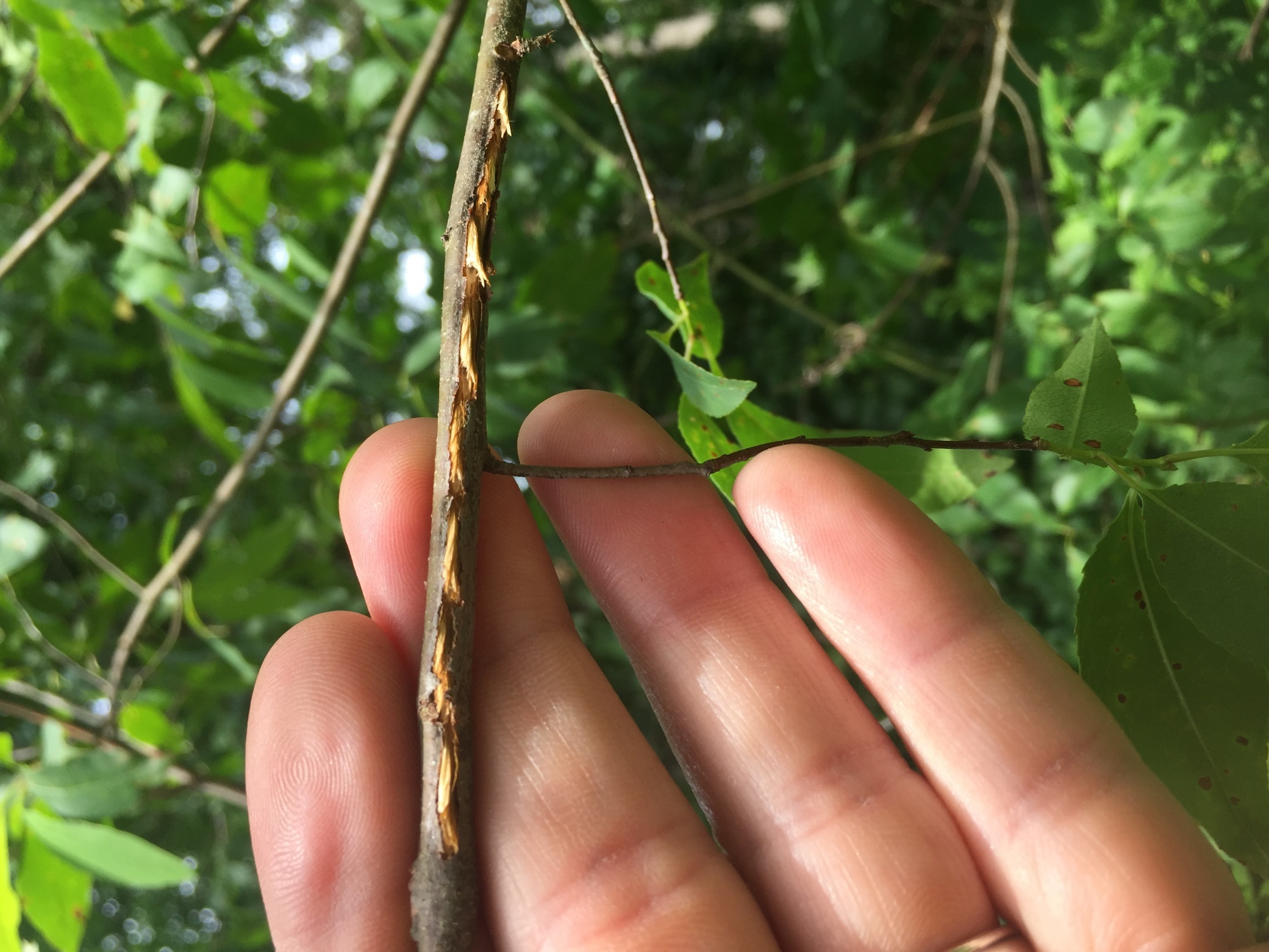
Cicada damage from oviposition results from adults inserting their eggs into the stem.
Photo by David Coyle, Clemson University
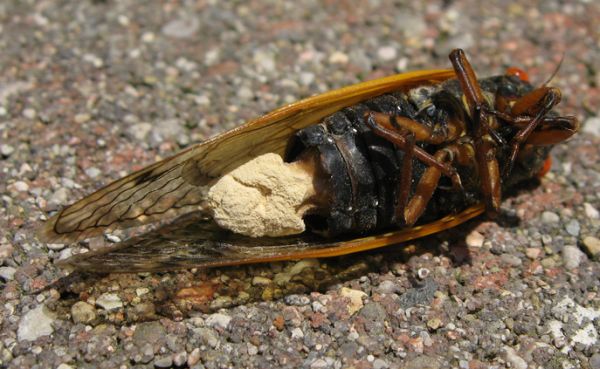
Massospora fungus (white mass) on cicada.
Image courtesy of Roy Troutman, https://www.cicadamania.com/cicadas/which-fungus-attacks-magicicadas-massospora-cicadina/
Cicada Diseases: Massospora Fungus
Periodical cicadas can be affected by a Massospora fungus. This fungus is parasitic and can infect the cicada in two ways.
If it infects the nymph as it burrows through the soil prior to emergence, the fungus develops in the abdomen of the cicada. This causes it to act strangely, generally remaining on the ground, spreading fungal spores as it drags its abdomen.
Male cicadas that are infected will answer other males’ mating calls, posing as females, further spreading the infection.
Towards the end of the cicada’s life, its abdomen will start to fall off, revealing more signs of the infection as it displays a white mass of the fungus. The fungus renders the insect infertile.
The fungus is harmless to people.

Physically protect vulnerable trees and shrubs from cicadas using netting.
Photo by James B. Hanson, USDA Forest Service, Bugwood.org
How to Manage Cicadas
Cicadas are usually harmless to plants, regardless of whether the cicada is annual or periodical.
However, younger and more vulnerable plants may be more prone to dying and heavy damage due to oviposition.
Netting vulnerable plants during the emergence season will keep them protected.
This is generally only done if periodical cicadas emerge, since their emergence can be predicted. It is impossible to predict the emergence of annual cicadas.
Document last updated on 10/25 by N. Jordan Franklin.
Originally published 07/21, revised 10/24.