Quick Guide to Growing Crinum Lily
Perennial Bulb
USDA Hardiness Zone: 7 to 10; varies by cultivar
Best Soil: Moist to normal garden soil; tolerates heavy soil
Sunlight: Sun, part sun, part shade
Watering: Only needed if the weather is dry during the flowering period
Care Tips: Stake flower stalks
What Are Crinum Lilies?
Crinums, also known as crinum lilies, are spring- and summer-blooming perennial bulbs that thrive in the Southeast. Hundreds of cultivars and types are available. All crinums are winter hardy throughout South Carolina; some cultivars also tolerate winter temperatures much farther north.
A Quick Overview of Crinum Botany
The genus Crinum is in the amaryllis family (Amaryllidaceae) along with lily of the Nile, daffodils, and onions (flowering and edible). The common name “crinum lily” comes from the past, when all these plants were in one very large lily family.
Crinum Bulbs
Similar to other lilies, crinum bulbs are made up of modified fleshy leaves. The stem is reduced to a basal plate, a firm, flat disc directly under the bulb. Leaves, unless noted below, are broadly strap-like and shiny green.
The flower stalk is technically a “scape,” a hollow, leafless stalk that arises from the basal plate underground. The height ranges from 2 to 6 feet, with most crinums in the 3-foot range. All cultivars produce several flower stalks, typically one to three successively and then one or more after a break of several weeks.
Crinum Flowers
Crinum flowers are typical, tapered “trumpet-shaped” lily flowers on tall stalks.
A cluster of buds forms at the top of the stalk. One or more buds open each day (with exceptions noted below) and last for 1 to 2 days. Flowers are 3 to 3½ inches wide and 3½ to 4½ inches long. Air temperature determines the opening speed and how long flowers last before they droop and die, with both processes occurring faster in warmer weather.
Optimal Growing Conditions for Crinum Lilies
Ideal Soil Moisture for Crinums
Crinums thrive in moist soil but are highly drought tolerant. They only require additional watering during the flowering period to prevent buds from drying out before opening.
Crinums are well-known for their ability to tolerate wet soil. Bulbs can withstand up to 48 hours of flooding; however, except for native swamp crinum, they should not be planted in soil that is continuously wet.
Note: Potted crinums are rarely available for sale; however, the bulb must be removed from the potting soil when planting in the ground, as continuously wet potting soil around the bulb can lead to rot.
Sunlight Requirements for Crinums
Crinums grow in a variety of light intensities, from full sun to part sun to part shade. For example, dappled shade under a crape myrtle or chaste tree provides enough light for blooming. In the lower half of South Carolina, crinums do best in part sun to part shade, as direct, intense sunlight can scorch leaves.
How to Plant Crinum Bulbs
Crinums are usually shipped as bare-root bulbs. Some growers trim the leaves and the roots to make packaging easier. Crinum bulbs are tough and can stand this type of handling.
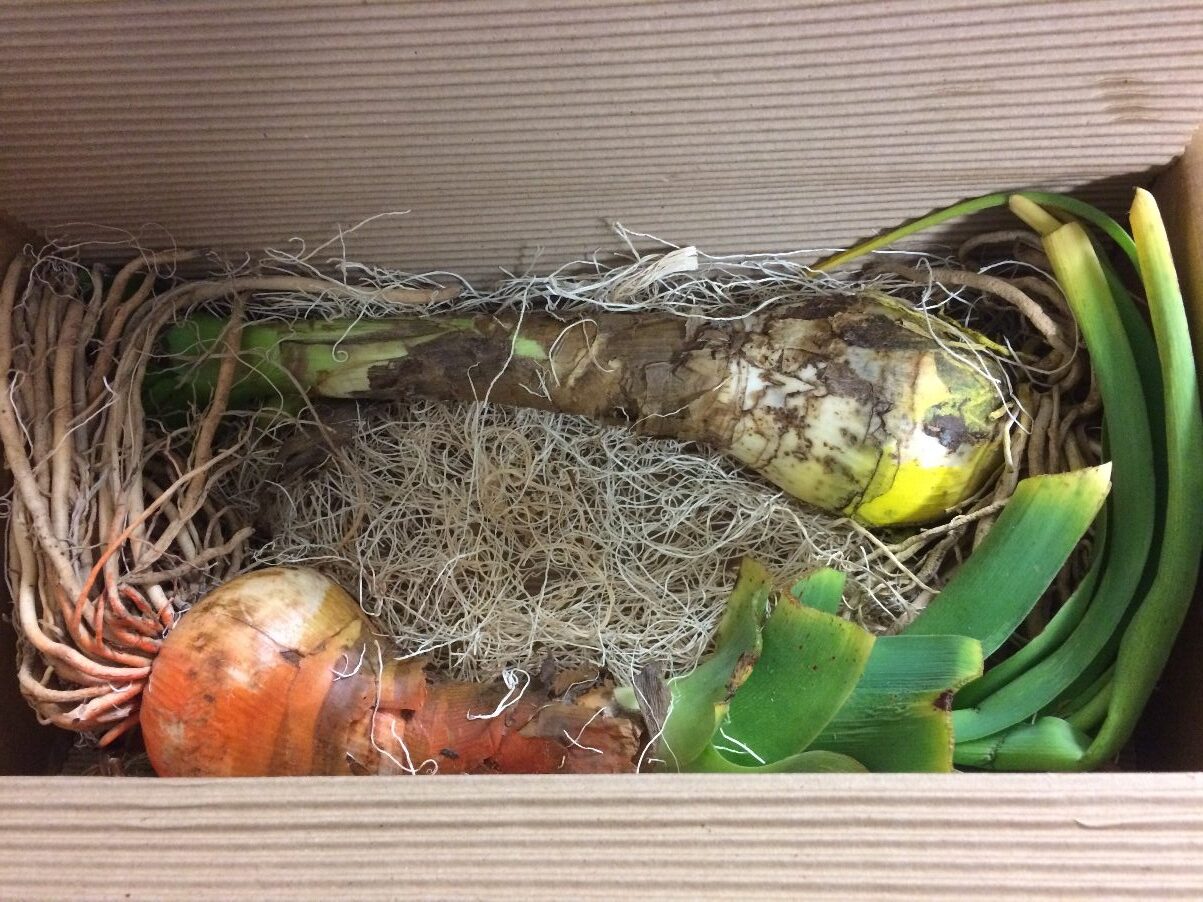
Crinum bulbs with trimmed leaves packaged for shipment. The bulbs were painted to mark different cultivars.
Anthony Keinath, ©2025, Clemson Extension
Planting instructions often direct gardeners to set bulbs into the ground “up to the neck.” The neck is the lower part of the leaf sheath where leaves are wrapped around each other. The neck can be 6 to 12 inches long on large crinum cultivars or bulbs. Setting the entire bulb and several inches of the neck below the soil surface is sufficient. Burying the entire neck below ground in heavy soil or soils with a shallow layer of topsoil can inhibit root growth in the clay subsoil.
Staking Flower Stalks: Why It’s Important
Crinum flower stalks are sturdy, but they must be staked to protect them from strong winds. Fortunately, fallen stalks usually bend at the base without breaking, allowing them to be straightened without damaging the flowers.
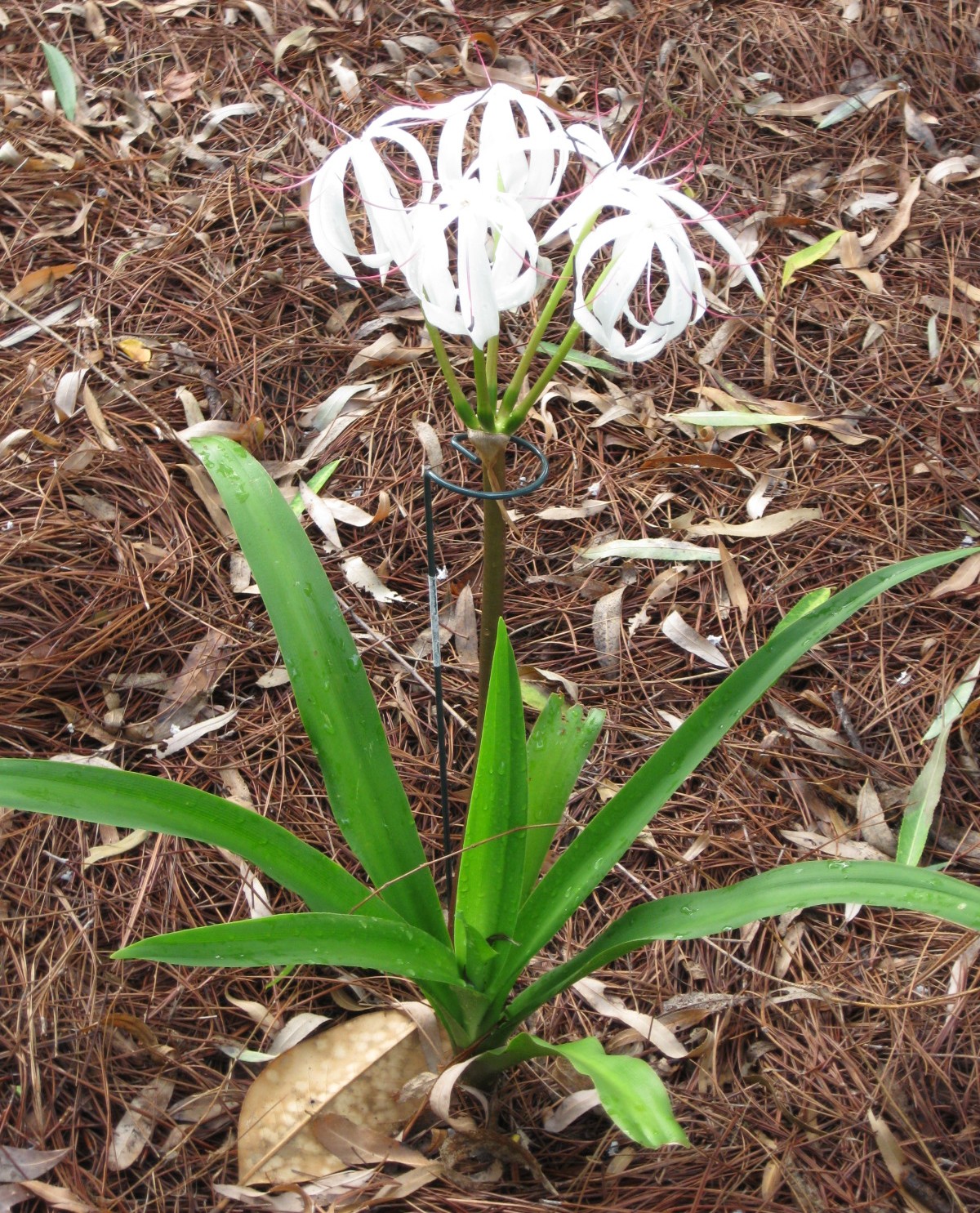
Crinum flower stalks should be staked to prevent toppling in strong winds.
Anthony Keinath, ©2025, Clemson Extension
How to Propagate Crinums: Tips for Dividing and Growing from Seed
Dividing Crinum Bulbs
Occasionally, some cultivars, such as Crinum x powellii, produce bulblets on the side of the main bulb. Once these young bulbs have a 12-inch-tall top, they can be removed by digging several inches away from them, gently pulling, and cutting any tissue that connects the bulblet to the main bulb. Bulblets need a few attached roots to “take” when replanted. Bulblets can also be left in place.
Crinum americanum and occasionally C. bulbispermum produce underground stolons, or horizontal stems, that send up a new plant about a foot from the main plant. These daughter plants can be moved or left in place to make a clump.
Growing Crinums from Seed: A Slow but Rewarding Process
Species crinums, such as C. bulbispermum and C. americanum, produce viable seeds, but hybrids do not. A flower produces a fleshy berry with one seed that will fall to the ground when it is mature. Seeds germinate readily if planted within a month of maturing.
Place seeds pointed side down on top of moist potting soil in a 4-inch pot but cover only the bottom 2/3 of the seed. Keep potting soil moist until the seed germinates, which takes several weeks. Seeds can also be planted directly into the ground.
One- or two-year-old seedlings can be transplanted to their permanent spot. Seedlings and plants grow slowly and require more than 5 years to reach the blooming stage.
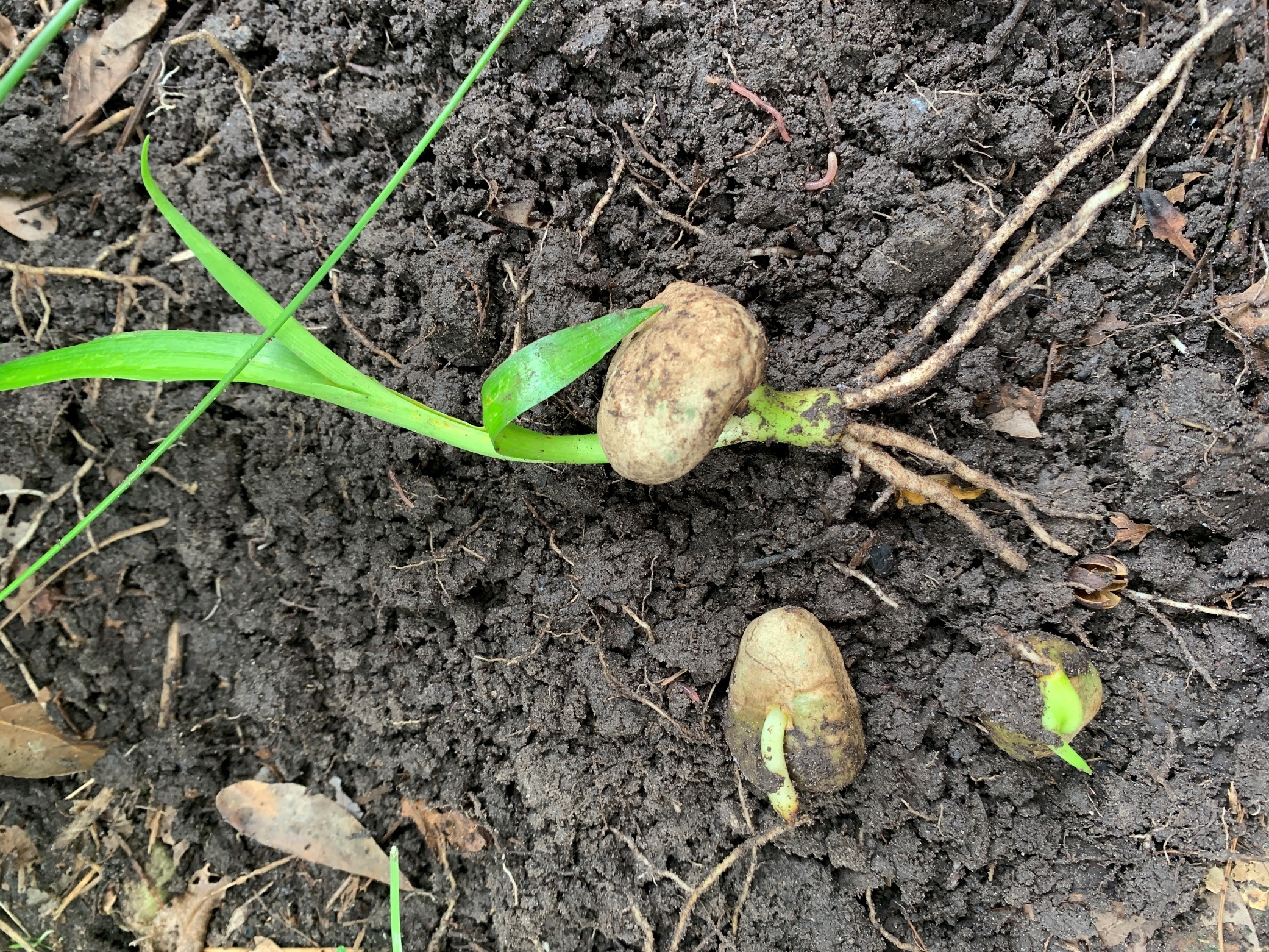
Germinated seeds of Crinum bulbispermum.
Anthony Keinath, ©2025, Clemson Extension
Recommended Crinum Cultivars for South Carolina
Crinum Hybrids
Most named cultivars are hybrids of two or more Crinum species, but the exact parentage may not be known. Not all hybrids have cultivar names.
- Crinum x powellii is an old hybrid crinum with pink flowers, the standard color, or white flowers.
- White Powellii ‘Album’ tends to produce multiple flower stalks that bloom at once. The large flowers resemble Easter lilies. Album’ blooms in mid-May on the coastal plain.
- ‘Cecil Houdyshel’ (tetraploid Crinum x powellii) is a cold-tolerant cultivar that performs well throughout South Carolina. It is one of the first crinums to bloom, generally in late March on the coastal plain. This cultivar is also one of the longest blooming crinums, with the last flowers appearing in early July. Flowers are solid pink with a white base.
- ‘Ellen Bosanquet’ has the darkest flower color of the commonly available crinums, a deep rosy pink to magenta. Flowers on this summer bloomer appear in June on the coastal plain and a bit later in the Upstate.
 Pink Crinum x powellii produces multiple flower stalks in mid-spring. Anthony Keinath, ©2025, Clemson Extension

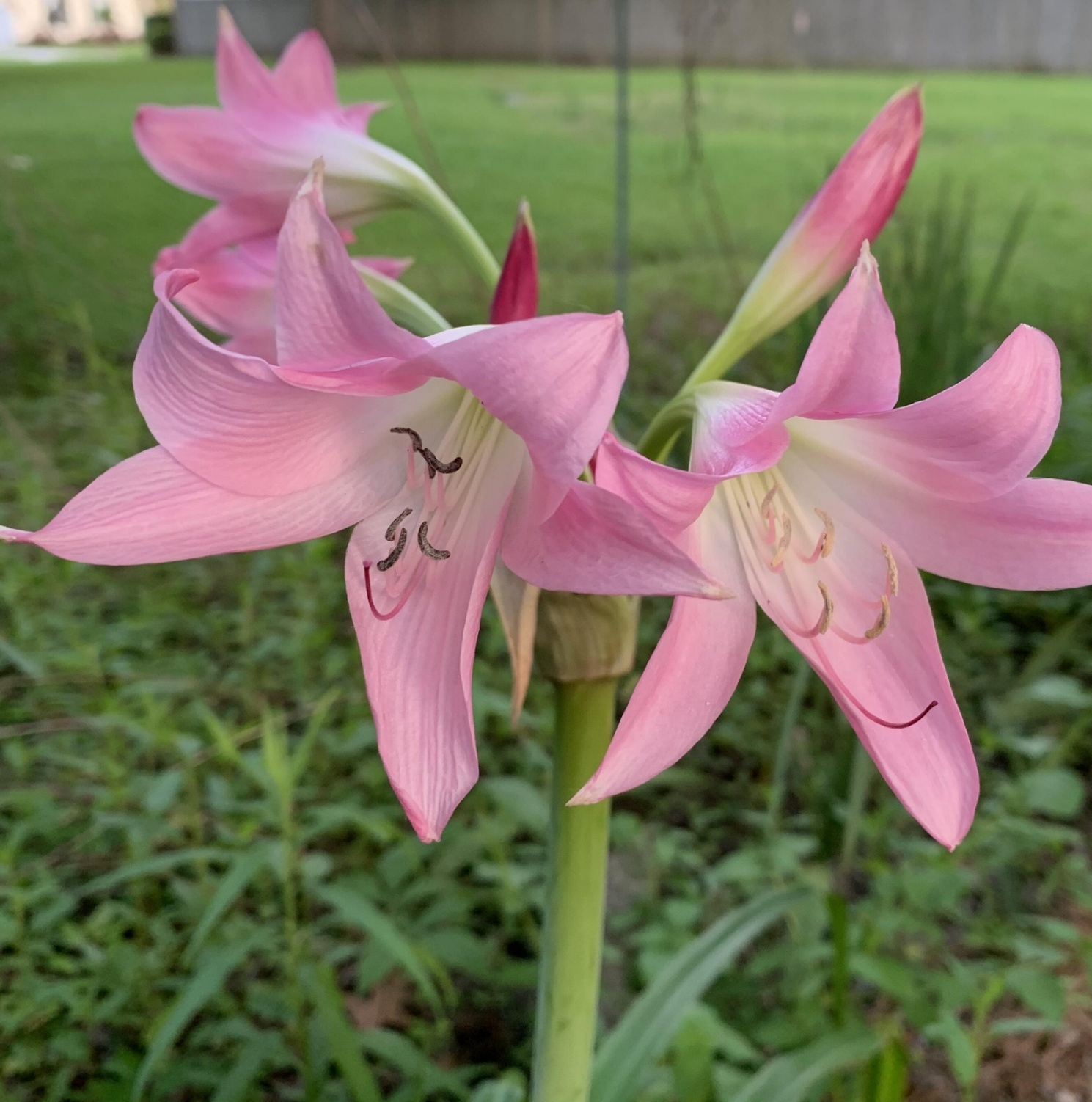
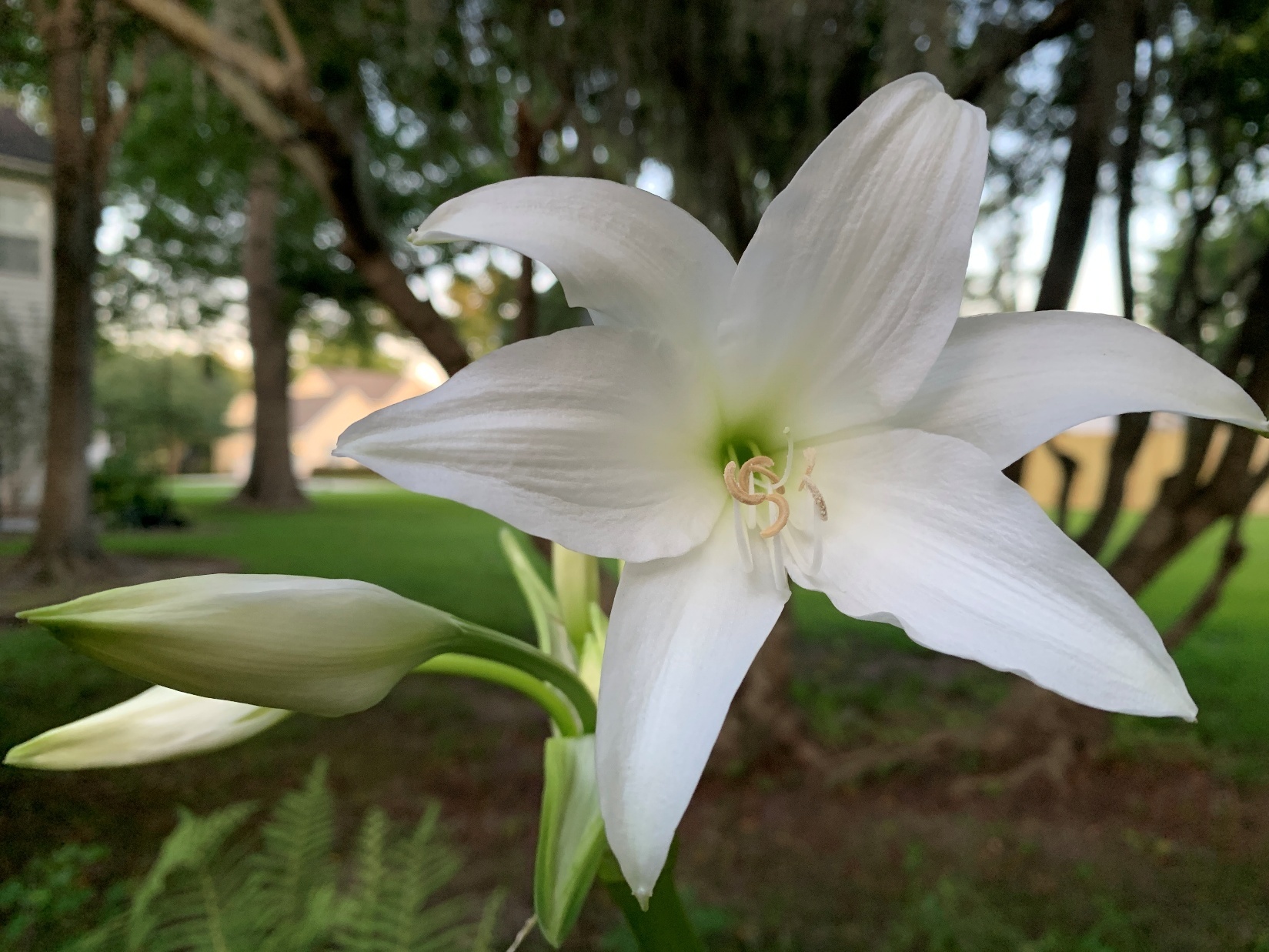

- ‘Walter Flory,’ a cross of ‘Ellen Bosanquet’ with Crinum x powellii ‘Alba,’ has pale pink flowers that appear in May to June. This cultivar is often grown for the coconut-like fragrance that is more noticeable in the evening. Like most other cultivars, it blooms well in part shade. However, it does not tolerate wet soil.
- ‘Bradley’ (Crinum scabrum x Crinum flaccidum) is a vigorous bloomer with many large flowers opening at once. It performs well throughout South Carolina.
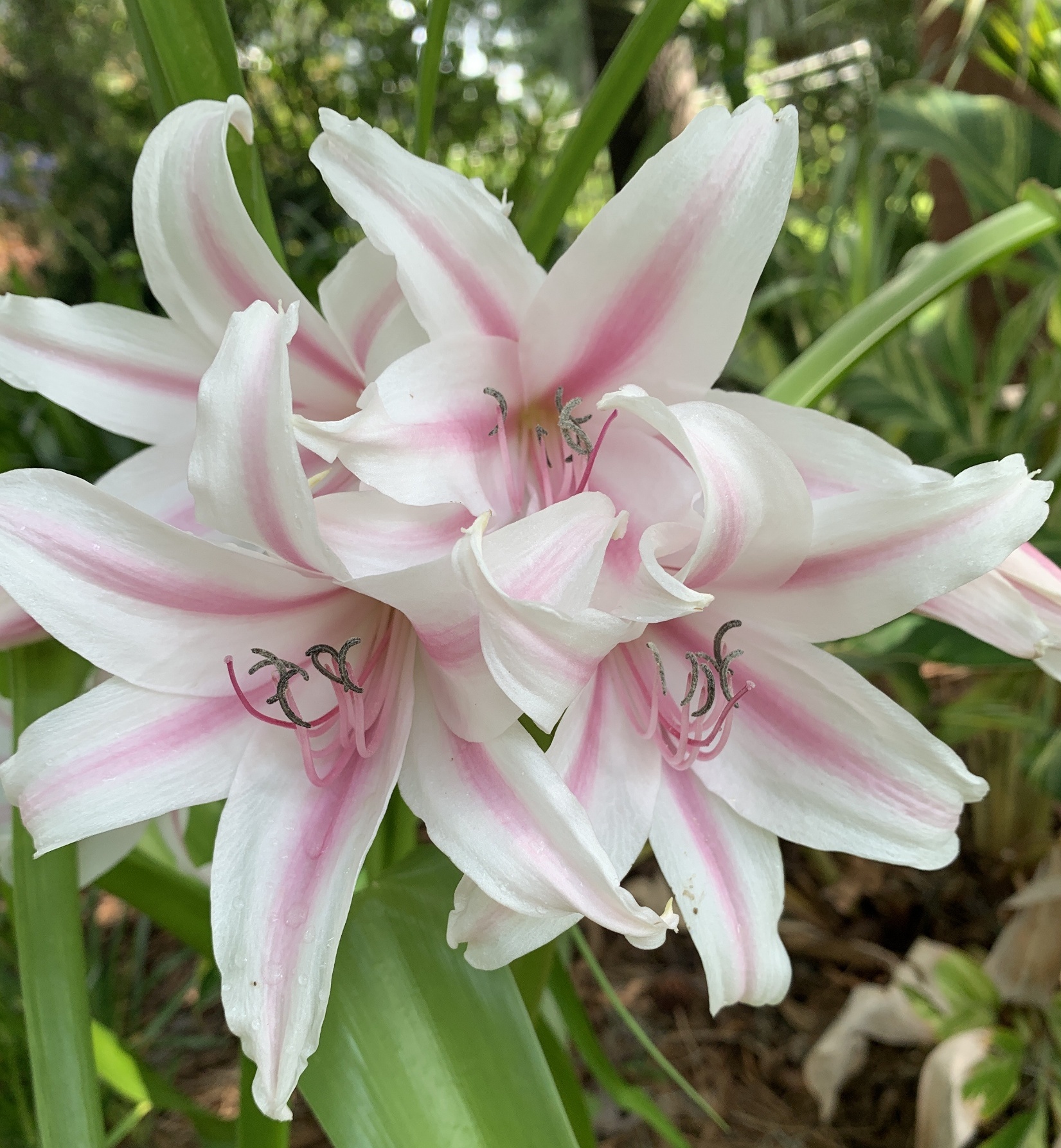
Traditional “milk and wine” striped crinum flowers.
Anthony Keinath, ©2025, Clemson Extension
Milk and Wine Crinums
- Crinum x herbertii, commonly called milk and wine crinum, is one of the oldest hybrids. It is a cross between C. bulbispermum (described below) and C. scabrum. The common name comes from the white flowers with a broad pink to mauve stripe down the middle of each petal. This hybrid is cold-tolerant and tough.
- ‘Carnival’ is a hybrid derived from a cross of Crinum x herbertii with C. bulbispermum. Although it has the parentage of a milk and wine crinum, the flowers are pink with faint stripes. A single stalk can have 10 flowers, and most open at the same time.
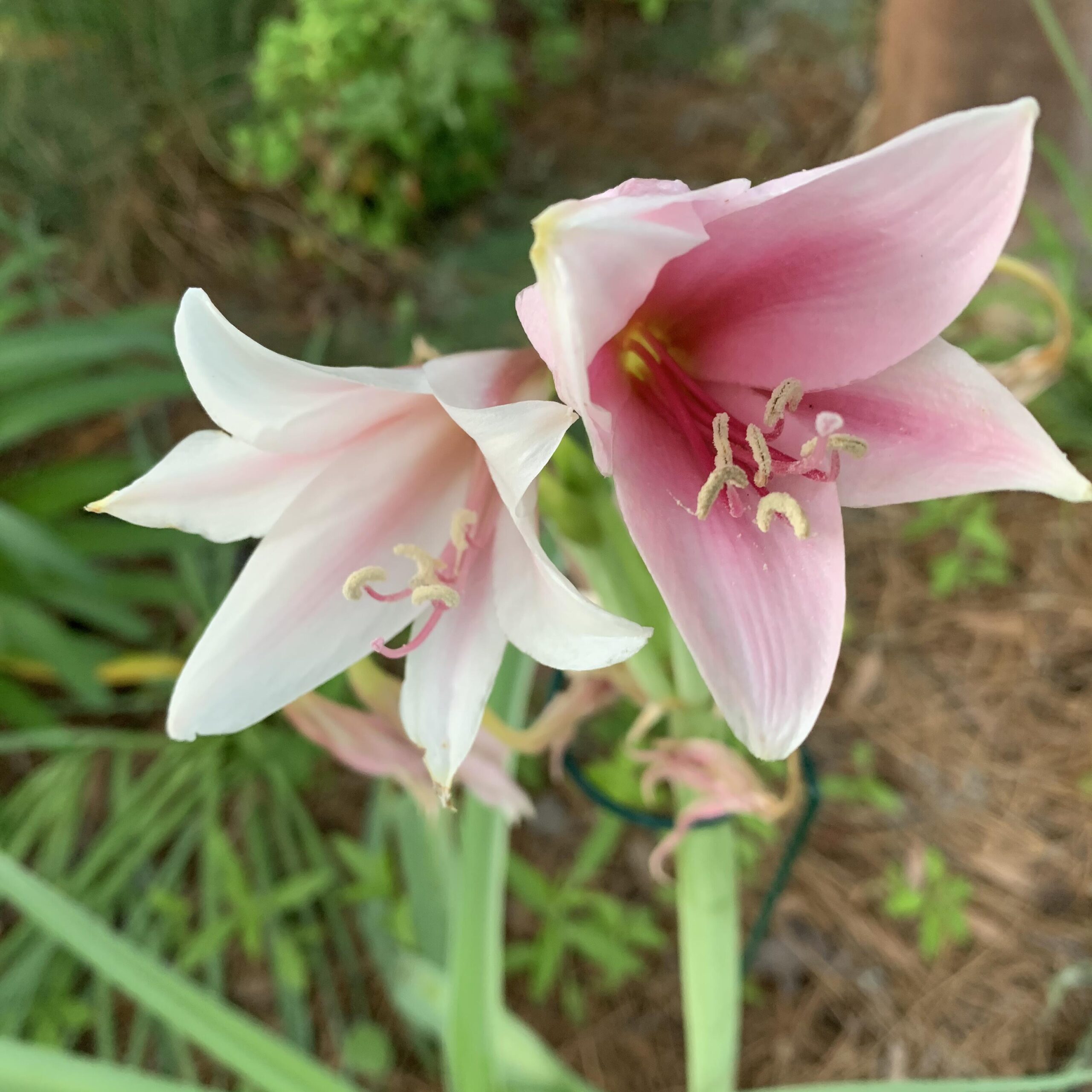
Crinum bulbispermum, also known as Orange River lily, is a cold-tolerant, early blooming crinum.
Anthony Keinath, ©2025, Clemson Extension
Crinum Species
Crinum bulbispermum, commonly known as Orange River lily, is a cold-tolerant, early blooming crinum. Leaves and flower stalks are dull blue green. Flowers are a bit smaller than hybrids. It typically blooms in early April on the coastal plain. Early flowers are pink and white, but the pink fades on flowers produced in warm temperatures.
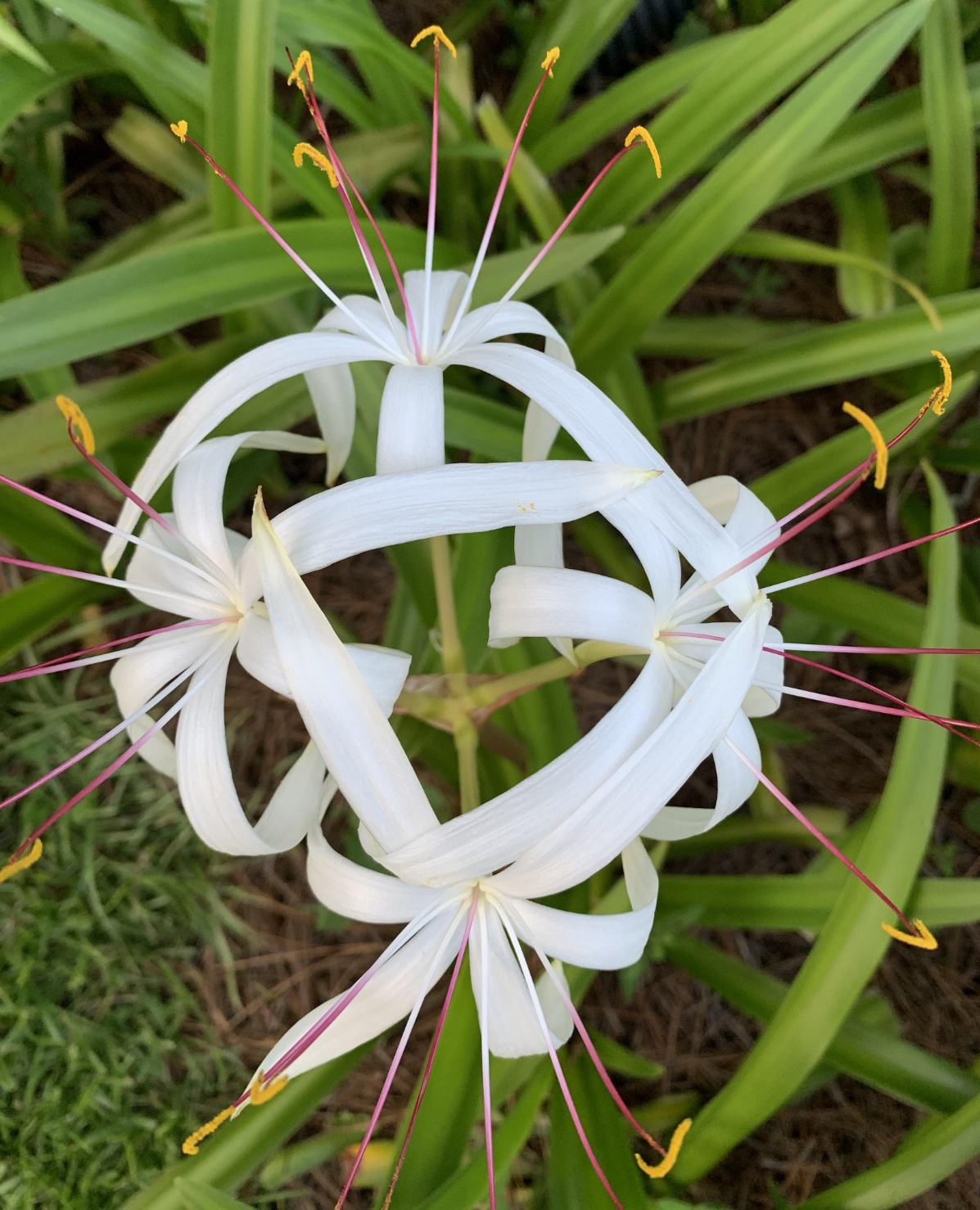
Native swamp crinum produces 4 to 9 flowers in a cluster.
Anthony Keinath, ©2025, Clemson Extension
Native Crinum Lily
Crinum americanum, or swamp crinum, is a vigorous, native, summer-blooming crinum. Swamp crinum is suited to planting along drainage easements at the back of suburban lots, as it tolerates moist soil well. Plants spread by producing underground stolons, or horizontal stems, that are deep and difficult to dig up, so the site for the initial planting should be chosen carefully.
Over time, a single plant will reproduce and spread to cover 25 square feet. Not every plant flowers; therefore, having a clump of swamp crinum increases the floral display.
Plants produce a single flower stalk about 2 feet tall with 6 flowers (can range from 4 to 9) at the top. Typically, all but 1 to 2 flowers open the first day, and the remaining flowers open the following day. Flowers last 2 days. Each flower has 6 milky white petals, up to 4 inches long, and six red pollen-producing stamens that stand out against the white petals. The main blooming time is early to mid-July, with occasional flowering into fall and as late as November on the coastal plain.
References
- Avent, Tony. 2025. Perennial Encyclopedia, Crinum.
- Bender, Steve (ed.). 2015. The New Southern Living Garden Book. Time Incorporated Books, New York. 768 pp.
- Farmer, Jenks. 2025. Crinum Lilies.