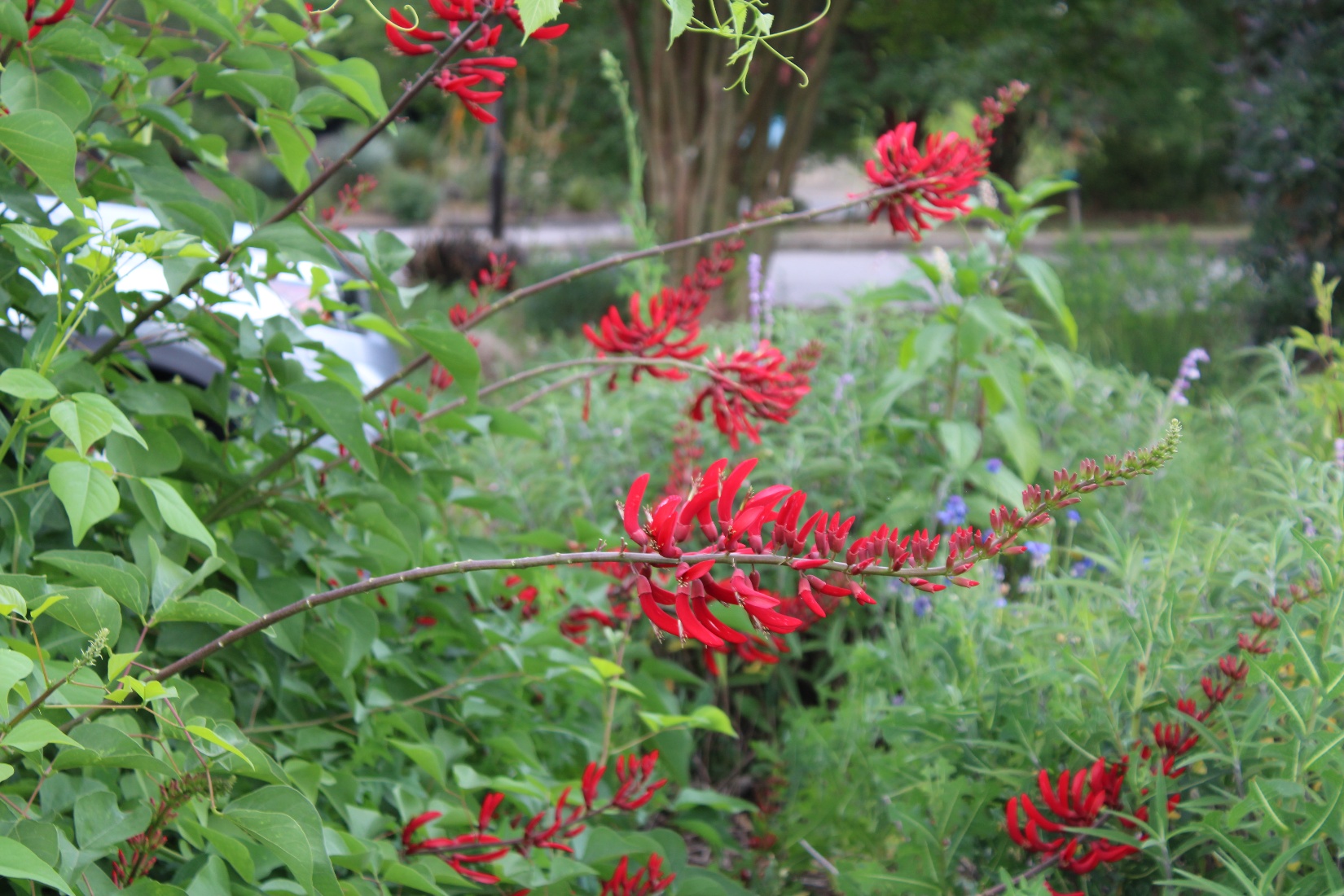
The bright red flowers of coral bean (Erythrina herbacea) attract hummingbirds and butterflies.
Ginger E Long, ©2026 HGIC, Clemson Extension
What is Coral Bean?
Coral bean (Erythrina herbacea) is a native shrub that has showy red flowers that attract hummingbirds and other pollinators.
It is a member of the pea family, Fabaceae, along with beans, peanuts, redbud trees, and wisteria.
It is considered a shrub or small tree; however, in colder climates, it can lose its leaves or even die back to the ground in winter, like a perennial.
There are many common names for it, including Cherokee bean, red cardinal, and cardinal spear.
The plant is commonly called coral bean for its bright coral-colored seeds.
Coral Bean Flowers and Pollinator Benefits
Blooms appear as early as March and can continue until November.
Individual flowers are born in clusters or racemes up to 6 inches long.
Hummingbirds frequently visit each flower in the raceme to feed on nectar.
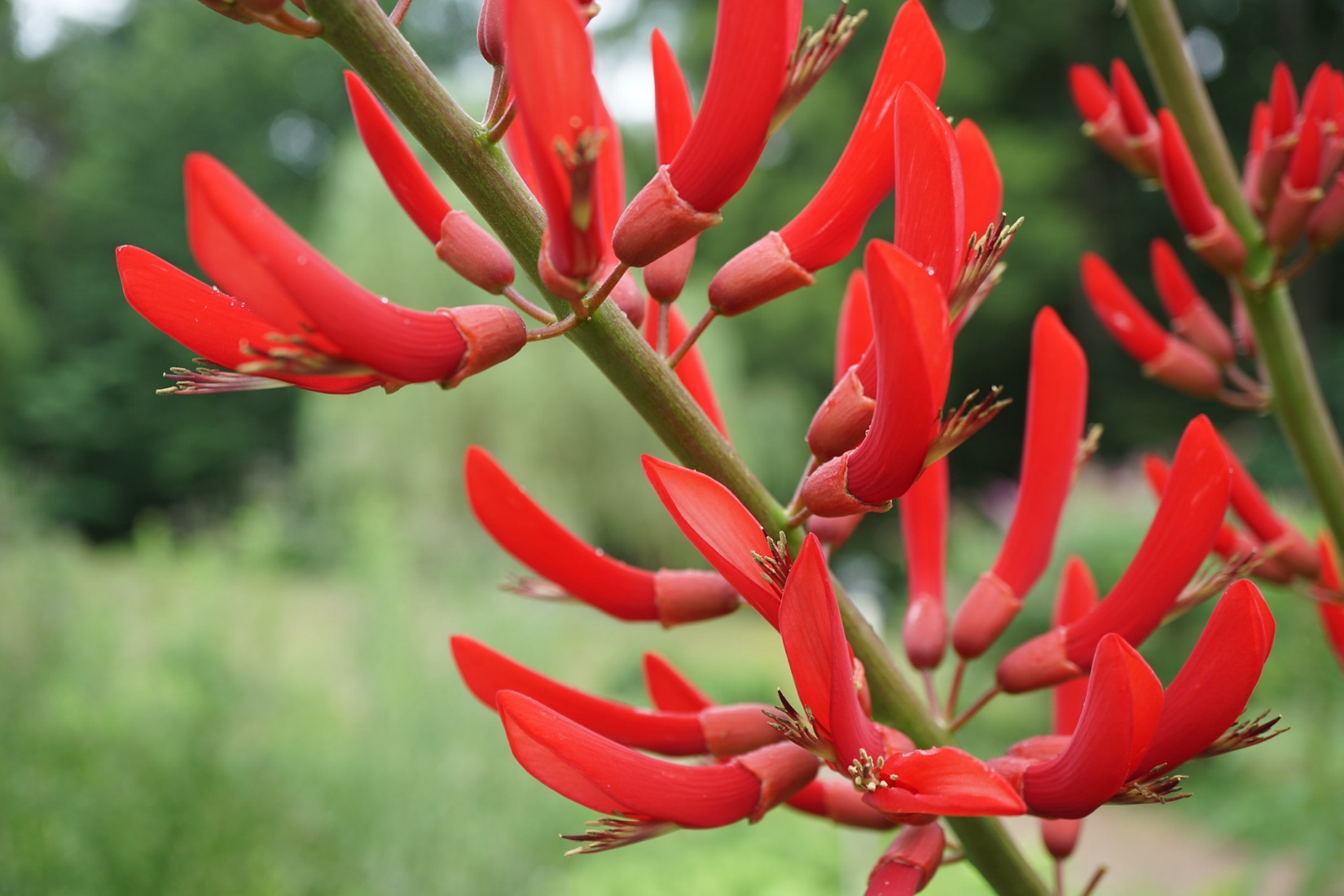
The individual flowers of the coral bean (Erythrina herbacea) are curved, tubular-shaped, and allow a hummingbird’s long beak and tongue to reach nectar in the back of the flower.
Barbara H. Smith, ©2019 HGIC, Clemson Extension
Coral Bean Plant Size and Growth Habit
Coral bean plants usually reach 6 feet or taller and grow 3 to 6 feet wide.
In climates where it does not die back in the winter, it can grow to the size of a small tree.
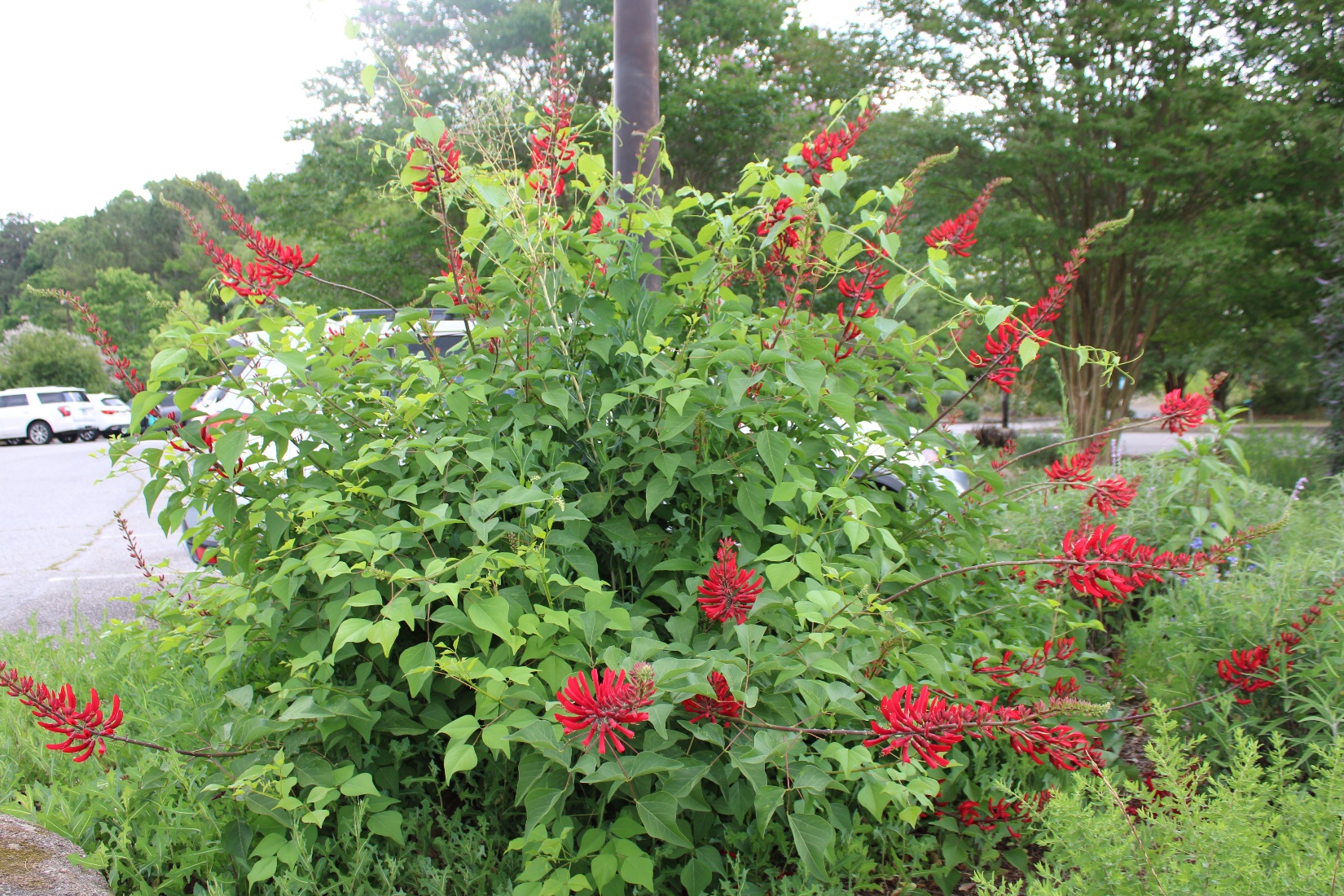
This coral bean (Erythrina herbacea) plant is over 3 feet tall and wide. It is growing in a hot, dry spot in a parking lot island at Riverbanks Botanical Garden in Lexington, SC.
Ginger E Long, ©2026 HGIC, Clemson Extension
Native Range of Coral Bean
Coral bean is native to Mexico and the southern US, ranging from Texas eastward to North Carolina.
How to Grow Coral Bean Successfully
USDA Hardiness Zones for Coral Bean
- Coral bean can be planted in USDA planting zones 6 through 11. This includes all of South Carolina.
Sunlight Requirements for Coral Bean
- Coral bean can be planted in part to full sun.
Soil Preparation for Coral Bean
- Plant in well-drained soil.
- Coral bean can be planted in clay, loam, or sandy soils if they are well-drained. They are most often found in sandy soil.
Watering Tips for Coral Bean
- Water regularly until plants are established. Once established, water during drought conditions.
Fertilizing Coral Bean
- Coral bean rarely requires fertilizer. The root nodules of the coral bean plant fix nitrogen in the soil, thus eliminating the need for additional fertilizer.
Pruning and Maintenance of Coral Bean
- If the plant goes dormant in the winter, prune off the dead stems soon after new growth appears in the spring.
How to Propagate Coral Bean
Growing Coral Bean from Seed
- Propagate via seeds.
- The seeds have a hard seed coat and should be scarified before planting in spring.
- Scarify the seeds by filing down or breaking part of the seed coat with a nail file, sandpaper, or nail clipper.
Propagating Coral Bean from Cuttings
- It can also be propagated via semi-hardwood cuttings that have partially mature wood on new growth from this year.
- Take cuttings from mid-July to early fall.
Coral Bean Pests and Diseases
Common Coral Bean Pests
- Coral bean pests include stem borers, leafrollers, and leaf miners.
- These pests typically do minor damage.
- For more information on insect control, see HGIC 2770, Less Toxic Insecticides.
Root Rot Problems
- Root rot can be a problem in soils that stay too wet.
Wildlife Resistance
- Resistant to deer.
Coral Bean Warnings and Safety Considerations
Toxic Seeds
- Seeds are toxic if eaten.
- Keep children and pets away from plants and seeds.
Spines on Stems and Leaves
- Plants have spines on the stems and undersides of leaves.
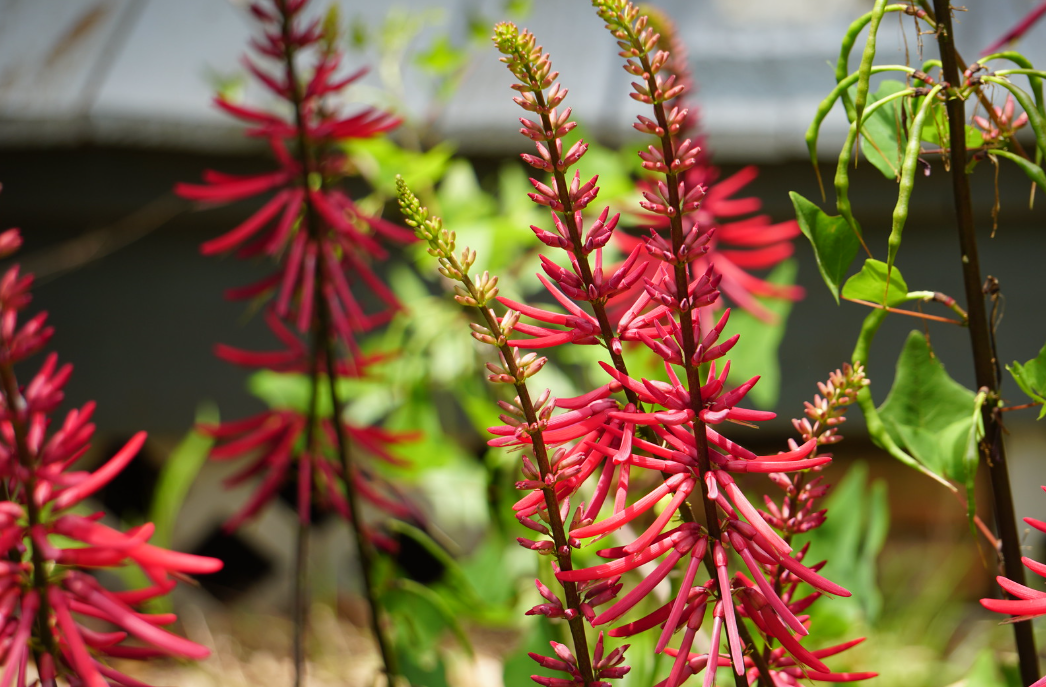
After flowering, the plants produce seed pods, as shown in the top right of this photo. The pods turn black and split open in autumn, exposing the colorful seeds inside. Caution should be taken with children, as these seeds are toxic.
Barbara H. Smith, ©2023 HGIC, Clemson Extension
Additional Resources for Growing Coral Bean
Native Perennial Wildflowers to Improve Soil Health
Lady Bird Johnson Wildflower Center
Florida Native Plant Society
Florida Wildflower Foundation
University of Florida IFAS Extension Gardening Solutions
NC State Extension Gardener Plant Toolbox