In September, I stepped out of the office for a walk and came upon a gorgeous sight: a stunning patch of 𝘏𝘺𝘭𝘰𝘵𝘦𝘭𝘦𝘱𝘩𝘪𝘶𝘮 ‘Matrona’. We planted these flowers last fall, and they held up remarkably well through this summer’s brutal temperatures and drought.
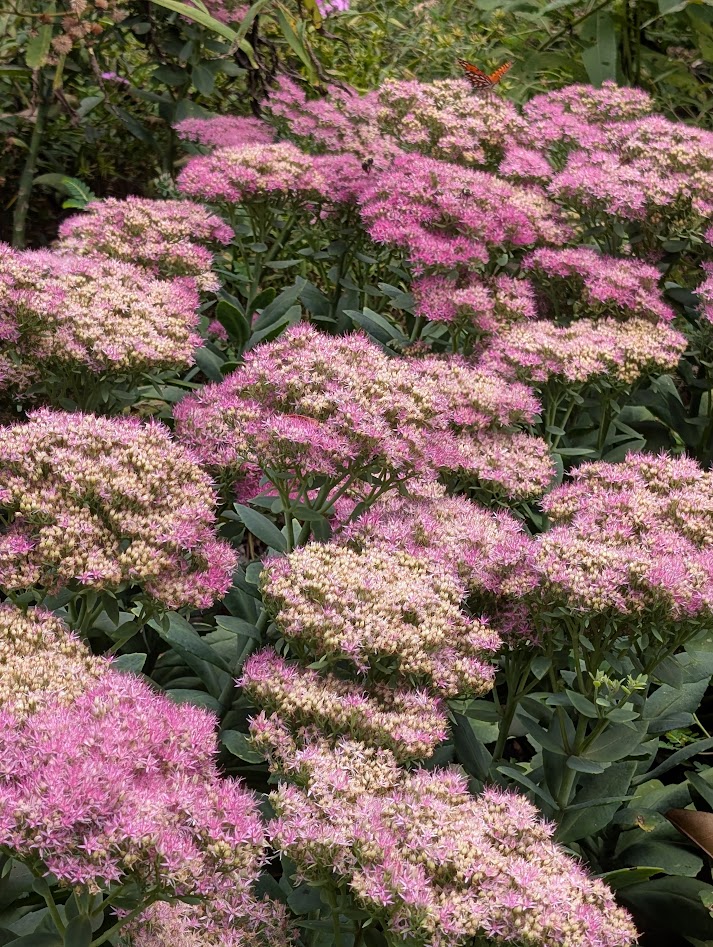
A mass planting of Hylotelephium ‘Matrona’ creates a mist of pink flowers in the fall landscape.
Sue Watts, ©2026, SC Botanical Garden, Clemson University
What Is Hylotelephium ‘Matrona’?
‘Matrona’ is a cross between 𝘚𝘦𝘥𝘶𝘮 ‘Autumn Joy’, a longtime favorite in our landscapes, and 𝘏𝘺𝘭𝘰𝘵𝘦𝘭𝘦𝘱𝘩𝘪𝘶𝘮 ‘Atropurpurea’, which is known for its darker foliage. This award-winning perennial, recognized with the RHS Award of Garden Merit among other honors, grows stems about 18 to 24 inches tall covered in fleshy leaves.
What Do Hylotelephium ‘Matrona’ Flowers Look Like?
When the flower buds open, the plants are covered with delicate, pink, star-shaped blossoms arranged in umbels. A collection of plants creates a mystical pink mist in the landscape. They stand out beautifully against the purple-green stems and should last from mid-August until the first fall frost.
When the flowers are finished, reddish-purple modified leaf-like structures (bracts) provide winter interest in the landscape.
How to Grow Hylotelephium ‘Matrona’
Plant in full sun in average, well-drained soil, and they will need little additional attention.
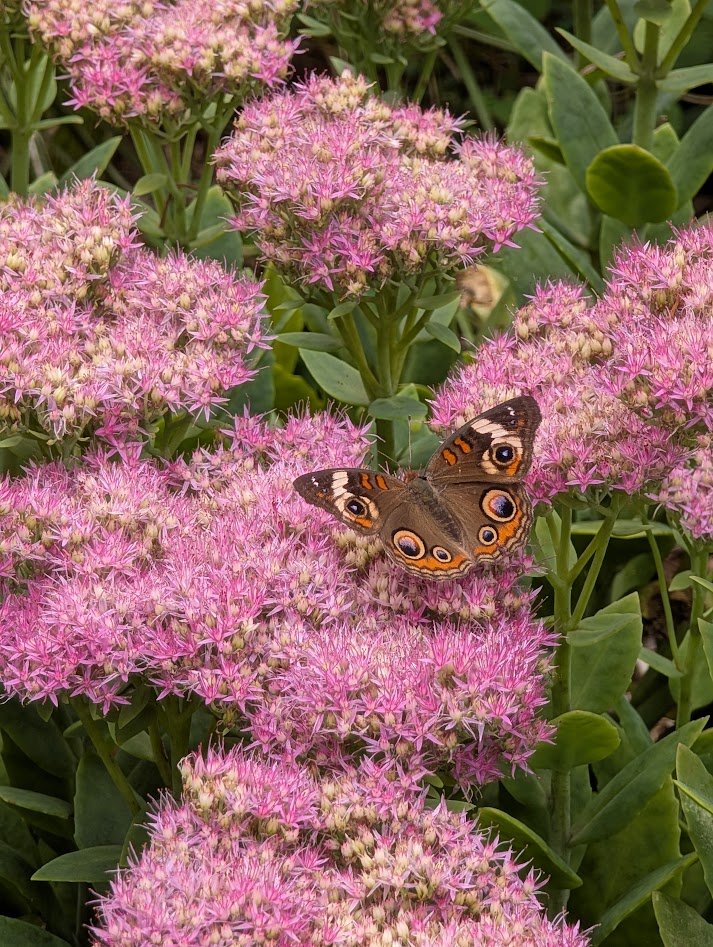
A buckeye butterfly visits the pink, star-shaped flowers of Hylotelephium ‘Matrona’.
Sue Watts, ©2026, SC Botanical Garden, Clemson University
How Does Hylotelephium ‘Matrona’ Support Wildlife?
At two o’clock that afternoon, butterflies, bees, and other insects covered the patch. My favorite, a buckeye butterfly, lingered long enough for a photo shoot. Clearly, this is an excellent plant for wildlife: its abundant nectar attracts pollinators, its fleshy leaves provide shelter, and its seeds feed birds and small mammals.
For more information, see: