Identifying Pickleworm Damage
What is going on with this cucumber?
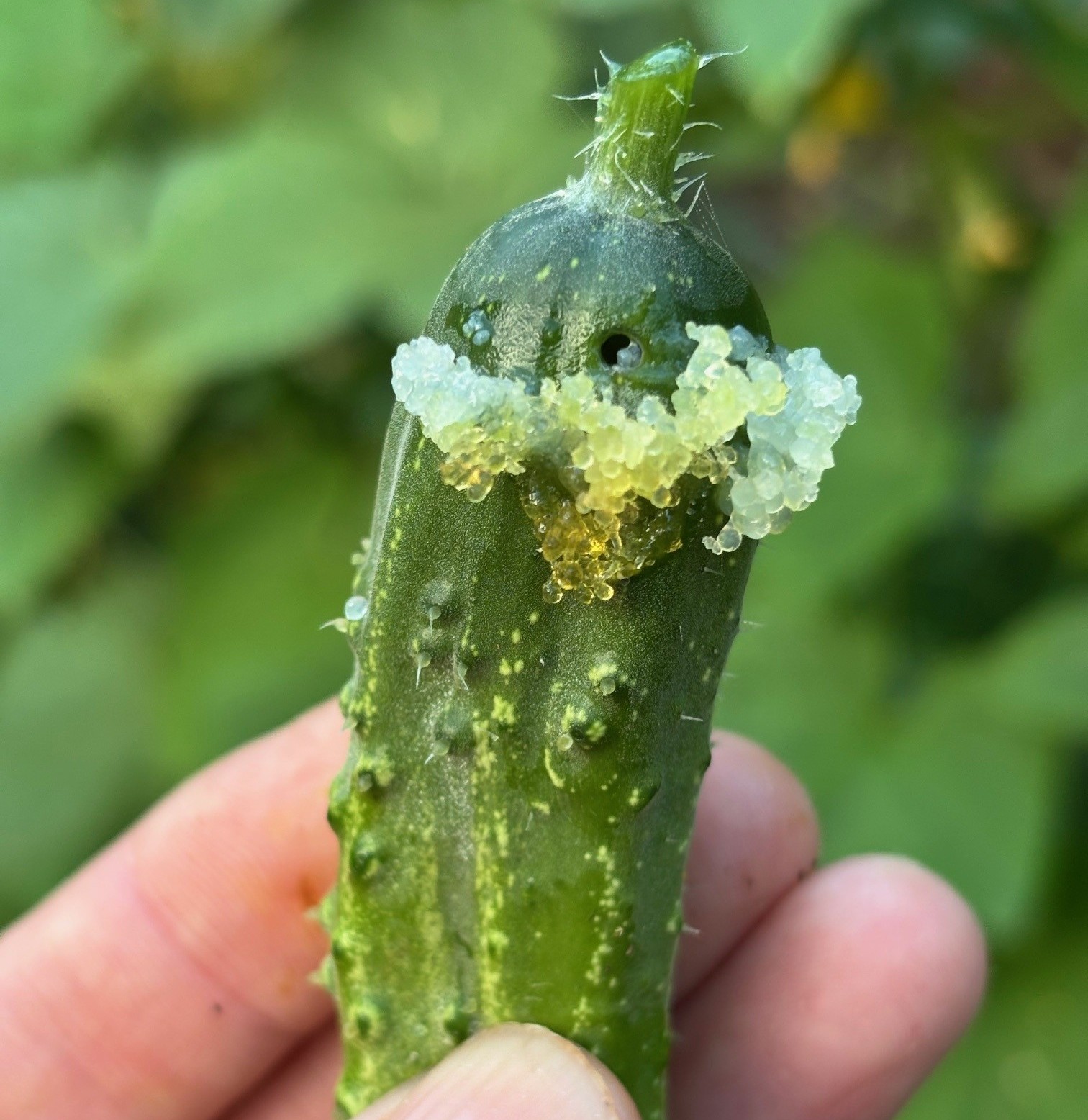
The hole and gelatinous material are clear evidence that the cucumber was recently attacked by a pickleworm.
Cory Tanner, ©2025, Clemson Extension
Pickleworms are caterpillars and the larva of pickleworm moths (Diaphania nitidalis). They feed on the flower buds and fruits of cucurbit crops, including:
- Cucumbers
- Squash
- Zucchini
- Melons
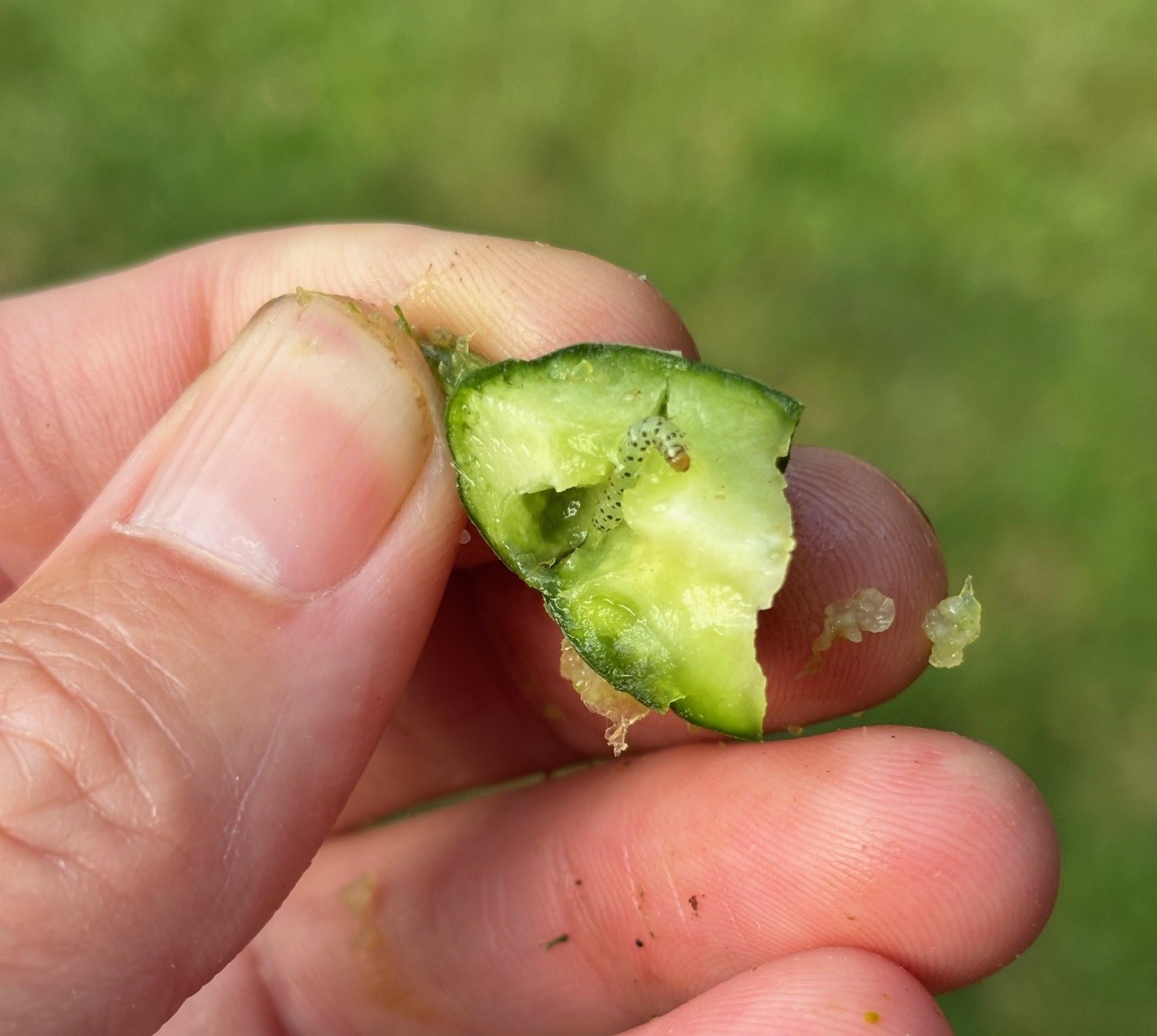
Pickleworm larva (Diaphania nitidalis) inside of cucumber.
Cory Tanner, ©2025, Clemson Extension
Life Cycle & Damage to Crops
The young caterpillars bore into the fruit, and a single attack makes the fruit unmarketable.
The gelatinous residue is the insect’s frass extruded from the feeding within the fruit.
These pests:
- Don’t overwinter in South Carolina
- Must reinvade our fields from overwintered populations in Florida each year.
- They are late-season pests here that usually don’t show up until July.
Scouting for Pickleworms
Begin in early July by looking for:
- Feeding of small caterpillars in flower buds
- Entry holes in developing fruit
Management & Control
- Apply labeled insecticide treatments should be applied as soon as the pest is detected.
- Treatments should be on the plant prior to eggs hatching for greatest effectiveness.
- Remember- once the caterpillars are inside the fruit, it’s almost impossible for a lethal dose of insecticide to reach them.
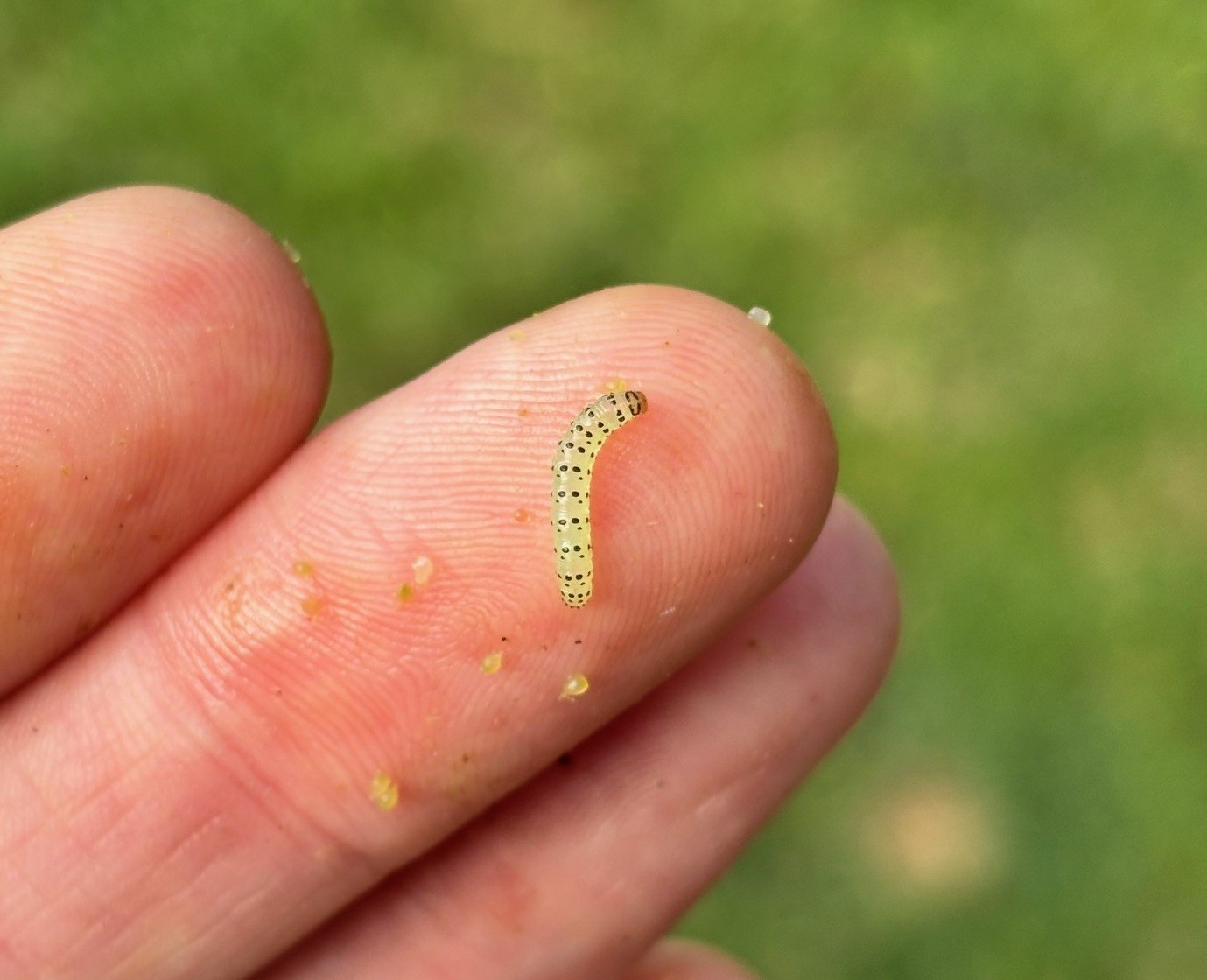
The body of the pickleworm is yellowish-white at first, but many reddish-brown spots appear on the back after the first molt.
Cory Tanner, ©2025, Clemson Extension
Additional Information
SC Grower The Pesky Caterpillar Pests of Cucurbit Crops: Part 2
HGIC 2207, Cucumber, Squash, Melon & Other Cucurbit Insect Pests