Strawberry planting has finished up, and the crops look good so far. Fall tomatoes, squash, and other vegetables are still being harvested, but the end is near. Greens are looking great, and we expect to have a good crop for the Thanksgiving market. See details below.
As we get into strawberry season, check out this year’s Strawberry Webinar Series to brush up on disease management, bed formation, and insect management. SC pesticide applicators can earn 1.5 pesticide credits. The webinar is available now through 11/15. View Details and Register Here
Keep an eye on the Upcoming Events tab periodically so you don’t miss any of our winter/spring meetings. Also, check out the latest episode of the SC Grower Exchange Podcast.
Don’t forget to look at our Resources tab for links to crop handbooks, helpful websites, and related blogs.
Coastal Region
Anna Sara Hill
- Kale, collards, and Swiss chard are yielding well this year.
- I notice a low population of whiteflies on various greens at one farm. The weather is warm enough that they can still survive, but it is cool enough that they are not laying many eggs, and the development of the nymphs has slowed down. At this time, no treatment is recommended; however, it is advisable to monitor them closely.
- Some bare-root strawberries have been planted over the past two weeks and are pushing new foliage.
- White, red, and purple radishes are ready for harvest.
- Pumpkins and winter squash are still being harvested in large quantities.
- Sugarcane is growing well this year and will be cut soon.

Radishes are ready to harvest.
Anna Sarah Hill, ©2025, Clemson Extension
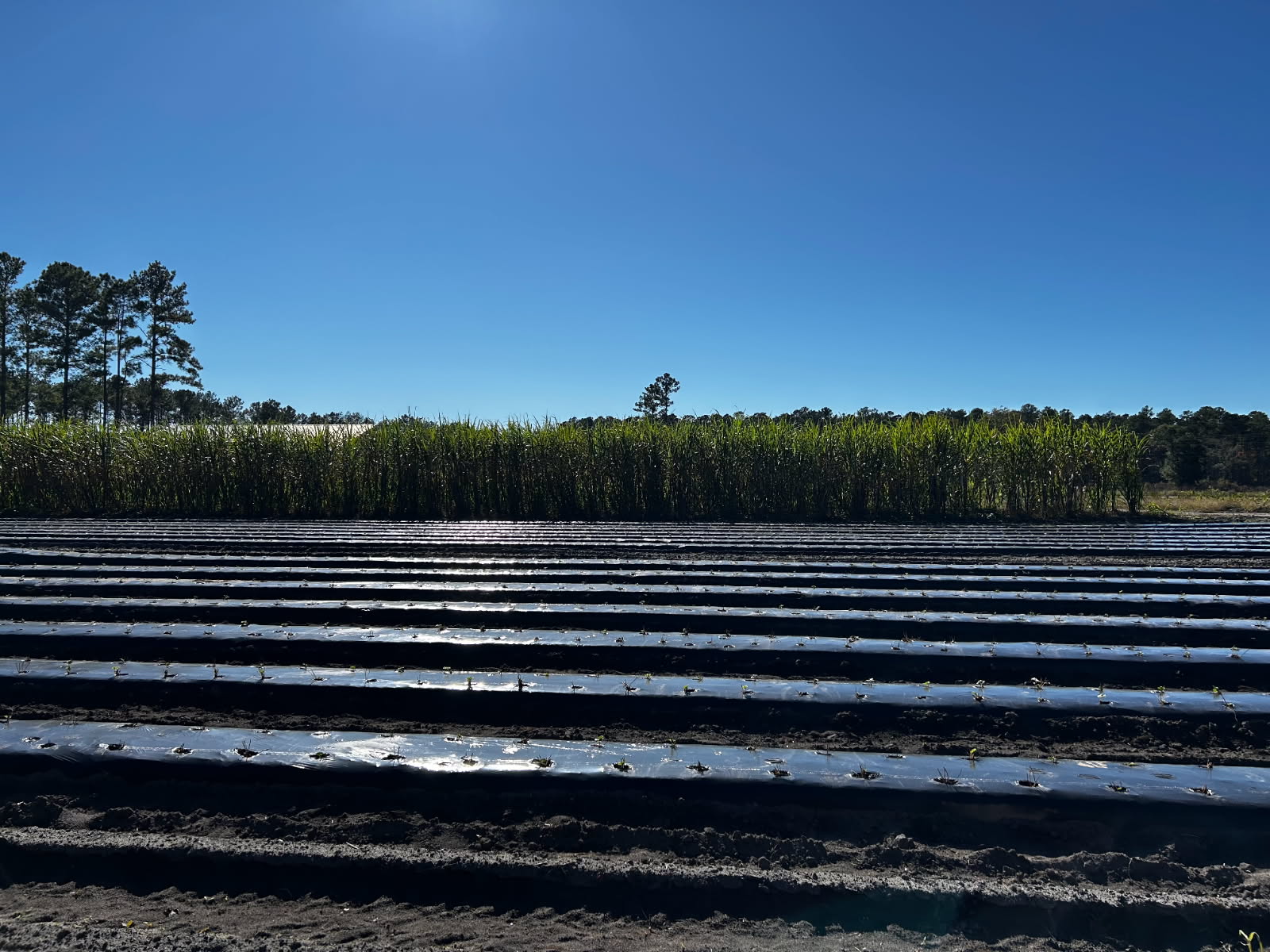
Foreground: Recently planted strawberries are pushing a new flush. Background: Sugarcane is ready to cut.
Anna Sarah Hill, ©2025, Clemson Extension
Zack Snipes
- Everyone has been busy in the Lowcountry the past few weeks. Our main focus right now is finishing up planting strawberries. Overall, I am pleased with the quality of both plugs and cut-offs this year. Keep them watered in until roots establish. We have some perfect growing weather coming up in the next 10-14 days, so that should really get the plants growing. Growers might want to consider spraying or running a product to help with Phytophthora root rot, especially in fields with a history of the disease or suspect plants this year.
- Aside from strawberries, we are busy in the fields harvesting greens, lettuces, root crops, tomatoes, squash, citrus, and rice. I am seeing increased worm activity in greens and in turf.
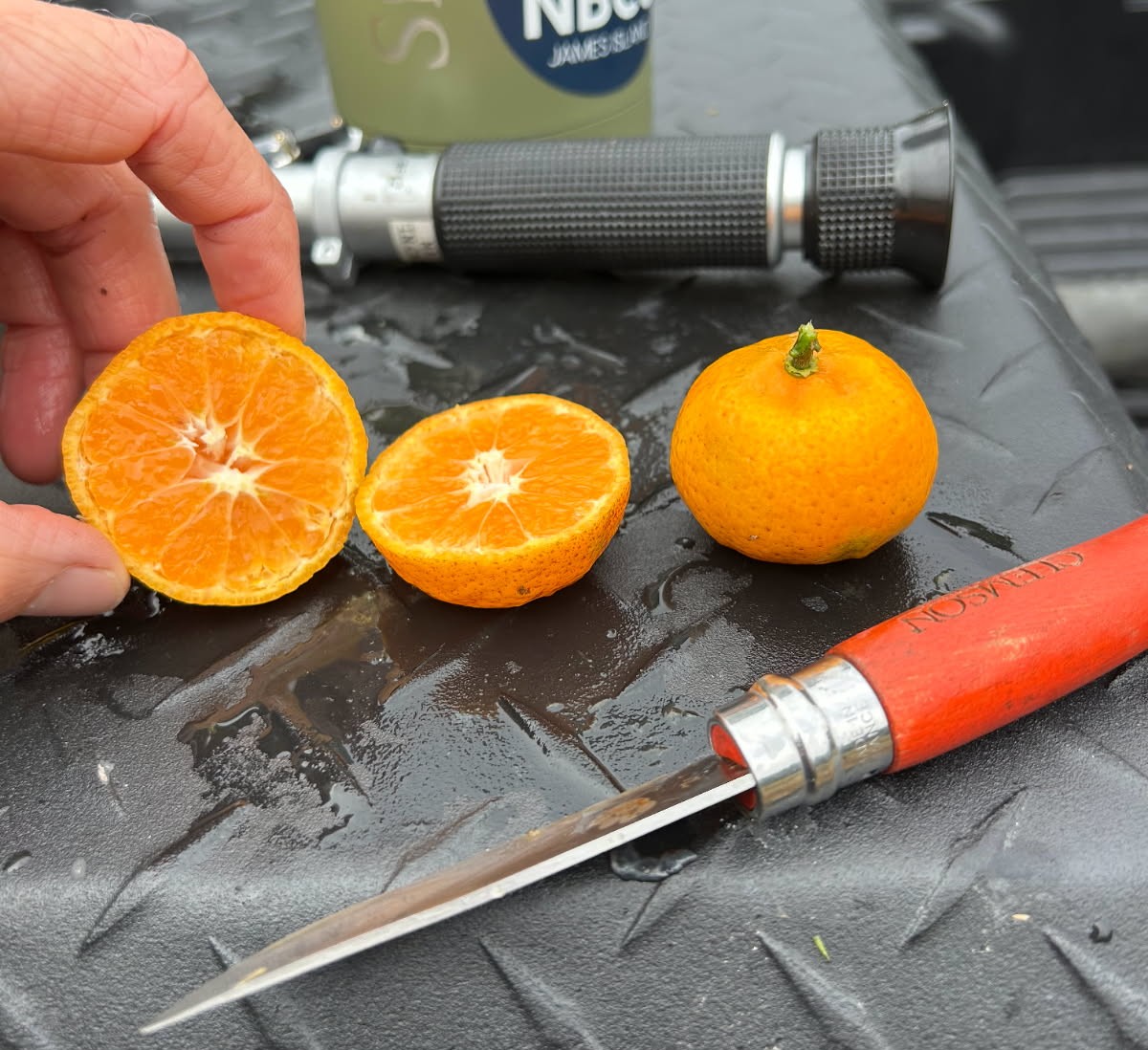
At CREC in Charleston, we are taking weekly brix (sugar) measurements to determine optimal harvest windows for citrus varieties.
Zach Snipes, ©2025, Clemson Extension
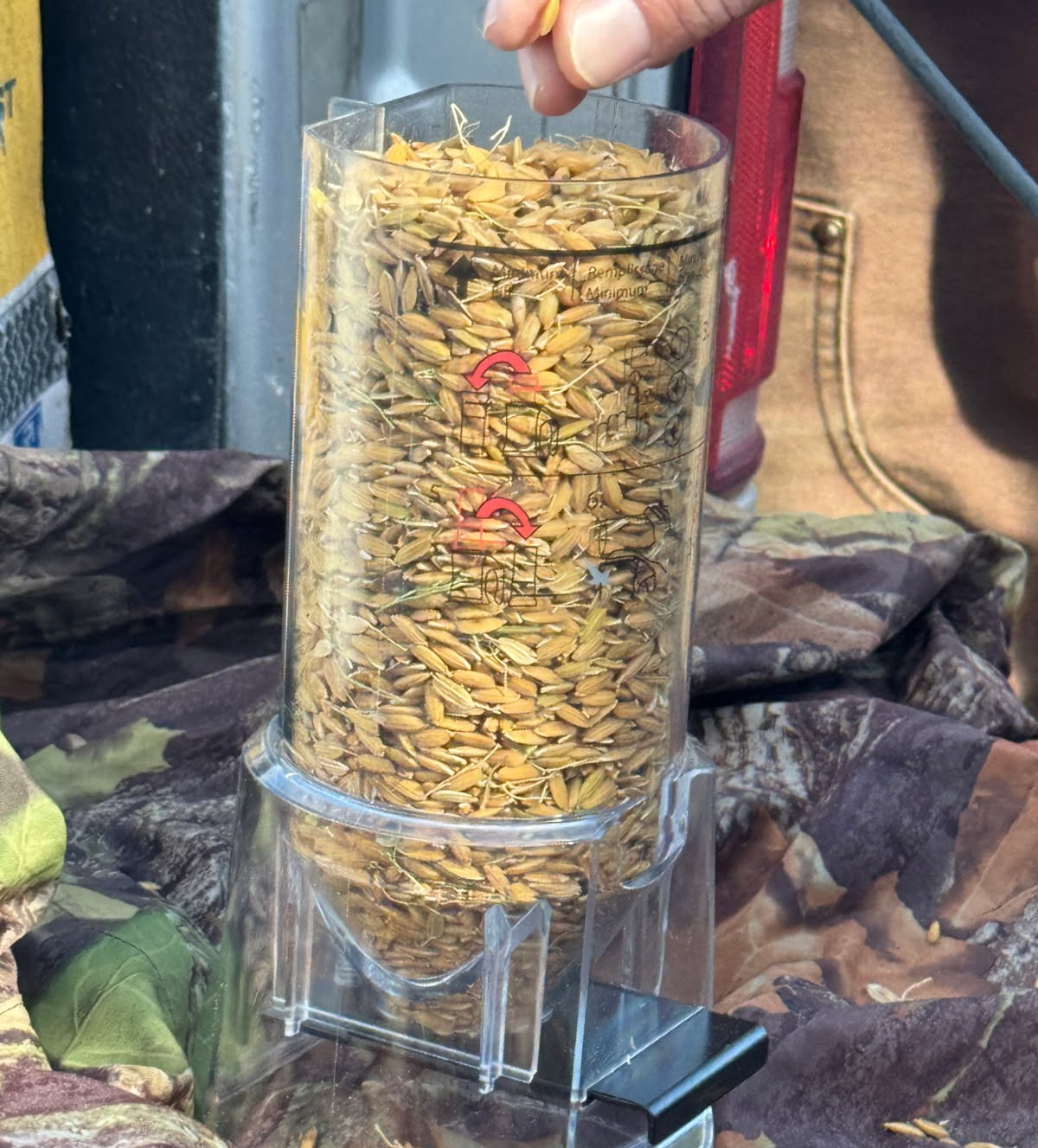
Checking the moisture content of Carolina Gold rice to determine harvest dates.
Zach Snipes, ©2025, Clemson Extension
Midlands Region
Sarah Scott
- We’ve had a couple of inches of rain throughout parts of the Midlands, which came after a period of significant dryness. Cooler temperatures are settling in, and some areas around Edgefield and McCormick Counties saw a very light frost early Saturday morning.
- Strawberries are in the ground, and growers are deciding on whether to cover and push plants or not (listen to today’s episode of the podcast to hear some pros and cons of that).
- Eggplants, peppers and tomatoes will continue for a few more weeks or until a frost. Collards, cabbage, broccoli and other greens and root crops are growing nicely and enjoying the fall weather. Prior to the rain, the aphid population seemed to have crept up, but with cooler nights and rain, they are dwindling again.
Upstate Region
Andy Rollins
- Strawberry development in the Upstate is progressing nicely. Many growers are injecting Orondis Gold at 10 days to 2 weeks after planting to control root rot issues. Many have pushed with liquid fertilizers to increase fall growth. Several growers have asked about covering strawberry plants with row covers for increased fall plant development. Plug plantings I visited last week have lost their older leaves and have put on 2 new leaves in 10-14 days. Some cutoff plants have not established as quickly, but are progressing. I advised applying protectant fungicides ahead of major rain events, like the one we saw early last week. Thiram or captan are good choices if no diseases have been identified on your farm. Several farms are fighting off major deer pressure.
- Muscadine harvest is finished, and growers are reporting good yields for the year. Black rot is believed to have been prevented by making more aggressive, earlier fungicide applications, but the drought in July and part of August also helped some in this regard.
- New grower visits are being made this week for next year’s plantings. Some peach growers made copper applications to control bacterial spot problems on susceptible varieties like Ohenry and Augustlady. Some growers are preparing to make delayed bloom applications using ethylene products. Where we had severe Phomopsis twig blight, some growers are spraying Bravo/Initiate to get ahead of the spring dieback.