Rain has finally come as the weather turns cooler. Strawberry planting is wrapping up in parts of the state. Insect pressure, including diamondback moth and two-spot cotton leafhopper, is still high in places. See details below.
For anyone growing or thinking about growing sweetpotatoes, please take this short survey to help us determine interest in a statewide sweetpotato production meeting.
As we get into strawberry season, check out this year’s Strawberry Webinar Series to brush up on disease management, bed formation, and insect management. SC pesticide applicators can earn 1.5 pesticide credits. The webinar is available now through 11/15. View Details and Register Here
Keep an eye on the Upcoming Events tab periodically so you don’t miss any of our winter/spring meetings. Also, check out the latest episode of the SC Grower Exchange Podcast.
Don’t forget to look at our Resources tab for links to crop handbooks, helpful websites, and related blogs.
Coastal Region
Anna Sara Hill
- This week is forecast to be rainy in the lower part of the coastal plain.
- The growing season is winding down in the coastal plain. Growers are plowing fields and pulling up plastic.
- One grower is still harvesting some pumpkins and winter squash.
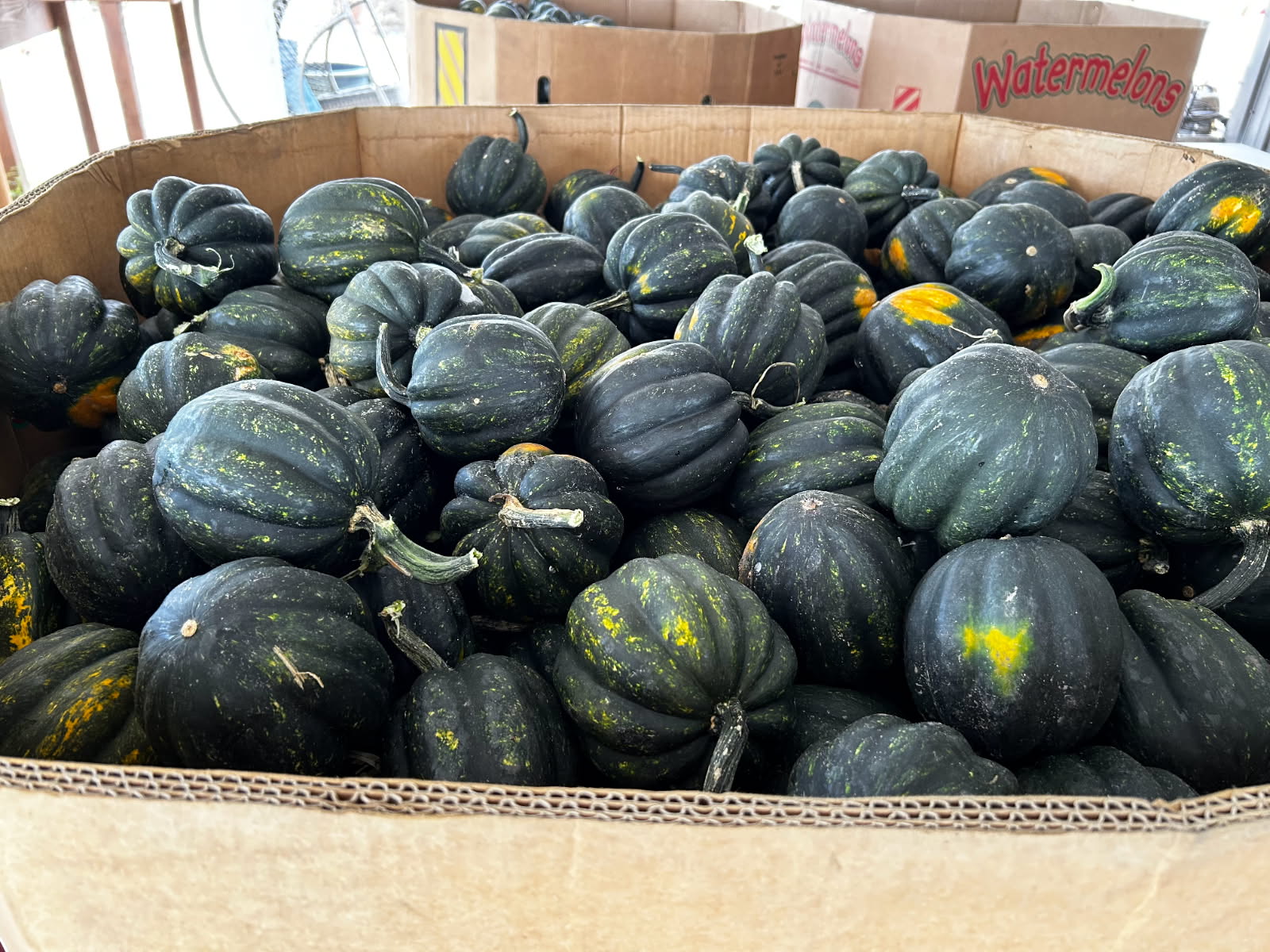
Acorn squash harvested this past week.
Anna Sarah Hill, ©2025, Clemson Extension
Midlands Region
Rob Last
- After another dry, but refreshingly cooler week in the Midlands, crops look very good. There is some rain in the forecast for this week, which may increase disease pressure. Currently, disease activity in fields remains low.
- Strawberry plants have been or are being delivered and planted. Overhead irrigation can help with establishment.
- Crops coming to market include tomatoes, peppers, eggplant, squash, zucchini, and leafy greens, including turnip greens and lettuce.
- Diamondback moth adults are active in the area, increasing worm pressure in susceptible crops. Keep monitoring and remember to rotate chemistry to prevent resistance. Two-spot cotton leafhopper (Amrasca biguttula) has been confirmed in Lexington County. The find occurred in eggplant with symptoms of hopper burn being evident. The symptoms observed in this case resembled 2-spotted spider mite feeding damage, both of which were found in the field. Check crops closely. I required a hand lens to distinguish the spots on the pest. A cell phone camera can also magnify enough to help with identification. Beleaf and Sivanto are reported to be effective in cotton crops and are licensed in eggplant. As we progress into winter, cooler temperatures are going to check the pest.

Two-spotted cotton leaf hopper on the underside of an eggplant leaf.
Rob Last, ©2025, Clemson Extension
Upstate Region
Briana Naumuk
- Here in the Upstate, fall weather has officially set in. Nightly temperatures are predicted to be in the 40s all this week and take an extra dip into the high 30s over the weekend. We are set to get some much-needed rain this week. It looks like it will be raining the rest of the week here, so plan spray applications accordingly. Be sure to scout for disease at the end of the week when it dries up.
- Apple harvest has been low this year, and growers are finishing up selling their later varieties. The season is likely to be over in the next couple of weeks. Growers will begin to prep for next season.
- Muscadines have been good this year and are chugging along as we approach the end of the harvest season.
Andy Rollins
- We finished up planting most of the Upstate strawberry crop last week. Make sure your deer fences are up, as cooler night temperatures are producing active deer movement. Plug plants are looking good across the board. California cutoff quality varies greatly. I believe some plants were possibly frozen or went through some heat, as they were slimy and had excessive amounts of dead tissue. Crown size on these plants varies greatly, which will affect total yield as some shipments contained plants with primarily pencil-sized diameter. I don’t believe this variability is any worse than normally seen, though.
- We recently did a dye injection through a drip system to help demonstrate how important irrigation timing is. Raised beds were treated with the same amount of dye, then irrigated for a period of 1,2,3, and 4 hours to observe the spread of the dye across that soil type.
- Some small farms in the Upstate grow green peanuts for boiling. They are harvesting now, and the harvest looks good. Heavier soils caused some soil-borne fungal problems.
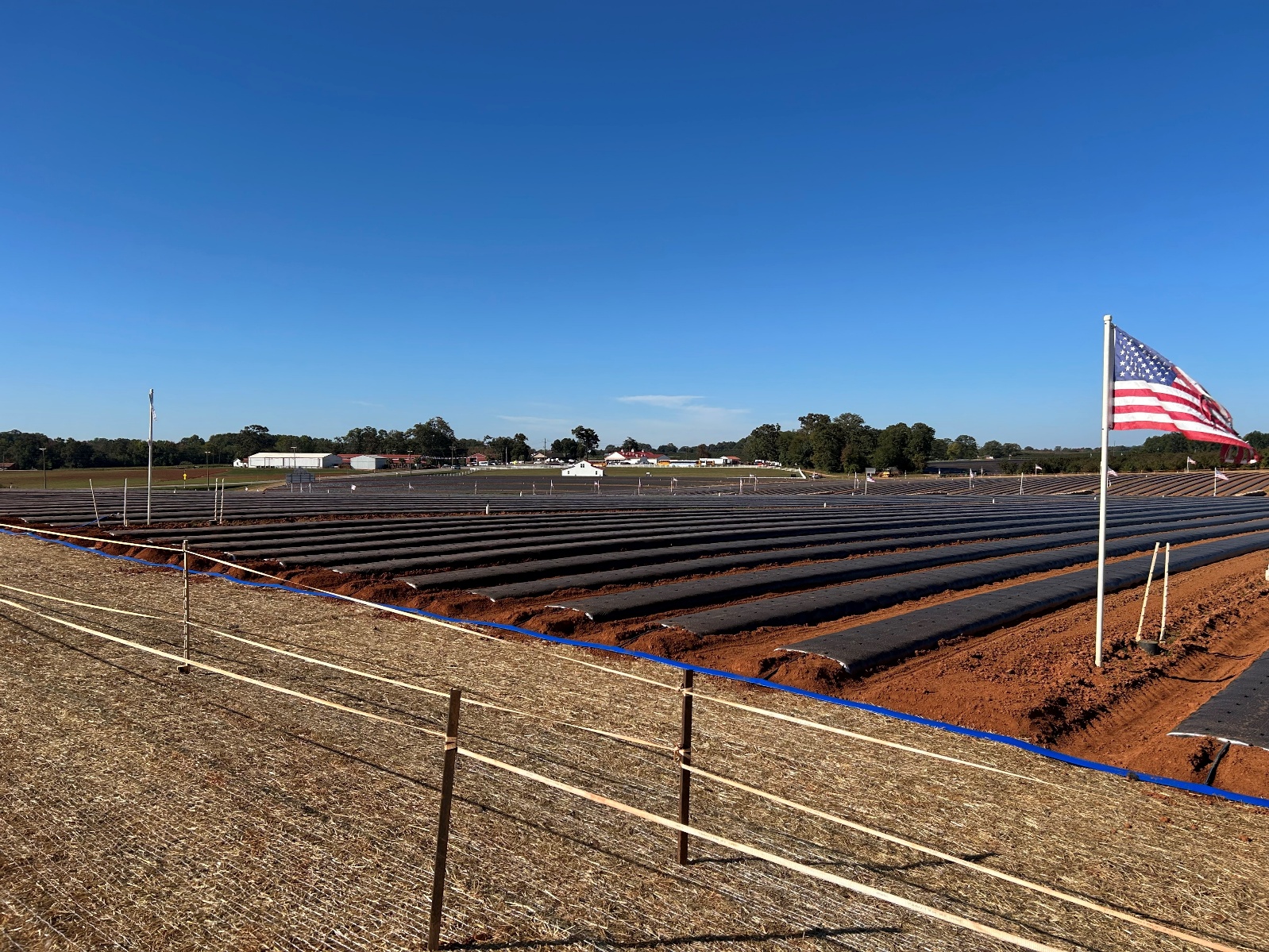
Make sure deer fences are up around strawberry fields. The cooler weather has deer moving.
Andy Rollins, ©2025, Clemson Extension
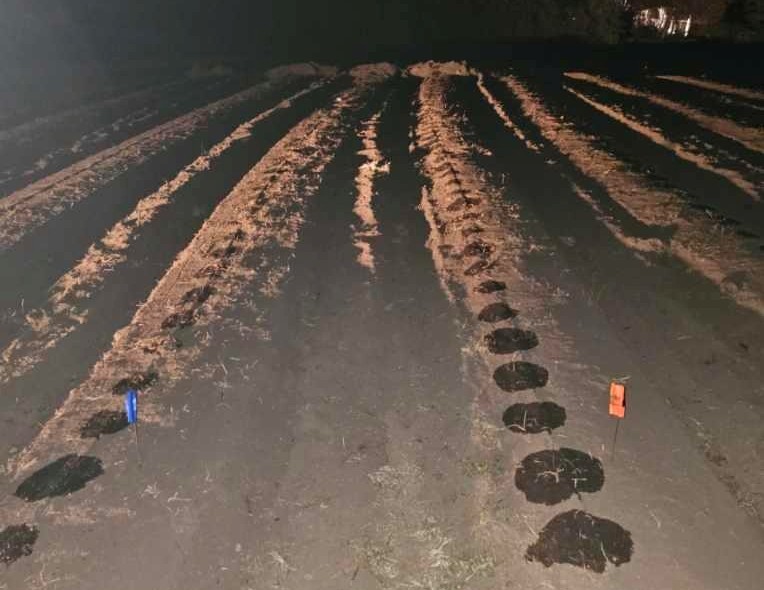
Dye on the soil surface from a drip irrigation demo.
Andy Rollins, ©2025, Clemson Extension