As the weather feels more and more like fall, disease is becoming more apparent. Strawberry planting is just beginning and will pick up in the next week. Leafy greens are looking good, though caterpillar populations are high in places. See details below.
As we get into strawberry season, check out this year’s Strawberry Webinar Series to brush up on disease management, bed formation, and insect management. SC pesticide applicators can earn 1.5 pesticide credits. The webinar is available now through 11/15. View Details and Register Here
Keep an eye on the Upcoming Events tab periodically so you don’t miss any of our winter/spring meetings. Also, check out the latest episode of the SC Grower Exchange Podcast.
Don’t forget to look at our Resources tab for links to crop handbooks, helpful websites, and related blogs.
Midlands Region
Rob Last
- We had some welcome rainfall early in the week for this area of the Midlands. As the week progressed, temperatures suggested the arrival of fall, potentially a false fall; however, the cooler conditions are a welcome respite for both crops and us.
- Crops are developing well in the area; however, with the rainfall early in the week, scouting for diseases will remain paramount.
- I am getting reports of increasing numbers of caterpillars, imported cabbageworm and diamondback moths being the most prevalent. Consult with your local agent or the Southeastern Vegetable Crop Handbook for more information. Always remember to rotate the modes of action for insecticides to prevent resistance.
- As we prepare for planting strawberries, a couple of suggestions.
- Check your plants upon arrival. Check the foliage for active symptoms of foliar pathogens, lesions, or leaf spots, for example.
- Check the underside of the leaves for the presence of spider mites.
- Check the roots are bright and white and not discolored.
- Reject any plants showing symptoms of disease; planting diseased stock now will lead to issues throughout the season.
- Make sure beds are moist in preparation for planting.
- Check irrigation systems are functioning as desired, both overhead and drip. A little time invested now can save a lot later.
- Finally, train the crews doing the planting to make sure they understand the correct planting depths to be achieved.
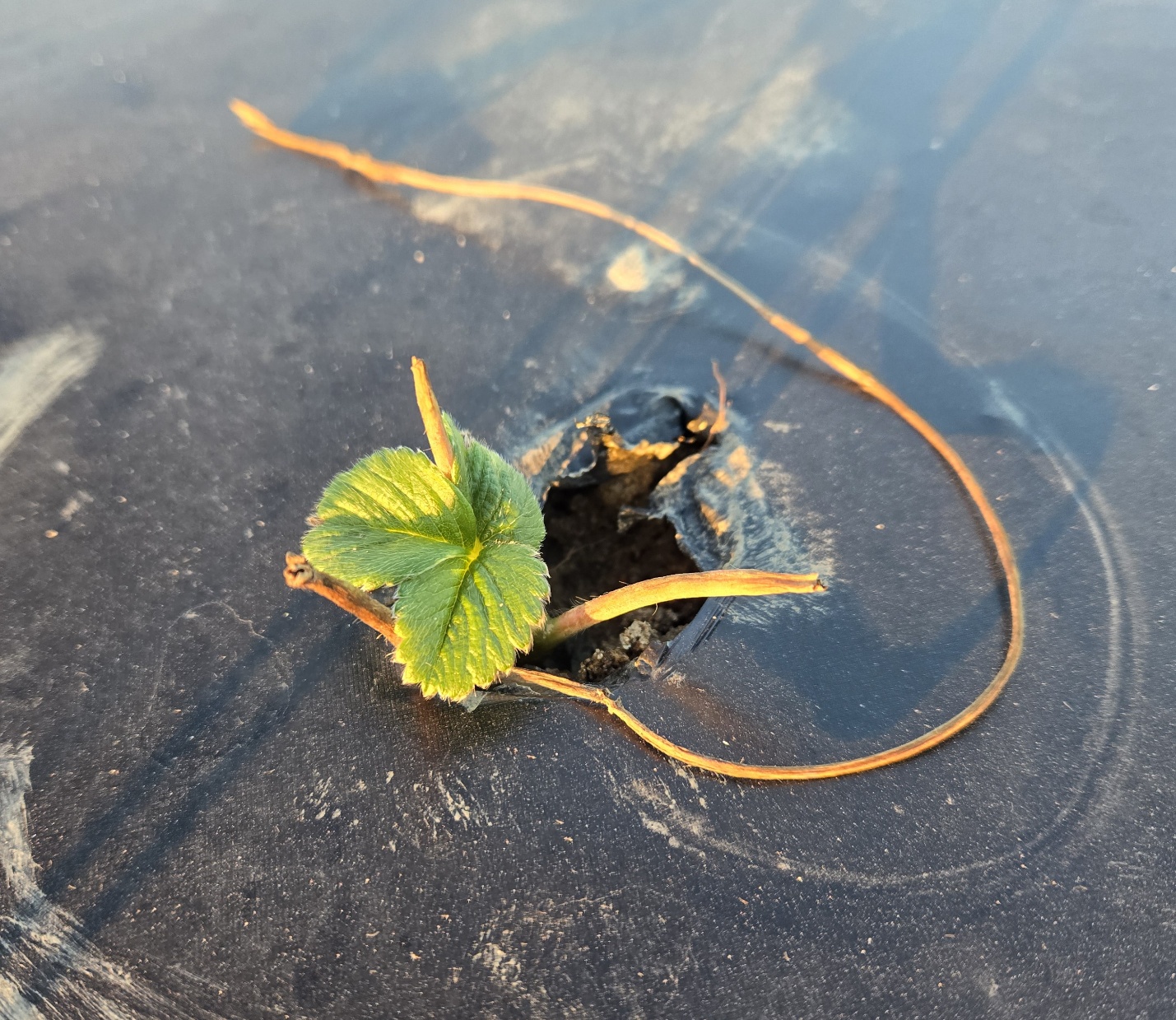
Freshly planted bare root strawberry transplant.
Rob Last, ©2025, Clemson Extension
Pee Dee Region
Brittney King
- The Pee Dee got a little bit of rain last week, but most areas are still very dry. Many growers are having to irrigate before prepping their beds and laying plastic for strawberries.
- Because of the continued dry weather, powdery mildew has been an issue in cucurbits, mainly squash and zucchini. Downy mildew, cucumber beetles, and viral symptoms are all very present. Plants are yielding in good volume for now, but will most likely be done after this week due to so much disease.
- Day-neutral strawberries are progressing well in the Pee Dee. I have seen some plants that appeared to have phytophthora root rot, but I am still waiting for confirmation from the lab. I am not seeing many insect pests besides spider mites at this time, most likely because of the drier weather. Growers who plant spring berries have already fumigated and are waiting to get their strawberry plants in to plant in the next week or two. This is your annual reminder to get up your deer fences, strobe lights, whatever deterrents you use in your field. It is highly recommended to have deer deterrents in place BEFORE you even plant the strawberries!
- Southern peas are starting to wind down, but yields have been great this year. Cowpea curculio was present at low numbers this year. Lima beans are about to be ready to harvest. I noticed a good number of pods that were not filled out, so I think the drier weather has impacted pod development. Lima bean anthracnose is a big issue currently because of the weather conditions we’ve been having.
- Leafy greens are loving the cooler temps and are progressing well. I am seeing diamondback moth caterpillars and cabbage loopers mainly on collards. Some collard growers are really wishing for some rain this week so they do not have to irrigate again.
- Muscadine harvest is ending, with some dark-skinned varieties still being harvested. It was a great year for muscadine harvest in terms of yield, and we had very little rain compared to this time last year, so disease pressure was way lower.
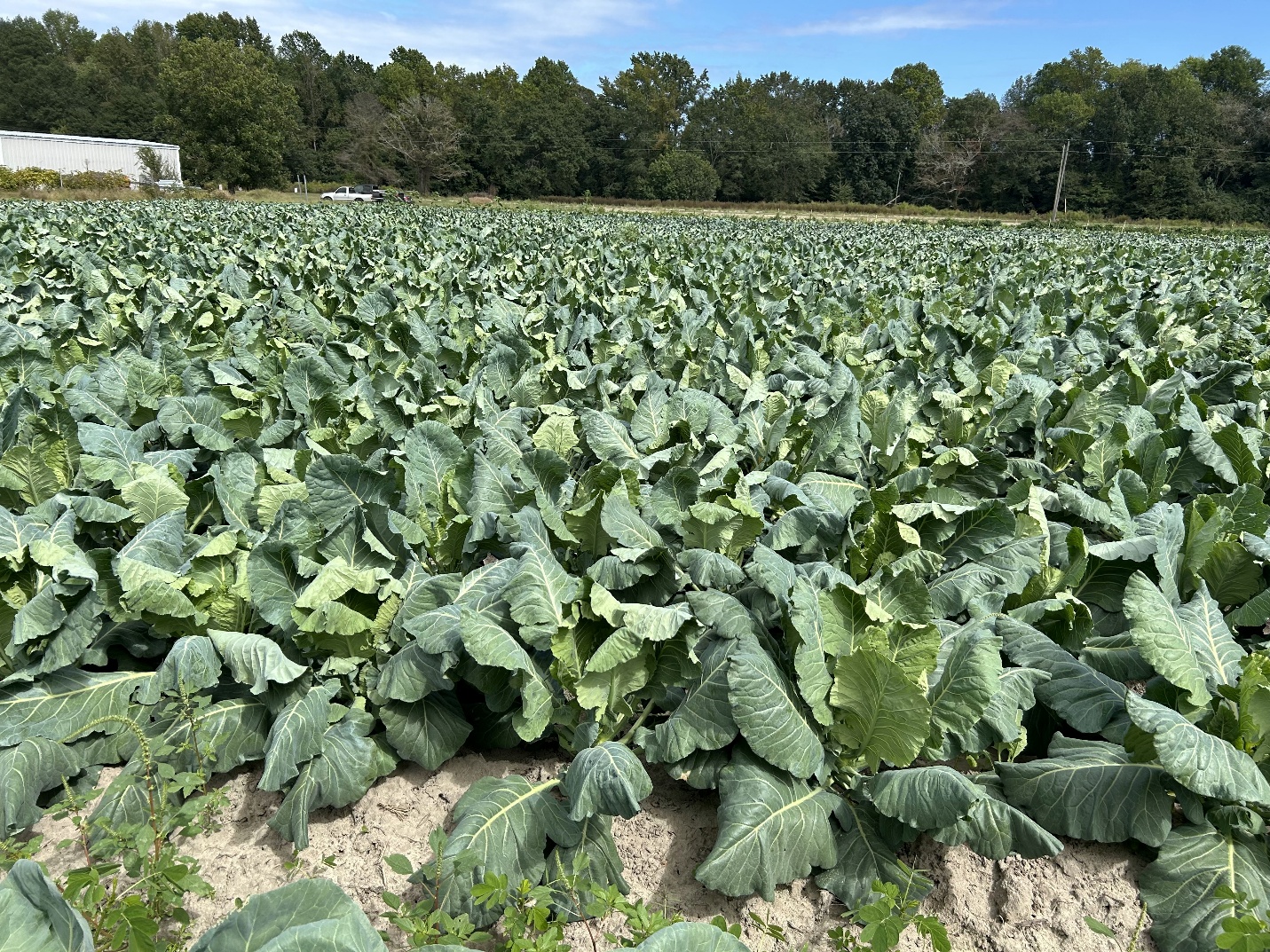
Collards are progressing well, but they sure could use some rain!
Brittney King, ©2025, Clemson Extension
Upstate Region
Andy Rollins
- I have continued inspecting new strawberry plantings. I am finding some V-shaped lesions on new plants that is suspected to be phomopsis. I am still finding some root rot, also. I found significant spider mites from a greenhouse strawberry plantings source. On a positive note, we are beginning harvest in greenhouse production, although fruit size is small starting out. A few growers haven’t fumigated yet and will be late planting. California cutoff supplies are on track, following their typically later arrival, which is a concern if growing weather temperatures decrease as they are predicted to.
- Muscadine harvest is strong, with some smaller producers having trouble moving any volume.
- Sweetpotato harvest is in full swing, with one producer trying out his new harvester.
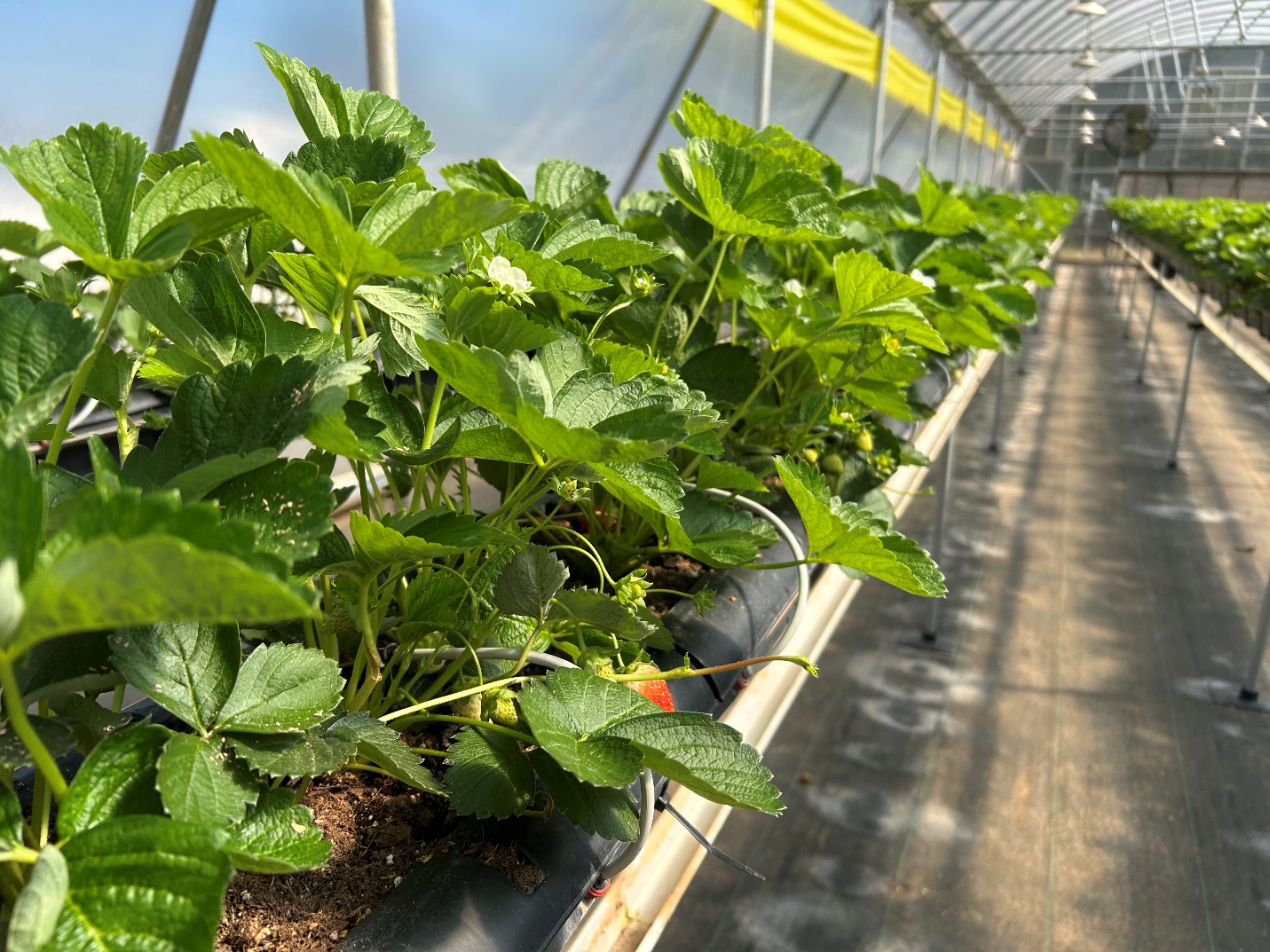
Harvest is beginning in greenhouse strawberries.
Andy Rollins, ©2025, Clemson Extension