Follow the transformation of a former swimming pool into a lush Celtic garden filled with pollinators, hummingbirds, seasonal color, and wildlife-friendly design ideas.
The Evolution of a Celtic Garden Space in South Carolina
It has been two years since my husband and I began developing our 20-year dream of creating a Celtic garden where our old swimming pool was once located.
See the blog post “The Evolution of a Garden Space“ for the project’s beginning in May 2024.

This is how the garden area looked in March 2024, before the magic began.
Barbara H. Smith, ©2024 HGIC, Clemson Extension
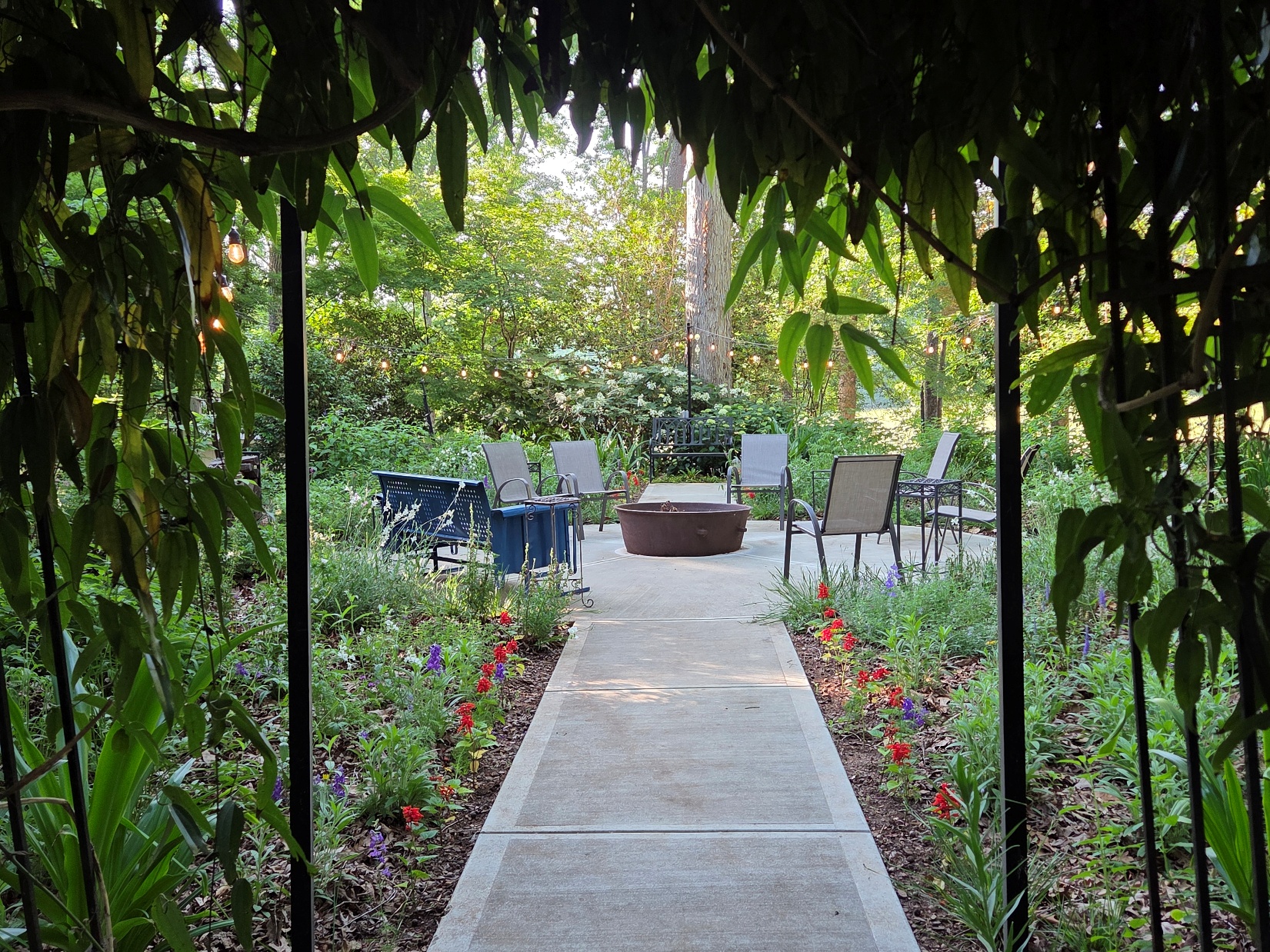
The Celtic Garden plants have matured, filling every space with a lush tapestry of color and texture.
Barbara H. Smith, ©2026 HGIC, Clemson Extension
How Repeated Plantings Create a Cohesive, Pollinator-Friendly Design
Choosing the plant material to create a fluid, pollinator-friendly garden has been so much fun, especially for a plant geek like me.
Repeating Plant Material Across Garden Quadrants
The garden features four quadrant planting areas, so plant selections were repeated in all four to create a continuous, cohesive design.
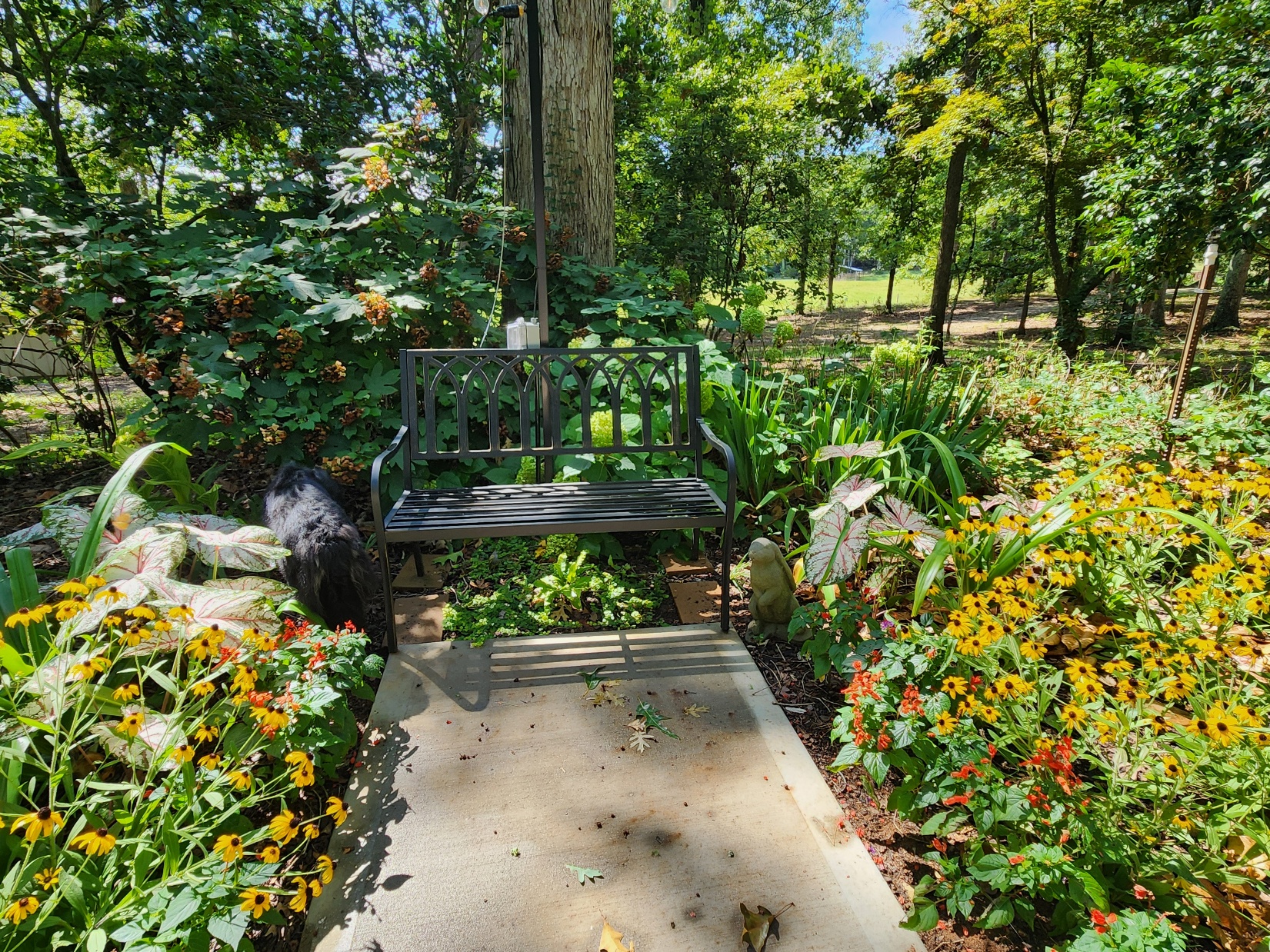
Plant selections for all four quadrants of the Celtic Garden were planted in the same way to create a continuous, cohesive design.
Barbara H. Smith, ©2025 HGIC, Clemson Extension
How a Carefully Curated Plant Palette Supports Pollinators From Spring Through Fall
Extending Bloom Season With Annuals and Perennials
Plants were selected to attract pollinating insects, along with a wide selection of leaf shapes, flower colors, and blooming times to extend flowering and color from early spring until the first killing frost of fall.
Combining Shrubs, Bulbs, and Seasonal Color for Long Bloom Cycles
A combination of annuals, perennials, small shrubs, and seasonal bulbs extends the long growing season in South Carolina from March until late November. Something is always blooming over the 8-month period.
As one perennial fades, later-blooming selections begin their displays. Annuals, such as Red Hot Sally salvia and colorful caladiums, add continuous color throughout the season.

A combination of annuals, perennials, small shrubs, and seasonal bulbs extends the long growing season in South Carolina from March until late November.
Barbara H. Smith, ©2025 HGIC, Clemson Extension
Creating a Hummingbird-Friendly Garden Sanctuary
Hummingbirds are frequent visitors and enjoy collecting nectar from all the flowers, especially annual and perennial salvias.
The cables supporting the outdoor lighting have become the perfect resting place for hummingbirds.
How Outdoor Patio Lighting Extends the Garden Experience
Last year, my husband added weatherproof outdoor patio lights.
Creating Evening Ambiance in a Pollinator-Friendly Garden
The nighttime lighting adds an ethereal, magical glow and extends the garden’s use into the evening hours.
The Celtic garden has become one of our favorite places to entertain family and friends.
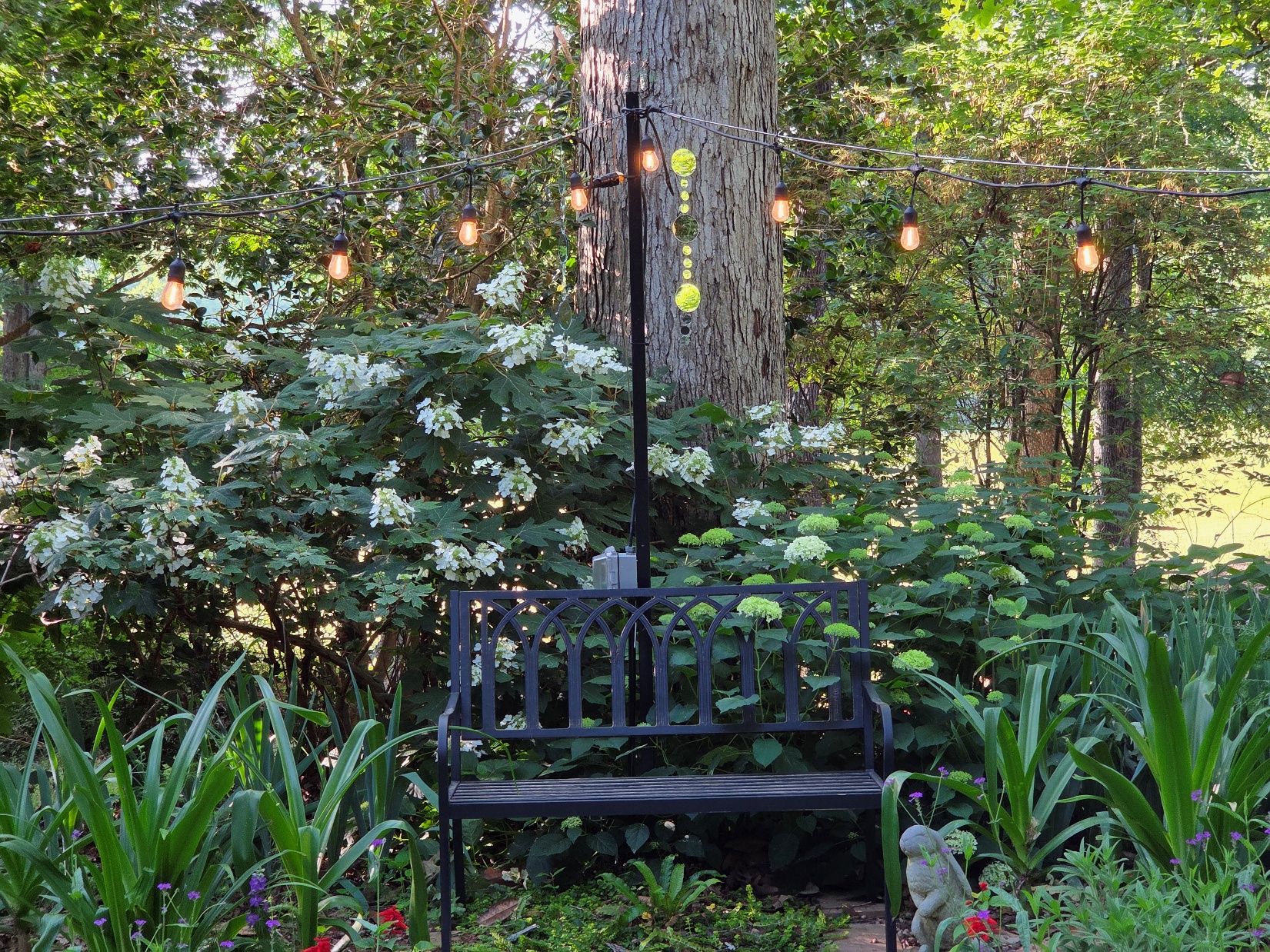
Nighttime lighting adds an ethereal, magical glow and extends the garden’s use into the evening hours.
Barbara H. Smith, ©2026 HGIC, Clemson Extension
Adding Charm to a Celtic Garden
Using Mirrored Garden Accents to Reflect Light
English gardeners call nonessential eye-catching items, mainly for decoration, “follies”. One of my favorite “follies” is strands of mirrored tiles hot-glued to a heavyweight fishing line.
They move in the breeze and reflect sunlight, scattering prismatic light throughout the garden.
Repurposing Vintage Furniture for Comfortable Garden Seating
Comfortable seating is important. We repurposed an old 1950s antique glider, adding a colorful, nature-inspired pad and pillows.
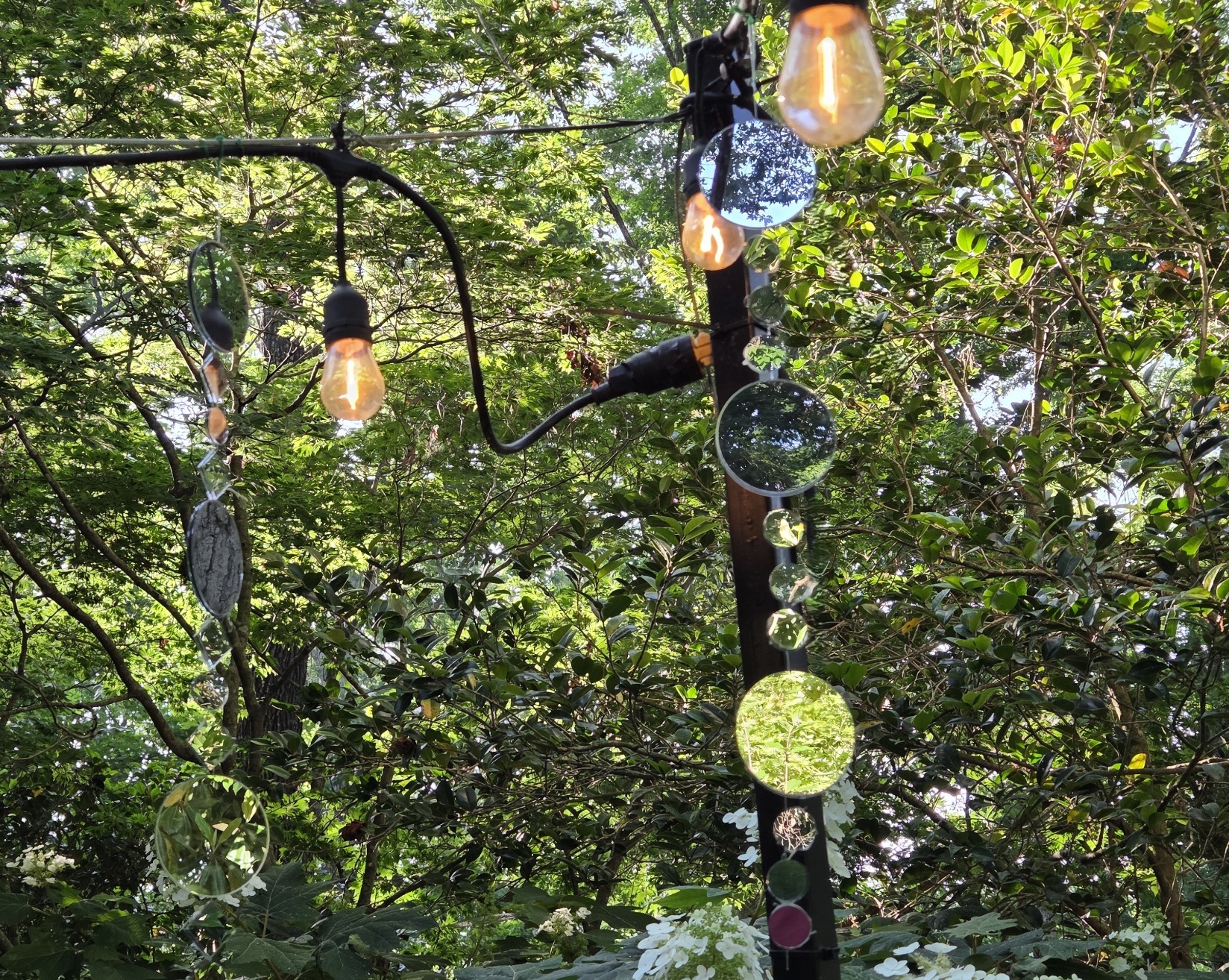
Mirrored tiles hot-glued to the length of heavy-duty fishing line sway in the wind and reflect prismatic light throughout the garden.
Barbara H. Smith, ©2025 HGIC, Clemson Extension

Kate enjoys lounging on the 1950s-era antique glider with a nature-inspired bird-print pad and pillows.
Barbara H. Smith, ©2026 HGIC, Clemson Extension
Fire Safety Considerations For Outdoor Garden Spaces During Drought
Due to the severe drought in South Carolina, we have not used the fire pit this spring for fire safety concerns.
How Leaving Seed Heads Supports Songbirds in a Wildlife-Friendly Garden
After a killing frost in the fall, seed heads on spent flowers are left until spring, providing an important food source and cover for a wide variety of small songbirds.

Flower seeds are left throughout the winter months, providing an important food source for a wide variety of small songbirds.
Barbara H. Smith, ©2026 HGIC, Clemson Extension
A Peaceful Farm Haven Surrounded by Plants, Wildlife Activity, and Birdsong
Being surrounded by beautiful flowers and foliage, observing increased insect and hummingbird activity, and listening to the birds sing have made this space one of our favorite places to relax and enjoy life here on the farm.