
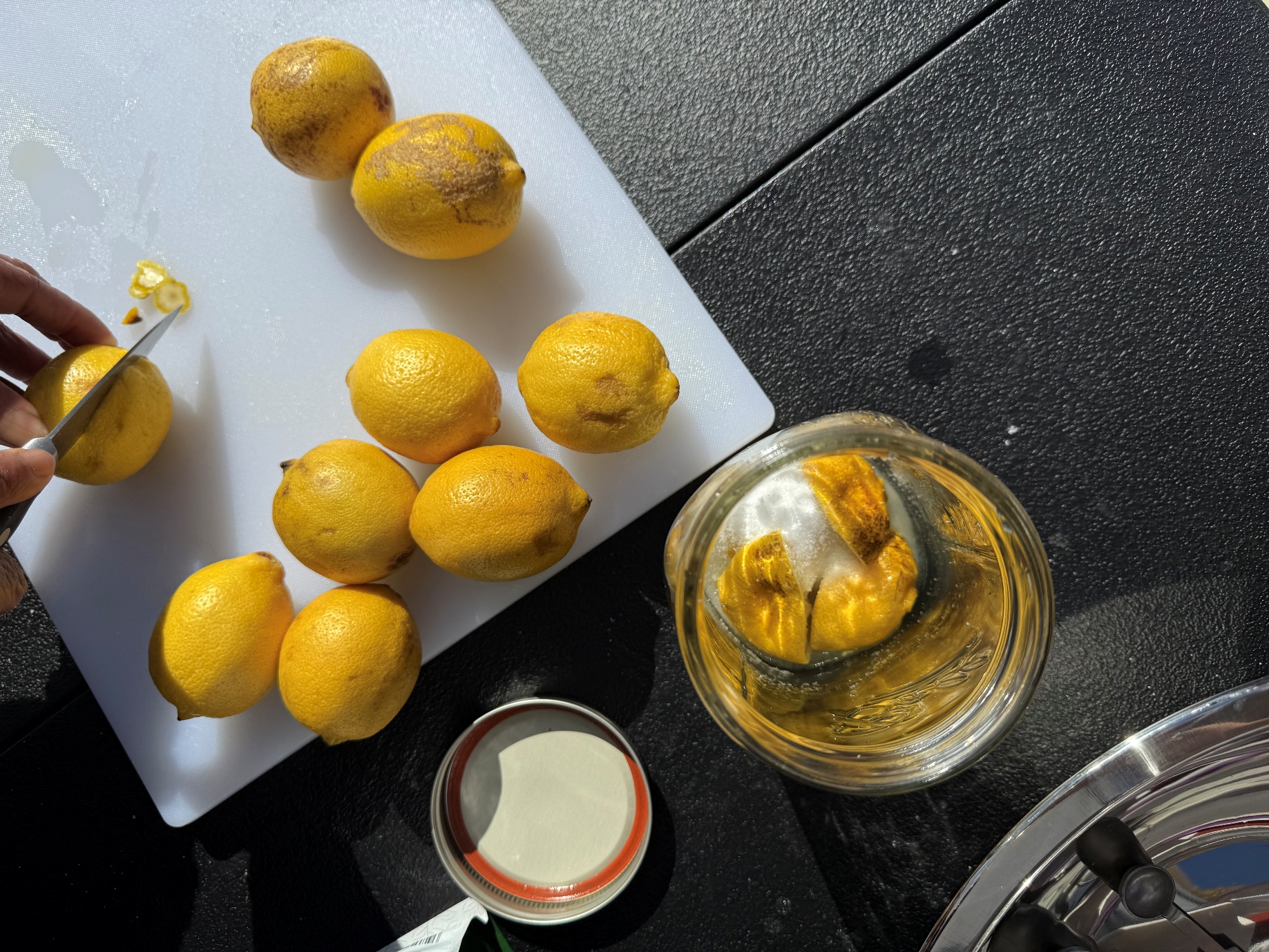
Packing lemons and salt into a sterilized jar to begin fermentation.
Jessica Hardiman ©2025, Clemson Extension
How to Make Preserved Lemons at Home
Preserved lemons are a staple in pantries and kitchens across the Middle East and North Africa. They were originally created as a way to keep lemons for use long after the fruit’s season had ended.
These are created by packing the lemons whole, halved, or quartered into a jar with a brine of kosher salt and lemon juice. The resulting lemon, after weeks of fermentation, has an intense, concentrated flavor that has many uses from soups and stews to chicken and fish bakes.
How Fermentation Works When Making Preserved Lemons
The fermentation process begins with the lemons, which naturally bear lactic acid bacteria on their surfaces. The lemons are then packed in the salt brine and allowed to sit.
The lactic acid bacteria from the lemons will begin to convert the sugars in the lemon pulp and peel into lactic acid, which lowers the pH of the entire product. The salt in the mixture helps draw out the lemon juice and suppresses spoilage microbes, while encouraging the growth of lactic acid bacteria.
Over time, enzymes and acid will break down the lemon peel, softening it and mellowing out the bitter taste. After approximately 2 weeks of fermenting, the lactic acid bacteria will dominate, stabilizing the pH, and the flavor of the preserved lemons will deepen.
How to Use Preserved Lemons in Everyday Cooking
After fermenting the lemons, only the peel should be used. The pulp and membrane can be discarded, and the peel is rinsed before use.
Flavor Ideas for Cooking with Preserved Lemons
- Sauté with olive oil and garlic when cooking leafy greens
- Add to tuna, salmon, or chicken salad
- Add to stews or soups as they simmer
- Roast with potatoes or other root vegetables
- Use the juice and small pieces of the rind to make a vinaigrette
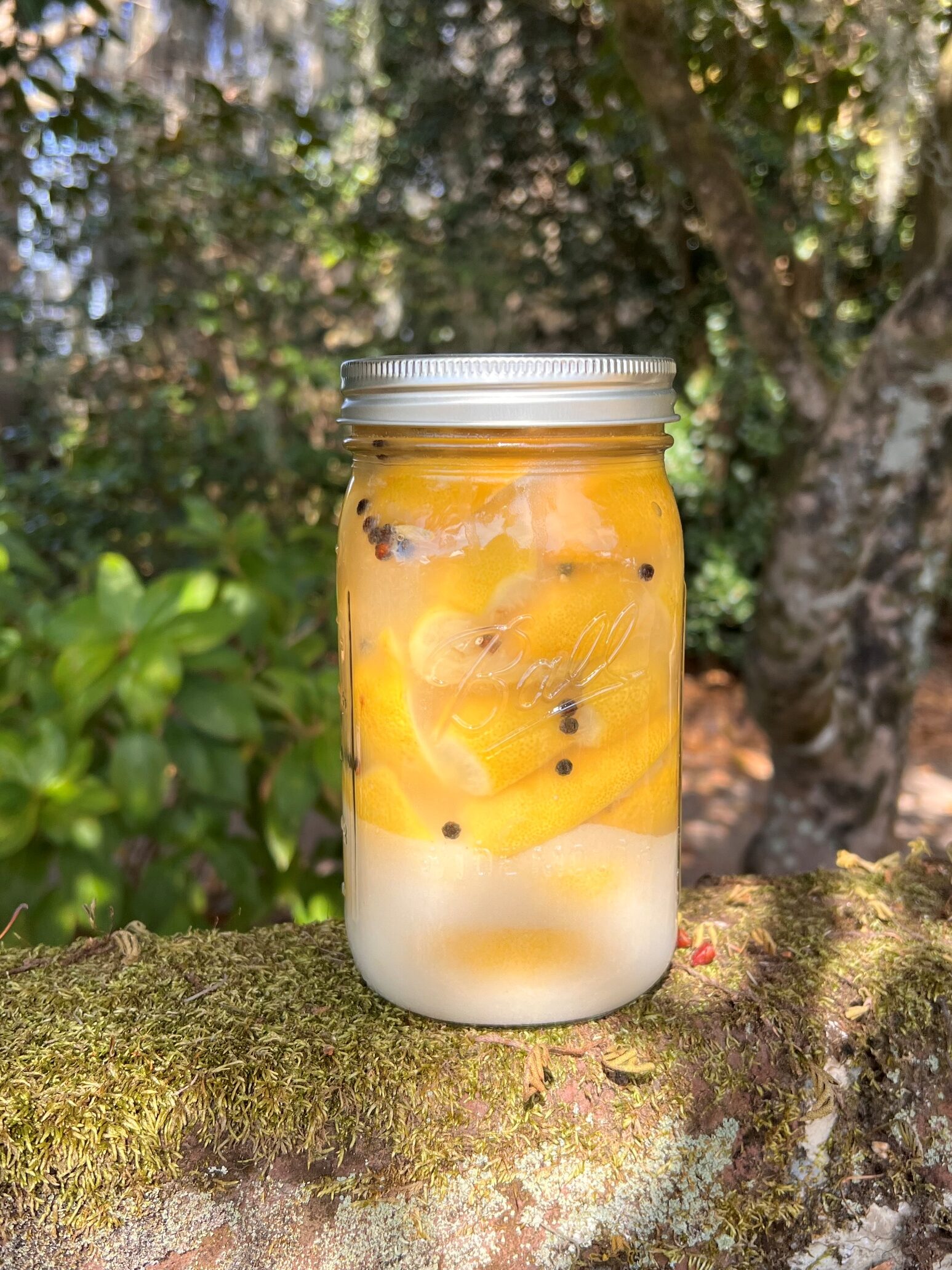
Jar of preserved lemons.
Susie Goudy ©2025, Clemson Extension
Preserved Lemon Recipe (Ball Complete Book of Home Preserving)
Ingredients for Making Preserved Lemons
Note: only the lemons and salt are necessary; all other spices are optional. If adding additional ingredients, be sure to only use dried spices or herbs, not fresh, as this can alter the pH.
Makes about 1 quart
- 10 lemons
- ½ cup pickling or canning salt
- 4 bay leaves
- 4 cinnamon sticks ~4” each
- 1 tsp whole black peppercorns
Step-by-Step Instructions for Making Preserved Lemons
- Sterilize the jar by boiling it in water for 10 minutes.
- Scrub 5 lemons well and dry with a paper towel.
- Slice 1/8 inch off the stem end. Starting at the stem end, cut the lemons into quarters lengthwise, without cutting through the bottom, and leave the end intact. Juice the remaining 5 lemons for 1 ½ cups of juice.
- Add 1 tablespoon of salt to the bottom of the jar. Pack 1 tablespoon of salt into each lemon and place in the jar, stem side up.
- Add cinnamon, bay leaves, and peppercorns to the jar if desired. Cover with the remaining salt.
- Add lemon juice to within an inch of the top of the jar. Cover with lid, screwing band down for an airtight seal.
- Place in a dark, cool area for 2 weeks, shaking daily to distribute salt, and burping the jar if needed.
- Lemons are ready to use in 2 weeks. Refrigerate. These will keep in the refrigerator for up to 6 months. Remove pulp and membrane, using only the peel. Rinse under water to remove excess salt.
Sources
Ball Complete Book of Home Preserving


