
What Is Fiber?
Fiber is a carbohydrate that is difficult to break down. It is difficult to digest for two reasons: its structure is more complex than simpler carbohydrates like polysaccharides (Figure 1 and Figure 2) and we do not naturally produce the digestive enzymes to break them down.
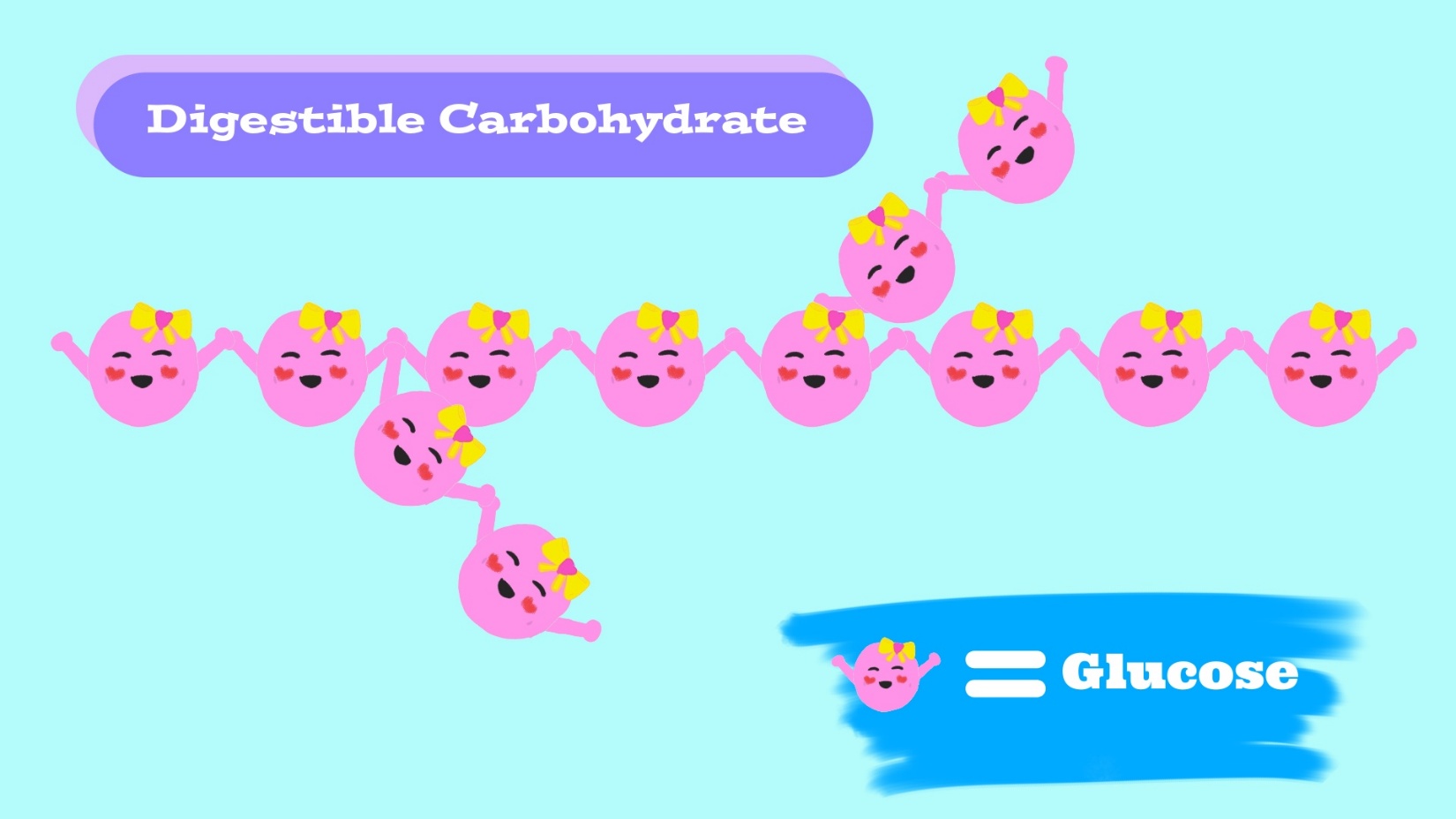
Figure 1: A digestible carbohydrate like starch (found in plant products) or glycogen (found in animal products) are easier to break down because it is easy to pull one glucose off the chain.
Liliana Flores, ⓒ2025, Clemson Extension
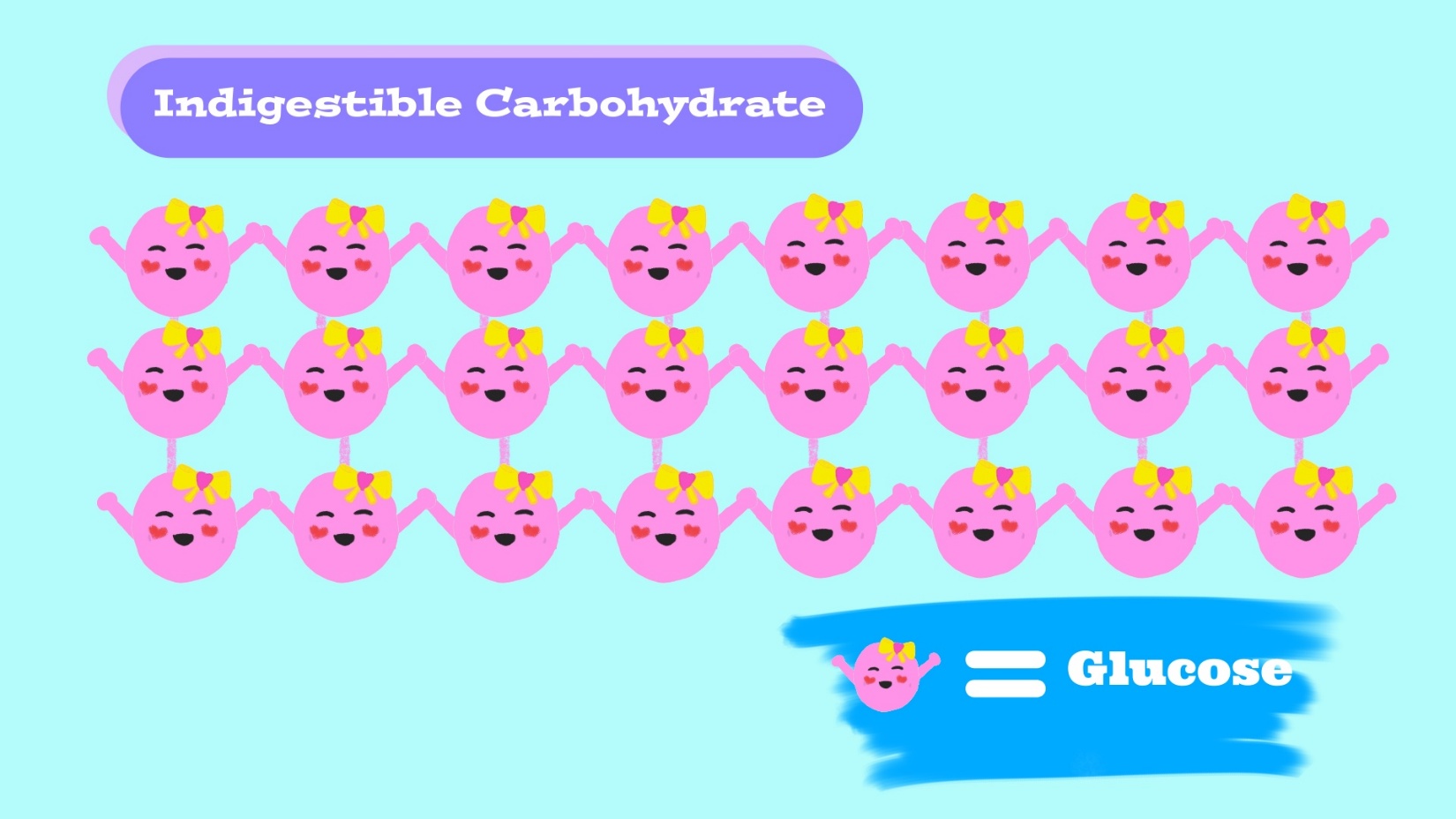
Figure 2: Indigestible carbohydrates like cellulose (plants) or chitin (mushrooms, insect exoskeleton) are harder to break down because they form a wall of glucose connections. This makes it harder to pull one glucose off.
Liliana Flores, ⓒ2025, Clemson Extension
Where can you find fiber?
You can find fiber in whole plant foods like fruit, vegetables, and whole grains. I associate fiber with food that is grown from the Earth.
The Journey of Fiber Through the Digestive System
Imagine this: it’s Valentine’s Day, you wanted to treat yourself with a box of chocolate-covered strawberries, a side of Chick-fil-a minis (served in that pretty heart-shaped tray), and flowers!
Let’s take a look at what journey the fiber in the strawberries take now that you chomped them down.
After swallowing your food, fiber (along with other food) falls down the esophagus tube into our acid-filled stomach. There the stomach pushes the content all around to break down the food both physically and chemically…but no matter how much acid comes its way or how aggressively the stomach walls push, fiber does not break down.
Mush-like food (including fiber) slowly gets released into the small intestine. The small intestine is our absorption canal: easily absorbed nutrients like broken down sugars (glucose, galactose, fructose), proteins, and fats get absorbed here. That means the sugar in the chocolate, the simple sugars in the strawberries, the sugars in the mini bread, and the protein in the chicken nuggets all get absorbed here.
Fiber stays on the ride until it reaches the large intestine. The large intestine is HOME to much of our gut bacteria. Some bacteria have the enzymes to break down certain fiber structures and take it in as food (we will discuss this more in the next section). The fiber that is not able to be broken down continues on the ride until it reaches the anal canal and exits out the body.
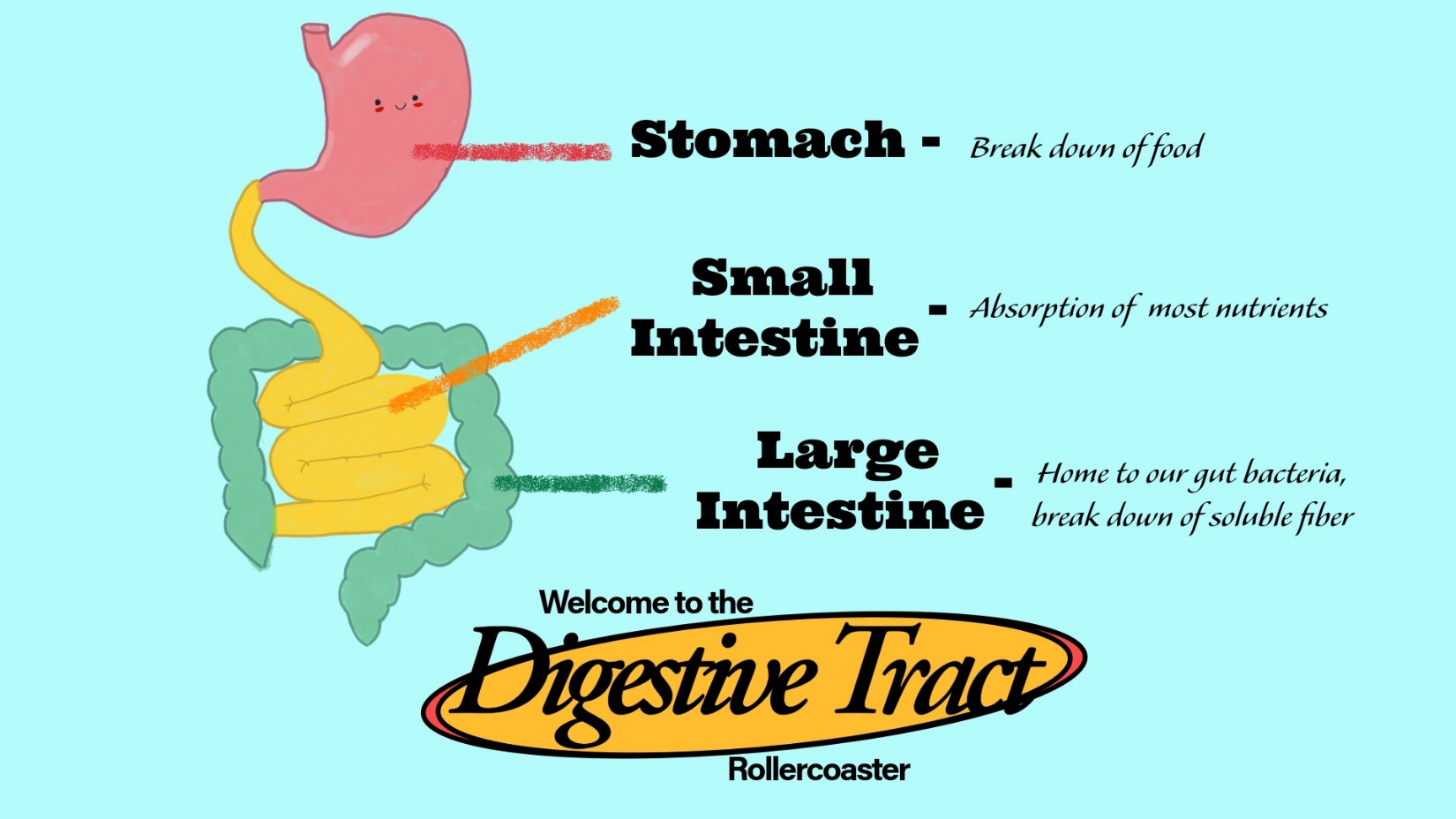
The digestive tract.
Liliana Flores, ⓒ2025, Clemson Extension
Two Types of Fiber: Soluble and Insoluble
So if fiber can’t be broken down naturally by our body, what is the point of it? Surprisingly, fiber offers a lot of great benefits to our body! Let’s get into it!
Fiber comes in two forms: soluble and insoluble fiber.
Soluble Fiber and Its Benefits
Soluble fiber is kind of like flour when you add water to it. It soaks the water up and changes its consistency to a thicker dough. This consistency helps aid us in multiple ways, some being:
- Lowers Cholesterol
As it moves through your digestive tract, fiber acts like a kid with sticky fingers. It grabs onto excess cholesterol and fat and carries it out with it rather than let it be absorbed into our body. - Supports Weight loss
Due to its thick consistency, fiber slows down the speed of digestion. The fullness and speed signals to your body to decrease your appetite, and this can aid in weight loss. - Feeds Beneficial Gut Bacteria (Prebiotic Effect)
We can’t naturally break down soluble fiber, but our gut bacteria can! They use it as a fuel source. Research shows that some gut bacteria’s “poop” or byproducts can cause neurotransmitters like serotonin (“feel-good” hormone) to be released! So there’s evidence that shows how beneficial gut health is to our mental health.
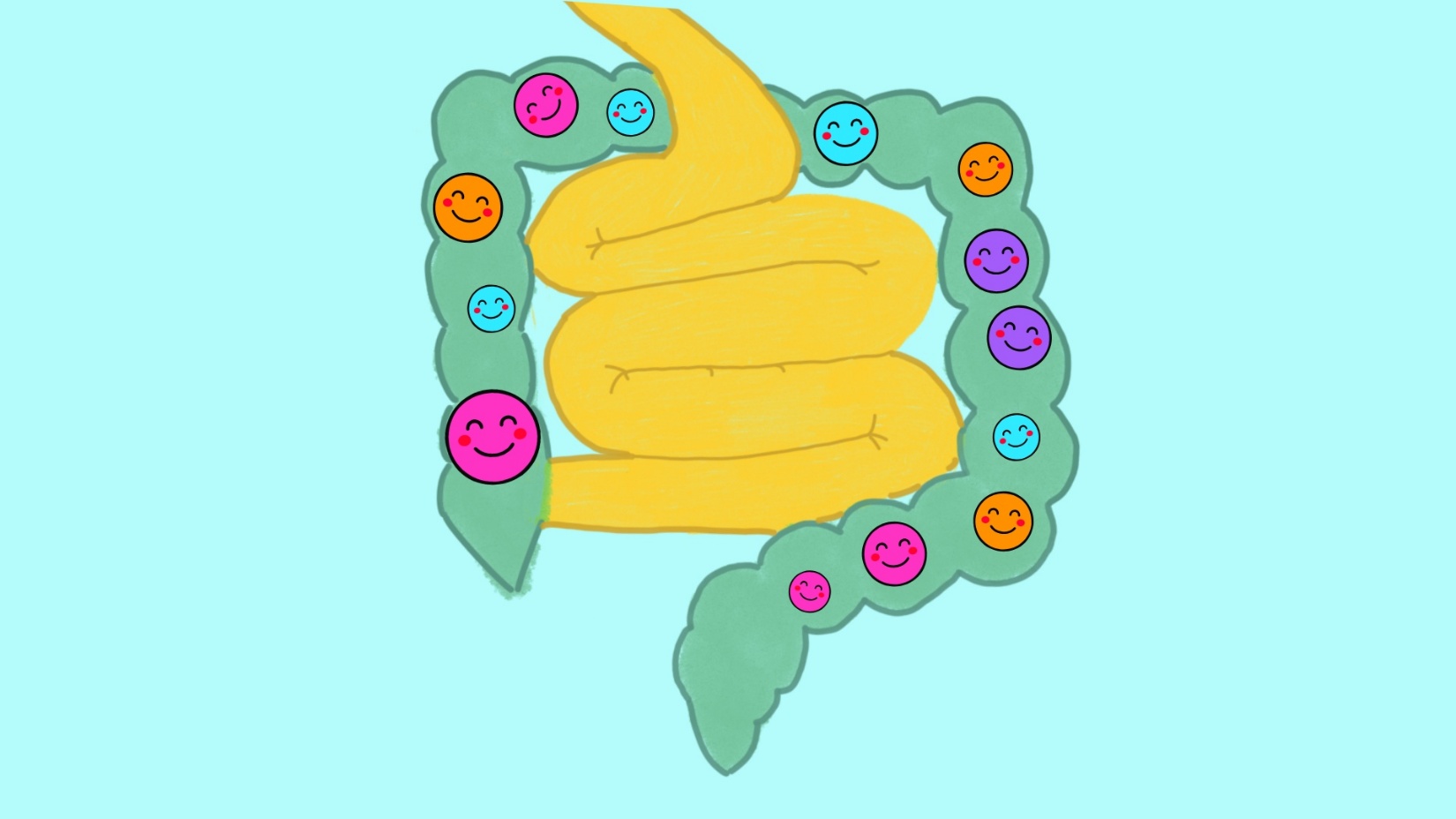
Gut bacteria primarily reside in our large intestine.
Liliana Flores, ⓒ2025, Clemson Extension
Insoluble Fiber and Its Benefits
Insoluble fiber is the type of fiber you probably think of when you think about fiber. It doesn’t turn into a gel-like consistency like soluble fiber, instead it comes out whole.
It’s well-known that corn will come out looking the same way as it went in. That’s because most insoluble fiber is made up of cellulose which is a type of structure that our bodies and gut bacteria can’t break down.
So while we still get the good nutrients from inside the corn, the outside remains the same.
Why Indigestible Fiber Is Helpful for Digestive Health
- Keeps the Flow Going
Insoluble fiber turns into bulk. This bulk alerts your digestive system to move it along. - Sweeps the Digestive System
As the fiber is getting pushed through the digestive system, it sweeps the walls of any unwanted and excess buildup. - Adds No Calories
Insoluble fiber cannot be broken down so it does not contribute to our caloric intake for the day!
Remember: The soft, inside part of an apple does get broken down, and we absorb the vitamins, nutrients, and other carbohydrates from that.
Fun Facts About Fiber
- Our gut bacteria is our own unique blend of bacteria! We received our first dose of gut bacteria during birth if we were delivered through the vagina and/or during breastfeeding.
- Insoluble fiber is also used to produce cardboard and paper = the cellulose from wood and cotton.
References
- Fiber: The carb that helps you manage diabetes. (2014, May 15). U.S. Centers for Disease Control and Prevention. https://www.cdc.gov/diabetes/healthy-eating/fiber-helps-diabetes.html
- Guan, Z., Yu, E., Feng, Q. (2021). Soluble Dietary Fiber, One of the Most Important Nutrients for the Gut Microbiota. National Library of Medicine, 10.3390/molecules26226802. https://pmc.ncbi.nlm.nih.gov/articles/PMC8624670/
- Gut microbiome. (2023, August 18). Cleveland Clinic, https://my.clevelandclinic.org/health/body/25201-gut-microbiome
- Kumar, K. (n.b.) Which foods are high in insoluble fiber? MedicineNet, https://www.medicinenet.com/which_foods_are_high_in_insoluble_fiber/article.htm
- Lynett, A., Batell, B. (Eds.). (2024, February). Soluble Fiber. University of Michigan Health, 8605. https://patiented.uofmhealth.org/Portal/Default/en-US/RecordView/Index/8605
- Miller, C., Collins, D. (Eds.). (n.d.). Carbohydrates. Human Biology. Johnsons and Wales University, https://jwu.pressbooks.pub/humanbiology/chapter/3-4-carbohydrates/


