Why American Beech Trees Retain Leaves in Winter
Winter is here, but have you ever noticed that there are a few trees out there that seem to have leaves that don’t want to let go?
This phenomenon is called marcescence (mar-CESS-ense), which means the leaves wither and do not fall off, a process also known as winter retention of leaves.

American beech trees (Fagus grandiflora) exhibit marcescence, retaining their leaves throughout the winter months.
Barbara H. Smith, ©2026 HGIC, Clemson Extension
In most deciduous trees (a tree that sheds its leaves seasonally), leaf drop occurs around autumn when the cells between the twig and the end of the leaf stem create an abscission layer. The cells separate, causing the leaf to fall off.
In marcescence, this doesn’t occur until the spring.
A Personal Nature Observation in a Stand of American Beeches
I learned about marcescence years ago, although at the time, I didn’t know it had a name.
Years ago, while hunting in the woods of Pennsylvania, my dad and I walked in the dark to our designated spot. At sunrise, when the forest started to come to life, we realized that we had sat down in a stand of American beeches (Fagus grandiflora).
American beeches are beautiful trees, but not ideal if you want to see hundreds of yards all around you.
The beech-leaf watching was great that day, but not so much on the wildlife side of things. However, it was a valuable lesson learned and a great memory of a nature observation.
What Other Trees Show Marcescence When Young
American beeches are the most famous trees known for displaying marcescence.
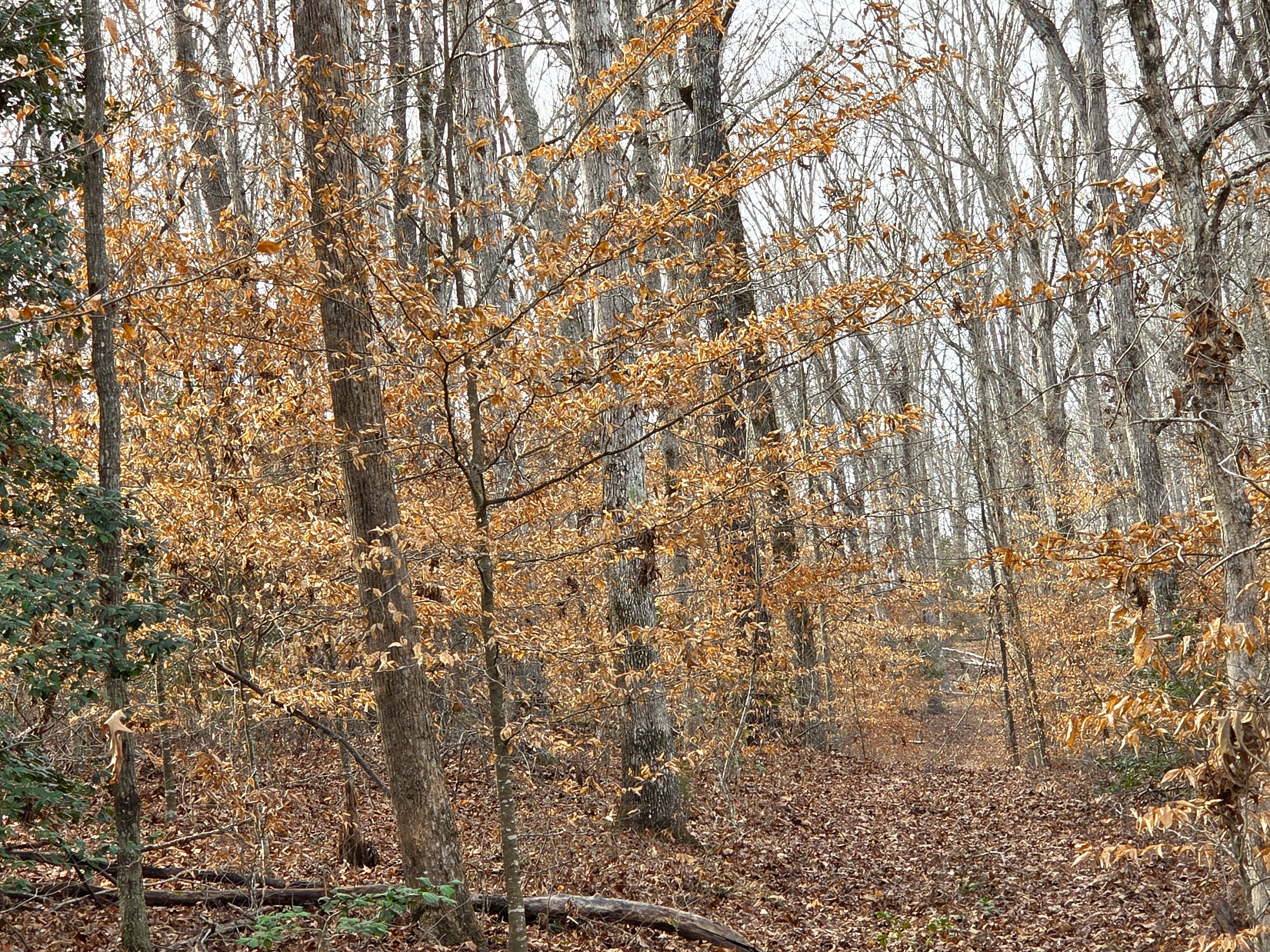
American beeches are the best-known trees for exhibiting marcescence.
Barbara H. Smith, ©2026 HGIC, Clemson Extension
Some other species in our area that will exhibit marcescence, especially when young, include oaks (Quercus spp.), hornbeam (Carpinus caroliniana), Eastern hophornbeam (Ostrya virginiana), and witch hazels (Hamamelis virginiana).
How Marcescence Benefits Soil, Moisture & Forest Floors
There are many theories as to why some trees display marcescence.
Some think that leaves that drop later in the spring will provide a fresh layer of mulch around the tree.
Trees like American beeches and oaks tend to grow in ridges or drier locations that may lack nutrients. The leaves may also help conserve soil moisture by adding shade to the forest floor.
How Marcescence Helps Deter Deer Browsing
Another theory relates to wildlife herbivory, especially white-tailed deer (Odocoileus virginianus).
Most of the time, the lower branches of a tree retain leaves, which are typically about head-height of deer. The dry leaves deter browsing by deer and other herbivores, hiding the tender buds or making them more difficult to feed on.
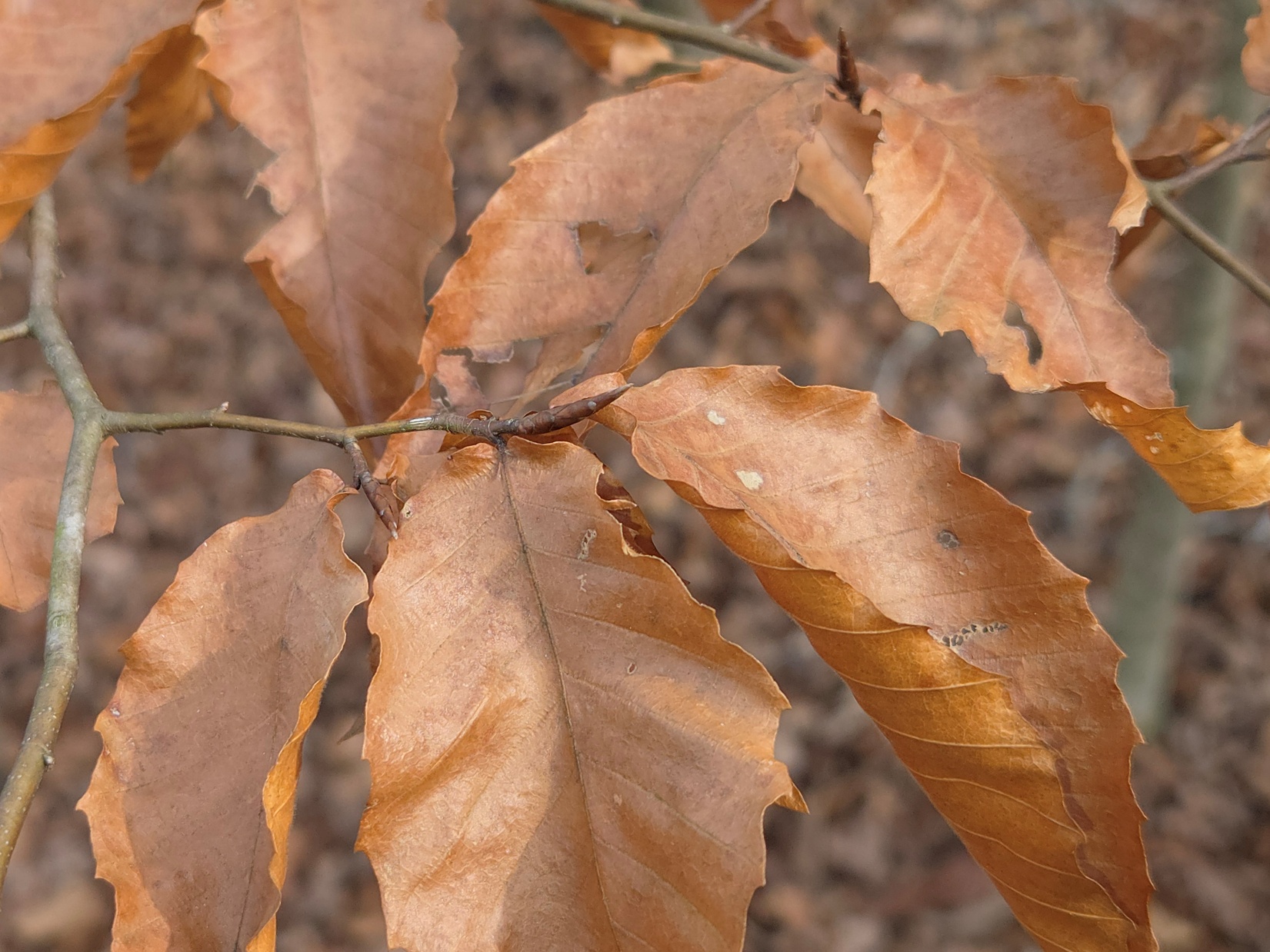
The dry leaves of American beeches help protect the tender leaf buds from deer browsing.
Barbara H. Smith, ©2026 HGIC, Clemson Extension