Yellow-rumped warblers are one of the few warbler species commonly seen in the United States during winter.
How to Identify Yellow-Rumped Warblers in Winter
Trying to identify the birds that visit your backyard can be a daunting task, especially because many birds look alike or share similar characteristics. One of the most challenging groups of birds to identify is the warbler family, but there is a warbler that prefers to stay around during the winter months, is easy to observe, and has a great nickname that you should get to know.
The yellow-rumped warbler (Setophaga coronata), more affectionately known as Butterbutt, is probably the most common species of warbler found in North America, and is particularly abundant in the United States during the winter months. They get their nickname from their bright yellow rump patch, which makes it easy to identify, especially as they fly away.
Most warblers migrate to the tropics during fall and winter because their diet consists mainly of insects. However, the yellow-rumped warbler is the only warbler that can digest waxy fruits, such as juniper, bayberry, wax myrtle, poison ivy, and dogwood, which allows them to remain well into winter.
Where to Find Yellow-Rumped Warblers in Winter Landscapes
Yellow-rumped warblers can inhabit a variety of habitats, but during the winter, they prefer more shrubby areas and are often found in residential areas, particularly when berries are available. Native plants that produce berries are extremely valuable to wildlife, but especially those that are available in the winter. These berries provide fats, carbohydrates, and other essential nutrients crucial to survival.
For more information, see HGIC 1700, Attracting & Feeding Songbirds.
How to Support Yellow-Rumped Warblers in Winter Landscapes
Providing native shrubs that hold berries through winter can help support yellow-rumped warblers and other overwintering birds.
For more information, see SCNPS Native Plant Directory.
Next time you are outside watching birds or looking out your window, look for the flock of yellow-rumps and consider participating in the Great Backyard Bird Count, which takes place every February (February 13-16, 2026).
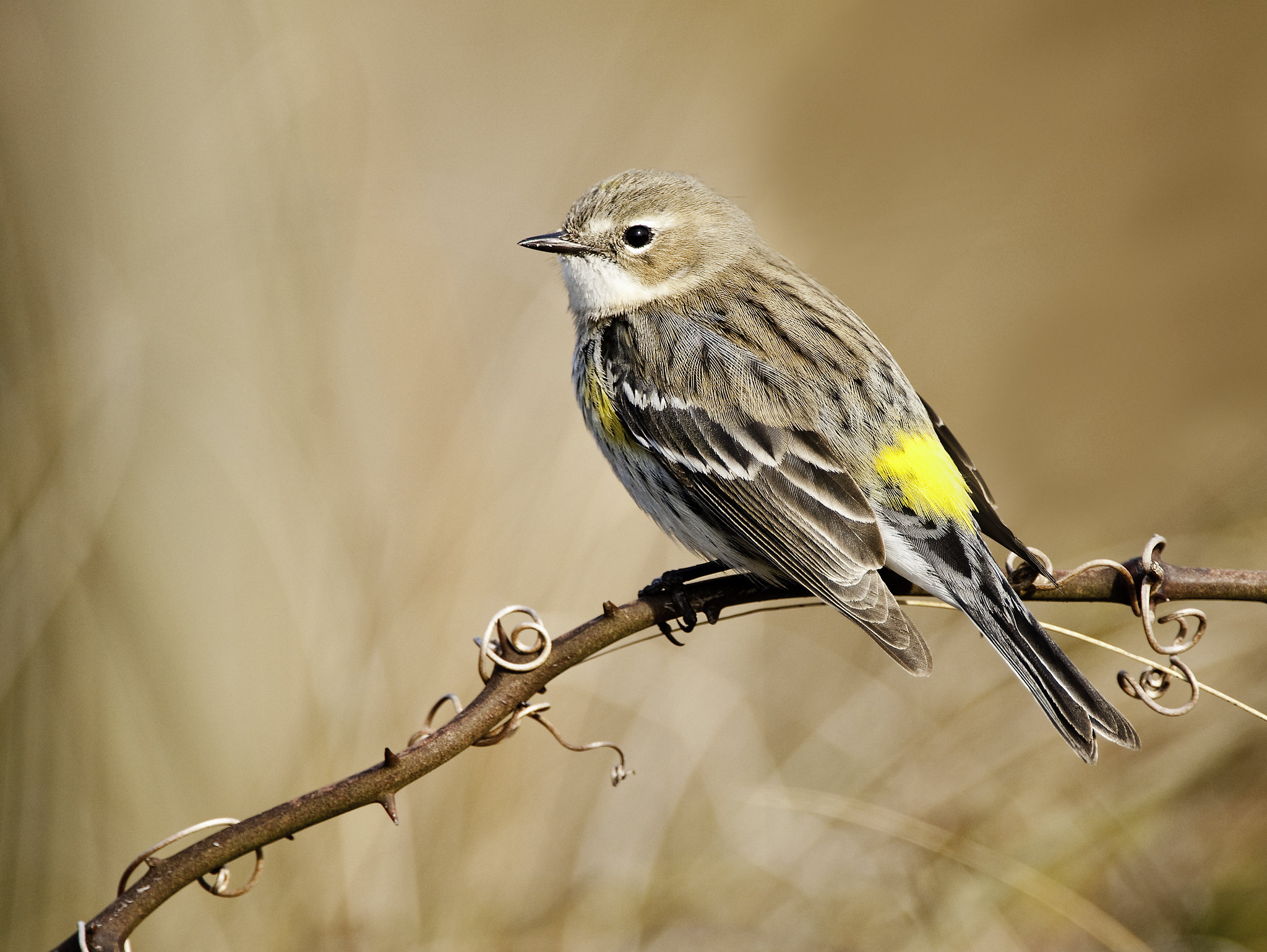
Yellow-rumped warbler on a branch.
Photo credit: Eve Turek, US Fish and Wildlife Services