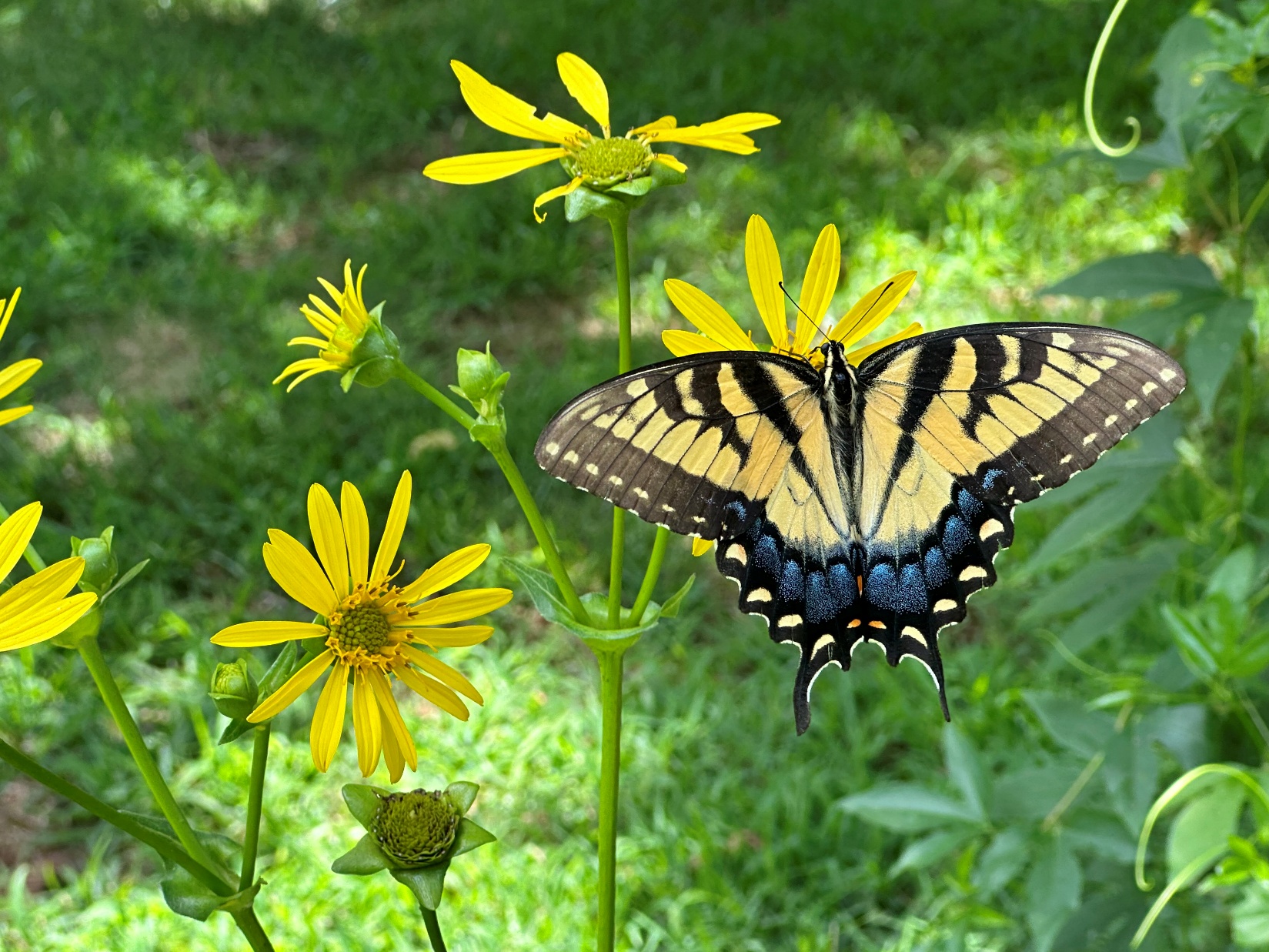
Cup plants provide nectar, pollen, and seeds, as well as a place to perch.
LayLa Burgess, ©2023, Clemson Extension
Cup Plant Quick Guide
- Plant type: Perennial wildflower.
- Scientific name: Silphium perfoliatum.
- Plant family: Asteraceae.
- USDA Plant Hardiness Zones: 3 to 9.
- Mature height: 4 to 8 feet; plants grown in open areas may reach 12 feet.
- Mature spread: 1 to 3 feet.
- Sunlight: 6 to 8 hours of full sunlight.
- Soil: Organically rich, moist soil; also grows in moist clay soils.
- Bloom time: June to September.
- Landscape uses: Pollinator gardens, maintained meadows, rain gardens, and background borders.
- Wildlife benefits: Nectar and pollen for insects; seeds for birds and other wildlife.
Cup plant (Silphium perfoliatum) is a perennial wildflower in the sunflower plant family (Asteraceae). It grows in open, moist woods, meadows, prairie-like habitats, thickets, and along streams in USDA Plant Hardiness Zones 3 to 9.
Cup plants are commonly used in pollinator gardens, maintained meadows, and rain gardens to provide nectar and pollen for insects. Birds and other wildlife eat the seeds.
Best Soil for Cup Plant
Cup plant prefers organically rich, moist soil, but will grow in moist clay soils. It will tolerate slightly droughty soils once established.
How to Grow Cup Plant
Starting Cup Plant From Seed
Direct seeding is the standard propagation method, but plants are slow to establish.
- Sow seeds in the fall, allowing time for cold stratification (prolonged exposure to cold temperatures during the winter) to occur and to promote seed germination the following spring.
- Alternatively, if sowing seeds in the spring, mimic cold stratification by storing them in the refrigerator for 3 months before planting. Keep seeds dry during cold storage to avoid mold.
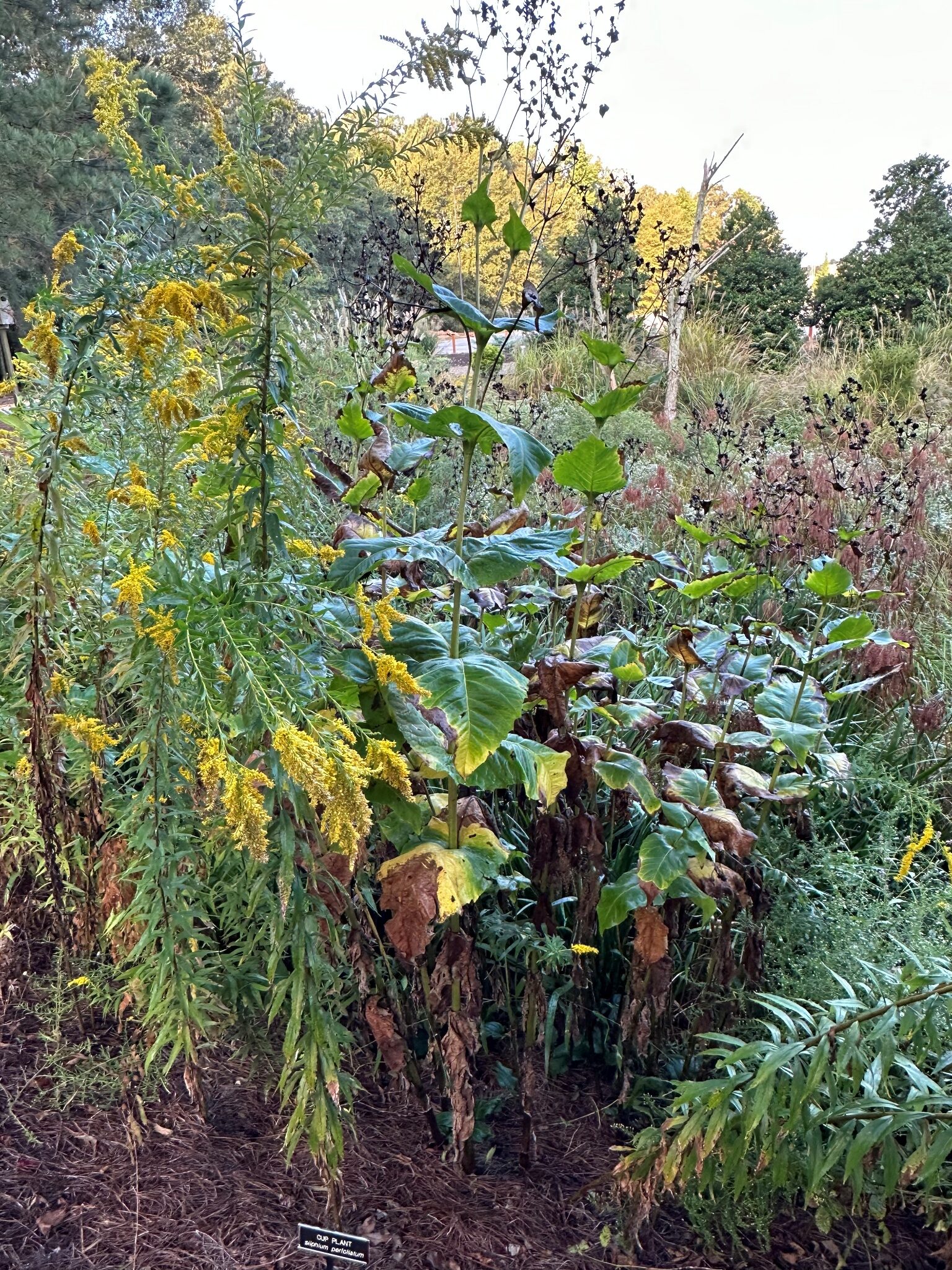
Cup plant flowers fade, and leaves begin to yellow as fall approaches. The sturdy stems will remain in place through the winter.
LayLa Burgess, ©2023, Clemson Extension
Sunlight and Bloom Time
Cup plant prefers 6 to 8 hours of full sunlight and blooms from June to September. Cup plant will seed at maturity by producing an achene-like structure called a cypsela.
Collecting and Storing Cup Plant Seeds
Collect mature seeds from September to October, allowing them to dry before sowing in the fall or storing them in a cool location for a spring planting.
Cup plant seeds can be collected and stored similarly to dahlia seeds. Review the collecting and storing seeds section in this blog, Saving Seeds From Dahlias, for more information.
Seasonal Growth and Stem Maintenance
As with most herbaceous perennials, the above-ground parts of the plant will die back after a hard fall frost, while the roots remain dormant and protected underground through the winter. The cells of cup plant stems have thickened (sclerified) cell walls, making the stem rigid and sturdy.
Allow the dead stems to remain intact and upright to provide an above-ground nesting habitat for various insects.
As soil temperature rises in early spring, new growth resumes with a flush of basal leaves. Remove the dead stalks as new growth begins.
Cup Plant Mature Height and Spread
Cup plants will grow 4 to 8 feet tall and 1 to 3 feet wide. Plants grown in open areas may reach 12 feet at maturity.
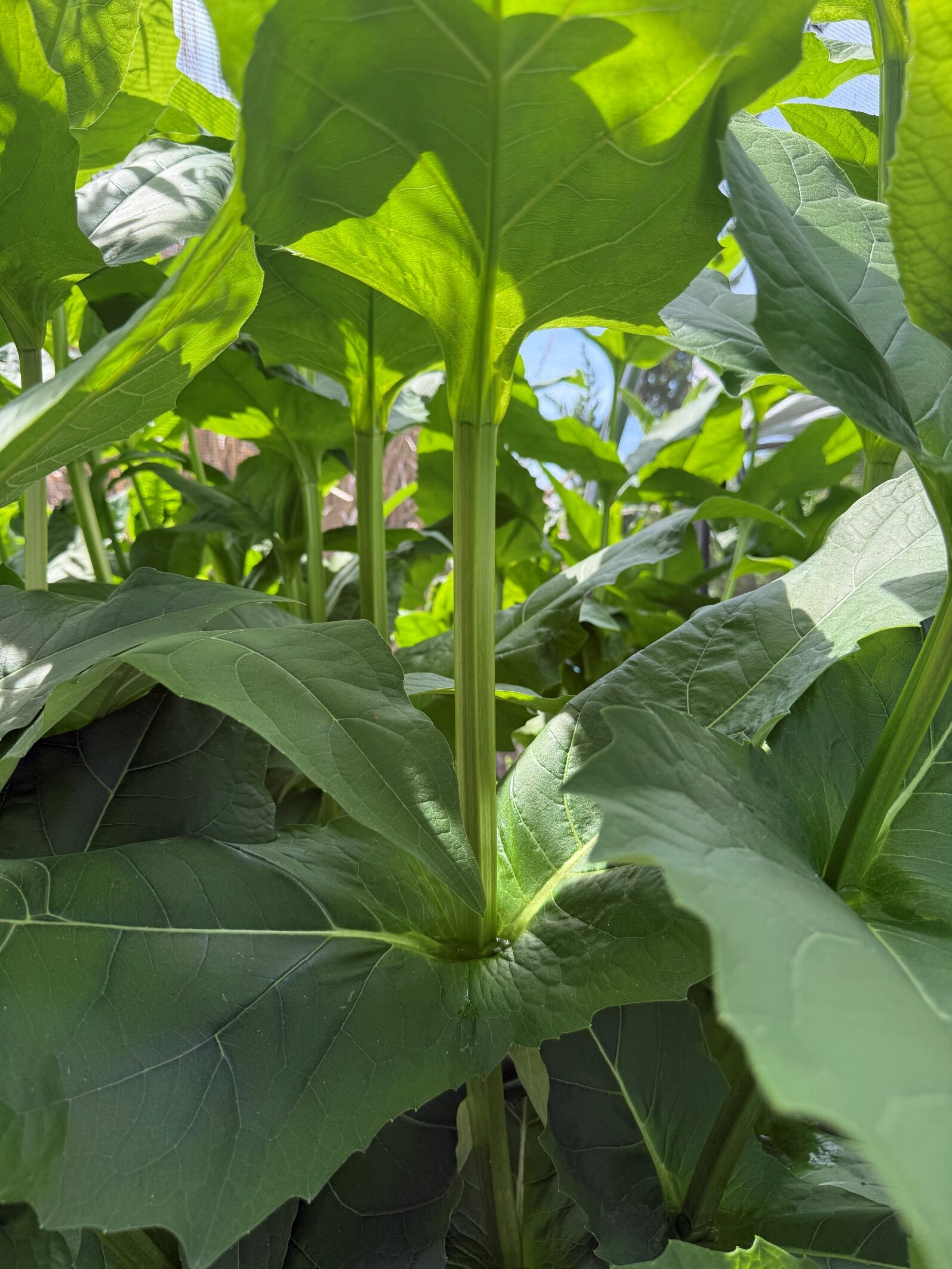
The square stem appears to be growing through the middle of a single leaf, but it’s only an illusion.
LayLa Burgess, ©2026, Clemson Extension
How to Identify Cup Plant
Square Stems and Sunflower-Like Blooms
Cup plant has an erect, square stem that distinguishes it from other Silphium species. Atop the stem are multiple, branched flowerheads adorned with sunflower-like blooms.
The individual flower heads range in diameter up to 3 inches, with a dark-centered cluster of florets surrounded by protruding, light-yellow flower rays.
Cupped Leaves That Collect Rainwater
The specific epithet perfoliatum (meaning “through the leaf”) refers to how the leaves surround the sturdy stem. The basal part of the oppositely arranged leaf pairs clasp together, becoming almost united around the stem. It appears as if the stem is growing up through the leaves.
The joined leaves form a cup-like structure that collects rainwater. The triangular leaves’ sturdiness allows small birds to land and drink or to flit about in the water.
Cup Plant Landscape Uses and Transplanting
Planting Location and Spacing
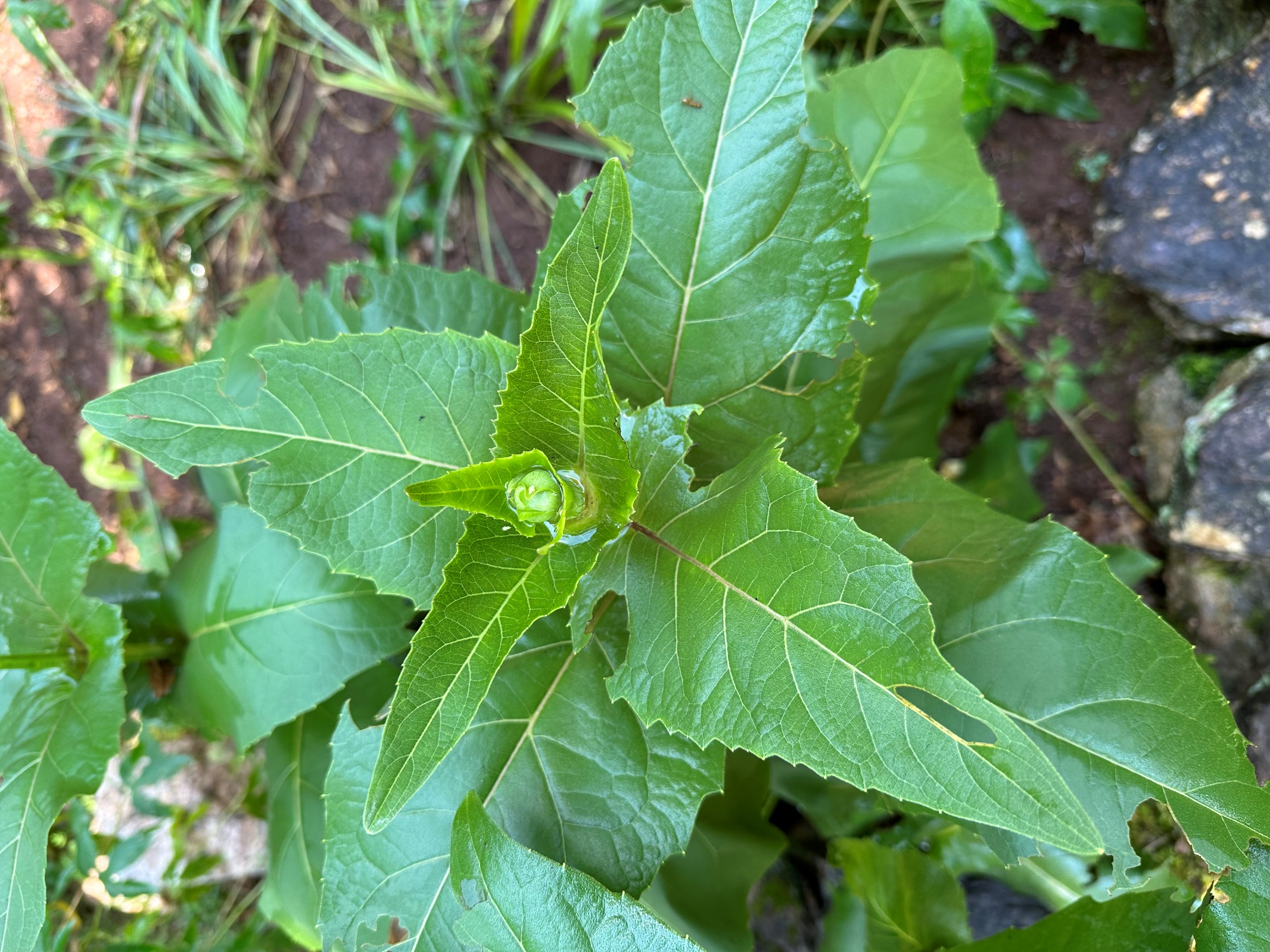
Buds form as the square stem grows in height.
LayLa Burgess, ©2023, Clemson Extension
At maturity, the cup plant is prominent in height and width. This plant requires adequate space per individual planting. It is best suited as a clumped planting (3-foot spacing) or restricted as a background border to accent other low-lying foreground perennials.
Transplanting Established Plants and Seedlings
Established cup plants have an extensive root system. Relocating established in-ground plants should be done when the first set, or two, of basal leaves have emerged from the ground. Dig an appropriately sized root ball for transplanting.
Alternatively, transplants produced from seed in propagation cell packs can be placed in preferred locations once hardened off. Again, direct seeding is an option.
Comparing Cup Plant With Prairie Dock
Cup plant looks like prairie dock or prairie rosinweed (Silphium terebinthinaceum), which occurs primarily in meadows. Prairie dock is usually taller than the cup plant. However, cup plants, grown in open spaces with little competition, may rival the prairie dock’s stature.
Cup Plant Problems and Management
Preventing Pest and Disease Problems
Insect and disease issues are rare for Silphium perfoliatum when grown in moist, fertile soil with appropriate plant spacing. Avoid crowding of plants.
Watering Established and Young Plants
Cup plant is semi-tolerant of drought once established. Adequate rainfall during the growing season may be sufficient for established plants, with little additional irrigation.
- Monitor rainfall with a rain gauge and supplement with drip irrigation, when necessary, particularly for young plants.
- Avoid overhead irrigation.
Managing Spread and Self Sowing
Cup plants will likely multiply and spread in the landscape or garden if left to their own devices.
- Carefully plan the plant’s location when designing perennial beds to minimize its spread.
- Landscape timbers can limit plant growth within an area or along a border.
- Additionally, remove flowers after bloom but before they set seed to reduce self-sowing.
Cup Plant Benefits for Pollinators and Wildlife
Flowers and Cupped Leaves Support Wildlife
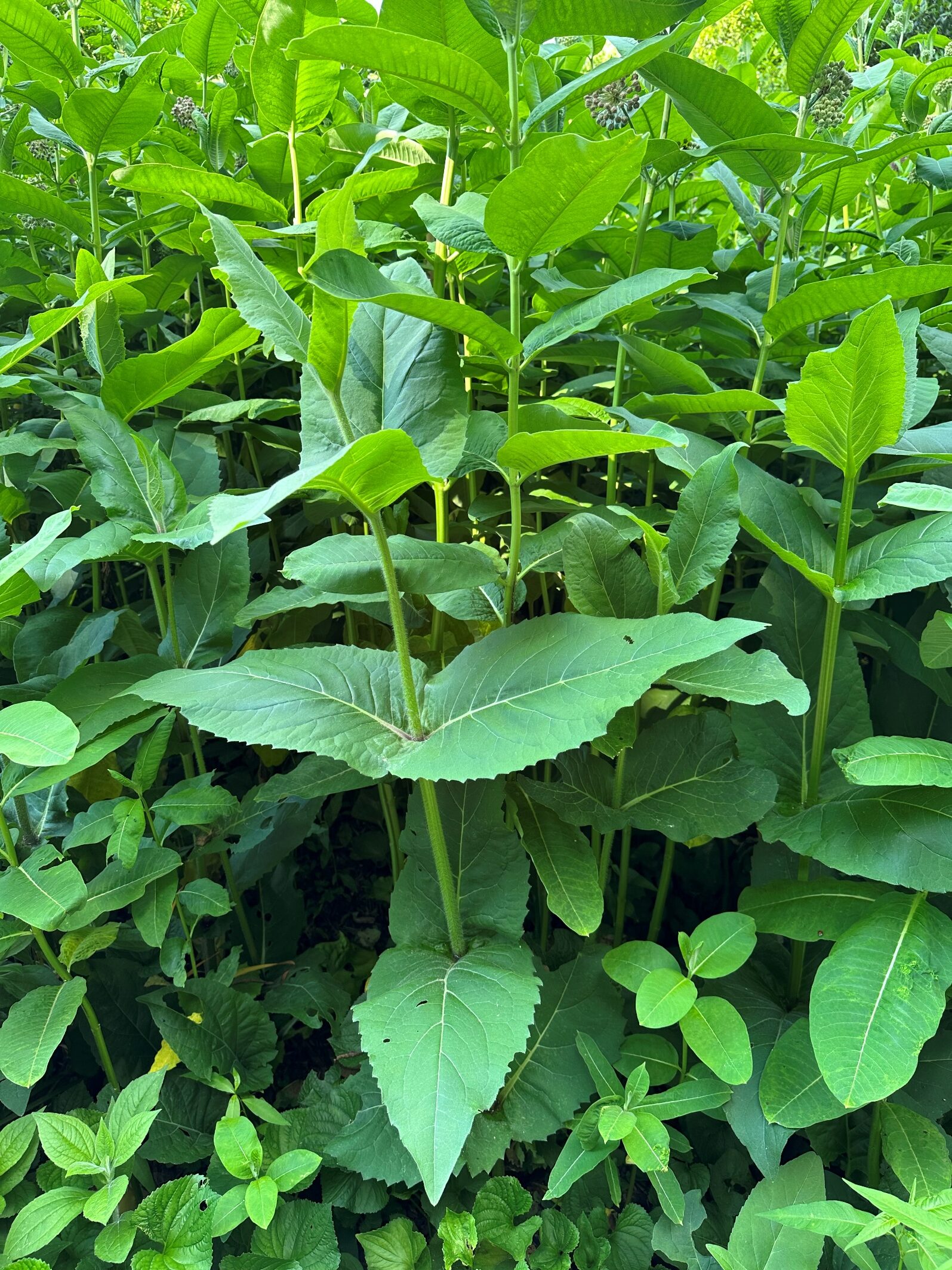
Cup plant growing among milkweed plants.
LayLa Burgess, ©2024, Clemson Extension
Due to its stately size, cup plant stands out in a landscape or garden, attracting the attention of gardeners, onlookers and wildlife. Its abundant flowers attract various insects, providing pollen and nectar to bees, wasps, bee-mimic flies, skippers, and butterflies.
On sunny days, flowerheads of the cup plants teem with activity, allowing gardeners to observe the everyday life of beneficial insects. If patient and perhaps with a bit of luck, one may catch a small bird enjoying a refreshing, sunlit waddle in the water among the cupped leaves.
Leaving Stems for Overwintering Insects
Native bees construct nests within the hollowed stems for progeny (babies) to emerge from the following spring. Other insects use plant materials from cup plants to construct overwintering nests, such as eloquently rolled leaf clusters.
Leaving stems in place provides habitat for the next generation of pollinators. Though leaving every stem in place during the winter is an option, leaving just a few stems will provide nesting sites while maintaining a manicured look to a garden or landscape.
Bringing Wildlife Activity to the Garden
Cup plant flowers are like a ray of sunshine, attracting wildlife that brings activity and motion to the garden. They provide valuable resources for the wildlife. Plant one or several in a grouping or along a defined border and bring on the excitement.
Cup Plant Resources
- Silphium perfoliatum, North Carolina State Extension- North Carolina Toolbox
- Plants for Pollinators – Cup Plant, Xerces Society for Invertebrate Conservation
Originally published 11/26