Strawberry begonia is a welcome addition to shade gardens.
LayLa Burgess, ©2024, Clemson Extension
Strawberry Begonia Quick Guide
- Scientific name: Saxifraga stolonifera
- Plant type: Mat-forming, evergreen groundcover
- Mature height: 6 to 8 inches; flowering stalks reach 18 inches
- Mature width: 1 to 2 feet
- Light: Partial to deep shade
- Soil: Moist, rich, well-drained soil
- USDA Plant Hardiness Zones: 6 to 10
- Outdoor bloom time: Late spring to mid-summer (May to June)
- Uses: Shade gardens, containers, hanging baskets, and indoor plantings
Strawberry begonia is a mat-forming, evergreen groundcover spreading by plantlets formed on stolons (above-ground runners). It grows as an outdoor herbaceous perennial in USDA Plant Hardiness Zones 6 to 10.
Winter protection from freezing temperatures or cold winds is recommended in colder planting zones. Placing a layer of pine straw mulch over the plants will insulate them through the winter months. Pine straw is an accessible, easy-to-work-with material. Remove the pine straw when warm temperatures and new growth resume.
Strawberry begonia (Saxifraga stolonifera) has many common names, including strawberry geranium, creeping saxifrage, and mother of thousands. To further complicate matters, this plant is not a strawberry, a geranium, or a begonia. However, it is a true saxifrage, belonging to the largest genus (Saxifraga) in the rockfoil plant family (Saxifragaceae).
Its native range spans China, Japan, and South Korea, and it typically thrives as an alpine species in Asia’s low-altitude, mountainous regions. Today, strawberry begonia resides on nearly every continent due to its ability to grow outdoors in suitable climates and its adaptability as a container-grown indoor plant.
Best Soil for Strawberry Begonia
Strawberry begonia grows well in-ground in moist, rich, well-drained soil. It tolerates clay soils once established, but adding a soil amendment, such as compost, to the planting site can help with its initial establishment.
Grown in an outdoor planter or as a house plant, it does well in a quality potting mix suited for containers and hanging baskets. For more information about potting mixes for container planting, visit Indoor Plants- Soil Mixes (HGIC 1456).
Strawberry Begonia Height and Spread
Grown in-ground, the average plant height is 6 to 8 inches, with a flowering stalk reaching 18 inches tall. The average width is 1 to 2 feet.
As a groundcover, strawberry begonia will spread and fill the width of an available space when planted in a suitable location.
How to Grow and Propagate Strawberry Begonia
Strawberry Begonia Light Requirements
Plant strawberry begonia in partial (filtered sunlight for only part of the day, 2 to 6 hours) to deep shade (less than 2 hours to no direct sunlight). This plant does not withstand intense sunlight and will wilt quickly.
Excessive sunlight causes the dark green leaves to appear bleached. The leaves will recover the former dark green color once moved to a shadier location.
Propagating Strawberry Begonia by Division and Plantlets
Strawberry begonia is primarily propagated by:
- Divisions of mature plantings
- Rooting new plantlets (also referred to as pups) formed on runners of the parent plant
Dividing Mature Plants
Dig and divide mature plants in early spring. Replant transplants to a new location in the landscape or pot them into a container or hanging basket.
Rooting Plantlets
Plantlets formed on runners of mature in-ground plants will readily root in place as they contact the moist soil surface.
When propagating using plantlets formed on runners from a container or hanging basket, cleanly cut them from the mother plant and place them on the surface of pre-moistened potting mix in a new planter. Appropriate humidity, temperature, and light conditions are required for indoor growth.
Strawberry Begonia Leaves, Flowers, and Growth
Strawberry Begonia Leaves
Individual strawberry begonia plants form a rosette of stalked leaves. Its leaf surface is dark green with silver to gray-white venation covered in hairs, giving it a fuzzy feel.
The underside of the leaf is a rosy pink to purplish-red hue. The leaves are rounded to heart-shaped and often have edge patterns resembling those of geranium and begonia leaves, hence the common names strawberry geranium and begonia.
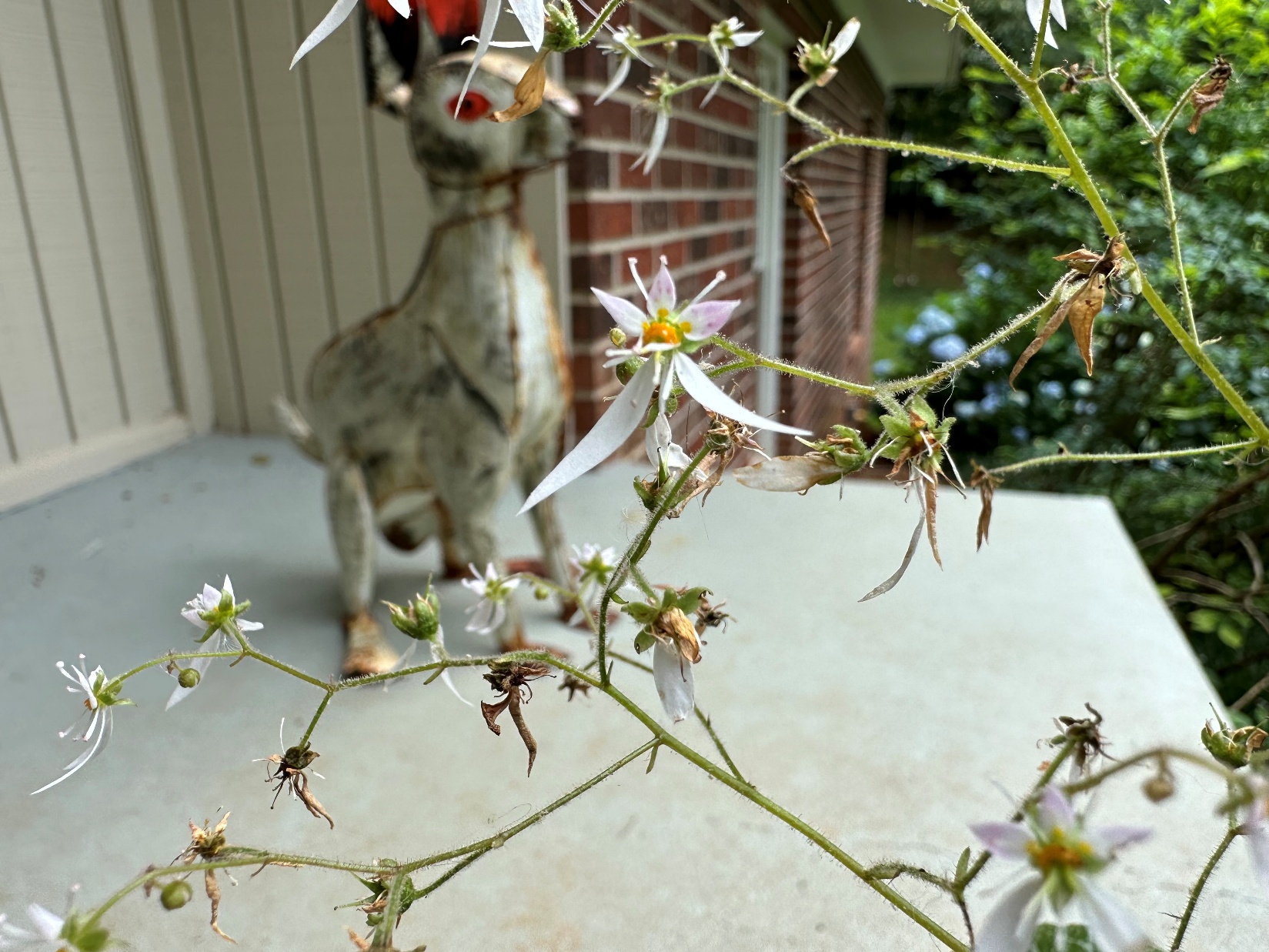
Strawberry begonia flowers are uniquely shaped and provide resources for beneficial insects.
LayLa Burgess, ©2024, Clemson Extension
Strawberry Begonia Flowers
Flowers are asymmetrical (irregular), consisting of five petals with three small upper petals and two large lower petals pointing downwards. The upper petals are white with pink spots, while the lower petals remain solid white.
Floral nectaries, associated with the pink spots on the upper petals, are present within the flower to produce sugary nectar as an attractant for pollinating insects. Airy, suspended flowers dangle from the thin, slender stalks.
The flower arrangement is termed cymose (determinant), with flowers maturing at the top of the stalk first, followed by the opening of the lower flowers.
Division, Seeds, and Runners
Mature strawberry begonia plants divide easily for transplanting. Additionally, they reproduce by seed and runner-like structures that easily root.
The production of plant offsets on runners that form a new plant is the same behavior exhibited by fruiting strawberry plants, hence the common name association with strawberry.
Strawberry Begonia Landscape Uses and Outdoor Container Care
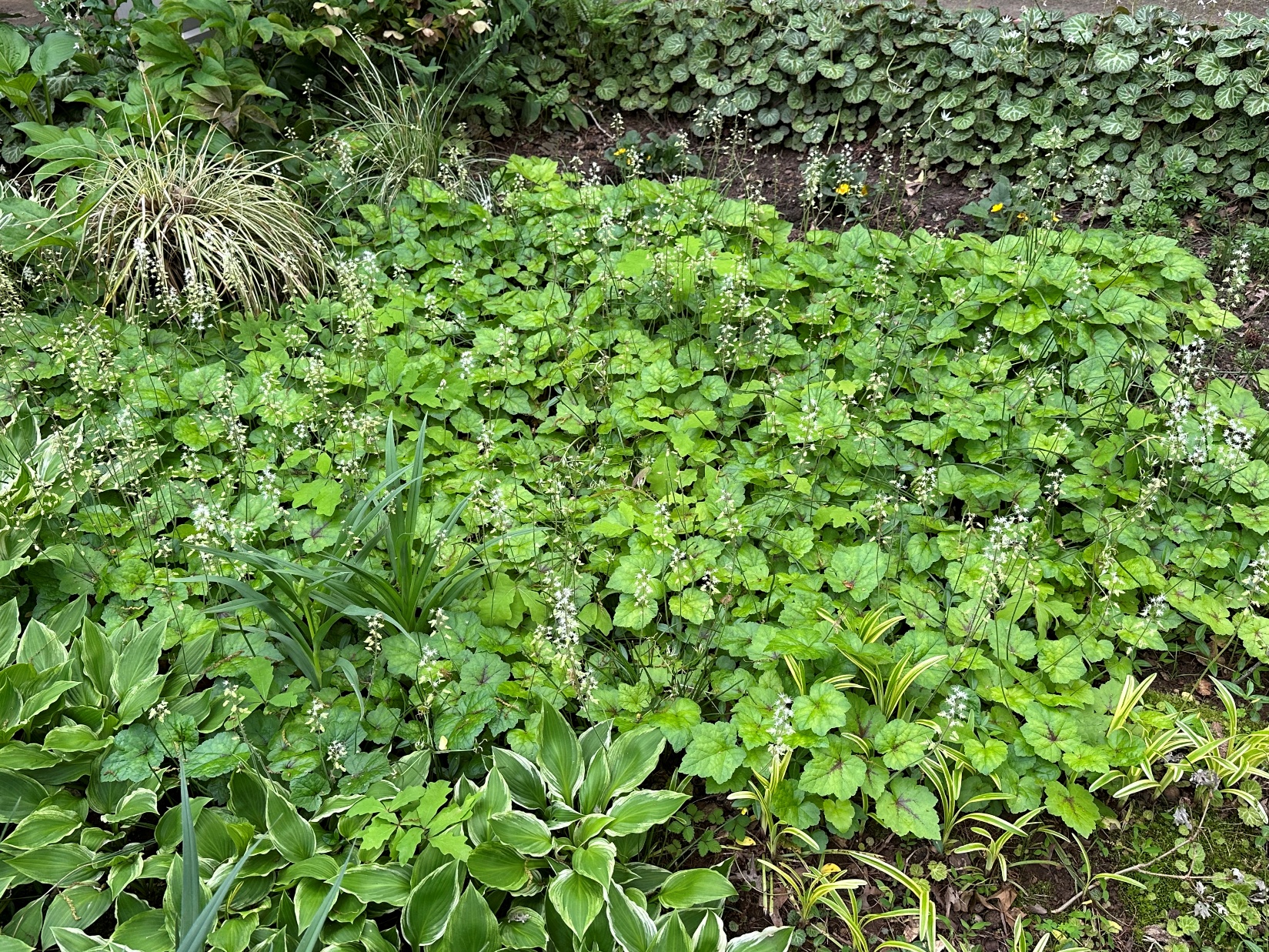
Frame a space for other shade-tolerant plants to mingle by using strawberry begonia as a border plant. Allow it to cascade over a rock wall.
LayLa Burgess, ©2024, Clemson Extension
Strawberry Begonia in Shade Gardens
Strawberry begonia blooms from late spring to mid-summer (May to June) when grown outdoors. As an evergreen, the leaf color, texture, and shape add winter interest to the garden.
It puts on a show in shaded woodland and rock gardens, filling in crevices, and flourishing when nestled beneath the dappled to deep canopy shade of large shrubs or trees.
While this plant can spread, it does so slowly and is non-aggressive. Garden barriers (E.g., landscape timbers or structures) can help manage and corral this groundcover.
It works well as a border plant for shade gardens. It can line a bed as an accent or intermingle with ferns, heucheras, small hostas, tiarellas, and anemones. It can also stabilize a shady slope as a groundcover.
Watering Strawberry Begonia in Outdoor Containers
Do not let the soil completely dry out when planted in an outdoor hanging basket or planter. Keep the potting mix moist, watering as the soil surface becomes slightly dry to the touch.
Irrigate until water drains from the hole(s) at the base of the basket or container.
How to Care for Strawberry Begonia Indoors
When growing strawberry begonias indoors, provide proper light, humidity, temperature, and watering.
Light, Humidity, and Temperature
Indoors, it grows well in bright, indirect, or filtered light from an east- or west-facing window. It prefers average room humidity (around 60%) with temperatures ranging between 50°-70° F.
Watering Strawberry Begonia Indoors
As with outdoor containers, water indoor plants when the soil is slightly dry to the touch. Ensure containers have drainage holes to allow water to exit through the bottom of the planter.
Stop irrigating when water begins to drain out of the planter. Maintain even moisture throughout the soil and keep the leaves dry.
Over-watering can attract insects that feed with piercing, sucking mouthparts, such as mealybugs and aphids.
Fertilizing Strawberry Begonia Indoors
Use a dilute, liquid fertilizer formulated for indoor plants when watering. Fertilize during the active growing season of spring and summer.
Repotting Strawberry Begonia
Strawberry begonia tolerates being slightly root-bound. Repotting may only be necessary every 4-5 years. If plants become too root-bound, repot into a larger planter or divide and share.
Strawberry Begonia and Pets
According to the American Society for the Prevention of Cruelty to Animals (ASPCA), strawberry begonia is considered pet-safe for cats and dogs. However, keep all houseplants out of reach of pets and children if there is a reason to believe they may ingest them.
Strawberry Begonia Cultivars
Several strawberry begonia cultivars are available to add a splash of color to container plantings, hanging baskets, or shaded window boxes.
- ‘Harvest Moon’ – chartreuse-colored leaves.
- ‘Hsitou Silver’ – large leaves with defined white veins.
- ‘Maroon Beauty’ – red hairs on the stems, displaying an overall reddish undertone in the planting.
- ‘Stephanie’ – vibrant red petioles (leaf-stems) and stolons (runners).
- ‘Tri-color’ – green, white, and pink leaves.
Common Strawberry Begonia Pests and Diseases
Healthy strawberry begonia plants have few insect and disease problems.
Strawberry Begonia Pests
Under prolonged exposure to high moisture or humidity, aphids, spider mites, mealybugs, whiteflies, and slugs may become an issue. Slug damage results in unsightly slime trails, holes in leaves, and ragged leaf edges.
Strawberry Begonia Root Rot
Excessively damp soil could lead to root rot, particularly among mass plantings. Be sure the area drains water or dries out before planting to save future labor and heartache.
Before planting, have the soil tested to identify any nutrient deficiencies or pH problems that need correction.
Strawberry Begonia Scientific Name and Adaptability
Meaning of Saxifraga stolonifera
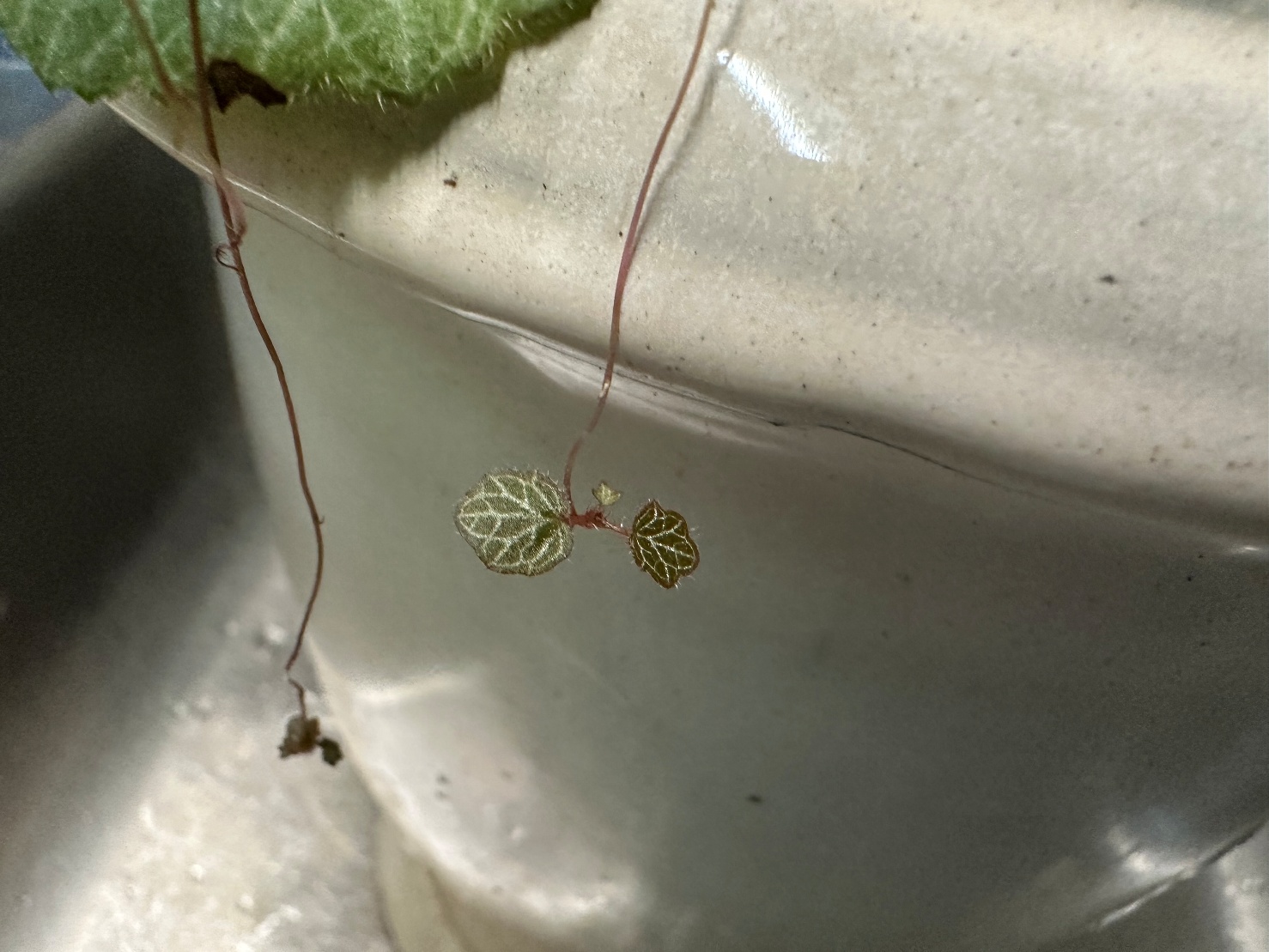
Strawberry begonia forms plantlets at the ends of stolons (runners).
LayLa Burgess, ©2024, Clemson Extension
Though known by many common names, strawberry begonia’s scientific name, Saxifraga stolonifera, provides information about the plant. Saxifraga combines the Latin root words, saxum- meaning rock and frangere- meaning to break.
As a true rockfoil, creeping saxifrage meanders along fissures and cracks in rock gardens, aiding in the natural cycling process that rock undergoes through geologic time.
The specific epithet stolonifera refers to the presence of stolons. Though it produces seed and divides easily, it also propagates by forming plantlets on stolons. This plant relies on multiple reproductive strategies, enabling it to thrive both outdoors and indoors.
Strawberry Begonia in South Carolina
Though most Saxifraga prefer cooler climates, strawberry begonia tolerates the hot, humid South Carolina weather when planted in a shade garden. It is a versatile plant that thrives in containers, hanging baskets, and window boxes and is adaptable to the houseplant lifestyle.
Strawberry Begonia Resources
- North Carolina State Extension- North Carolina Toolbox, Saxifraga stolonifera
Originally published 11/26