Quick Grow Guide for Flame Violets
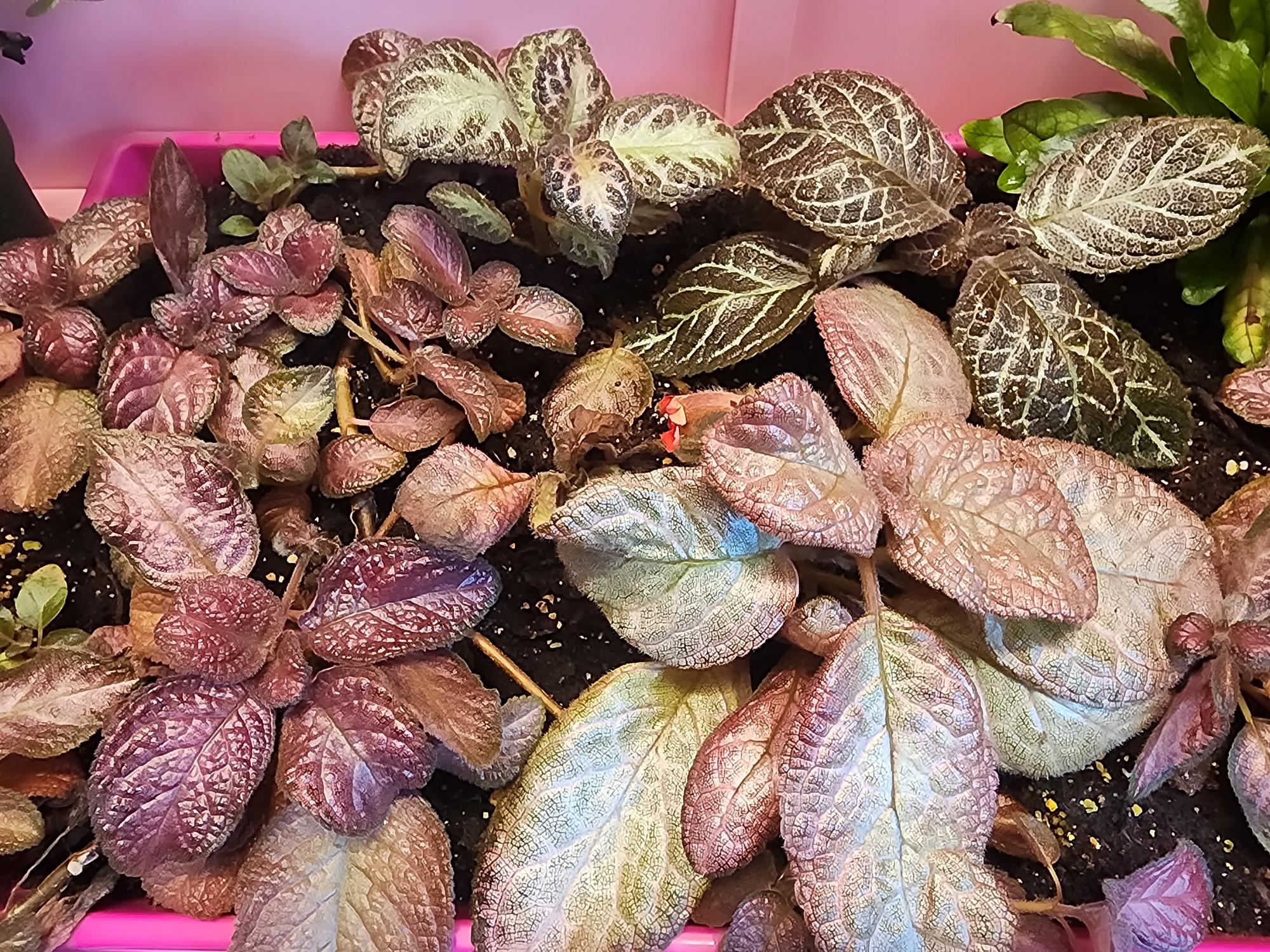
Group planting of flame violet cultivars ‘Sea Foam’, ‘Longwood Gardens’, and ‘Pink Brocade’ showing colorful foliage.
Jackie Jordan, ©2026, Clemson Extension
Plant Type: Indoor
Best Soil: Well-drained; rich, organic potting mix; Equal parts peat moss or coco coir, fine vermiculite, and perlite
Sunlight: Bright indirect light to medium natural light
Watering: Keep slightly moist; allow the soil surface to dry slightly.
Care Tips:
- Warm temperatures, 70-80°F
- Provide humidity levels above 50%.
- Do not allow the plant to dry out
Note: Pet safe
What Are Flame Violets (Episcia spp.)?
Flame violets (Episcia spp.) are tropical plants prized for their colorful foliage and small, brightly colored flowers.
These tender, herbaceous perennials are grown for their colorful leaves and small, pretty flowers. They are members of the Gesneriaceae plant family and related to African violets.
They are shade-tolerant, moderate-growing, creeping, evergreen groundcover plants.
Flame violet plants are native to lowland rain forests of Nicaragua, south through Columbia, Venezuela and Brazil.
Flame Violet Plant Size: Height and Spread
Mature flame violet plants have a compact, stoloniferous growth pattern, making them suitable for containers, hanging baskets, and terrariums.
- Height: 4 to 12 inches
- Spread: 1 to 2 feet

Photo of flame violet variety ‘Copper’ with variegated silver-green and dark forest green foliage and red tubular flowers.
Jackie Jordan, ©2026, Clemson Extension
Ornamental Features of Flame Violet Plants
Flame violet plants are grown primarily for their striking foliage and vibrant flowers.
Common Flame Violet Features
- Velvety oval leaves
- Variegated foliage patterns\
- Leaf color ranges from chocolate brown to pink to silver
- Many hybrids sport leaves with multiple colors
- Funnel-shaped flowers
- Flower colors include red, orange, pink, white, yellow, or lavender
- Long bloom period
How to Grow Flame Violets Indoors
Providing the right light, moisture, and humidity will help flame violets grow and bloom well indoors.
Light Requirements for Flame Violets
Flame violets like bright indirect light.
Place plants within 3 to 4 feet of east- or west-facing windows. To prevent sun-scorched leaves, protect them from direct natural light in the afternoon.
Temperature Requirements for Flame Violets
Flame violets are sensitive to cold, so provide a warm location away from drafts, with temperatures between 65°F and 80°F.
Watering Flame Violet Plants
Keep plants moist, but do not allow soil to remain soggy.
They need well-draining soil that dries slightly between waterings.
Use tepid (room-temperature) water, as roots are sensitive to cold water.
Cold water splashing on leaves can result in white blotches.
For more information on proper watering practices, visit HGIC 1459 Indoor Plants – Watering
Humidity Requirements for Flame Violets
Flame violets require humidity above 50%.
To address the plants’ humidity needs during drier months:
- Use a humidifier
- Keep plants in a terrarium or under a glass or plastic cloche (a dome-shaped cover)
- Group several plants together
Fertilizing Flame Violets for Best Growth
Fertilize every 4 to 6 weeks from spring through fall.
Do not fertilize during the winter months, as plants are dormant or semi-dormant and do not actively grow. Applying fertilizer during the dormant period can cause nutrient buildup, which can lead to root damage.
Use a balanced, water-soluble fertilizer (10-10-10 or 20-20-20) diluted to half or quarter strength. Apply it directly to the soil to keep from damaging delicate foliage.
For more information on light requirements and fertilizing indoor plants, visit HGIC Factsheet 1450, Cleaning, Fertilizing, Containers, and Light Requirements.
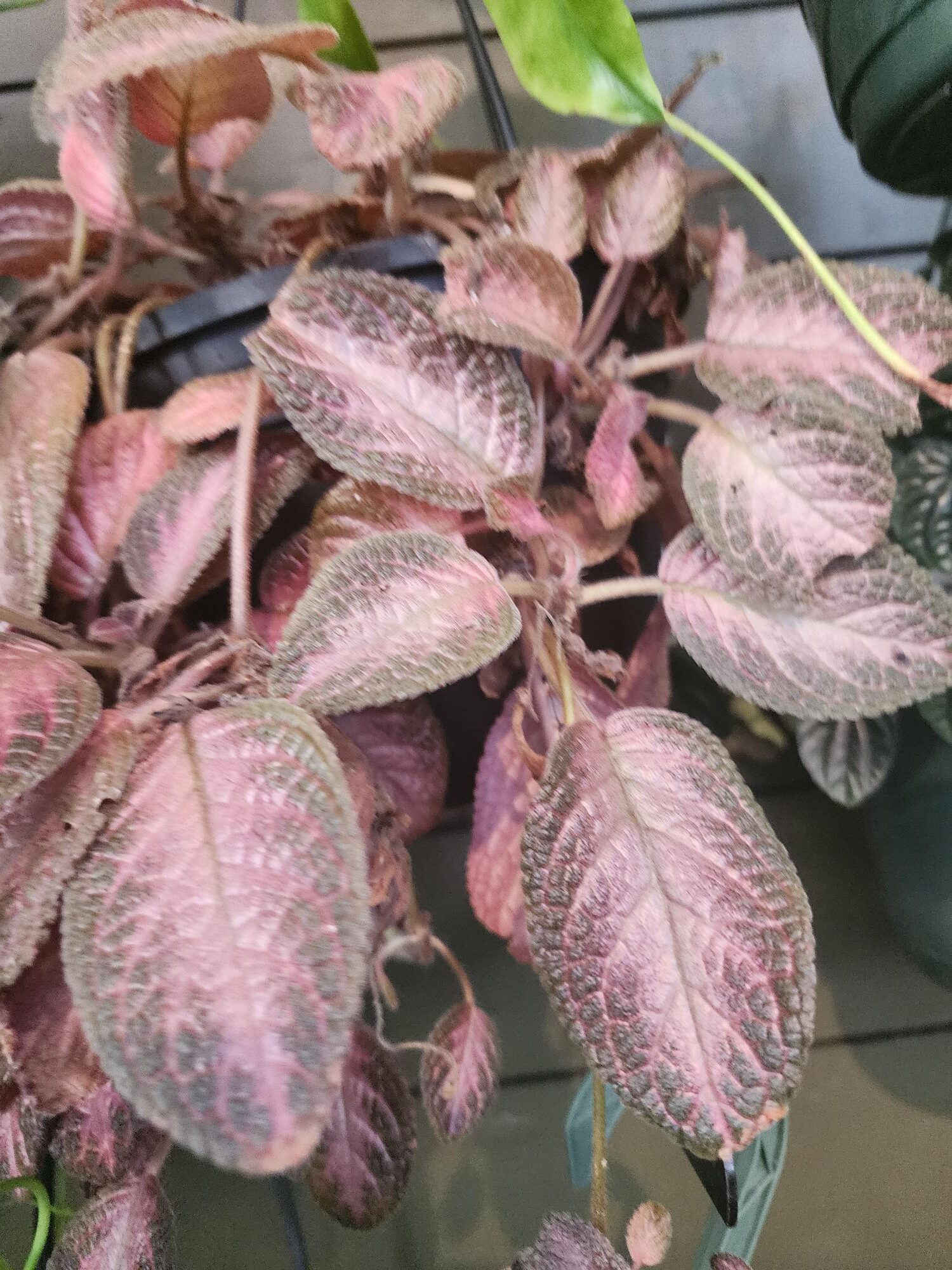
Photo of unknown flame violet with pink leaves.
Jackie Jordan, ©2026, Clemson Extension
Common Problems with Flame Violet Plants
Similar to many houseplants, flame violets may occasionally experience pest, disease, or environmental problems.
Insect Pests on Flame Violet Plants
Spider mites, aphids, and mealybugs could be problematic.
For more information on controlling common houseplant insects , see HGIC 2252, Common Houseplant Insects & Related Pests
Diseases of Flame Violet Plants
Fungal leaf spots and stem blights can occur.
Root rot and crown rot can develop if the potting media remains soggy.
For more information, see HGIC Factsheet 2250, African Violet Diseases & Insect Pests
Environmental Problems with Flame Violet Plants
Brown leaf margins can develop when humidity needs are not met or when the soil dries out.
Leaf scorch can be problematic if plants receive direct sunlight.
Flame Violet Species and Popular Cultivars for Indoor Growing
Several species and numerous cultivars of flame violet plants are grown for their distinctive foliage and flower colors.
Classification can be difficult because of variability. Royal Botanic Gardens, Kew lists 9 species. The majority of the varieties in cultivation are hybrids of Episcia reptans and E. cupreata.
Episcia Species
Episcia reptans
Native to tropical South America. It has orange flowers and metallic-green leaves with dark-green leaf margins.
Episcia cupreata
Native range Nicaragua to Northern Brazil. It can have red, pink, orange, or yellow flowers with very dark green, almost black leaves and light green venation.
Episcia cupreata var. validifies has medium-green leaves and bright red to orange-red flowers.
Episcia lilacina
Native to Mexico. It has light purple flowers and green, fuzzy, oval leaves with silvery-white midrib venation.
Flame Violet Cultivars
Numerous flame violet cultivars have been developed for distinctive foliage patterns and flower colors.
- ‘Alice’s Aussie’ – metallic-red foliage
- ‘Cleopatra’ – variegated leaves with green at the midrib, outlined in white and pink at the leaf margin with bright red flowers
- ‘Gold Digger’ – black leaves with pink venation, pink leaf margin, and red flowers
- ‘Longwood Gardens’ – bronze-green leaves with silver-green venation and reddish- orange flowers
- ‘Pink Smoke’ – light green leaves with thick pink margins and pink flowers
- ‘Sea Foam’ – iridescent silver-green leaves with pink margin
- ‘Suomi’ – deep brown-green leaves with a light green midrib and yellow flowers
- ‘Temptation’ – iridescent pink leaves with light green midrib and two-tone yellow and orange flowers
References
- Plant of the Week: Episcia cupreata: Flame Violet
- Crown and Root rot of Gloxinia and Other Gesneriads
- North Carolina Extension Gardener Plant Toolbox – Episcia reptans
- North Carolina Extension Gardener Plant Toolbox – Episcia cupreata
- Missouri Botanical Garden – Episcia cupreata
- Plants of the World Online Royal Botanical Gardens, Kew – Episcia
- The Gesneriad Reference Web – Episcia hybrids