
Quick Guide to Growing Native Plants in South Carolina’s Coastal Plain
Region: Coastal Plain of South Carolina
Skill Level: Beginner-friendly
Benefits: Low maintenance, wildlife habitat, water efficiency
Best Planting Seasons: Fall and spring
Ideal For: Gardeners seeking sustainable, eco-conscious landscapes
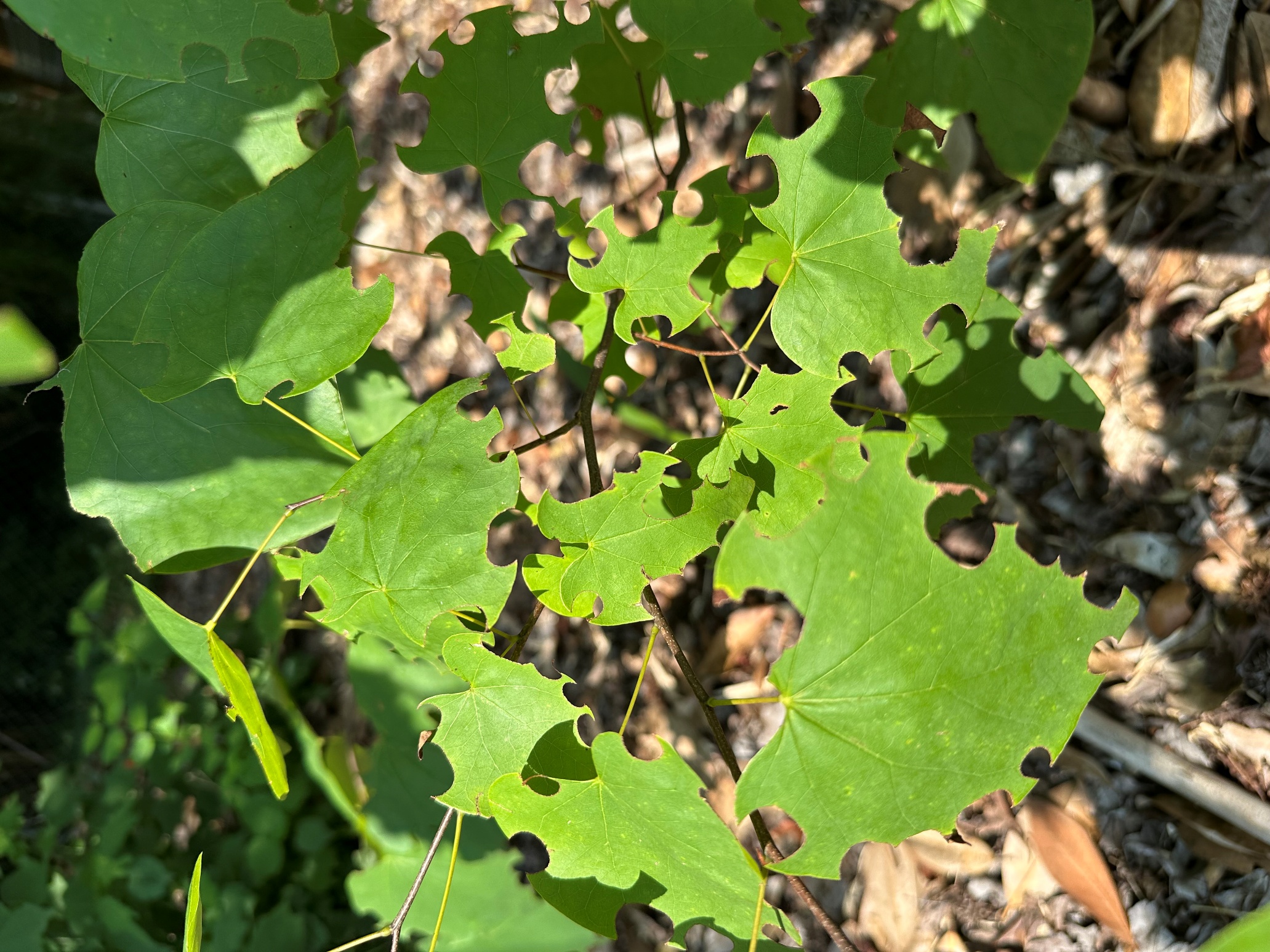
Leaf cutter bee removing circular leaf pieces from eastern redbud foliage.
Samantha Porzelt, ©2025, Clemson Extension
What Are Native Plants?
Native plants are an essential component of sustainable landscaping in South Carolina’s Coastal Plain. They provide critical habitat for pollinators and beneficial insects while reducing long-term landscape maintenance needs.
Defining Native Plants
Native plants evolved naturally in a region over thousands of years. That means they are well-adapted to the local soil, climate, and wildlife.
Unlike many traditional landscape plants, they typically thrive without fertilizer, pesticides, or heavy irrigation once they are established.
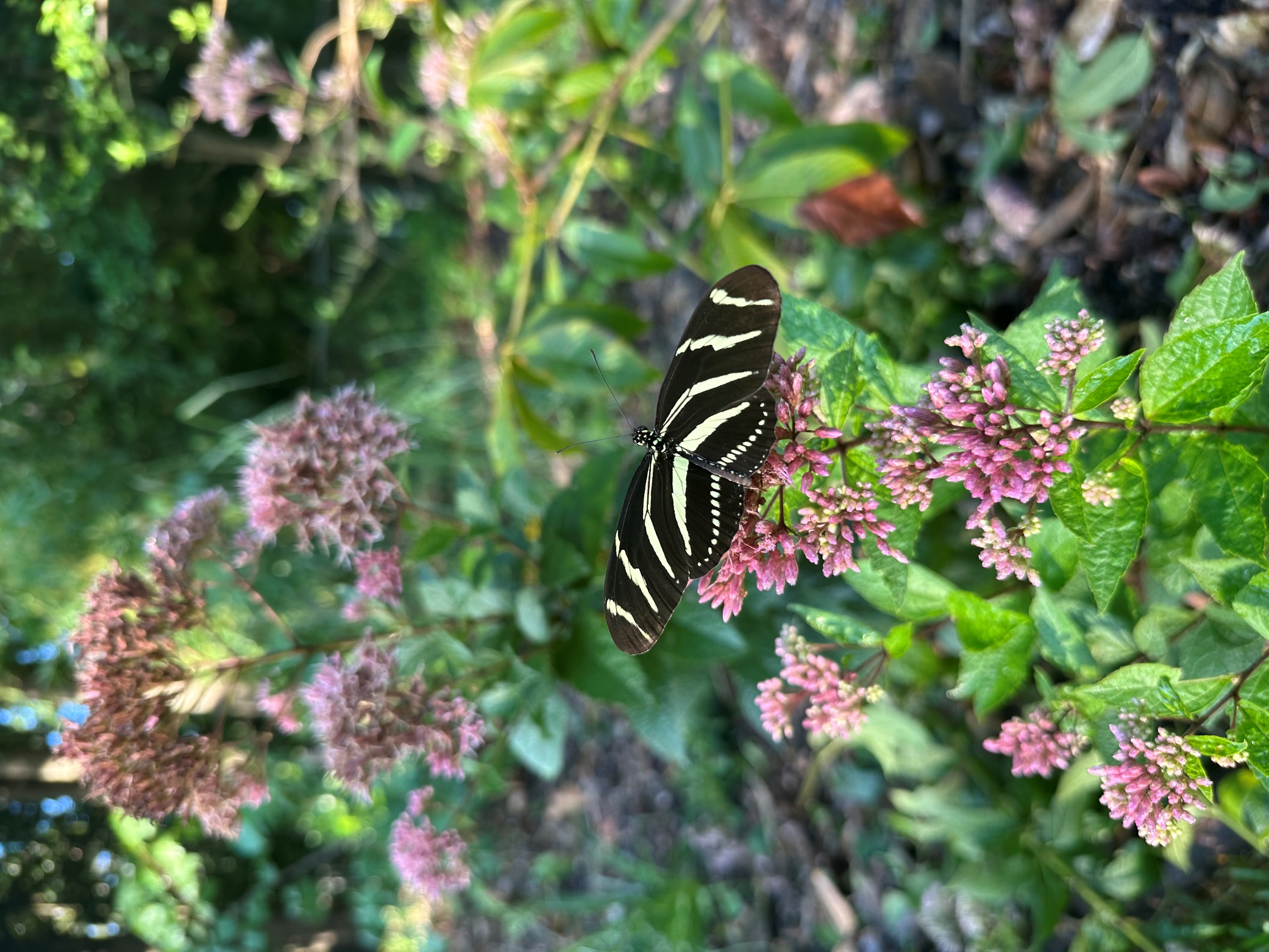
Zebra longwing butterfly feeding on pink coastal Joe Pye weed flower.
Samantha Porzelt, ©2025, Clemson Extension
Why Native Plants Are Important for South Carolina Ecosystems
Native plants are more effective in providing food, shelter, and nesting habitats for birds, pollinators, and other wildlife compared to non-native vegetation due to their co-evolution.
In fact, some native wildlife and insects require specific native plants to survive.
Beyond supporting wildlife, native plants play a crucial role in strengthening ecosystems by enhancing soil health, filtering pollutants out of stormwater, and helping to control erosion.
By gardening with native plants, you’re working in harmony with the environment, not against it.
In addition to their ecological value, native plants support biodiversity, and they can be highly functional in a home landscape. Many species bring seasonal beauty, offering colorful blooms, textured foliage, and seed heads that attract songbirds.
Avoid Invasive Species When Gardening in South Carolina
Why Invasive Plants Are Harmful
In contrast, invasive species often spread aggressively, outcompeting native plants and disrupting natural ecosystems.
They provide little benefit to local wildlife and can be expensive and time-consuming to manage once established.
Choosing native plants prevents these harmful impacts.
Seasonal Care for Native Plants in South Carolina
Seasonal Growth and Maintenance
Many native perennials and ornamental grasses are deciduous, meaning their above-ground growth dies back in the winter before reemerging in spring.
Leaving the dormant stems in place throughout fall and winter provides valuable habitat and food for wildlife.
In early spring, trim back the old growth and new shoots begin to appear.
For shrubs and small trees, annual pruning is usually unnecessary unless you’re removing dead or damaged branches, maintaining aesthetics, or managing fruit production.
Native plants in South Carolina typically require less seasonal maintenance once established compared to non-native landscape plants.
How to Start a Native Plant Garden in South Carolina
Step 1: Observe Your Site Conditions
Spend a few days paying attention to your garden area and observing the sunlight and moisture levels.
Sunlight
- Full sun (6+ hours)
- Partial sun (4–6 hours)
- Mostly shade (4 or fewer hours)
Moisture
After a rain event, note how long the soil stays moist.
- Water pools = moist
- Soil stays saturated for several hours = medium
- Soil dries quickly = dry
Step 2: Make a Plan & Start Small with Native Plants
Research which native plant species will thrive in your garden’s conditions.
Use the guide below to select species that match your conditions and will be easy to grow.
Start with a small bed or just a few plants to learn what works best without feeling overwhelmed.
Step 3: Test & Prepare Your Soil for Native Plants
- Send a soil sample to your local Extension office for testing and follow the recommendations.
- Mix in compost to enrich and improve soil structure.
- It may take several months for soil pH to adjust.
Alternatively, choose plants adapted to your existing soil pH and nutrient levels.
Weed Removal Methods
- Lay a tarp over existing grass and weeds for 4–6 weeks.
- For immediate planting:
- rotary tiller
- hoe
- herbicide
- hand-pulling methods
- If using herbicide:
- always read labels
- wear protective gear
- wait before planting
- Combining multiple methods yields the best results.
Step 4: Plant Native Plants During Cool Weather
In coastal South Carolina, fall and spring are the best seasons to plant.
Cooler temperatures reduce transplant stress, allowing roots to establish before summer heat or winter chills.

Fresh mulch applied to rain garden bed to conserve soil moisture and suppress weeds.
Samantha Porzelt, ©2025, Clemson Extension
Step 5: Add Mulch to Native Plant Garden Beds
Spread a 2 to 3-inch layer of natural mulch in your garden, keeping it away from stems.
Benefits include:
- Conserves water
- Regulates soil temperature
- Suppresses weeds
Add 1 to 2 layers of brown cardboard underneath for extra weed protection.
Avoid landscape fabric, which restricts wildlife movement and breaks down into microplastics.
Step 6: Water Native Plants Properly During Establishment
Newly planted native plants need regular watering as they establish.
- Water consistently for the first couple of weeks, then gradually reduce frequency.
- Water deeply in the mornings, avoiding wet leaves.
- Provide supplemental water during drought.
Once established, native plants require little to no irrigation if matched to your site’s conditions.
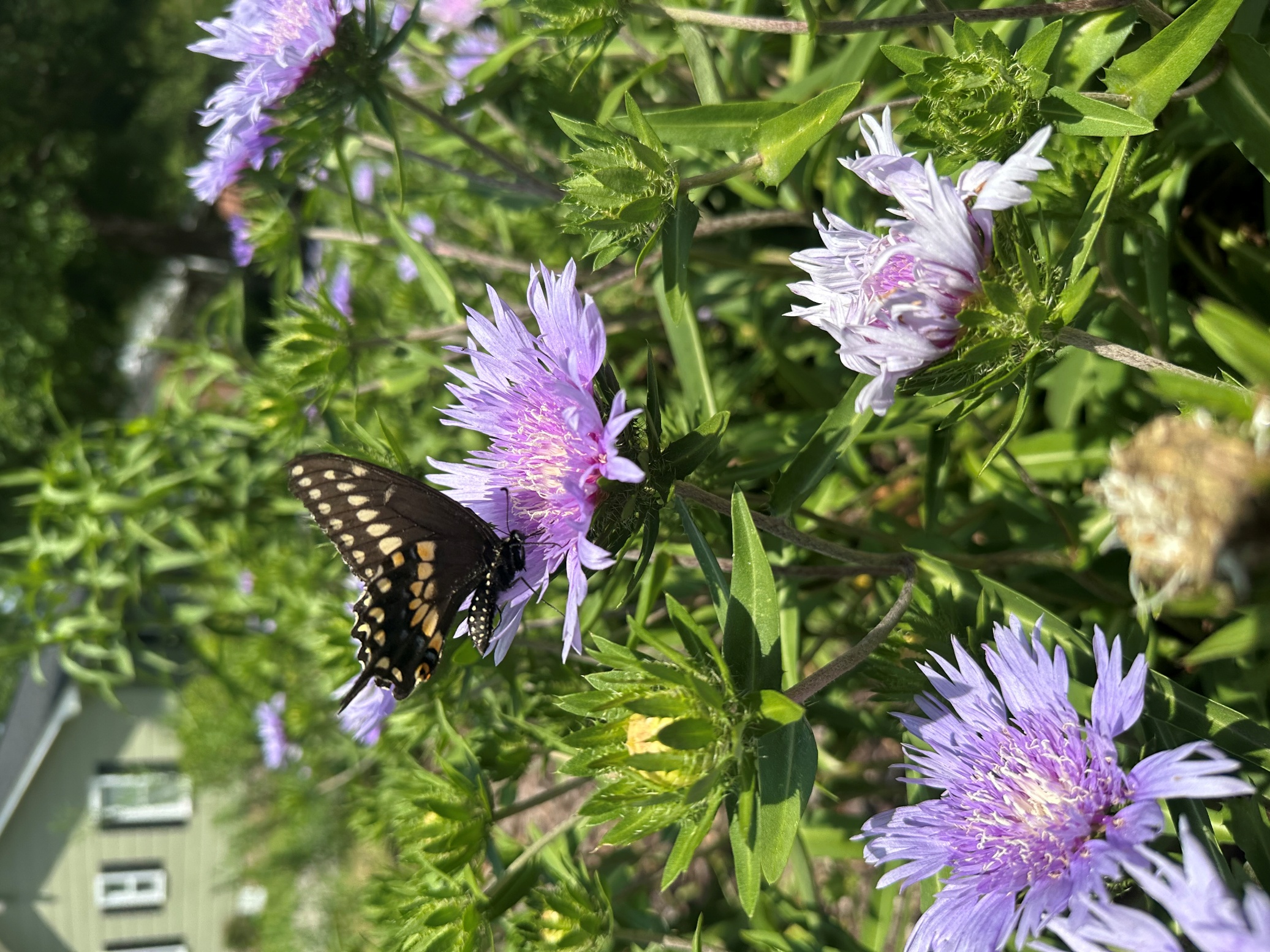
Swallowtail butterfly feeding on purple Stokes aster flower in a native plant garden.
Samantha Porzelt, ©2025, Clemson Extension
Step 7: Monitor Garden Health and Control Weeds
- Check for plant health and refresh mulch as needed.
- Weed frequently in the early stages.
- Target grasses and sedges first—they’re harder to remove later.
Avoid insecticides—most native plants tolerate minor pest pressure, and these “pests” feed birds and reptiles.
Step 8: Enjoy the Benefits of Native Plants
With the right plant in the right place, your garden will soon come alive with color, pollinators, and wildlife.
Native plants support the local ecosystem while requiring less maintenance than traditional landscape plants.
Recommended Native Plant Species for South Carolina’s Coastal Plain
Annuals
| Common Name | Scientific Name | Plant Type | Sun Requirement | Soil Moisture |
| Dune sunflower | Helianthus debilis | Annual | Full sun | Dry |
| Indian blanket | Gaillardia pulchella | Annual | Full sun | Dry, Medium |
| Red sage | Salvia coccinea | Annual | Full sun | Dry, Medium |
Perennials
| Common Name | Scientific Name | Plant Type | Sun Requirement | Soil Moisture |
| Stoke’s aster | Stokesia laevis | Perennial | Full sun, Part sun | Dry, Medium |
| Georgia aster | Symphyotrichum georgianum | Perennial | Full sun | Dry, Medium |
| Spotted beebalm | Monarda punctata | Perennial | Full sun, Part sun | Dry, Medium |
| Large flower coreopsis | Coreopsis grandiflora | Perennial | Part sun, Shade | Medium |
| Anise-scented goldenrod | Solidago odora | Perennial | Full sun | Medium, Moist |
| Blue-eyed grass | Sisyrinchium angustifolium | Perennial | Full sun, Part sun | Medium, Moist |
| Obedient plant | Physostegia virginiana | Perennial | Full sun, Part sun | Medium, Moist |
| Foxglove beardtongue | Penstemon digitalis | Perennial | — | — |
| Yarrow | Achillea millefolium | Perennial | Full sun, Part sun | Dry, Medium |
| Cutleaf coneflower | Rudbeckia laciniata | Perennial | Full sun | Medium, Moist |
| Blue mistflower | Conoclinium coelestinum | Perennial | Full sun, Part sun | Medium, Moist |
| Texas star hibiscus | Hibiscus coccineus | Perennial | Full sun, Part sun | Moist |
| Southern blue flag iris | Iris virginica | Perennial | Full sun | Moist |
| New England aster | Aster novi-angliae | Perennial | Full sun, Part sun | Moist |
| Clustered mountain mint | Pycnanthemum muticum | Perennial | Full sun, Part sun | Moist |
| Green-and-gold | Chrysogonum virginianum | Perennial | Part sun, Full shade | Dry–Moist |
| Turk’s Cap Hibiscus | Malvaviscus arboreus | Perennial | Full sun, Part sun, Full shade | Medium |
Vines
| Common Name | Scientific Name | Plant Type | Sun Requirement | Soil Moisture |
| Coral honeysuckle | Lonicera sempervirens |
Vine | Full sun, Part sun | Moist |
Sedges and Grasses
| Common Name | Scientific Name | Plant Type | Sun Requirement | Soil Moisture |
| Switchgrass | Panicum virgatum | Grass | Full sun, Part sun | Dry–Moist |
| Pink muhly grass | Muhlenbergia capillaris | Grass | Full sun, Part sun | Dry, Medium |
| River oats | Chasmanthium latifolium | Grass | Part sun, Full shade | Moist |
Ferns
| Common Name | Scientific Name | Plant Type | Sun Requirement | Soil Moisture |
| Southern shield fern | Dryopteris ludoviciana | Fern | Part sun, Full shade | Moist |
Shrubs
| Common Name | Scientific Name | Plant Type | Sun Requirement | Soil Moisture |
| American beautyberry | Callicarpa americana | Shrub | Full sun, Part sun | Dry, Moist |
| Buttonbush | Cephalanthus occidentalis | Shrub | Part sun, Full shade | Moist |
| Oakleaf hydrangea | Hydrangea quercifolia | Shrub | Full sun, Part sun | Medium, Moist |
Trees
| Common Name | Scientific Name | Plant Type | Sun Requirement | Soil Moisture |
| Common wax-myrtle | Morella cerifera | Tree | Full sun, Part sun | Dry–Moist |
| Common pawpaw | Asimina triloba | Tree | Full sun, Part sun | Moist |
| Yaupon holly | Ilex vomitoria | Tree | Full sun, Part sun, Full shade | Medium, Moist |
| Dahoon holly | Ilex cassine | Tree | Full sun, Part sun | Medium, Moist |
Native Plant Selection Resources for South Carolina Gardeners
For additional options, visit the South Carolina Native Plant Society Plant Directory, created with Clemson University.
Contact your local Extension agent for guidance, and use the South Carolina Native Plant Society interactive nursery map to find native plant sources.
Originally published 04/26


