Widow Spider Quick Guide / At-a-Glance
Species covered: Southern black widow (Latrodectus mactans), northern black widow (L. variolus), and brown widow (L. geometricus).
Primary identification features: Rounded abdomens, bright markings, and—in many adults—a red, orange, or red-orange hourglass-shaped marking on the underside.
Typical habitat: Dark, sheltered spaces close to the ground, including woodpiles, empty containers, crawl spaces, basements, sheds, barns, and other crevices.
Primary concern: Widow spider bites are rare and typically occur defensively when a spider is crushed or its web is disturbed.
Most important prevention strategy: Reduce potential habitat and avoid reaching into dark areas without gloves.
Medical importance: Black widow bites may cause serious symptoms and can require medical attention; brown widow bites are generally much less severe.
Removal: Carefully remove spiders or egg sacs with a vacuum cleaner, then seal and dispose of the vacuum bag outdoors.
Chemical control: If spiders remain after habitat reduction, use only pesticides labeled for spiders and follow all label directions.
Widow spiders are one of the most well-known types of spiders in the United States. They are famous for inspiration for a superhero character, and infamous for their dangerous bites.
There are three species of widow spiders in South Carolina: the southern black widow (Latrodectus mactans), the northern black widow (L. variolus), and the brown widow (L. geometricus).
While widow spiders are a concern for many people, the chances of being bitten can be greatly reduced by knowing what to look for and taking steps to mitigate the chances of an encounter.
Widow Spider Description
Identification
- Male and female widow spiders look different (this is called being sexually dimorphic).
- The juveniles (known as spiderlings) often appear very different than adults.
- Female black widows are larger (they can be up to 1 ½ inches in total length) and have longer legs and are typically what most people picture when they think of a black widow spider.
- Their abdomens are round, and are typically the size of a large pea or small marble.
- True widow spiders can be distinguished from a similar group of spiders, called false widow spiders, due to their bright markings and rounded abdomens.
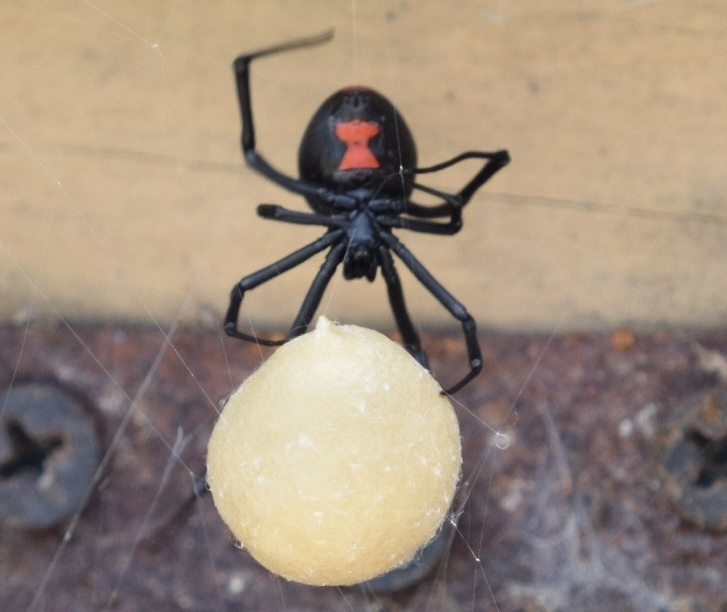
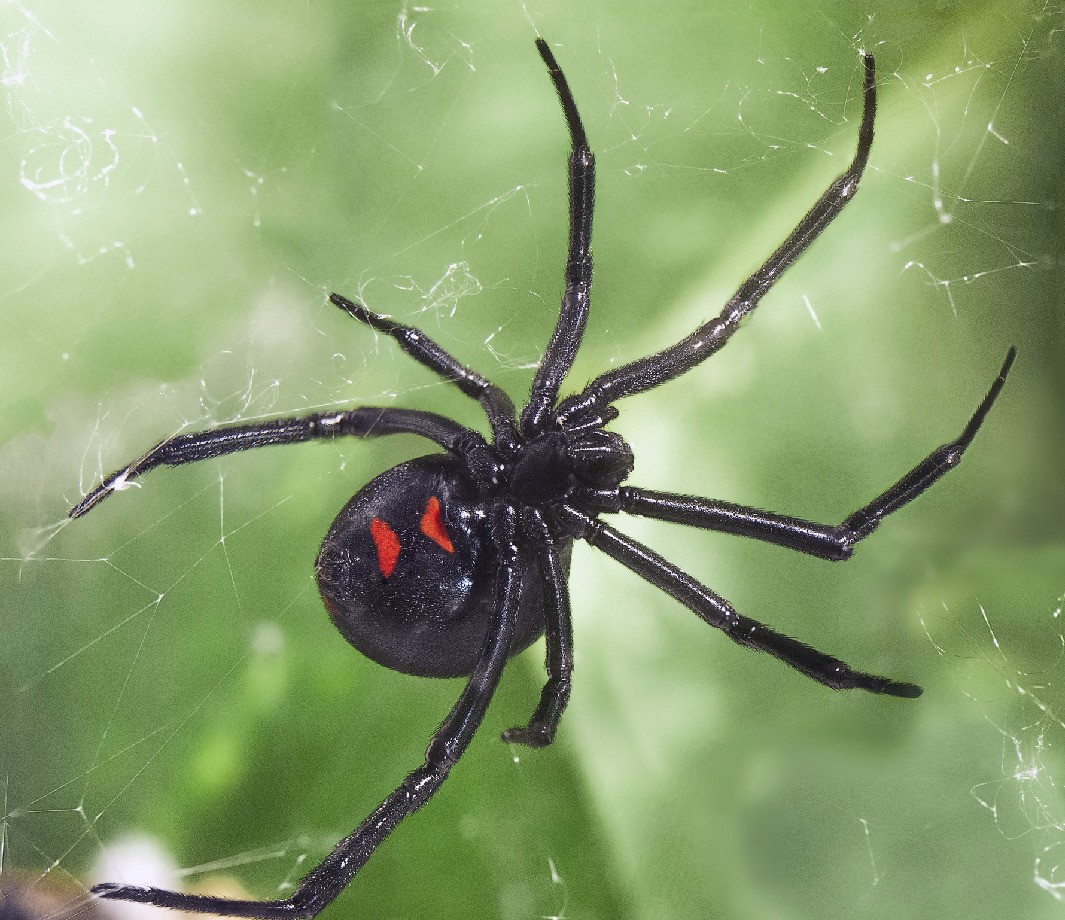
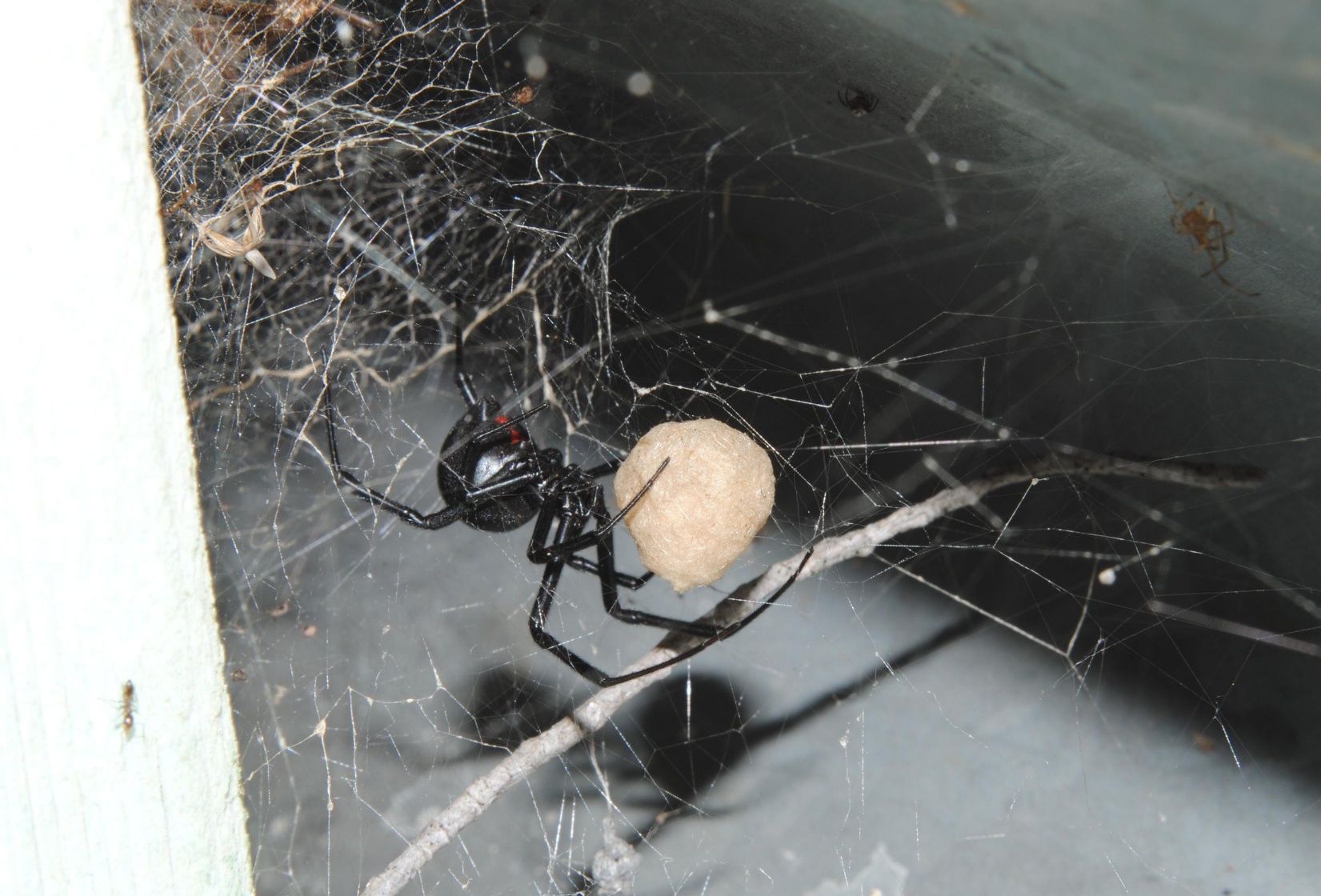
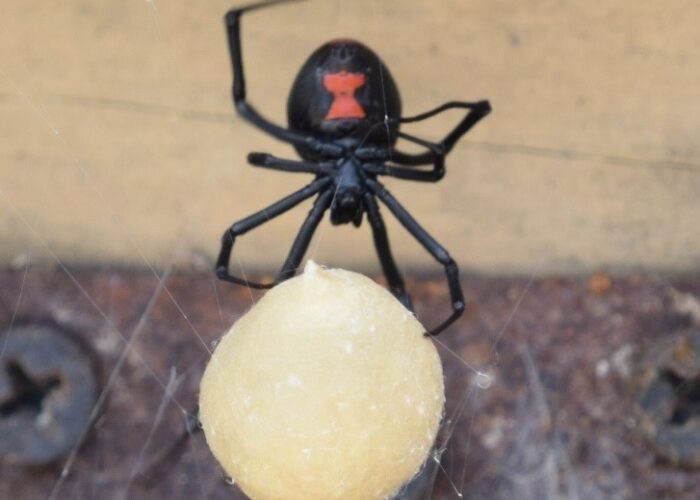 Both male and female adult southern black widow spiders have a conspicuous red hourglass-shaped marking on the underside of their abdomen. Their egg sacs are rounded with a single small point. Photo from iNaturalist.org, by rmcdaniel43 (#348992364), some rights reserved (CC BY-NC).
Black Widow Spiders
Adult Female Southern Black Widow Spiders
The female southern black widow spider is easily recognizable due to its black legs and shiny, round, black body with the characteristic red hourglass-shaped marking on the underside of its abdomen. Sometimes, female widow spiders can have additional red or white markings on the top of their abdomen.
Adult Female Northern Black Widow Spiders
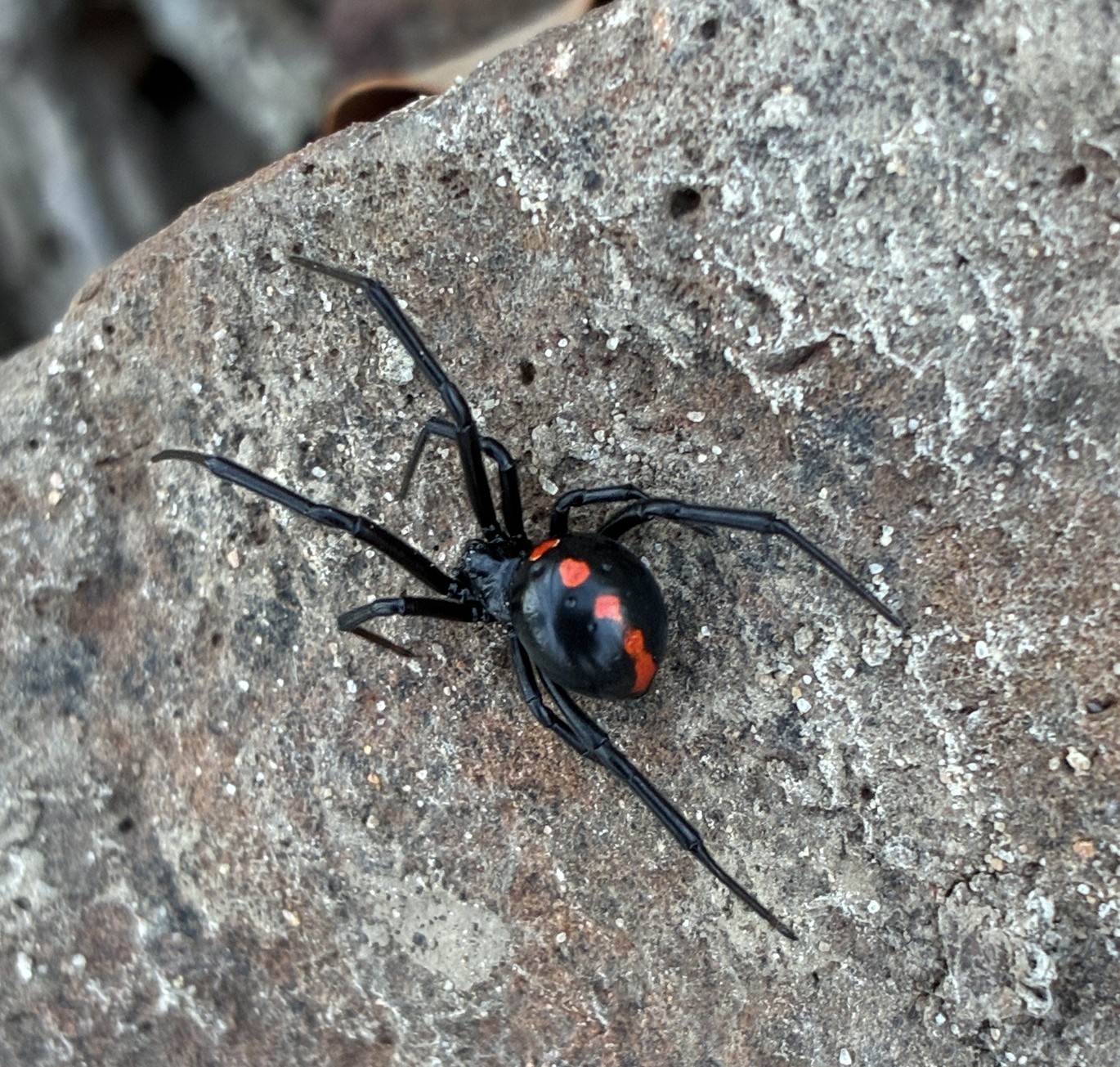
Female northern black widow spiders look similar to southern black widows, but they can be distinguished by the two red spots on their underside instead of the hourglass marking. Northern black widow spiders can also have red or orange spots and white markings on the top of their abdomen.
Male and Immature Black Widow Spiders
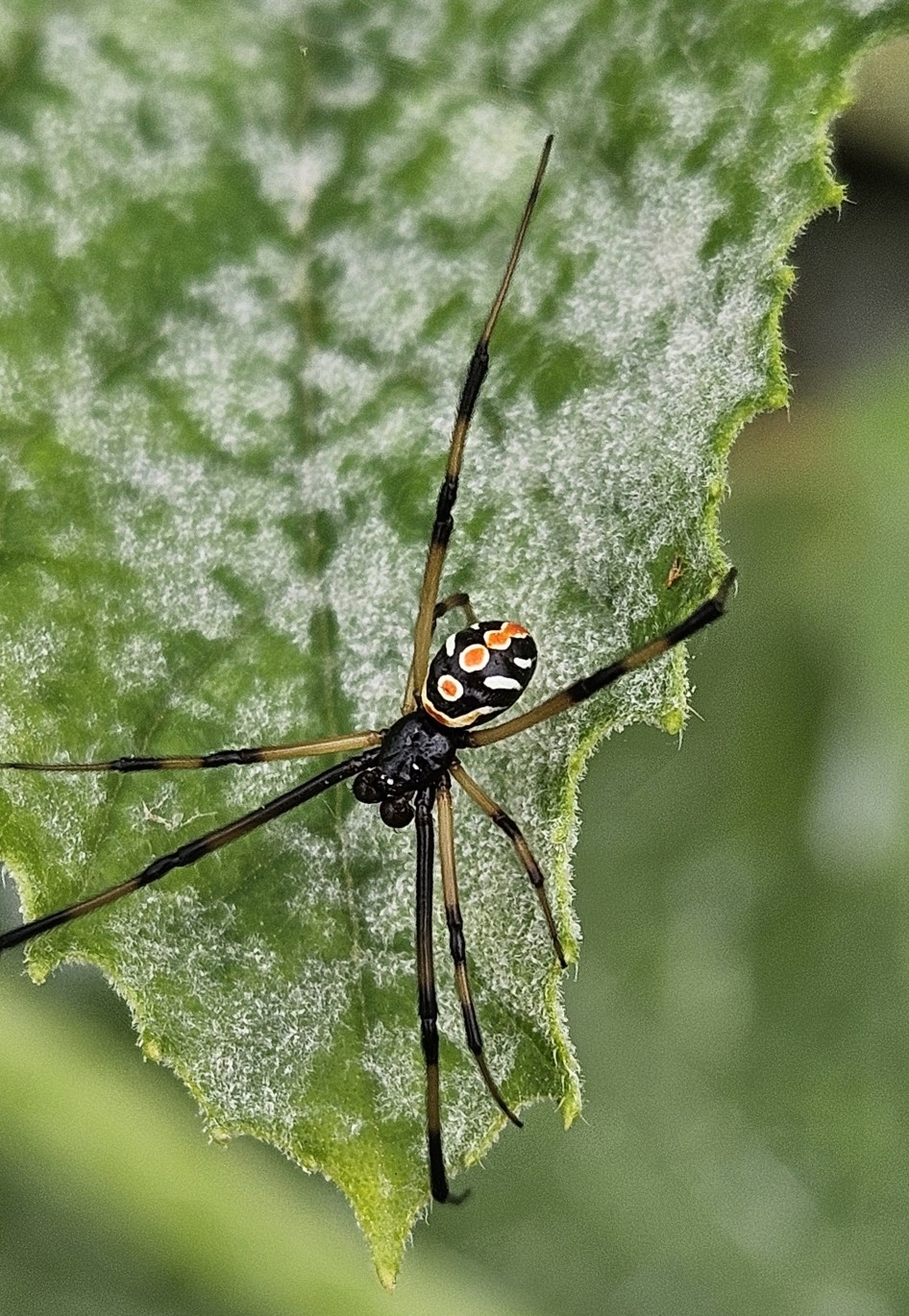
The male and immature female southern and northern black widows are significantly smaller than the adult females and are often more colorful, having red and white abdominal markings. Both males and females possess the hourglass-shaped marking. Additionally, the legs of males are much longer in proportion to their body than they are in the females.
Black Widow Spiderlings and Egg Sacs
Southern and northern black widow spiderlings are orange, brown, and white, and they turn more black with each molt. The eggs sacs are round and tan to greyish in color with a single small point.
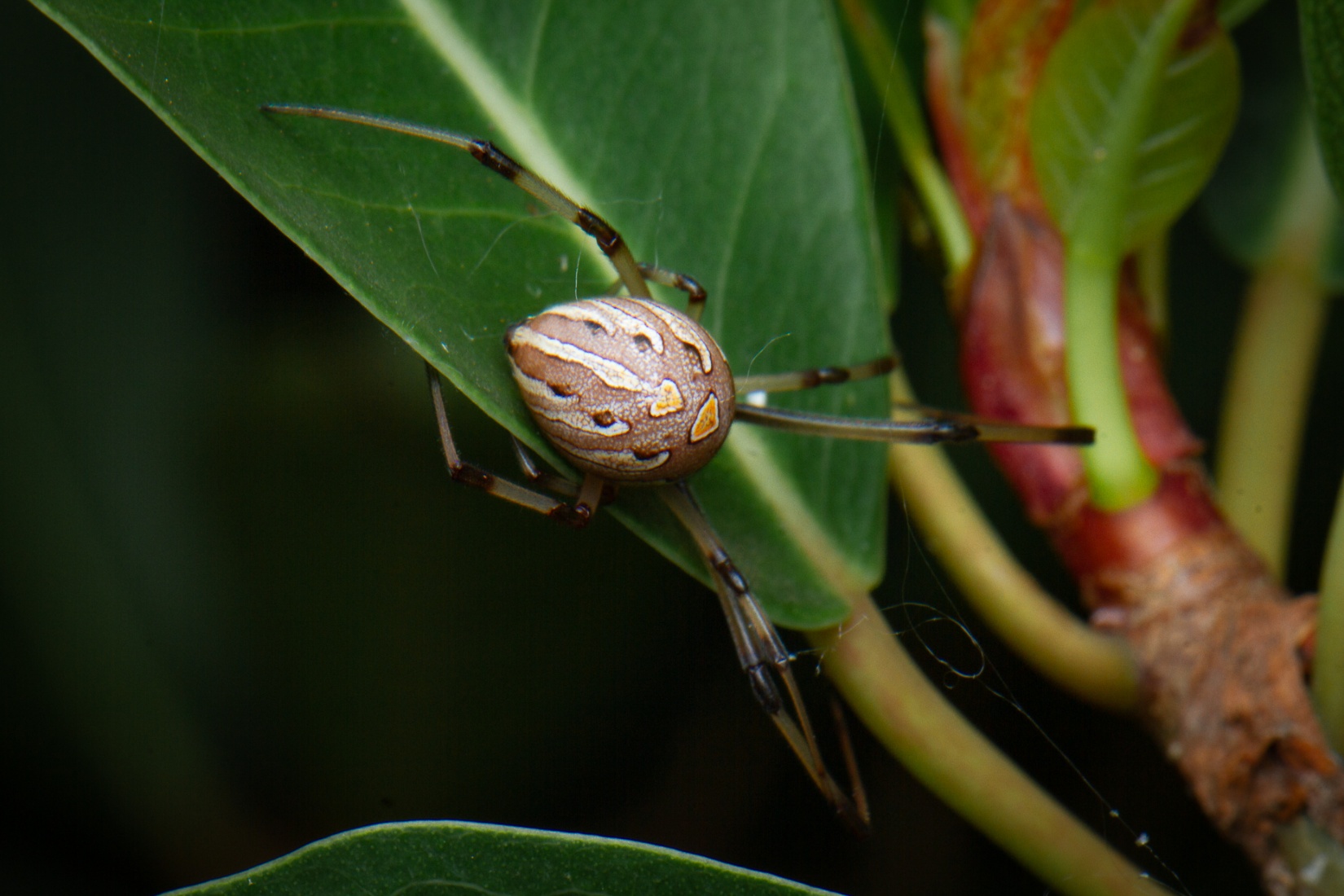
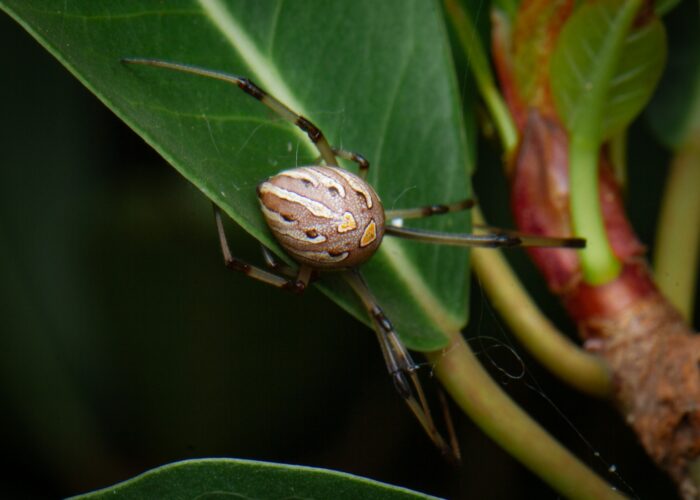 Adult female brown widow spiders have conspicuous tan, brown, and orange markings on the top of their abdomen. Photo from iNaturalist.org, by Rion E. Lerm (#603657187), some rights reserved (CC BY-NC).
Brown Widow Spiders
Adult Female Brown Widow Spiders
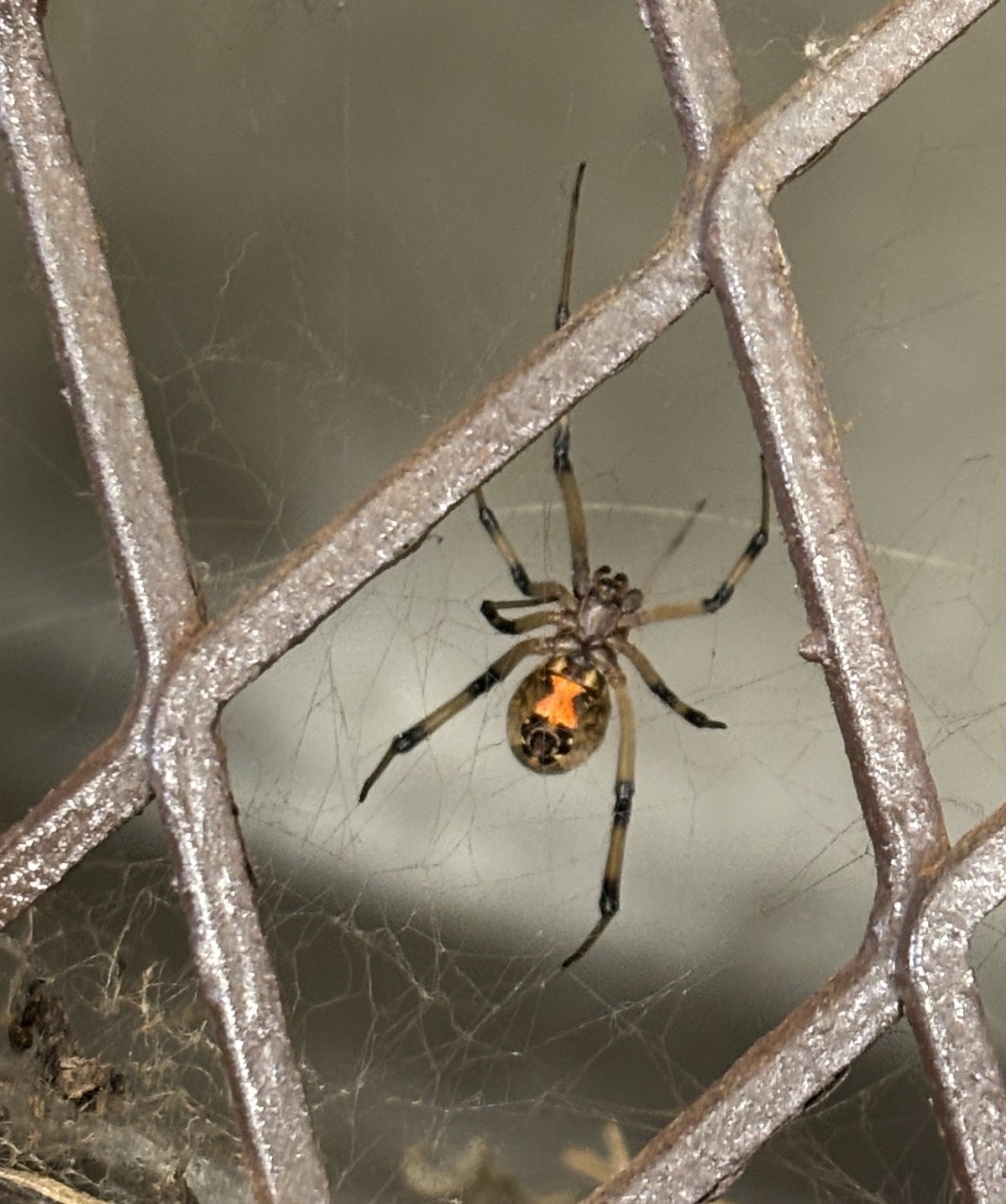
Brown widow spiders range from grey to tan to dark drown in color, with some appearing black. They have distinct brown, white, and black geometric patterns on the top of their abdomen and dark brown banding on their legs. Like the southern black widow, female brown widow spiders have a prominent hourglass-shaped marking on the bottom of their abdomen that is usually orange or red-orange in color.
Male Brown Widow Spiders
Male brown widow spiders are significantly smaller than the females and have longer legs in proportion to their body size. The males are typically tan to dark brown in color and have the hourglass-shaped marking, though it often appears broken in the middle (i.e., appears as two triangles mirroring each other).
Brown Widow Spiderlings and Egg Sacs
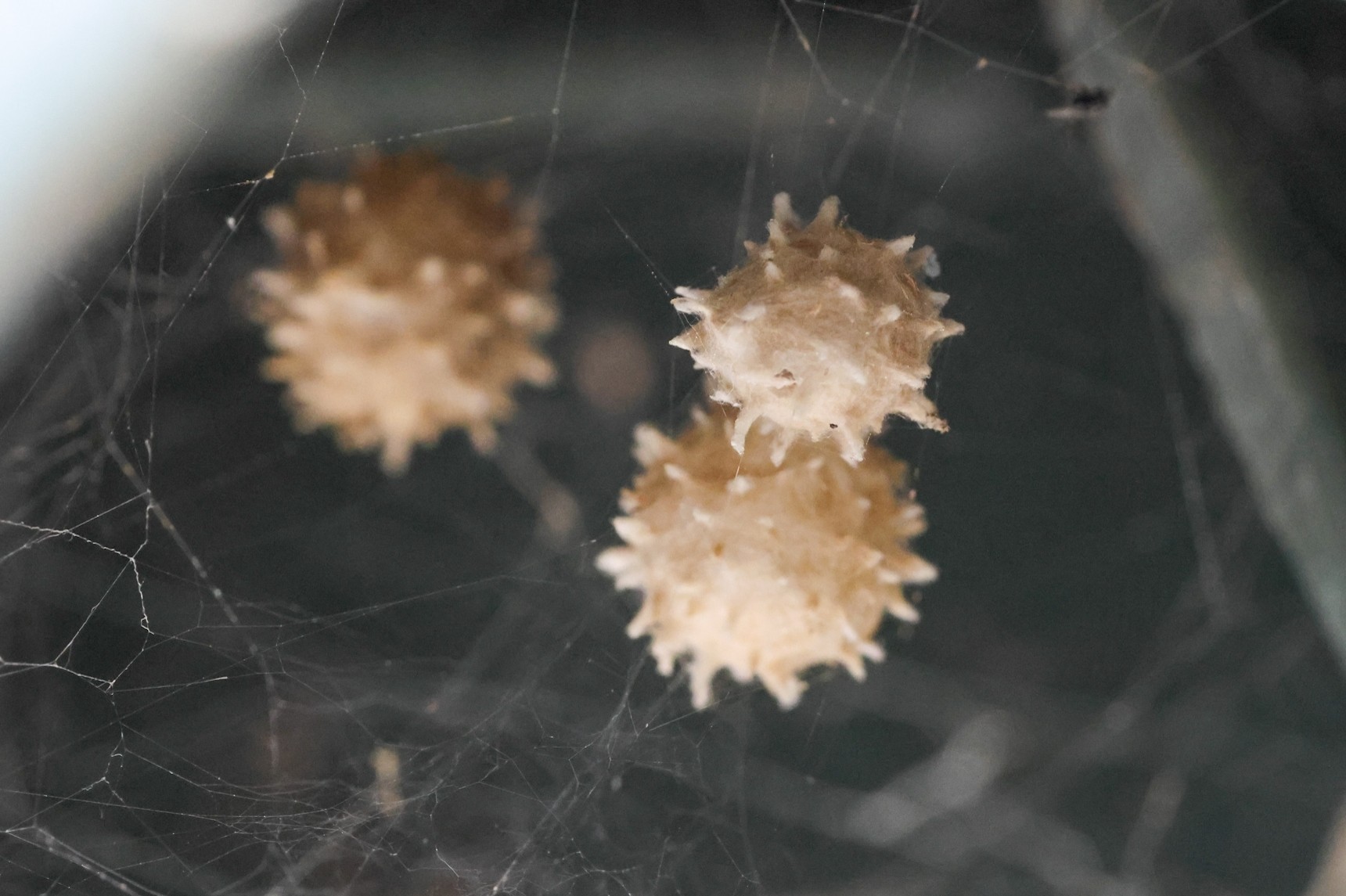
Brown widow spiderlings resemble the adults with tan to dark brown bodies covered in white and brown markings. The egg sacs are rounded, light tan, and covered in small points.
For more information about brown widow spiders, visit Brown Widow Spiders (HGIC 2474).
Widow Spider Distribution and Habitat in South Carolina
Distribution
Southern black widow spiders are found throughout South Carolina, while northern black widow spiders are mainly found in the Piedmont and Upstate regions. Brown widow spiders are not native to the U.S. but can now be found throughout South Carolina, with higher densities in the coastal regions. Adults from all three types of widow spiders can be found year-round in South Carolina.
Habitat
Widow spiders can be found in many different habitats, but they prefer dark, sheltered spaces close to the ground. Widow spiders are most commonly found outdoors in woodpiles, empty containers (such as flowerpots), utility and irrigation boxes, or other crevices where they can build their webs. You may also find widow spiders in crawl spaces, basements, sheds, and old structures such as barns.
Widow Spider Ecological Role
Widow spiders are predators, and some of their prey are likely either unwanted or pestiferous (or both). However, since these three types of widow spiders have overlapping distributions, they can compete with one another for resources. Research shows that the non-native brown widow spiders can outcompete and even kill the native black widow spiders. Because of this, we may see an increase in brown widow spiders and a decrease in black widow spiders over time.
Widow Spider Medical Importance
All three types of widow spiders have venom that is toxic to people. However, bites from widow spiders are very rare. Widow spiders are timid, and bites typically only occur out of defense (e.g., when a spider is crushed, such as in a shoe) or when the web is disturbed. Death from a black widow bite has not been reported since 1983.
Black Widow Spider Bites
The bite from a black widow spider may go unnoticed at first but often requires medical attention due to the neurotoxic venom, and the bite may require antivenom in severe reactions. Small children are most at risk for severe reactions.
Symptoms from a black widow spider bite include intense local pain around the bite within a few minutes. Other symptoms generally develop within 1 to 3 hours, and include:
- Severe stomach pain
- Muscle spasms and cramps
- Nausea
- Fever
- Chills
- Difficulty breathing
- Burning/tingling sensation of the skin
- Fatigue
Brown Widow Spider Bites
The bite from a brown widow spider is much less severe to people. These spiders rarely inject enough venom to cause more than a minor reaction and are considered much less dangerous.
Response to a Suspected Bite
If you believe you are bitten by a widow spider, a photo should be taken of the spider (if possible) and brought to the hospital so that the correct treatment can be administered. Attempting to collect the spider could result in an additional bite. Additionally, dead spiders can still contain venom and should be handled with care.
Widow Spider Management
The best way to control widow spiders is to eliminate their potential habitat.
Cultural Controls
- Store shoes or other clothing inside to greatly reduce the risk of being bitten by a widow spider.
- Remove excess clutter outside the home, such as empty containers, or move away from heavily frequented areas.
- Remove firewood or move it away from heavily frequented areas.
- Wear gloves when moving firewood or other outdoor clutter, or accessing utility boxes, as bites can occur when a hand is reached into dark areas that may contain a widow spider.
- Seal cracks, holes, and other gaps on the outside of the home to help prevent widow spiders from nesting inside and also prevent other unwanted pests from entering the home.
Physical Removal
- If widow spiders or their egg sacs are found inside the home, garage, or in heavily frequented outdoor spaces, carefully remove them with a vacuum cleaner.
- Immediately remove the vacuum bag after removal.
- Seal the vacuum bag in a plastic bag and dispose of it in an outdoor trash bin.
- Sealed bags containing spiders or their egg sacs can also be placed in the freezer for several hours, as an added precaution.
- The cold will kill the spiders and the eggs.
Chemical Control
- If widow spiders remain after the elimination of nesting areas, pesticides may be required.
- Spray spiders directly with aerosol sprays labeled to kill spiders.
- Apply spot treatments with insecticidal dusts in cracks or crevices where spiders build their nests.
- Always follow the pesticide label directions.
- Consult a licensed pest professional for additional guidance.
Originally published 09/26