
Why Foodborne Illness Increases During Summer
Spring and Summer are seasons that always bring a needed break from the cold. We enjoy going outside and working in our yard or gardens. It’s also a time when we need to be extra mindful of food safety. According to the CDC, 33% of foodborne illnesses occur between June and August, with August having the highest rate at 12.4%.
The significant rise in foodborne illnesses is due to two basic facts. First, warmer temperatures enable bacteria to grow faster. Temperatures between 41° and 135°F are considered the danger zone in which dangerous bacteria can grow. They grow exponentially faster between 75° and 125°F. With late Spring and Summer days reaching 90°F or higher and high humidity, bacteria can flourish. Secondly, this time of year invites cookouts and picnics. This can provide multiple challenges in keeping food safe for service. For more information, see HGIC 3602, Safe Picnics: A Guide to Preventing Foodborne Illness at Outdoor Gatherings.
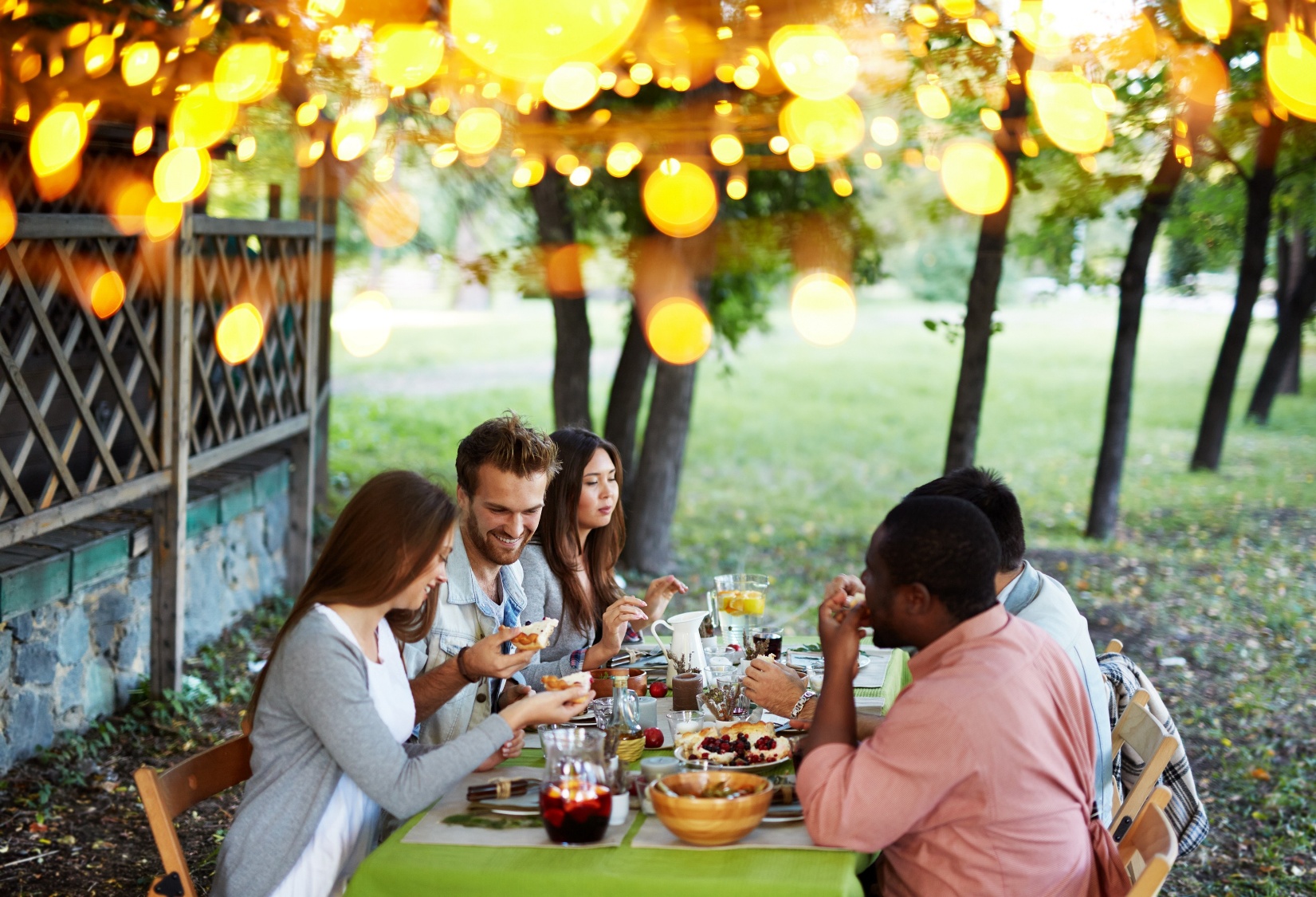
Friends enjoy an outdoor meal beneath shaded trees, highlighting the importance of keeping food at safe temperatures during picnics and cookouts.
Image credit: Pressmaster_stock.adobe.com
Outdoor Food Safety Tips
Here are some tips to help ensure your food remains safe during these hot seasonal days.
Keep Cold Foods Cold
Use an insulated cooler with ice or ice packs to keep perishables below 40°F. When grilling meat, the best practice is to remove it from the cold holding and place it on the grill immediately. The same practice is recommended for ready-to-eat cold foods such as potato salad or coleslaw. Leave them in a cold holding until ready to serve.
Keep Hot Foods Hot
Traditional thinking is that keeping food hot during hot days should be easy. That would be true, and yet it can be deceptive. If food is not held at the correct temperatures, bacteria can thrive. Hot days can trick you into thinking a heating source to maintain a temperature of 140°F or higher isn’t necessary. Keep food hot at the correct temperature.
Follow the One-Hour Rule
When serving food outside in temperatures above 90°F, cold food is only safe for one hour. Try to provide only the amount of cold food that will be consumed in an hour or less. Keeping your cold food cold and providing the correct quantity will be key to controlling bacterial growth.
Wash Your Hands Frequently
It stands to reason that, with hot days favoring bacterial growth, frequent handwashing is imperative. Grilling raw meats and making summer salads provide a constant opportunity for cross-contamination. As mentioned earlier, bacteria generally grow faster in warm, humid weather. Frequent handwashing helps reduce that growth.
Protect Food from Insects and Other Pests
Flies, roaches, and ants often land on or crawl on your food or hands and can carry dangerous germs. Keeping your food wrapped securely or in tight containers can help prevent this form of contamination.
Keep Coolers in the Shade
If you are using a cooler, try to keep it in the shade away from direct sunlight. Serving in the shade can also help to maintain your cold food items at a safe temperature for longer.
Use Separate Coolers for Food and Drinks
Food packaging can carry bacteria that can be exposed to ice. For this reason, you never want ice that’s been used to keep food cold for drinks. You should have separate coolers for perishable food and drinks. A secondary reason is that a drink cooler will open more frequently, potentially compromising food safety.
Enjoy Outdoor Meals Safely
Hot, seasonal days can provide many challenges for food safety. This is obvious with the number of foodborne illnesses that occur during the summer months. We need to be diligent so that our summer is free of foodborne illness, which we can prevent.
Sources
- U.S. Department of Agriculture. (2024, May 19). Press Release: Serve Safe with Food Safety Tips from USDA. https://www.usda.gov/aboutusda/news/pressreleases/2024/05/21/serve-summer-safe-food-safety-tips-usda
- U.S. Food and Drug Administration. (2024, March 5). Article: Handling Food Safely While Eating Outdoors. https://www.fda.gov/food/buy-store-serve-safe-food/handling-food-safely-while-eating-outdoors
- Haraminac, E., Michigan State University Extension. (2016, July 16) Article: Keep food safe when cooking and serving outdoors. https://www.canr.msu.edu/news/keep_food_safe_when_cooking_and_serving_outdoors


