

Jars of Kimchi on counter.
Jessica Hardiman © 2025 HGIC, Clemson Extension
Kimchi is a traditional dish in Korean culture. It is made primarily of fermented cabbage with the addition of radishes, carrots, and spices to create a sour, tangy, and salty dish.
There are many different variations of kimchi that can be prepared, and you may experiment with your preferences as you try making this dish!
For information on the nutritional benefits and uses of kimchi, see Kimchi–An Introduction.
What Is Fermentation in Kimchi?
Fermentation is the process of sugars being broken down by microorganisms in the absence of oxygen.
- It preserves food to make it last longer.
- It gives food distinct flavors, like those in kimchi, sourdough, and aged cheese.
Kimchi relies on lactic acid bacteria to ferment, which thrive in slightly acidic conditions.
How Does Kimchi Fermentation Work?
The preparation of kimchi can be mainly attributed to the growth of microorganisms Weissella and Lactobacillus species bacteria, among others.
- These bacterial cultures are naturally present on the vegetables.
- Theyallow fermentation to happen through the development of organic acids to result in an optimum pH of 4.2.
- This pH level creates an environment that favors the growth of the lactic acid bacteria, while inhibiting the growth of harmful bacteria.
The fermentation process of kimchi is similar to sauerkraut but takes a shorter amount of time. Kimchi ferments in 1-2 days at room temperature, or longer in the refrigerator.
Eating kimchi can be a healthy way to include more probiotics and vegetables in your diet.
How to Eat Kimchi
Kimchi is most often used as a topping to complement rice in Asian dishes, but can also be added to:
- Eggs
- Noodles
- Burgers
See the recipe below if you’re interested in making your own kimchi! If possible, go to a local Asian store to find all these ingredients.
Kimchi Recipe
This recipe is adapted from Ball Mason Jars Recipe: Kimchi.
Materials Needed
- Knife
- Large bowl
- Plate
- Strainer
- Food processer/blender
- Gloves
- Glass jar and lid
Ingredients
- 1 medium head of napa cabbage (about 2 lbs)
- ¼ cup iodine-free sea salt or kosher salt
- Water
- 1 tbsp grated garlic (5-6 cloves)
- 1 tsp grated peeled fresh ginger
- 1 tsp granulated sugar
- 2 tbsp fish sauce
- 1 to 5 tbsp of Korean red pepper flakes, or gochugaru (depending on spice preference)
- 8 ounces Korean radish or daikon radish, peeled and cut into matchsticks
- 4 medium green onions, trimmed and cut into 1-inch pieces
Step-by-Step Instructions
- Cut the cabbage lengthwise through the stem into quarters. Cut the cores from each piece and cut each quarter into 2-inch-wide strips.
- Sprinkle the salt over the cabbage and massage, using your hands, until the cabbage starts to soften. Cover the cabbage with water and place a plate on top of the cabbage with something to weigh it down on top, to keep it fully submerged in the water. Let stand for 1-2 hours.
- Rinse and drain the cabbage. Rinse repeatedly, 2 or 3 times. Let the cabbage drain for 15 to 20 minutes.
- While the cabbage is draining, make the spice paste by combining garlic, ginger, sugar, and fish sauce in a food processor or blender. Stir in the gochugaru.
- Gently squeeze the cabbage to release any excess water and add it to the spice paste in a large bowl. Add the radish and green onions.
- Using your hands, work the paste into the vegetables until they are coated completely. Using gloves is recommended to protect your hands from spices as well as lingering odors.
- Pack the kimchi into a 1-quart jar and press down until the brine rises to cover the vegetables. Leave at least 1 inch of space at the top of the jar and seal.
- Let the kimchi ferment by leaving it at room temperature (68 °F-72 °F), out of direct sunlight for 1 to 5 days, or in the refrigerator for longer ferment time. Place a bowl under the jar to collect any overflow liquid.
- Check on the kimchi every day and press down on the cabbage with a spoon to keep it submerged in the brine. When the kimchi tastes to your liking, transfer it to the refrigerator for storage for up to 6 months.

Kimchi being mixed in bowl.
Jessica Hardiman ©2025 HGIC, Clemson Extension
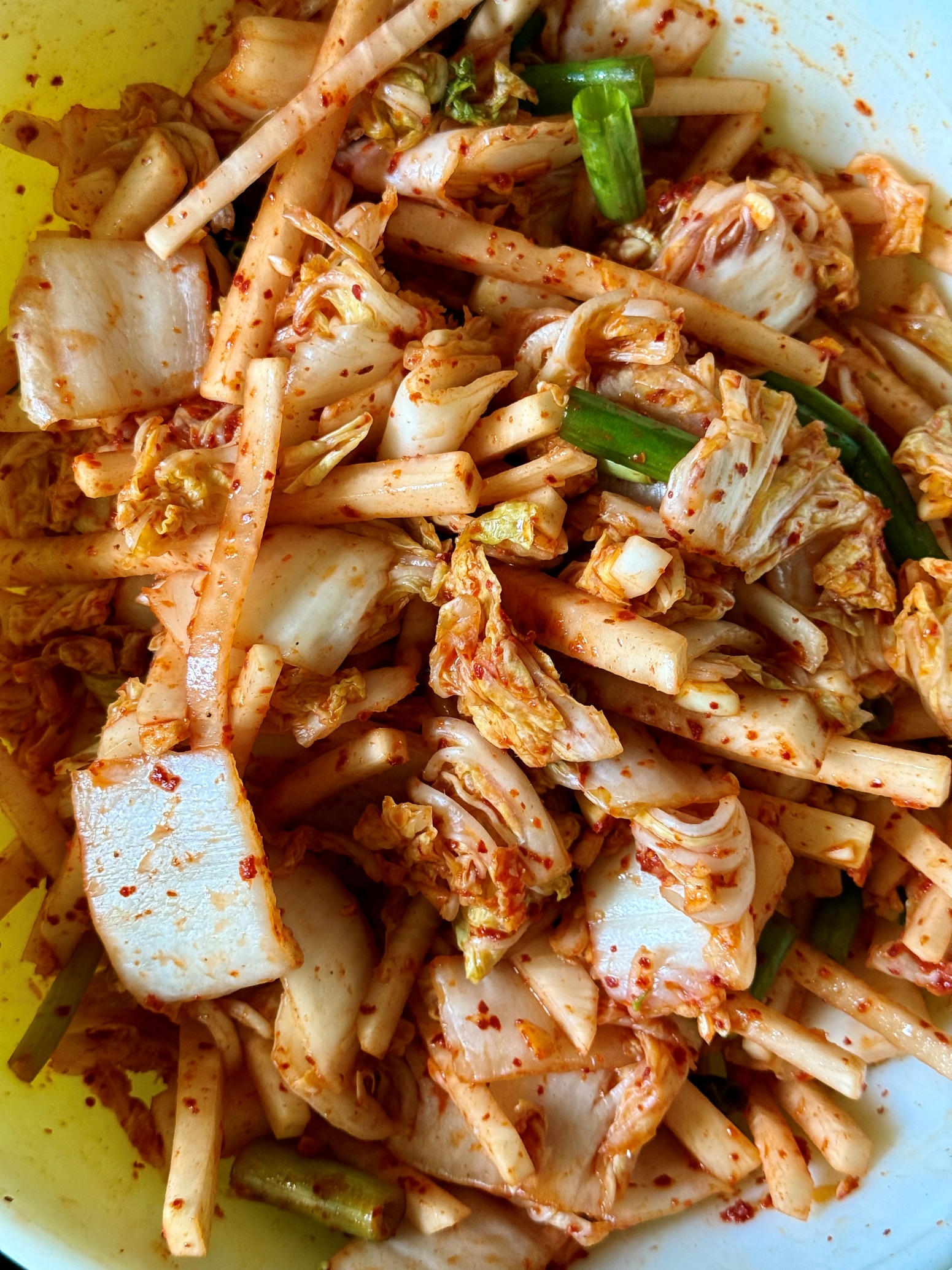
Kimchi is a traditional dish in Korean culture. It is made primarily of fermented cabbage.
Jessica Hardiman ©2025, HGIC, Clemson Extension
Sources
- National Center for Home Food Preservation. Fermenting. University of Georgia (2025).
- Oehler, Nellie. Kimchi basics. Oregon State University Cooperative Extension Service (2020).


