
Why Preserve Your Summer Harvest?
Summer gardens often produce more fruits and vegetables than we can enjoy fresh. Preserving your harvest is a great way to reduce food waste, save money, and enjoy homegrown produce long after the growing season ends. Choosing the right preservation method is key to maintaining both quality and food safety.
Freezing Fruits and Vegetables
Freezing is one of the easiest ways to preserve produce.
- Herbs: Chop and freeze in water or olive oil using ice cube trays.
- Peppers: Wash, chop, and freeze without blanching for later use in soups, stir-fries, and casseroles.
- Corn: Blanch before freezing to preserve its flavor and texture.
- Berries: freeze individually by spreading on a baking sheet, then transfer to freezer-safe bags.
- Tomatoes: Freeze whole, chopped, or pureed for future sauces and soups.
Safe Home Canning
Canning is an excellent option for long-term storage, but it must be done safely.
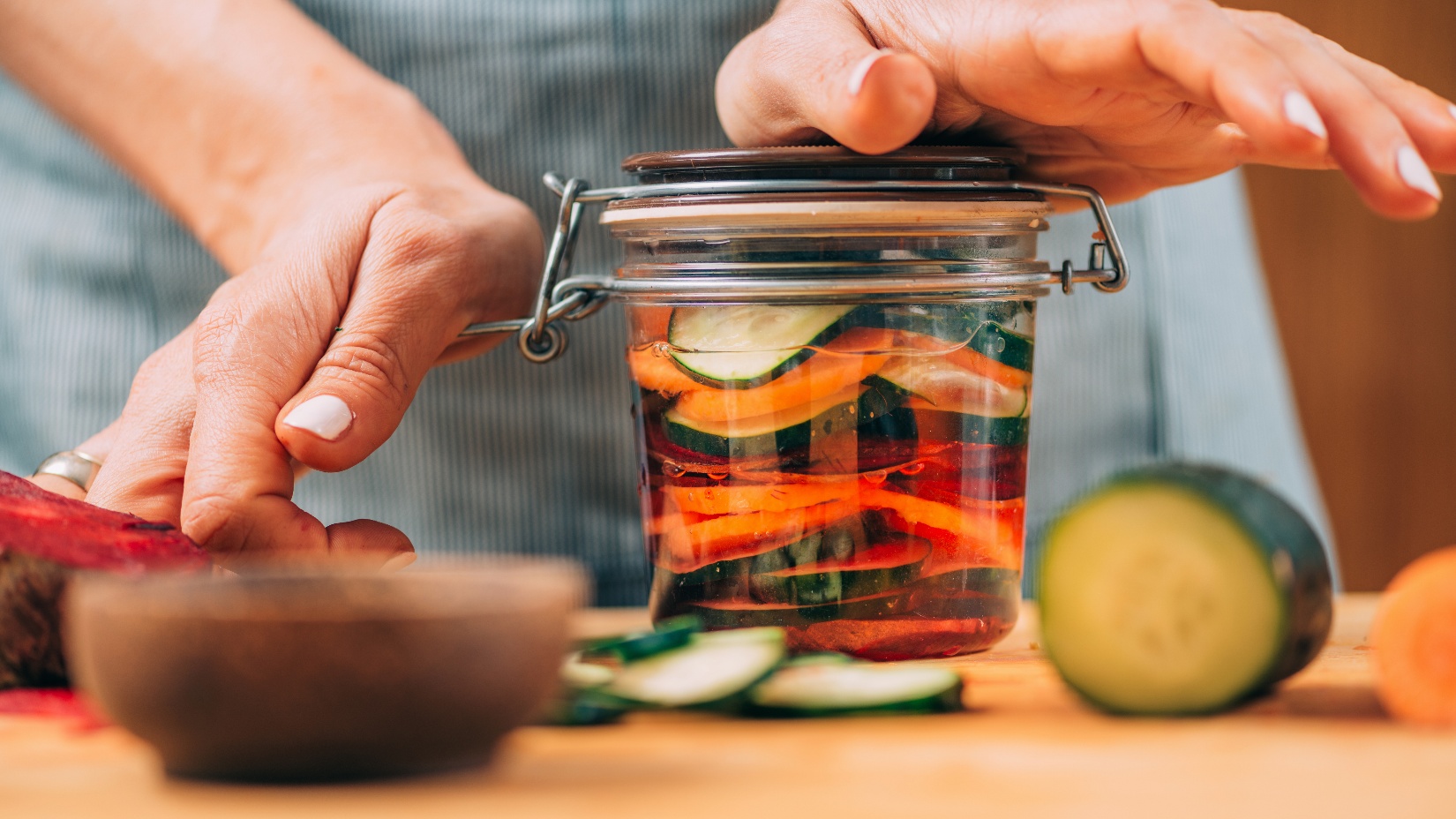
High-acid foods like fermented vegetables can be safely processed in a boiling water bath canner.
Photo credit: Microgen_stock.adobe.com
High-Acid Foods
High-acid foods such as many fruits, jams, jellies, and pickled vegetables can be processed using a boiling water bath.
Low-Acid Foods
However, low-acid vegetables, including green beans, corn, carrots, and most vegetable mixtures, must be pressure canned to destroy bacteria, including Clostridium botulinum, which can cause botulism. Clemson Extension emphasizes that research-based canning methods should always be followed to prevent foodborne illness.
Dehydrating Produce
Dehydrating removes moisture to help prevent spoilage while concentrating on flavor. Herbs, peppers, apples, and tomatoes are popular choices for dehydrating and can be stored in airtight containers in a cool, dry place.
Start with High-Quality Produce
Before preserving, inspect your produce carefully. Freeze, can, or dehydrate fruits and vegetables while they are fresh and at peak quality. Avoid preserving bruised, moldy, or overripe produce, as preservation does not improve its quality. Clemson Extension notes that the primary methods of safe home food preservation are canning, freezing, and drying.
Use Research-Based Food Preservation Recommendations
For the most up-to-date recommendations, consult Clemson Extension’s HGIC Food Preservation resources and the USDA Complete Guide to Home Canning, which provide research-based guidance for safely preserving fruits, vegetables, meats, and other foods.
By preserving your summer harvest safely, you can enjoy garden-fresh flavors year-round, reduce food waste and make the most of your hard work in the garden.
Additional Resources
Canning Foods at Home | Home & Garden Information Center
Preserving Foods | Home & Garden Information Center
How Did We Can? | USDA Complete Guide to Home Canning, 2015 revision
Elisabeth Justice, EFNEP Instructional Designer


