Coastal Region – Glen Payne
Daylight hours have dwindled, and nights last longer as fall marches on. The growth of plants has really slowed down. Less water is now required, and irrigation systems can be adjusted for less frequent watering days and duration.
- Inspect inside the irrigation clock to ensure that insects such as bees, roaches, ants, and the occasional snakes aren’t building a home on the irrigation transformer using it as a heat source during the cold. Removal of critters will prevent the electrical system from shorting. HGIC 1815, Landscape Irrigation Equipment Part 6: Timers & Controllers
- Inspect the Ground Fault Indicator (GFCI) receptacles that exterior irrigation controllers are plugged into and verify that the reset button works.
- Inspect rain sensors for damage and verify that they will shut the system off as advertised.
- Irrigation controllers may be placed in the ‘OFF’ position for the winter months.
- Mulch should be installed correctly to prevent winter weeds, keep soil warm, & prevent soil compaction. HGIC 1604, Mulch
- Plant trees as consistent rainfall returns, using less irrigation for establishment. HGIC 1001, Planting Trees Correctly
- Vegetable Gardens are seeing the beginning of the harvest of cole crops (collards, kale, spinach, cabbage, & lettuce mixes) are starting to come on, and the weather is cooling down, providing a nice reason to be outside. HGIC 2203, Cabbage, Broccoli & Other Cole Crop Insect Pests
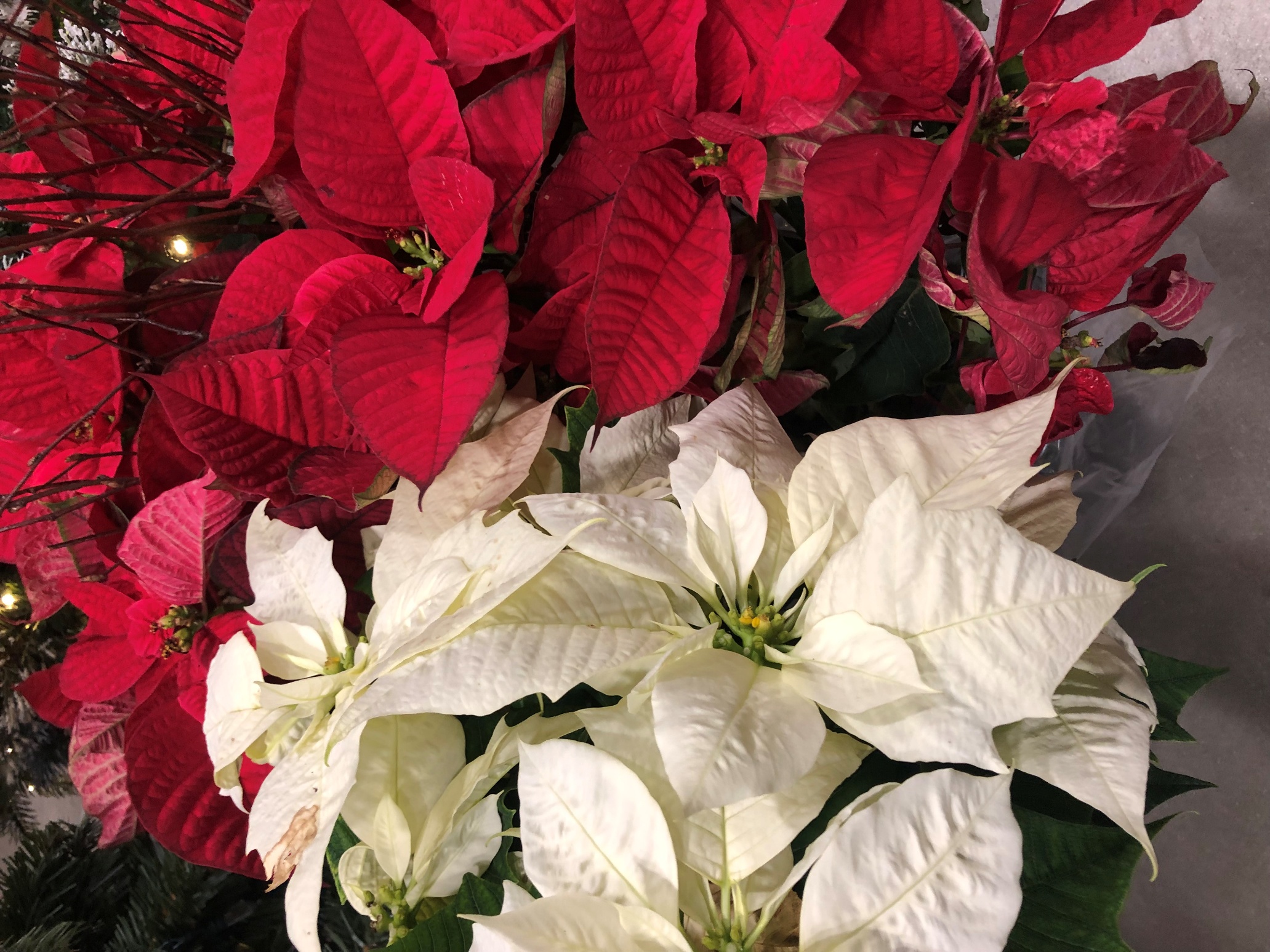
Poinsettias
Glen Payne, ©2025, Clemson Extension
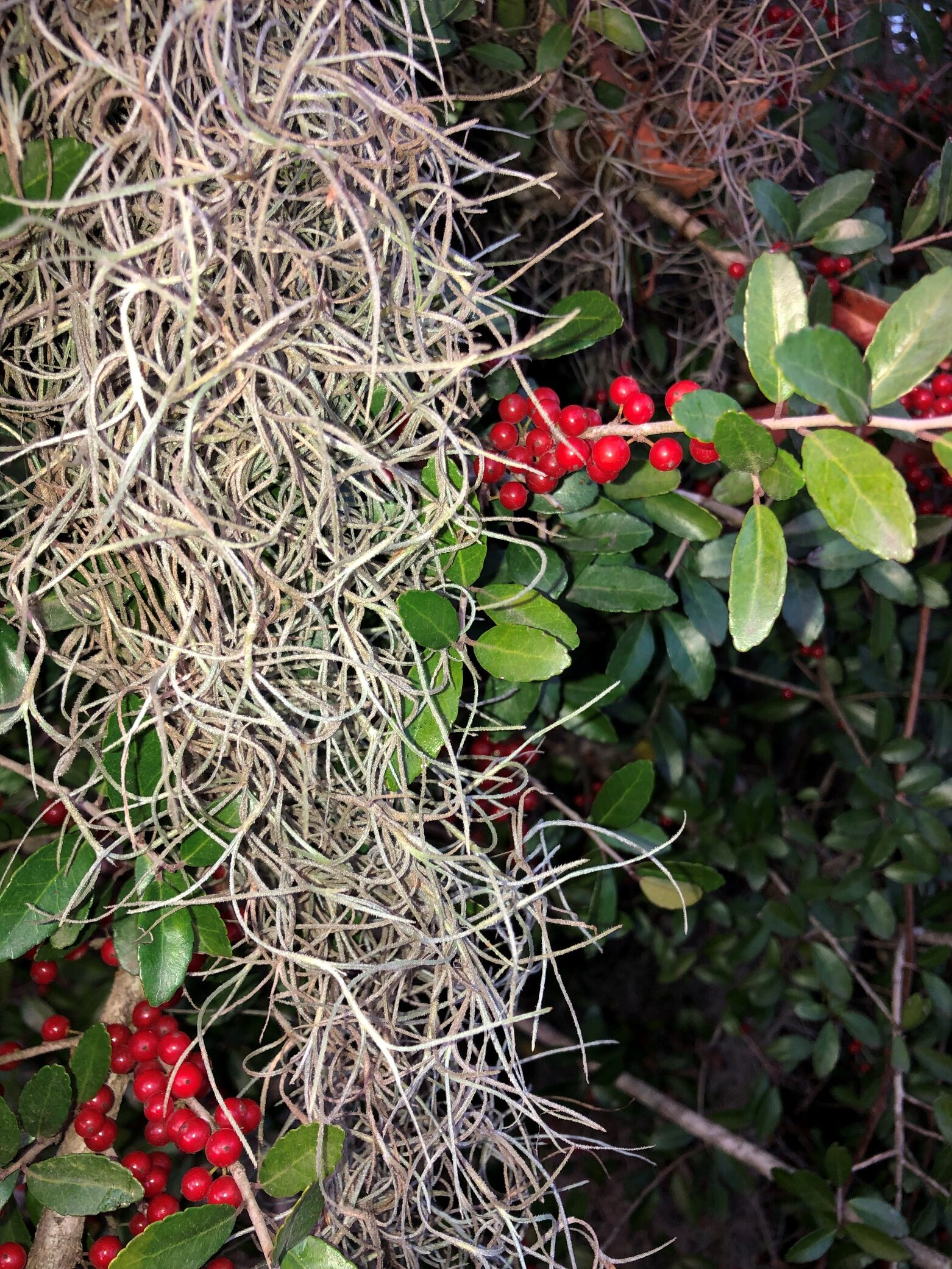
Yaupon Holly Berries, Ilex vomitoria.
Glen Payne, © 2025, Clemson Extension
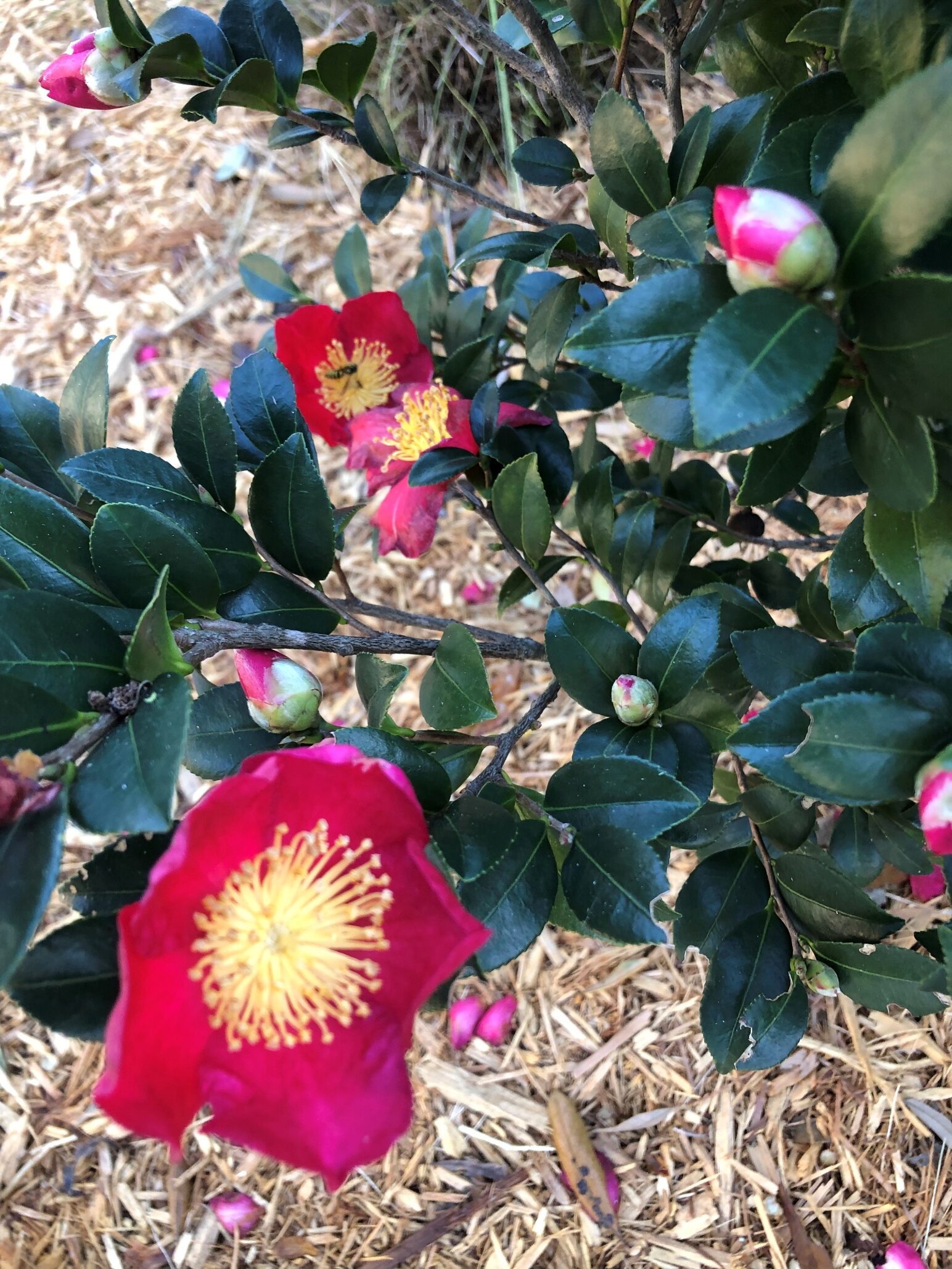
Camellia Blooms
Glen Payne, ©2025, Clemson Extension
Midlands Region – Jennifer Weaver
Planning for fall and winter interest in the landscape:
- Planting can continue throughout the fall and winter months, allowing new plants to establish their roots before spring growth begins.
- Visit your local nursery to select fall-blooming sasanquas (Camellia sasanqua) while they are in bloom and choose your favorite! Make sure to follow the “right plant, right place” rule and plant them where they will receive proper water, sunlight, and soil conditions so they will thrive and remain healthy in the landscape.
- Consider planting other shrubs that provide colorful flowers during the winter months. Paperbush (Edgeworthia chrysantha) begins blooming in December with 1 ½ – 2” yellow flowers and beautiful yellow fall color.
- Try these plants that provide fragrance as well as flowers in fall and winter, such as tea olive, winter daphne and winterhazel.
- Don’t overlook using our attractive native grasses.
- Muhly grass (Muhlenbergia capillaris) sports beautiful mauve plumes.
- Another native is switchgrass (Panicum virgatum). Its tall, bunch-type growth habit makes it very competitive with weeds. There are many cultivars/varieties of switchgrass to choose from, which have different colored foliage and flowers.
- Indian grass (Sorghastrum nutans) has golden-bronze seed heads that flow in the wind, adding movement and life to the winter landscape.
- Take note of plants and trees exhibiting beautiful fall foliage color now and add them to your landscape for seasonal interest. Options are oakleaf hydrangea (Hydrangea quercifolia), Carolina allspice (Calycanthus floridus), Chalkbark maple (Acer leucoderm), Gingko (Gingko biloba), Black gum (Nyssa sylvatica) and dogwood (Cornus florida).
- As plants lose their foliage, seek out plants with interesting branching/silhouette/fruits for winter interest in the garden.
- Henry Lauder’s walking stick (Corylus avellana ‘Contorta’) is a multi-stem, 8-10’ tree with contorted branches, which can be observed in the winter but also has crumpled leaves and yellow catkins in the spring, giving it year-round interest.
- American Persimmon (Diospyros virginiana) has bright orange fruits on bare branches in fall that persist well into winter.
- Don’t forget to showcase your evergreens! Arborvitae, juniper, hollies, yews, cedars and cypress foliage stand out as other deciduous plants lose their leaves.
- Plant a mixed group of evergreens when creating a screen for best results and variety. Always consider using natives when possible, as some non-natives are invasive and threaten the native flora.

Winterberry’s bright red berries persist through the winter.
Photo credit: Blaine Moore in Sustainable Garden Design article
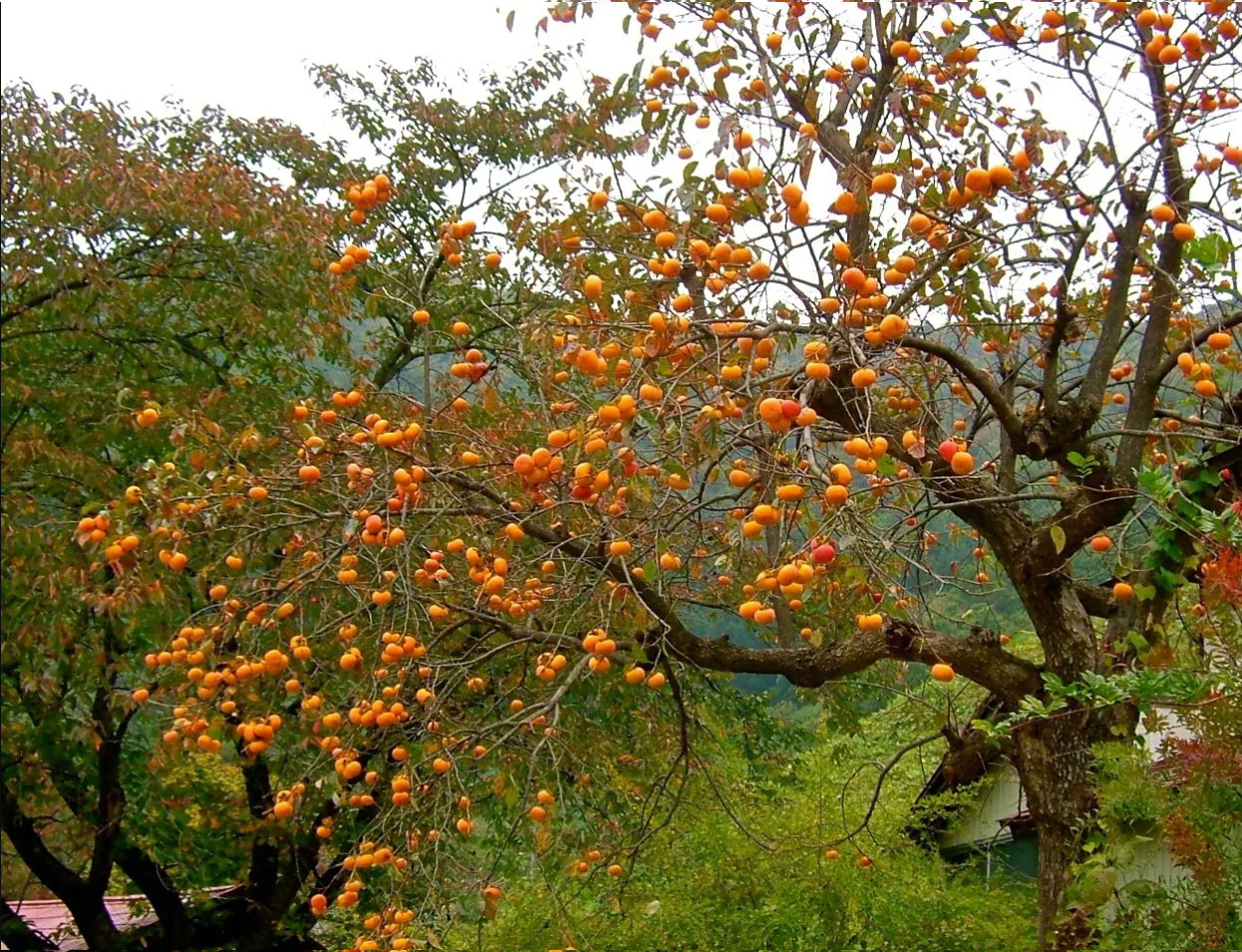
The orange fruit of persimmon on bare branches in fall and winter.
Photo credit: Blaine Moore in Sustainable Garden Design article
Other tips for the fall and winter garden.
- Create a natural seasonal wreath from items collected from your landscape. Use a muscadine vine as a base, and add yaupon holly with red berries, magnolia leaves with brown back, arborvitae and cypress. Mix in pinecones, acorns and other natural elements from your yard and top with dried fruit and a bow.
- Mulch landscape beds and around trees to help hold soil moisture. You can blow fallen leaves into your landscape beds and top with a fresh layer of mulch such as pine straw. The decomposing leaves underneath will help to add organic matter to enrich the soil and improve water retention.
- Make sure to water evergreen trees and shrubs so they don’t dry out over the winter. Each time a plant dries out in the landscape, this stresses the plant and makes it more susceptible to pests and pathogens. It is important to water deeply over the entire root ball.
Upstate Region – Ginger Long
When selecting a fresh-cut Christmas tree:
- Inspect the trunk for splits. If any splits are found, it indicates that the tree is too dry and will not absorb water.
- Shake the tree gently. If more green needles fall than brown ones, then the tree is too dry.
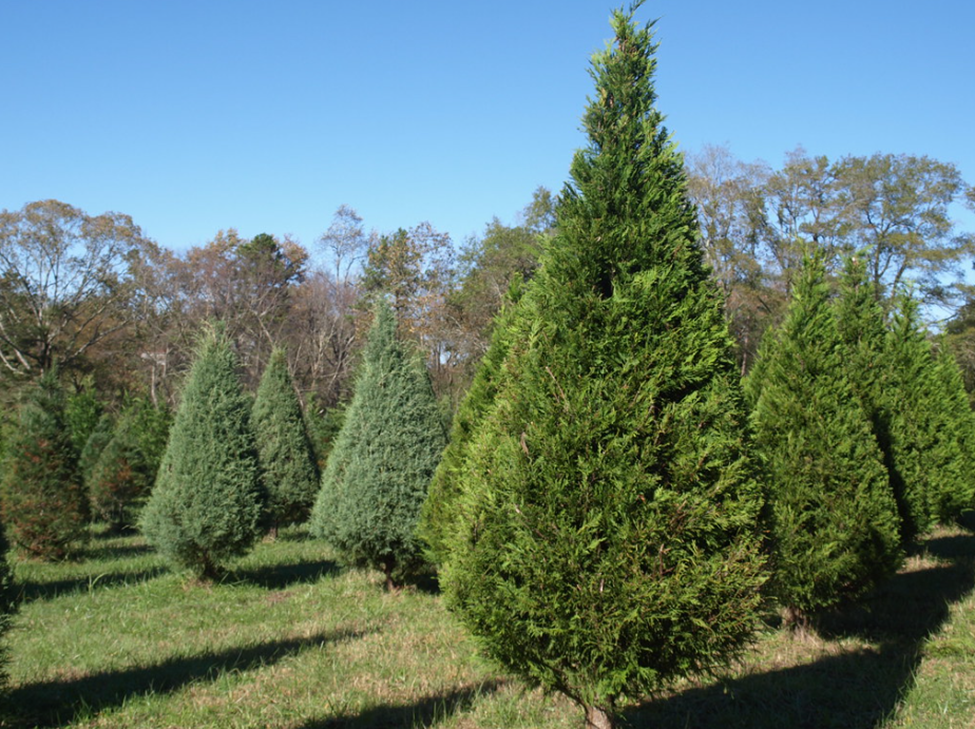
Examine trees carefully at Christmas tree farms, tree lots, or garden centers for splitting trunks and needle drop. Shake trees to dislodge any insects before bringing them indoors.
Barbara H. Smith, ©2019 HGIC, Clemson Extension
- Make a fresh cut on the bottom end of the tree trunk before bringing it inside. Remove ½ inch of the trunk to allow the tree to absorb water more effectively when it is placed in its tree stand.
- Fresh-cut Christmas trees require at least one quart of water per day to stay fresh throughout the holiday season.
Fresh-cut holiday greenery, such as garlands and wreaths, should be misted with water daily to help them stay hydrated. Keep them out of direct sunlight and away from heating vents. Before hanging garlands and wreaths, soak them in water for several hours, then allow them to dry outdoors before bringing them inside. They can also be sprayed with an anti-transpirant product to prevent moisture loss.
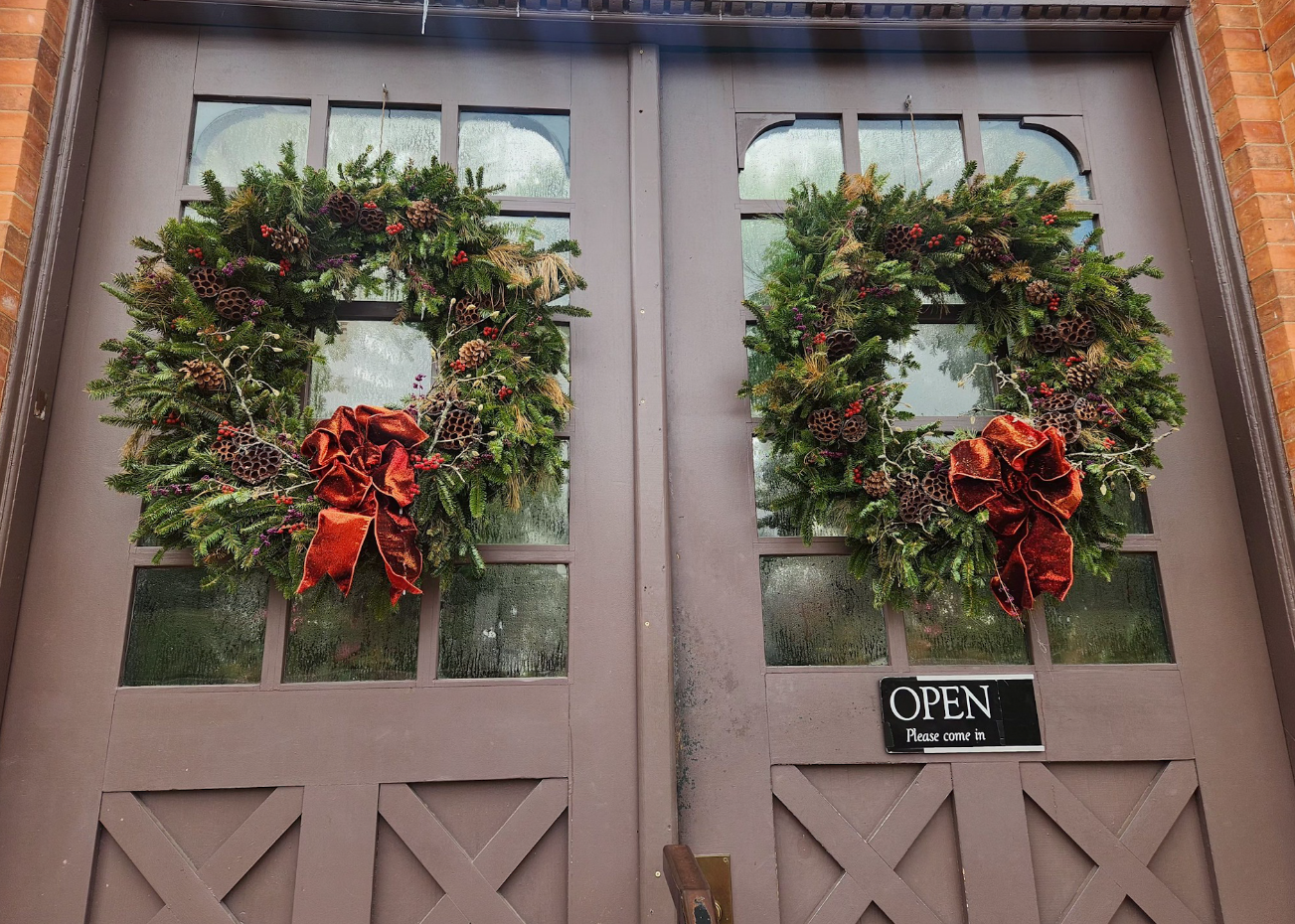
Wreaths made from freshly cut greenery will last longer when misted with water daily, helping them stay fresh for a longer period.
Millie Davenport, ©2023 HGIC, Clemson Extension
Houseplants for the holidays will be available at garden centers and other retailers. Poinsettias, Christmas cactus, cyclamen, amaryllis, and paperwhites, among others, should be grown indoors in a bright window but not in direct sunlight. Be sure to remove the plants from decorative pots, wraps, and saucers to water them. Allow them to drain thoroughly before returning them.

Bright red poinsettias and white cyclamen are colorful houseplants for the holidays.
Millie Davenport, ©2023 HGIC, Clemson Extension
Garden centers often offer young conifers decorated for the holidays. Dwarf Alberta spruce, lemon cypress, and more can be found. These can be brought indoors for a short time during the holidays. Avoid placing them near heating vents to prevent them from drying out too much and dropping needles. Be sure to gradually acclimate them to outdoor temperatures before permanently placing them outdoors.
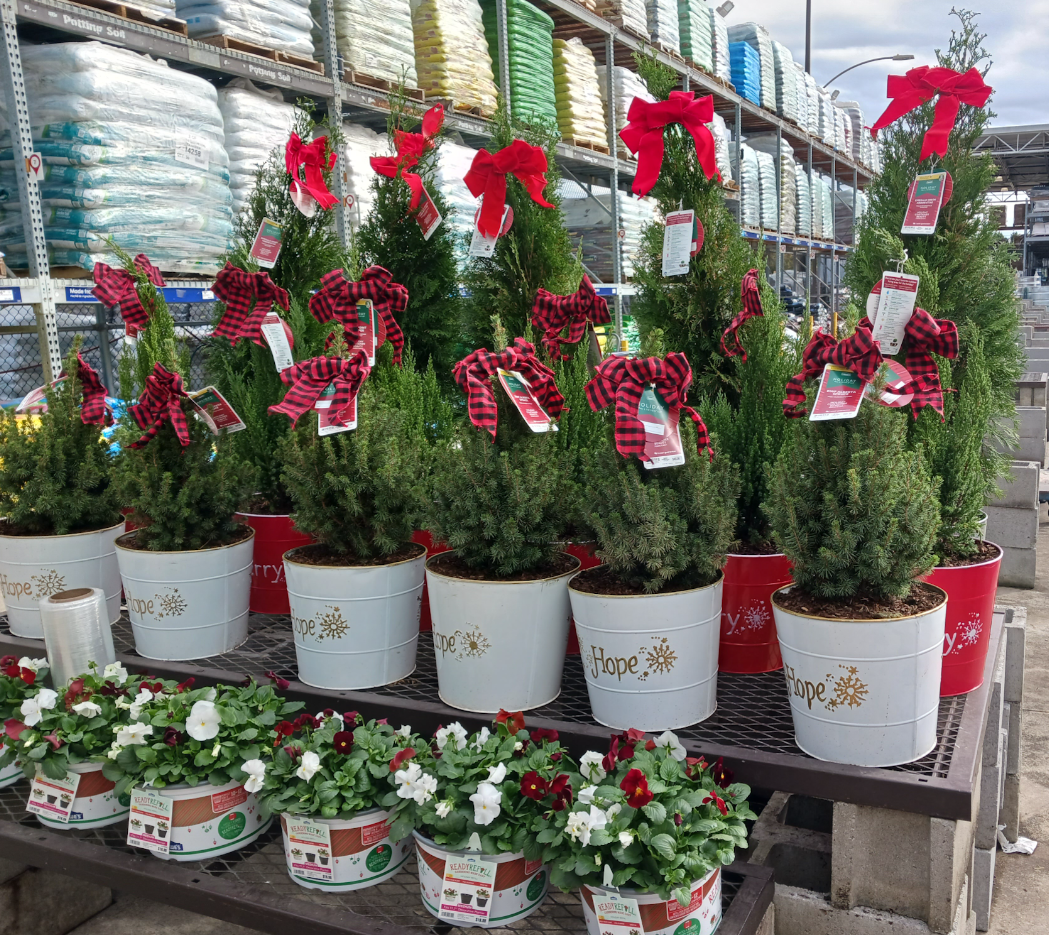
Dwarf Alberta spruce and other conifers are frequently sold for holiday decorating.
Ginger E Long, ©2023 HGIC, Clemson Extension
South Carolina celebrates Arbor Day on the first Friday of December. This year, it will be December 5, 2025. Mark your calendars and shop for a new tree for your yard. For more information on planting a tree correctly, see HGIC 1001, Planting Trees Correctly.
The Bradford Pear Bounty program offers a free tree to property owners for each Bradford Pear tree removed, up to a maximum of five. Homeowners are responsible for the cost of tree removal. Be sure to take a selfie with the downed tree to bring to the exchange. The 2026 tree exchange dates and locations can be found on the Bradford Pear Bounty site. Check for your nearest exchange location and be sure to register.