Coastal Region – Christiana Huss
Fall weather is practically here!
- Late September and October are great months for planting perennials. The weather is mild enough for a young plant to survive, but there is still plenty of time for them to establish before the first frost in winter. Always add a layer of mulch to newly planted perennials to help keep moisture in the soil and minimize weed competition.
- Have you saved any seeds from your summer garden yet? Flowers can be deadheaded or left alone to become a seedy food source for birds throughout winter. In the vegetable garden, identify which plants are healthiest and produce the highest yield. Allow some fruit on these plants to fully mature past ripening and save those seeds for next year’s garden.
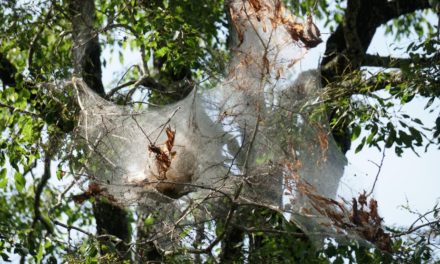
- In September, insects are abundant and active. Take a moment to appreciate the diversity of buzzing bees, colorful butterflies, caterpillars, and tiny creatures that call your garden home.
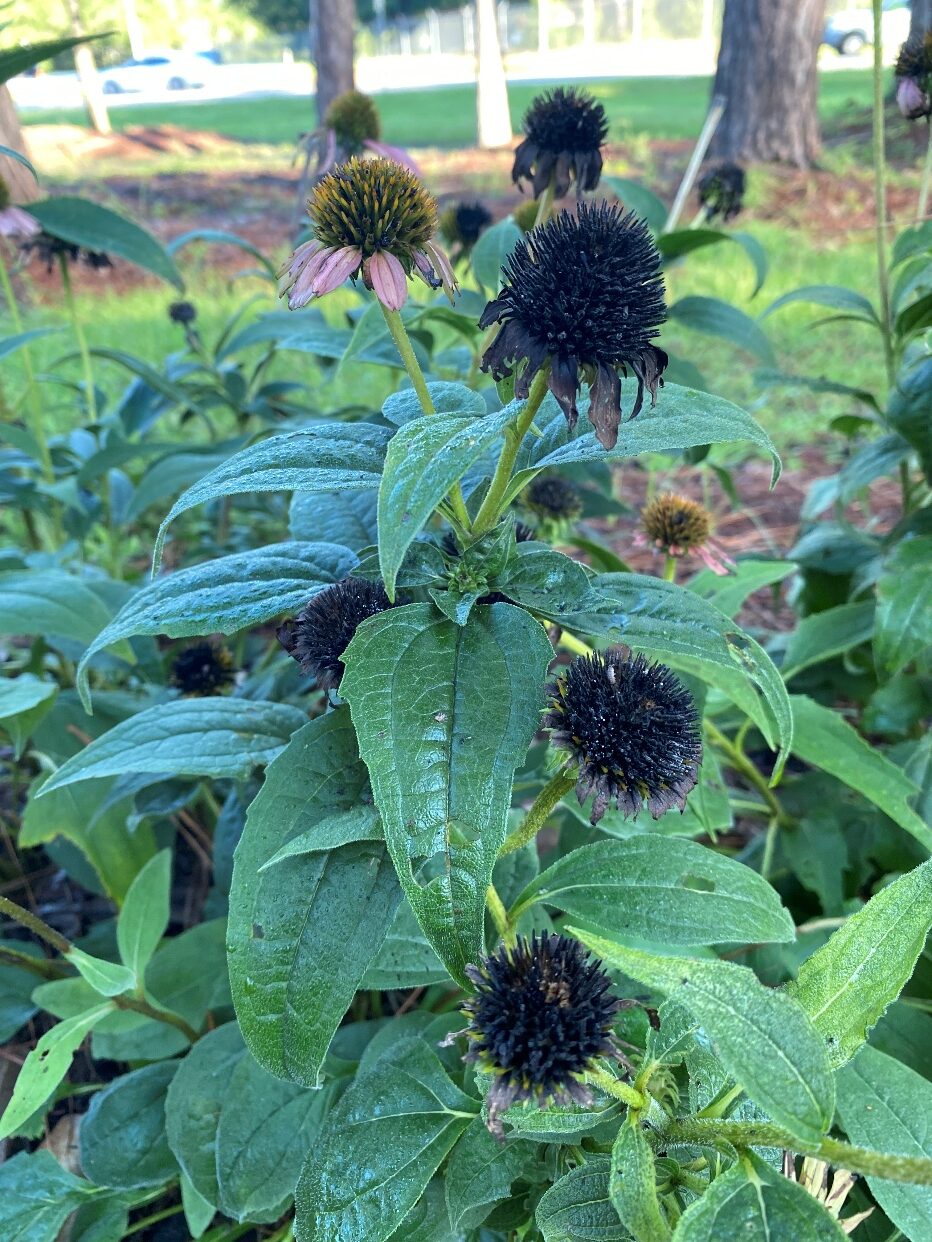
These coneflower heads are full of seeds.
Christiana Huss, ©2026, Clemson Extension
Midlands Region – Jackie Jordan
September is a period of transition in the garden.
- Plant seeds of hardy annual flowers like calendula, sweet alyssum, foxglove, larkspur and poppies.
- Freshen up containers and flowerbeds. Pull out warm season annuals and set out pansies, violas, snapdragons and ornamental cabbage and kale once they become available.
- Start shopping for spring flowering bulbs for the best selection. Bulbs can be stored in the refrigerator for several weeks until ready to plant. Just avoid storing bulbs near ripening fruit or vegetables.
- There are a few fall blooming bulbs like colchicum and autumn crocus, that are planted immediately and will bloom that season.
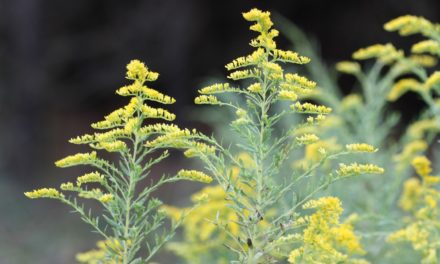
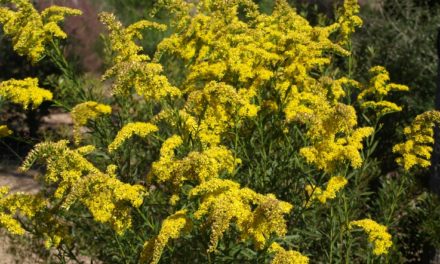
- Add fall blooming perennials such as ginger lilies, goldenrod, Mexican sage, pineapple sage, asters and ‘Autumn Joy’ sedum to sunny areas.
- Many ornamental grasses bloom in the fall, have a good fall color and provide movement in the garden
- Toad lilies, Japanese anemone and autumn ferns perform well in shade.
- It’s time to plant collards, arugula, kale, mesclun, mustard and Swiss chard, broccoli, cauliflower, cabbage and many other vegetables.
- Plant cool season herbs like chives, cilantro, dill and parsley towards the end of the month.
- Fertilize Tall fescue lawns at a rate of 1 lb. of actual nitrogen per 1,000 sq. ft. If your tall fescue lawn has become patchy from heat stress, make plans to seed at a rate of 6lbs. per 1,000 sq. ft.
- Apply preemergent herbicides this month to control annual blue grass. For preemergent herbicides to bee effective they must be applied before the weeds start actively growing. Annual blue grass begins to germinate when we receive four consecutive days with daytime highs at or below 75 °F.
- Another great way to prevent a lot of annual winter weeds is to freshen up mulch in your flower beds and maintain a 3-inch layer.
- If you want to overseed your warm season lawn with ryegrass, the middle of the month is a great time to do this, but be careful.
- Early fall is a great time to divide perennials like daylilies, daisies and hosts.
- Fall is a great time to plant trees and shrubs. The plants have a chance to become established in the cooler weather and can take advantage of higher rainfall. If you have room in your garden, consider adding a native tree or shrub. One of my favorites is beauty berry. It has purple berries that add interest to the garden in fall and are great in arrangements. Hearts-a-Busting is a native shrub with showy scarlet fruit in September and October. A variety of viburnums have showy berries in the fall and offer beautiful autumn leaf colors.
- If you have room for a tree, consider adding a black gum tree . It is a native tree that performs well in drier soils and has intense red fall leaf color.

A bouquet made from late summer blooming flowers.
Jackie Jordan©2026, Clemson Extension
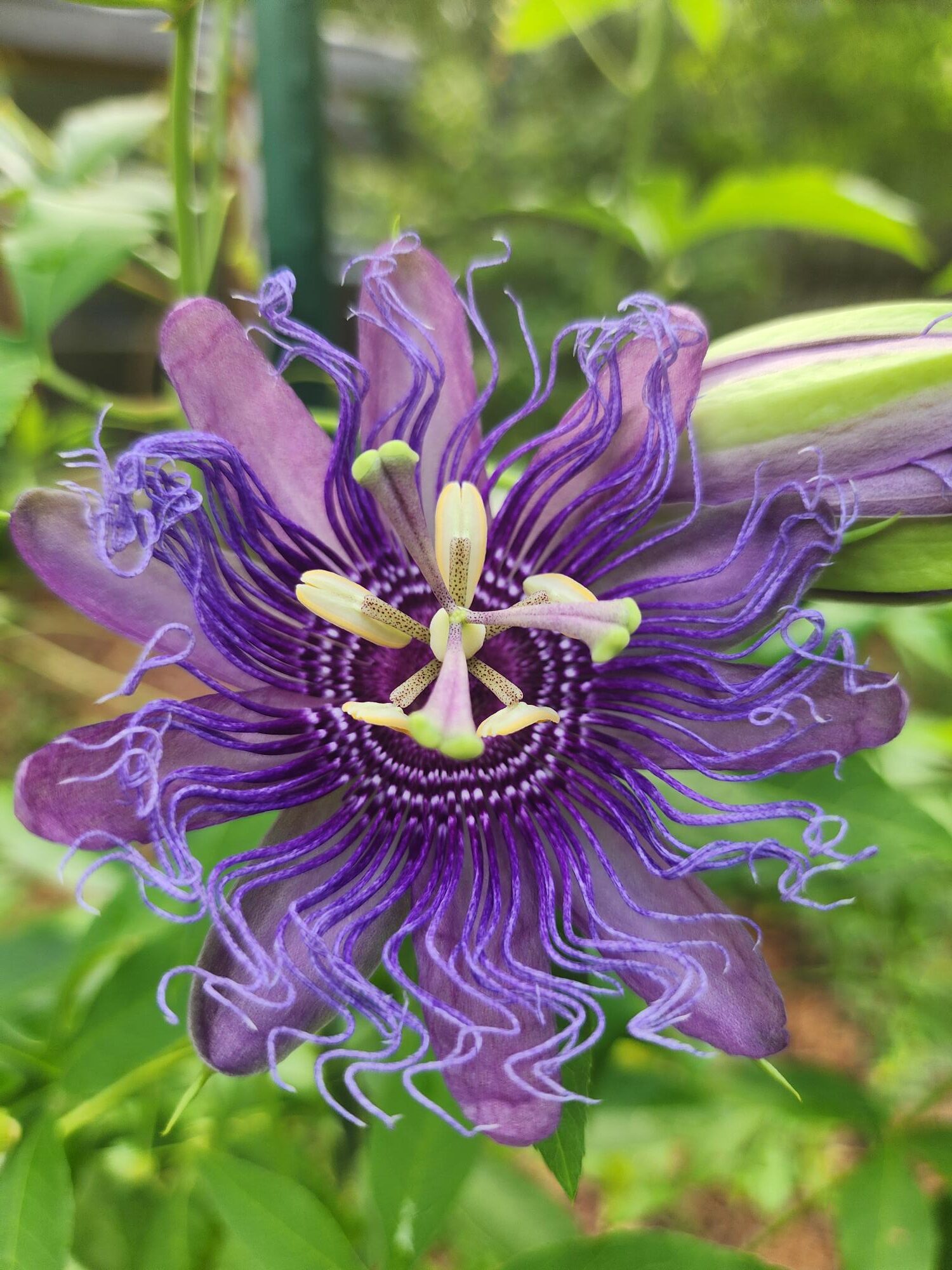
A purple passionflower in bloom.
Jackie Jordan©2026, Clemson Extension
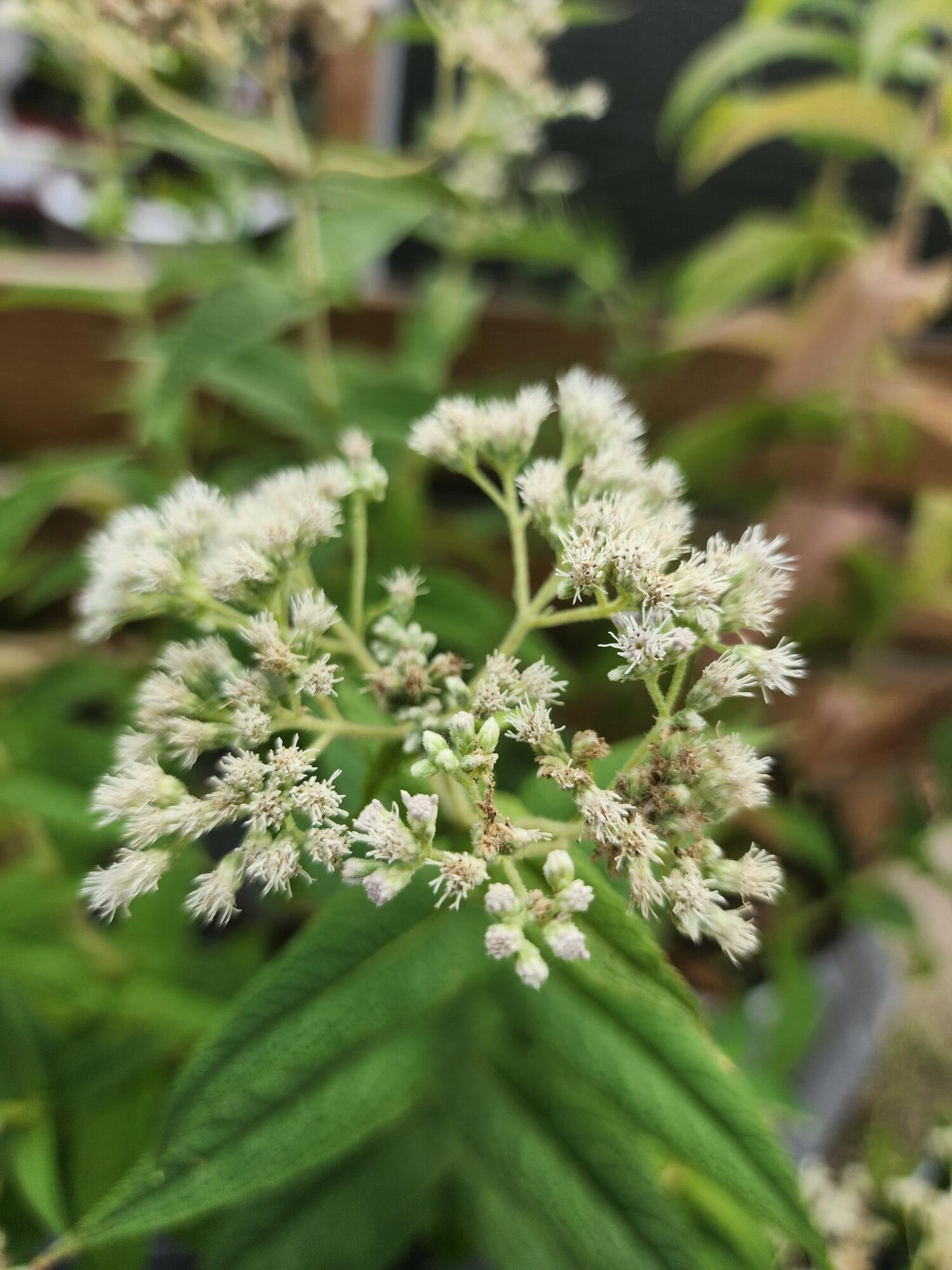
Bonset, a native plant, in bloom.
Jackie Jordan©2026, Clemson Extension
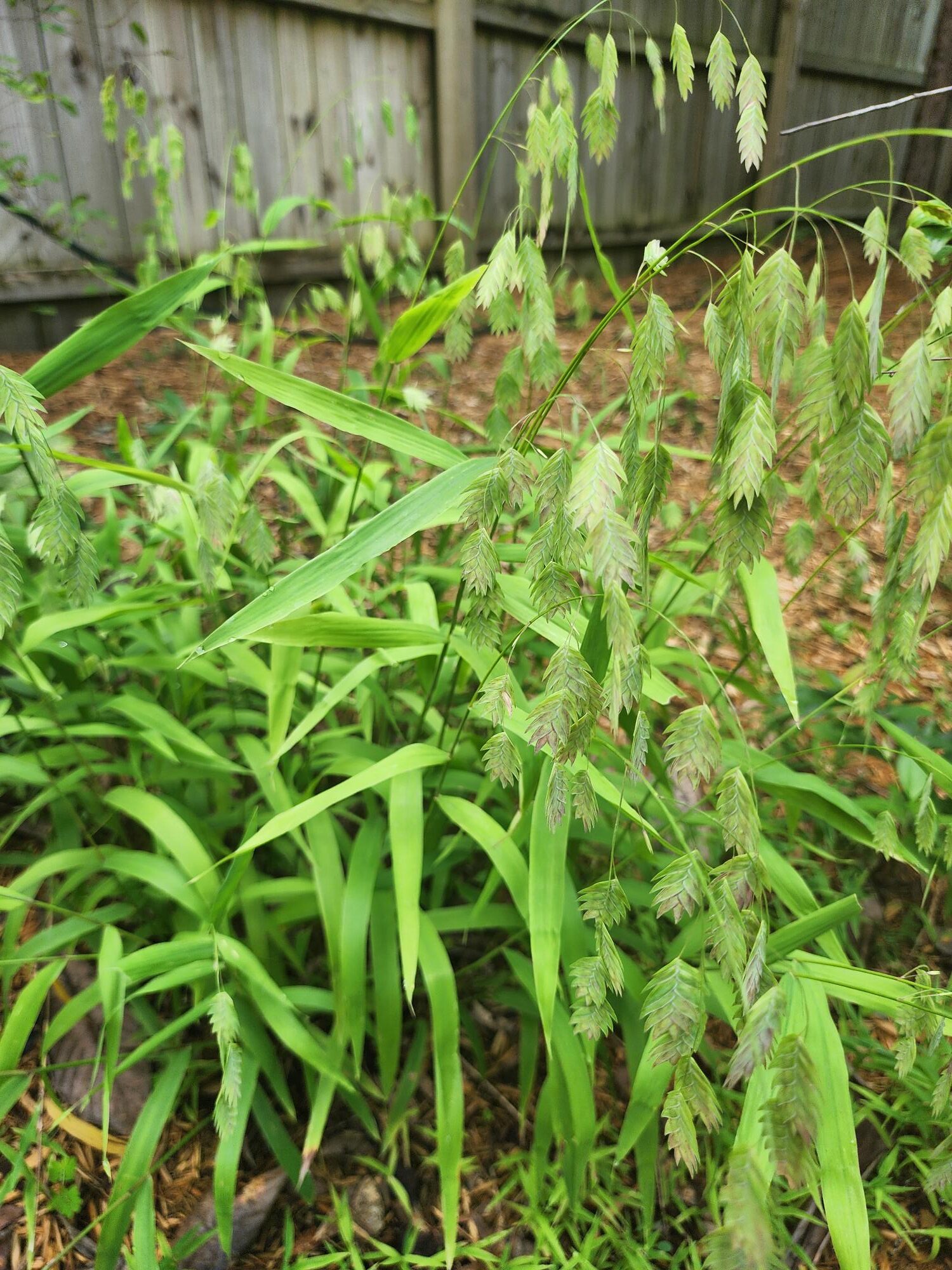
Northern sea oats with a cascading seed head.
Jackie Jordan©2026, Clemson Extension
Upstate Region – N. Jordan Franklin
September is a busy month in the landscape and garden.
Warm-Season Turfgrasses: September Lawn Care in South Carolina
- In September, warm-season turfgrasses, such as bermudagrass, centipedegrass, St. Augustinegrass, and zoysiagrass, are winding down after a busy growing season. Our job as gardeners is to allow these grasses to rest.
- All nitrogen fertilizer applications should have stopped in mid-August. Late-season nitrogen fertilizer applied to the lawn can open grasses up to disease and potential damage when cold temperatures arrive in October and November.
- While it is necessary to continue mowing the lawn until growth stops, no other lawn maintenance tasks, such as aerating, dethatching, or topdressing, are necessary. Performing these tasks now will stress warm-season turfgrasses, leaving them little time to recover before dormancy sets in.
Warm-Season Turfgrass Maintenance Resources
For more information about maintaining warm-season turfgrasses, visit the following links:
- Bermudagrass Yearly Maintenance Program (HGIC 1216)
- Centipedegrass Yearly Maintenance Program (HGIC 1215)
- St. Augustinegrass Yearly Maintenance Program (HGIC 1218)
- Zoysiagrass Yearly Maintenance Program (HGIC 1217)
Cool-Season Turfgrass: Tall Fescue Care in September
Tall fescue is the main cool-season turfgrass grown in South Carolina. While the warm-season turfgrasses are winding down, tall fescue is just starting its growing season.
Mid-September is the time to begin overseeding, fertilization, and aeration. Visit the Tall Fescue Maintenance Calendar (HGIC 1219) for more information about tasks to begin now.
Plant Fall Vegetables or Fall/Winter Cover Crops
Fall Vegetables to Plant in September
While some gardeners are relieved to put the vegetable garden to rest for the winter, others are gearing up for a fall garden. The following crops can be grown during September in South Carolina:
- Beets
- Broccoli
- Brussels sprouts
- Cabbage
- Carrots
- Collards
- Garden peas
- Kale
- Lettuce
- Mustard greens
- Onions
- Radishes
- Rutabagas
- Spinach
- Turnips
Fall Vegetable Gardening Resources
For more information about fall vegetable gardening, visit:
Fall/Winter Cover Crops for the Vegetable Garden
For gardeners ready to take a break from the vegetable garden, planting a cover crop is an easy way to wrap up the season while setting the garden up for success next season.
Cover crops benefit the garden by:
- Reducing soil erosion
- Suppressing weed growth
- Maintaining soil moisture
- Adding organic matter
- Improving soil structure
- Supporting beneficial soil microbes
The following cover crops are recommended for the fall/winter season.
- Annual rye
- Austrian winter pea
- Crimson clover
- Forage radish
- Oats
- Winter wheat
Cover crop seed mixtures containing multiple plant species that provide multiple benefits over a single-species cover crop are available from many seed companies.
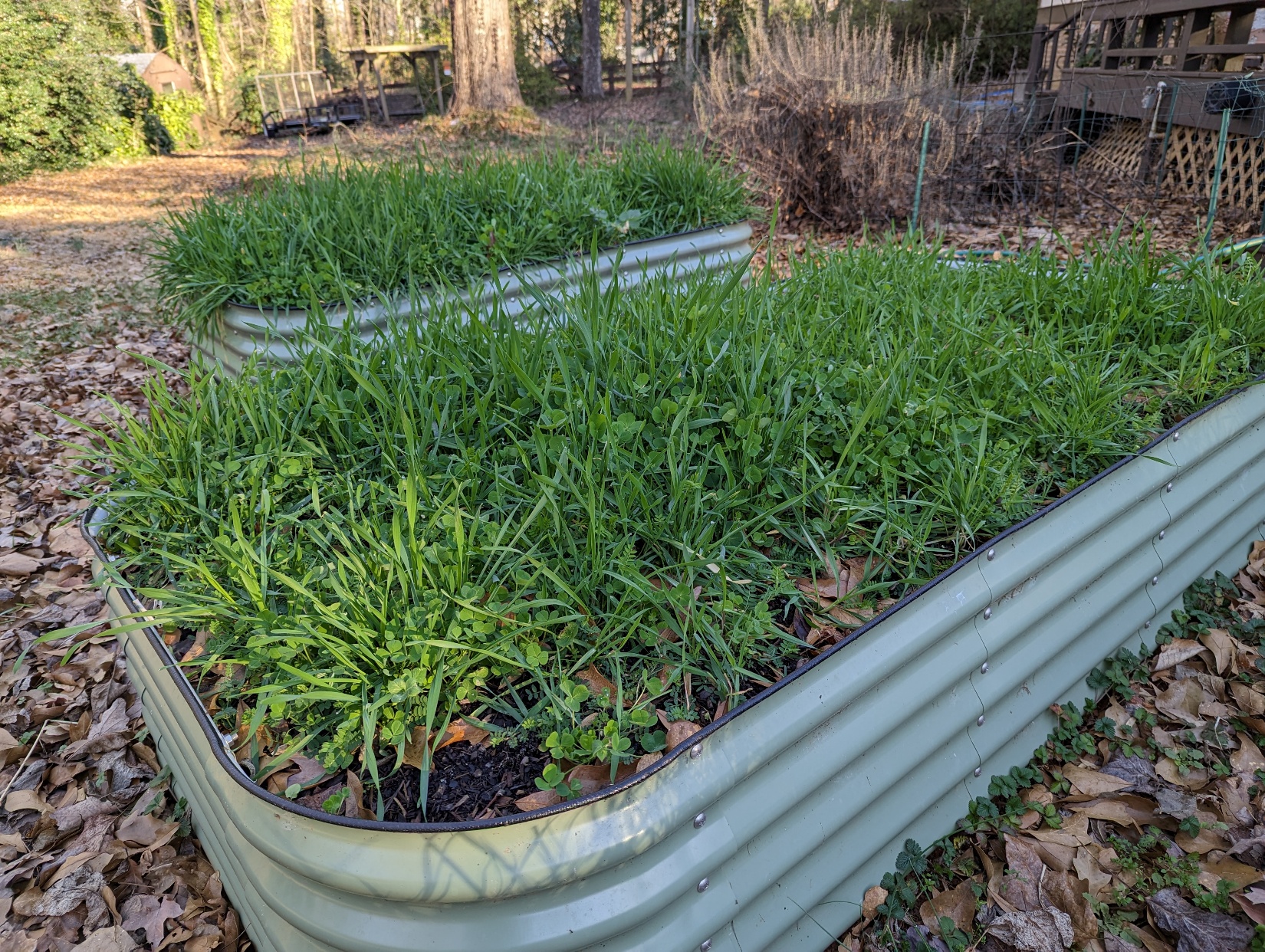
Fall/winter cover crop, primarily made up of oats, clover, and vetch, provides many benefits in a raised-bed garden.
N. Jordan Franklin, ©2026 HGIC, Clemson Extension
Fall/Winter Cover Crop Resources
For more information about cover crops, visit:
Landscape Ornamentals: September Gardening in South Carolina
September marks the best time to begin planting woody ornamental trees and shrubs in the garden and landscape.
Planting Trees and Shrubs in September
Why Plant in the Fall?
- While container-grown trees and shrubs can be planted year-round, fall is preferred because roots continue growing during South Carolina’s relatively warm fall and winter.
- Fall planting allows plants to establish roots before the stress of the following summer.
- Balled-and-burlapped (B&B) plants are generally dug and planted during the cooler months, often after leaf drop.
Tree and Shrub Planting Resources
For more information, visit: