“Anyone who thinks gardening begins in the spring and ends in the fall is missing the best part of the whole year; for gardening begins in January with the dream.” ~Josephine Nuese
Why Winter Is the Best Time for Garden Planning in South Carolina
In some parts of South Carolina, winter temperatures have put garden beds to rest for a little while, or there are slower-growing cool-season crops that require less labor this time of year.
This can be an excellent time to organize your seeds and supplies as you plan your spring and/or summer garden!
How to Organize Your Seeds for Spring and Summer Planting
Organizing your personal seed library is a great place to start. It will allow for inventory checks and ease browsing when it is time to plant.
Dividing the seeds in your storage container or binder by category can also help make browsing and finding seeds easier.
Some examples include organizing seed packets:
- Alphabetically
- By growing season
- By crop type
- By flower color
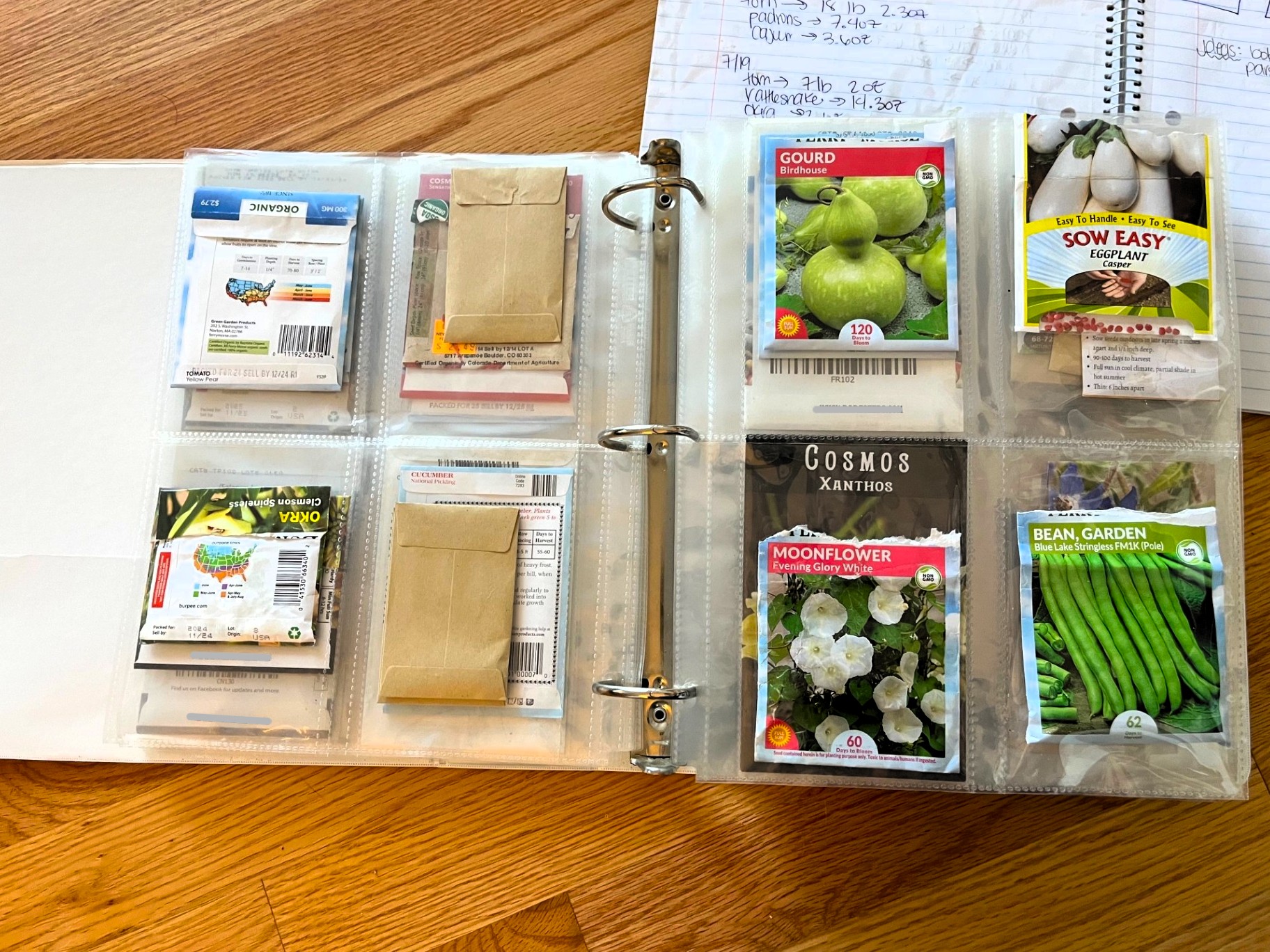
Various seed packets are organized by growing season in plastic trading card pages within a 3-inch binder.
Julia Nichols, ©HGIC 2026, Clemson Extension
Check Seed Packet Expiration Dates
Begin by checking the expiration dates on the back of your seed packets.
Create two piles:
- Expired seed packs
- Seed packs that are still within the expiration date
Seeds with low germination rates can be added to your compost pile. More on checking seed viability, below!
How to Properly Store Seeds for Long-Term Use
Next, find a storage method that works best for you. Some examples are:
- Wooden boxes
- Air-tight plastic containers or jars \
- Binders
Keep your stored seeds in a cool, dark, low-humidity spot for long-term storage.
Adding a desiccant packet or a dehumidifier to the space can also help.
How to Check for Seed Viability Before Planting
Before you toss those old, expired seed packets, check their viability! There may still be a few seeds that will germinate and plant.
There are two methods for checking seed viability.
Seed Viability Test for Small Seeds
The first method, typically recommended for smaller seeds, can be found here: HGIC, Are Those Old Vegetable Seed Still Good?
Float Test for Large Seed
The second method, the float test, is typically used for larger seeds such as peas, beans, and corn.
- Place your seeds in a bowl or cup of water
- Let them sit for 5 minutes
- Seeds that sink are viable
- Seeds that float should be discarded
Lay viable seeds on a paper towel and allow them to dry overnight before you place them back in a packet or envelope.
How to Start Your Seeds Indoors
If you begin your vegetable garden plants from seeds indoors during the late winter months, now is the time to begin your yearly check on seed-starting equipment.
Get an inventory of your seed starting trays or pots.
Plug in the growing lights and allow them a few seconds or minutes to fully illuminate. Modern grow lights, such as LEDs and T5 fluorescents, reach full brightness almost instantly when switched on, unlike older incandescent bulbs.
Check any switches or additional settings on your lights.
Plug in the warming mats, if used, and allow them 15 to 30 minutes to reach an optimal temperature. Using the back of your hand, check that the entire mat feels pleasantly warm and there are no cool spots.
How to Plan What to Plant in Your Garden
Once seed packets are organized, it’s easy to begin planning for the growing season.
Draw out diagrams of where crops will be planted.
Utilize companion planting to maximize the use of all available growing space. Graph paper works well for sketching out your garden or garden beds.
Crop rotation schedules can also be planned at this time. Rotating crops in a bed throughout a growing season or every growing season can enhance soil fertility and improve soil health. As well as manage pests and diseases.
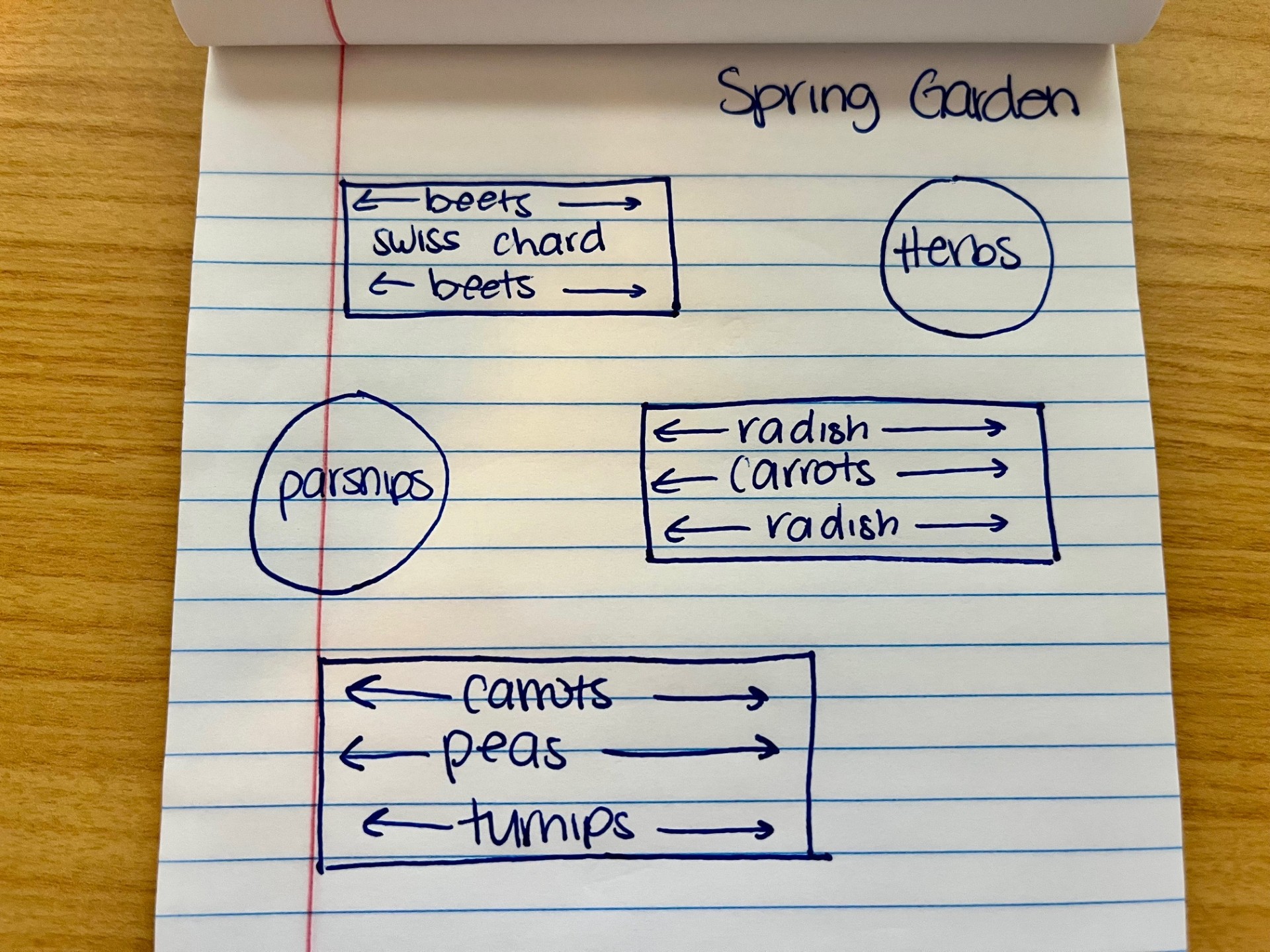
A spring garden was mapped out using companion planting in some garden beds.
Julia Nichols, © HGIC 2026, Clemson Extension
How to Create a Seasonal Planting Schedule
Schedule approximate planting dates for your crops and add them to your calendar or planner.
This allows you to determine:
- When to plant seeds
- When to size up containers (if needed)
- When to transplant outdoors in the garden
How to Use Local Frost Date to Guide Garden Planting
While the weather can always affect outdoor transplant plans, knowing when your area’s approximate last frost date can help you estimate a range of dates for outdoor planting.
While the weather can always affect outdoor transplant plans, knowing when your area’s approximate last frost date can help you estimate a range of dates for outdoor planting.