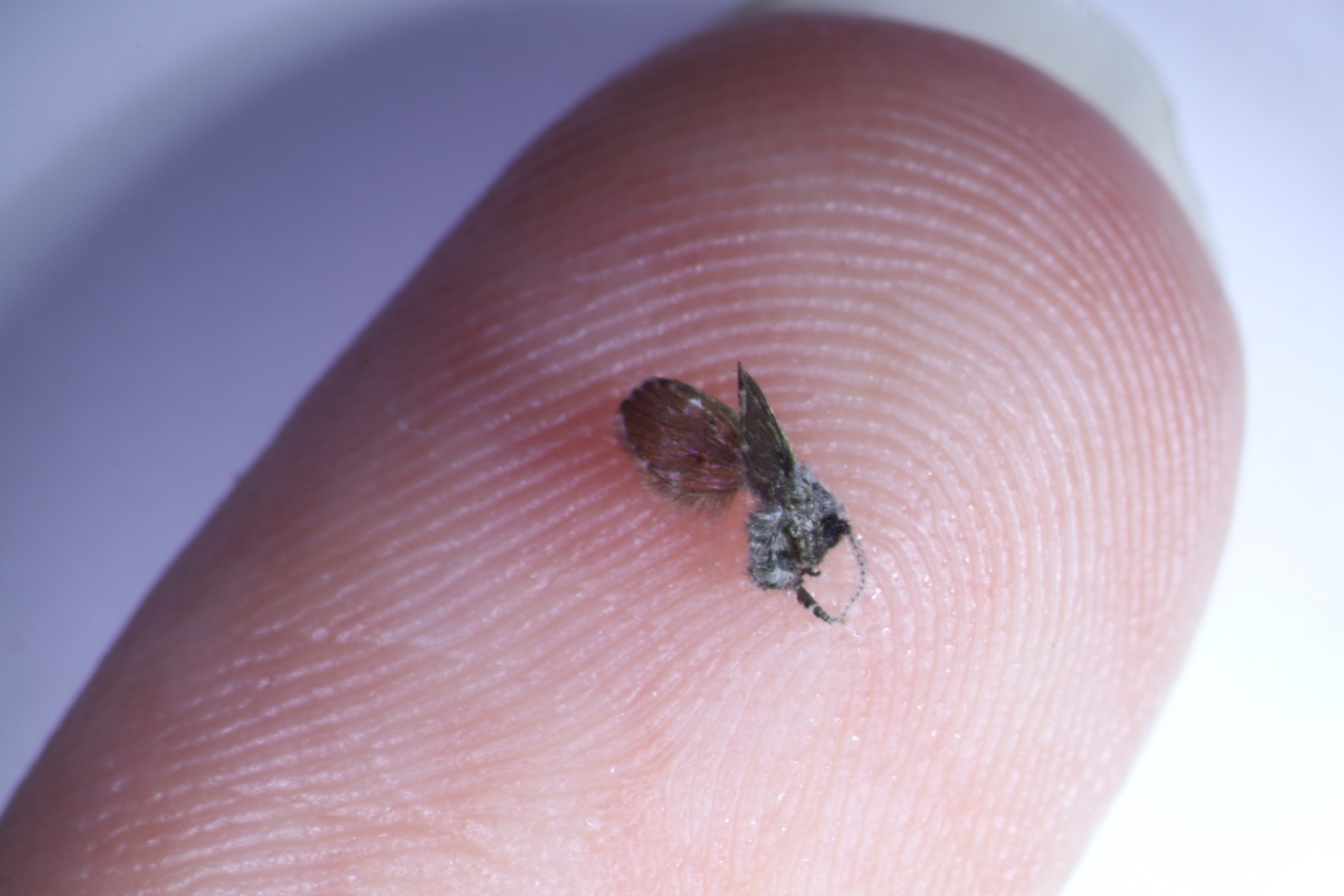
Moth fly adult.
Photo by Lindsey Stone, ©2026, Clemson Forestry and Environmental Conservation
Quick Guide to Moth Flies (Drain Flies)
- Common Names: Moth flies, drain flies, filter flies, sewer flies
- Scientific Family: Psychodidae
- Size: 1/16 to 1/4 inch long
- Where Found: Drains, sewer lines, bathrooms, kitchens, moist outdoor areas
- Damage: Generally harmless nuisance pests
- Do They Bite? No
- Primary Control Method: Eliminate breeding sites and organic buildup in drains
- Life Cycle: Can be completed in as little as 2 weeks
Moth flies are in the insect order Diptera and are found around the world. These tiny flies have many common names including drain flies, filter flies, and sewer flies – names they get from their appearance and habits. Their fuzzy wings make them look like little moths and they are usually found around drains or sewer lines, typically in homes or public restrooms.
How to Identify Moth Flies (Drain Flies)
Adult Moth Fly Appearance
Adults, which range in size from 1/16 to 1/4 inch long, are the only life stage commonly seen.
They may be yellow to brown to black in color. The adults are hairy and hold their wings roof-like over their bodies when resting.
During daylight, they often rest on walls near drains. They are most active during the evening and may be attracted to light.
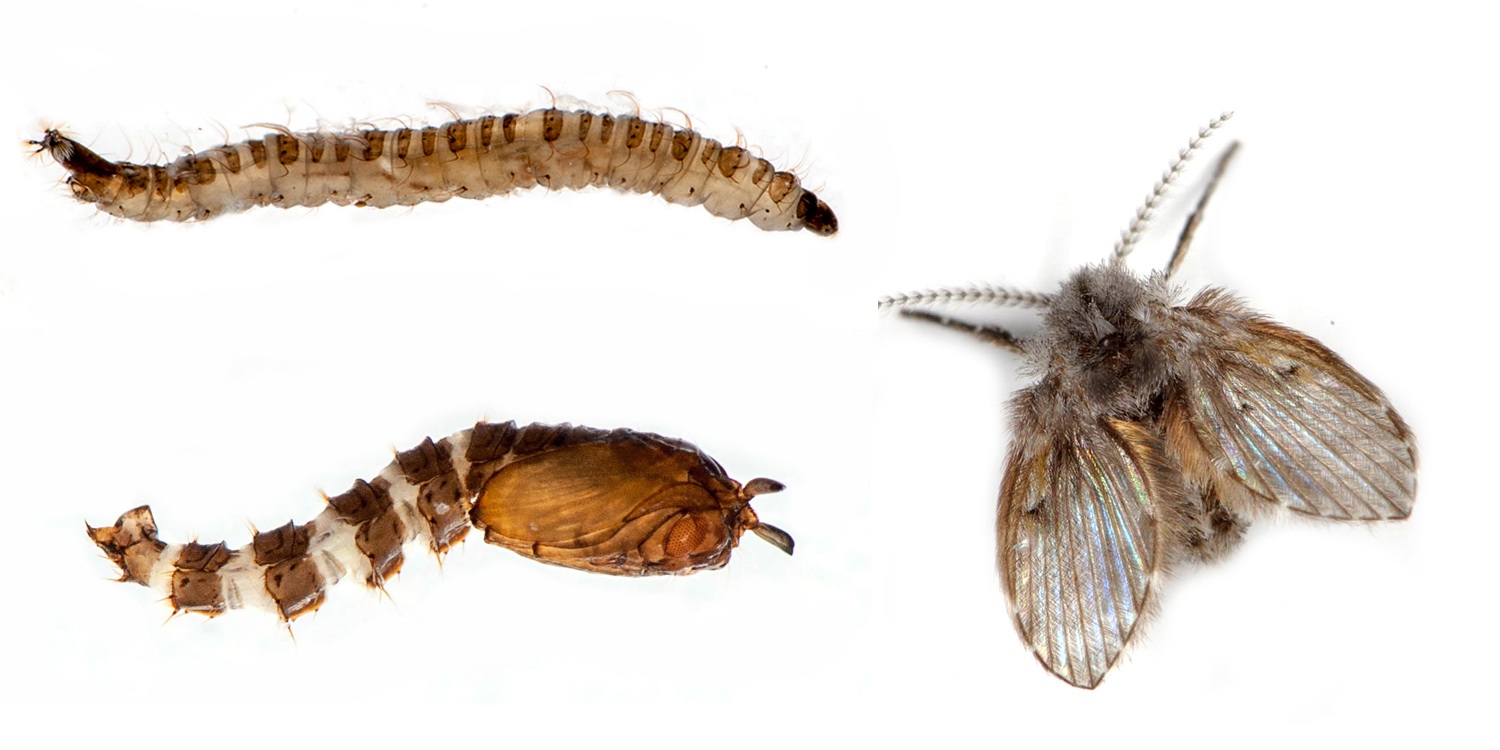
Moth fly larva (top left), pupa (bottom left), and adult (right).
Photo by Matt Bertone, NC State University
Moth Fly Life Cycle
Adults lay eggs in drain areas or other moist, protected locations; the immature or larval stage is seldom seen.
Most larvae are long, skinny, legless, and about 1/8 to 3/8 inch long. They often have a pale underside with a darker head, tail and dark bands across their back.
Pupae resemble larvae. In some species, the entire life cycle can be completed in just 2 weeks.
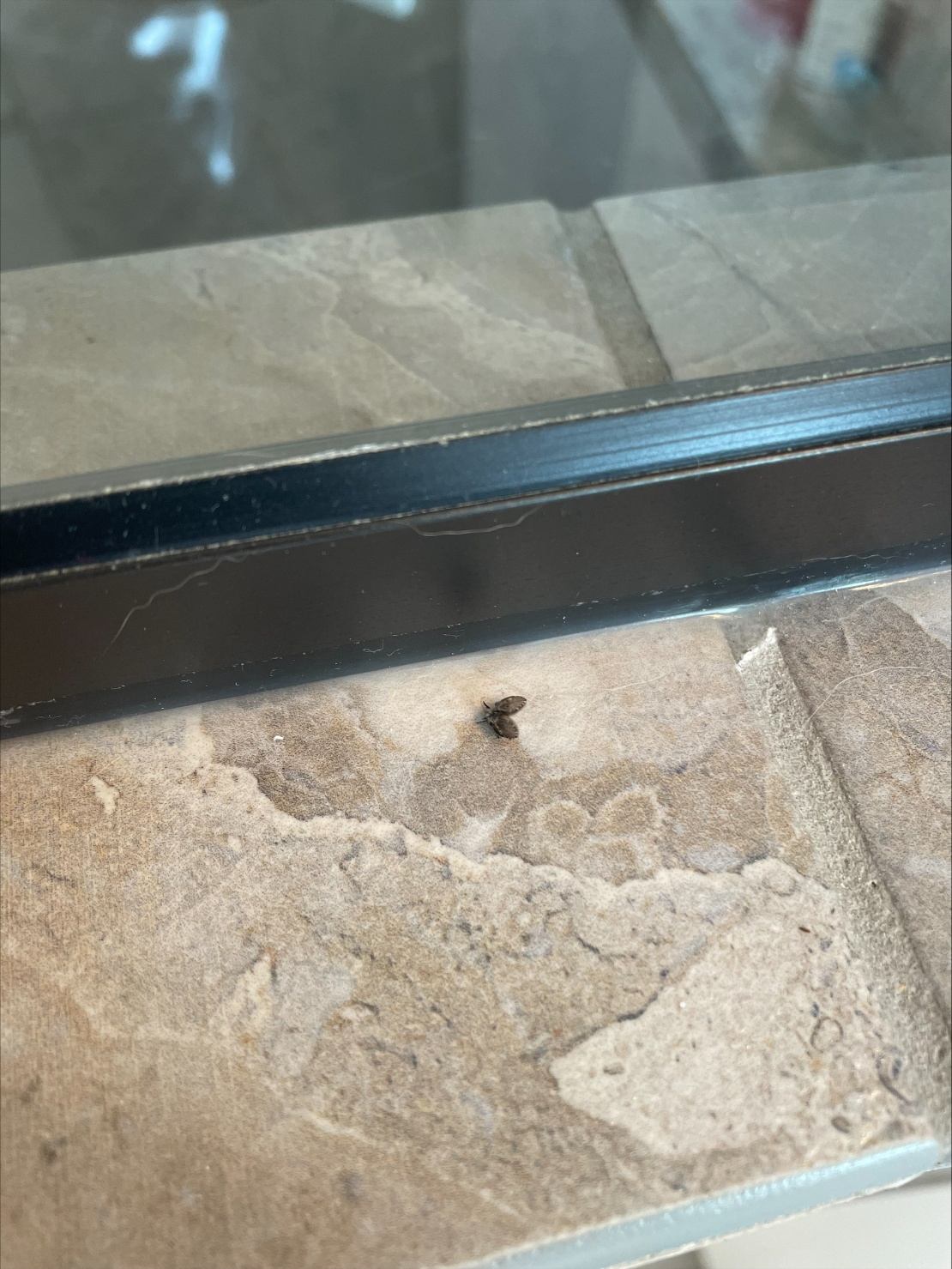
Moth fly adults can often be found sitting on or near showers or sinks.
David Coyle, ©2026 Clemson Forestry and Environmental Conservation
Moth Fly Habits and Breeding Sites
Adult female moth flies most often lay their eggs in masses on the surface of gelatinous film found in drains and sewers.
They may also breed in moist shady areas outdoors such as:
- Under potted plants
- In bird feeders and baths
- In moss
- In clogged roof gutters
- Under air conditioners
- In thick mulch
- On wet ground areas
The larvae feed on decaying material that collects in drains.
In natural settings, moth fly larvae feed on decaying plants and animals. They breathe through a tube that helps them survive even when their environment is very wet.
Are Moth Flies Harmful?
Most moth flies are harmless to humans, though they may transmit bacteria and other microorganisms from their breeding sites to areas where people are.
Moth flies do not bite.
How to Control Moth Flies (Drain Flies)
Moth flies are not strong fliers and cannot fly long distances, though they have been known to be carried by the wind up to 300 feet.
Most infestations originate in the building or location where the adults are found.
Killing Adult Moth Flies
Any aerosol or spray insecticide will easily kill the adults.
However, for long term control, the breeding sites must be found and removed, altered, or treated.
Finding and Eliminating Breeding Sites
Inspect drain areas first but consider all the potential breeding sites mentioned previously.
Drains can often be cleaned with over-the-counter cleaners followed very hot water.
If this is not successful, mechanical cleaning with a stiff brush may be required to remove any film (breeding sites) lining the drain.
When to Call a Professional for Moth Fly Problems
If moth fly control is difficult, consider consulting a pest control operator or plumber.
You may have broken pipes or moisture problems around your house that you cannot easily find or repair.
Before hiring any professional, consider getting quotes from two or three firms and understand any contracts you sign.
Sources
- Kvifte GM, Wagner R. 2017. Psychodidae (sand flies, moth flies or owl flies). Chap. 24, p. 607-632. In: Kirk-Spriggs AH & Sinclair BJ, eds., Manual of Afrotropical Diptera. Vol. 2, Nematocerous Diptera and lower Brachycera. Suricata 5. South African National Biodiversity Institute, Pretoria.
- Munstermann LE. 2019. Phlebotomine Sand Flies and Moth Flies (Psychodidae). Chap. 12, p. 191-211. In: Mullen GR & Durden LA, eds., Medical and Veterinary Entomology (3rd ed.). Academic Press, Cambridge, MA.
Originally published 10/98