
Quick Guide to Growing Swamp Milkweed (Asclepias incarnata)
Plant Type: Herbaceous perennial
USDA Hardiness Zones: 3 to 9
Sunlight Needs: Part shade to full sun
Soil Moisture: Average to wet
Mature Size: Up to 5 feet tall, 3 feet wide
Deer Resistance: High
What Is Swamp Milkweed (Asclepias incarnata)?
Swamp milkweed (Asclepias incarnata), or rose milkweed, is an easy-to-grow herbaceous perennial plant native to South Carolina and much of North America.
It is a valuable native plant alternative to tropical milkweed (Asclepias curassavica), which harbors an overwintering parasite called OE (Ophryocystis elektroscirrha).
Why Choose Native Plants for South Carolina Landscapes?
Native plants are those that have evolved in a region without human introduction or interference. They offer ecological and practical benefits for South Carolina landscapes, particularly in pollinator gardens and wildlife habitats.
Because native plants are well-adapted to local conditions, incorporating native plants into the landscape:
- Supports biodiversity
- Promotes a healthy garden ecosystem
- Requires little to no fertilizer
- Supports beneficial insects and nesting songbirds
When possible, avoid using pesticides when landscaping with native plants.
Where Swamp Milkweed Grows Naturally in North America
Swamp milkweed is native to many US states, including parts of South Carolina.
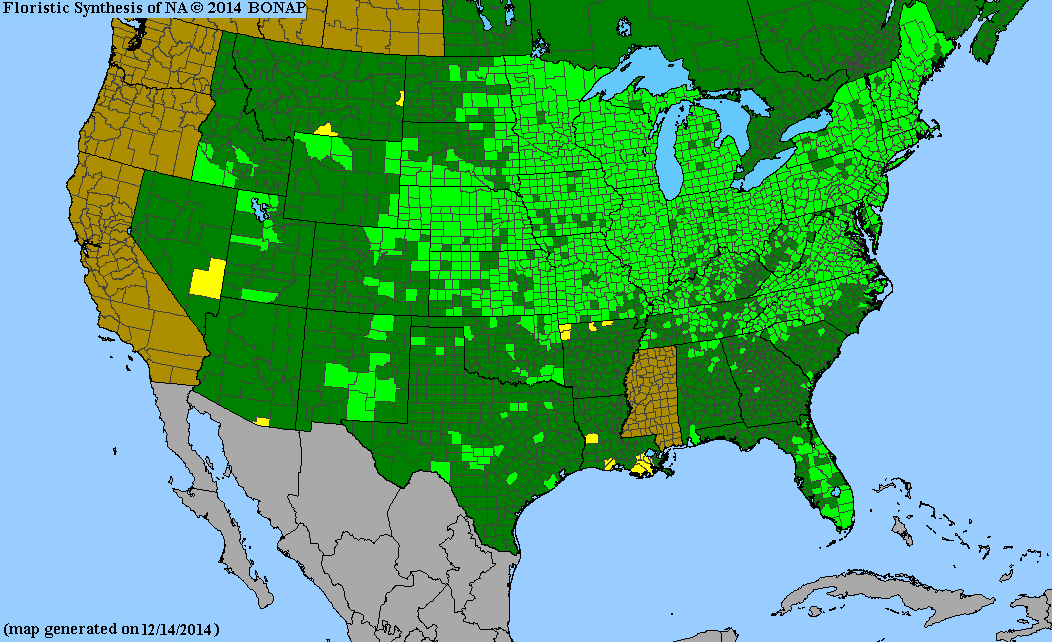
County-level U.S. map highlighting the native range of swamp milkweed, with green shading indicating counties where the species naturally occurs.
Map image credit: BONAP’s North American Plant Atlas (NAPA)
Swamp milkweed naturally occurs in wetlands, marshes, and moist meadows across much of eastern and central North America.
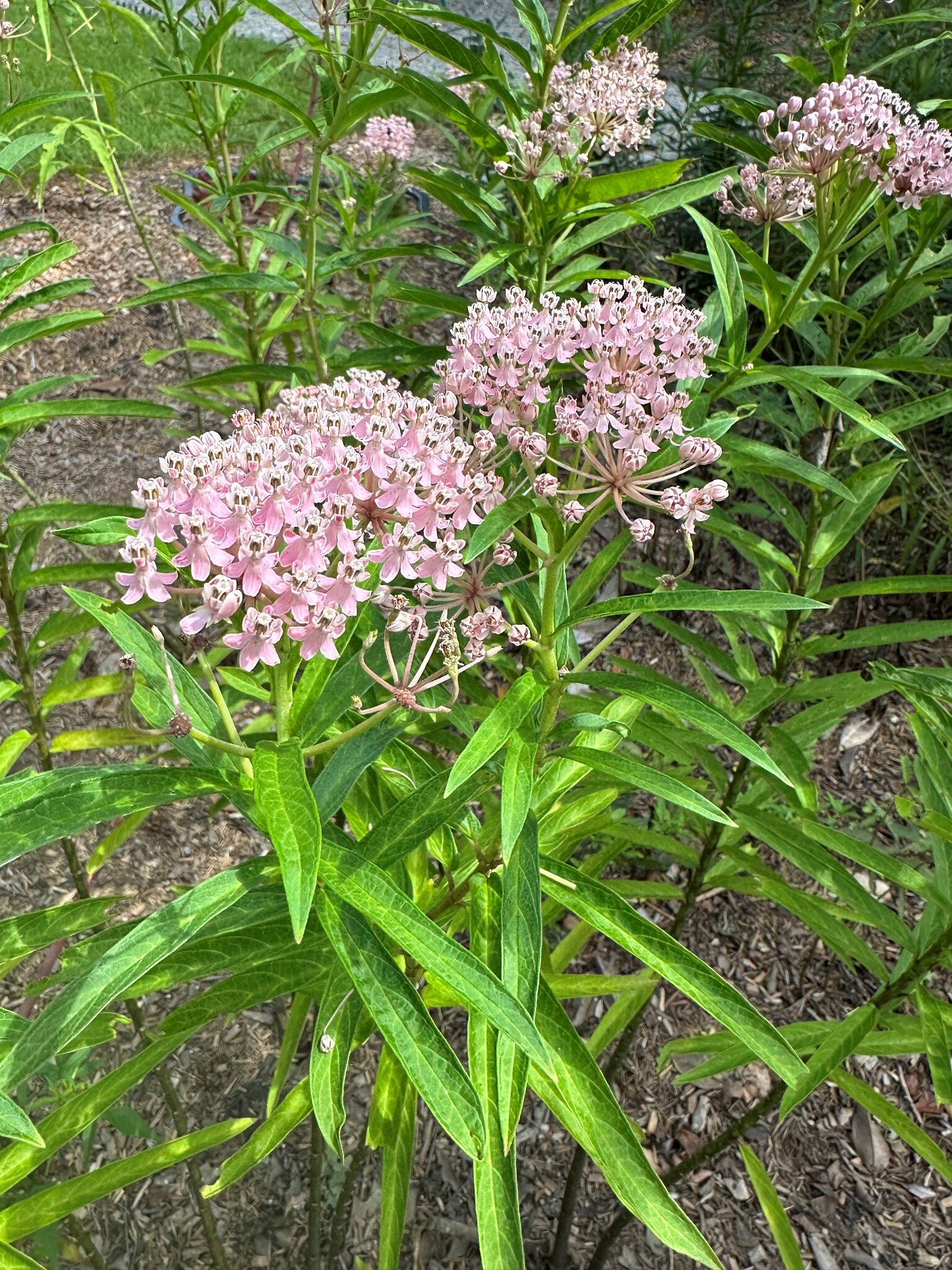
Flowering swamp milkweed (Asclepias incarnata) plant with upright stems and pinkish-mauve flower clusters growing in a garden setting.
Samantha Porzelt, ©2024, Clemson Extension
How to Grow Swamp Milkweed (Asclepias incarnata) in South Carolina
Best Growing Conditions for Swamp Milkweed
As an obligate wetland species (an organism that cannot survive outside of a specific set of growing conditions), swamp milkweed naturally thrives in wet soil. Still, it adapts well to moist to wet garden conditions in South Carolina.
For best results:
- Swamp milkweed grows best in full sun (six hours or more) of direct sunlight
- Plant in the spring or fall to allow establishment during cooler weather
- Space plants 18 inches apart
- Irrigate regularly during the first few months to maintain soil moisture
In summer, swamp milkweed produces clusters of small, showy, pinkish-mauve flowers at the tops of its stems.
The plant typically sends up one to six upright stems each year, lined with narrow, lance-shaped leaves.
Swamp milkweed is widely available at native plant nurseries throughout South Carolina.
To find a native plant nursery nearby, use the SC Native Plant Society’s nursery map.
Swamp Milkweed (Asclepias incarnata) Life Cycle and Seasonal Maintenance
Spring Care for Swamp Milkweed
- Cut last year’s dormant stems down to 18 inches.
- New stems emerge from the ground, growing up to five feet tall.
- Bushier growth is encouraged by pruning the stems back 18 inches early in the growing season.
- Stem cuttings can be rooted to propagate new plants.
Summer Growth and Flowering
- Swamp milkweed produces flowers that attract many pollinators.
- After adequate pollination, the blooms fade and long, tan seed pods are produced.
- The seed pods split open when the seeds mature.
- Flat, brown seeds are attached to white, silky hairs, which aid in their dispersal by wind.
Fall and Winter Maintenance
- Collect and save swamp milkweed seeds to propagate new plants.
- Swamp milkweed requires 30 days of cold, moist stratification to germinate successfully.
Wildlife Value of Swamp Milkweed (Asclepias incarnata)
Swamp milkweed provides important ecological benefits by supporting pollinators and serving as a host plant for several insect species.
Pollinator Benefits of Swamp Milkweed in South Carolina Gardens
Pollen and nectar produced by swamp milkweed attract a wide variety of pollinators, including:
- Bees
- Butterflies
- Hummingbirds
Swamp Milkweed as a Host Plant for Insects
All species within the Asclepias genus serve as essential host plants for:
- Queen butterfly (Danaus gilippus)
- Milkweed tussock moth (Euchaetes egle)
- Monarch butterfly (Danaus plexippus)
These insects rely on milkweed as a primary food source for their larvae, and without it, they cannot complete their life cycles or, in the case of monarchs, their annual migration.
Companion Plants for Swamp Milkweed in South Carolina Pollinator Gardens
Create a well-rounded backyard habitat in South Carolina pollinator gardens by planting companion plant species that prefer similar growing conditions to swamp milkweed.
-
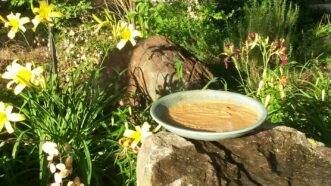
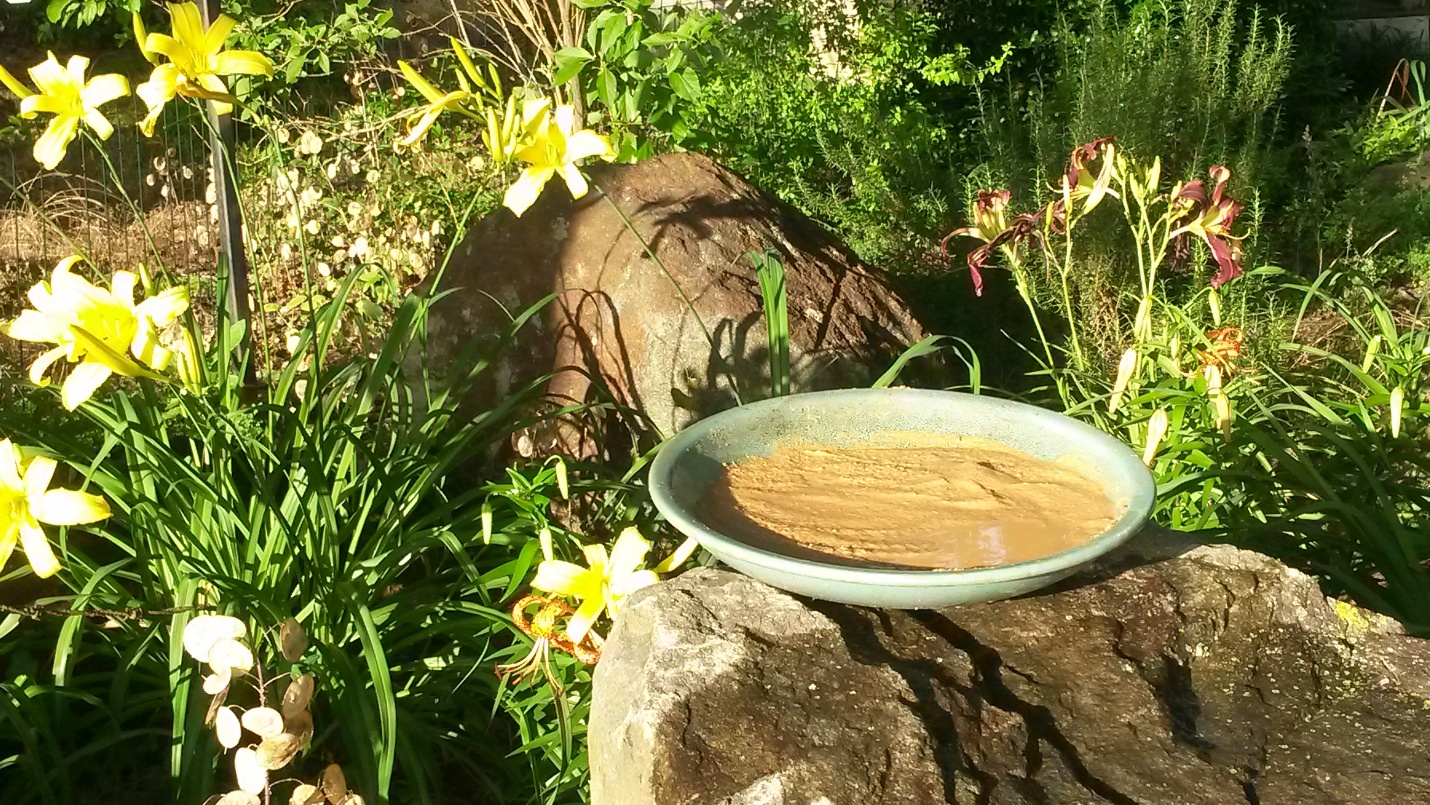
Puddling dish example.
Barbara H. Smith, ©2025 HGIC, Clemson ExtensionGoldenrod (Solidago spp.)
- New England aster (Symphyotrichum novae-angliae)
- Dense blazing star (Liatris spicata)
- Blue mistflower (Conoclinium coelestinum)
- Purple coneflower (Echinacea purpurea)
A diverse pollinator garden provides a continuous source of pollen and nectar throughout the year and offers shelter from predators.
Butterfly Garden Tip
Puddling dishes made from a shallow tray, fresh water, sand, and stones make great additions to a butterfly garden.
Puddling dishes supply essential minerals that butterflies need and offer a safe place to drink and rest.

Monarch butterfly (Danaus plexippus) larvae on swamp milkweed (Asclepias incarnata).
Samantha Porzelt, ©2024, Clemson Extension
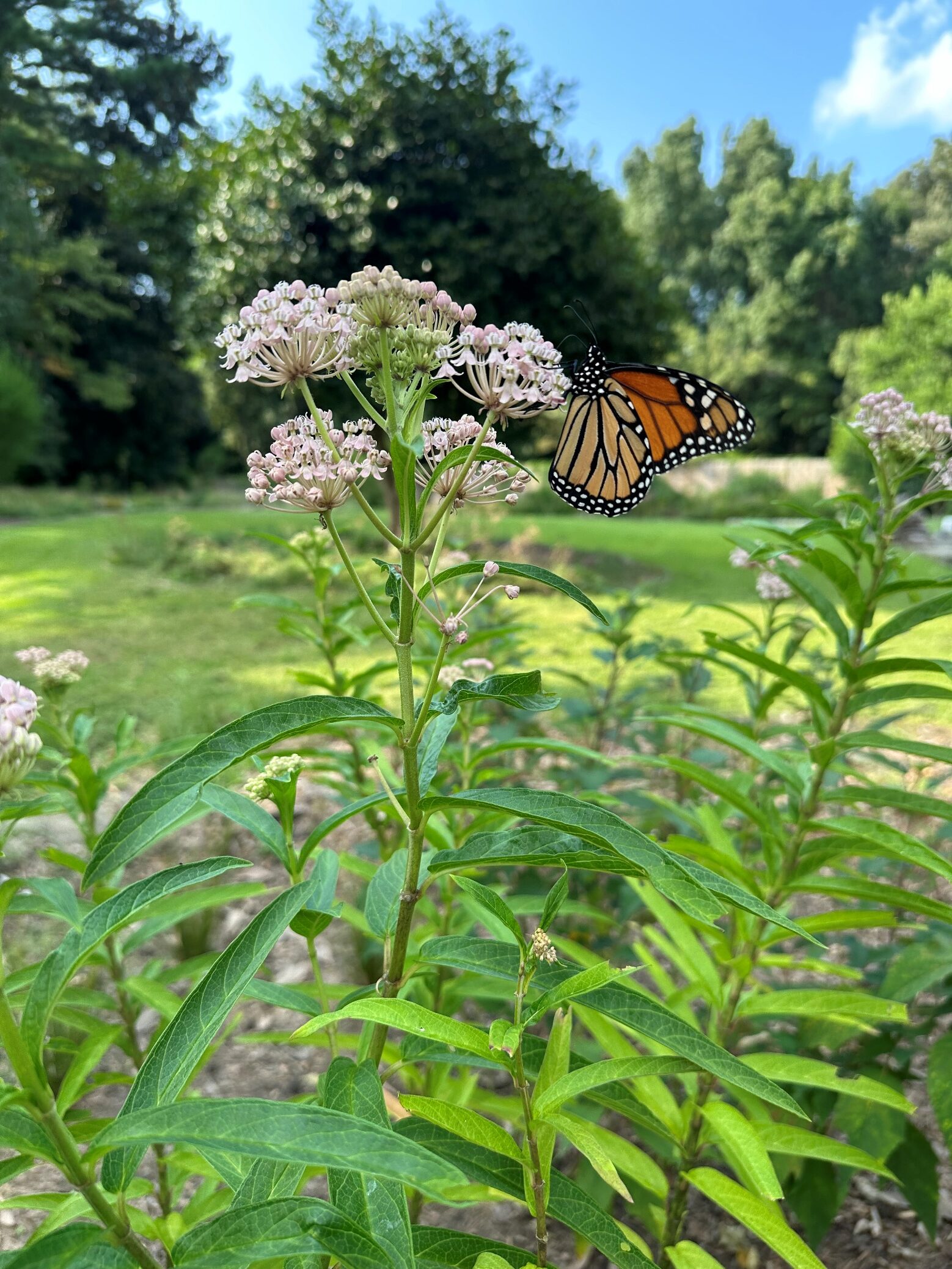
Monarch butterfly (Danaus plexippus) on swamp milkweed (Asclepias incarnata).
Samantha Porzelt, ©2024, Clemson Extension
Common Swamp Milkweed Pest Problems in South Carolina
Swamp milkweed is generally a hardy native plant, but a few insects may occasionally appear on plants growing in gardens or landscapes.
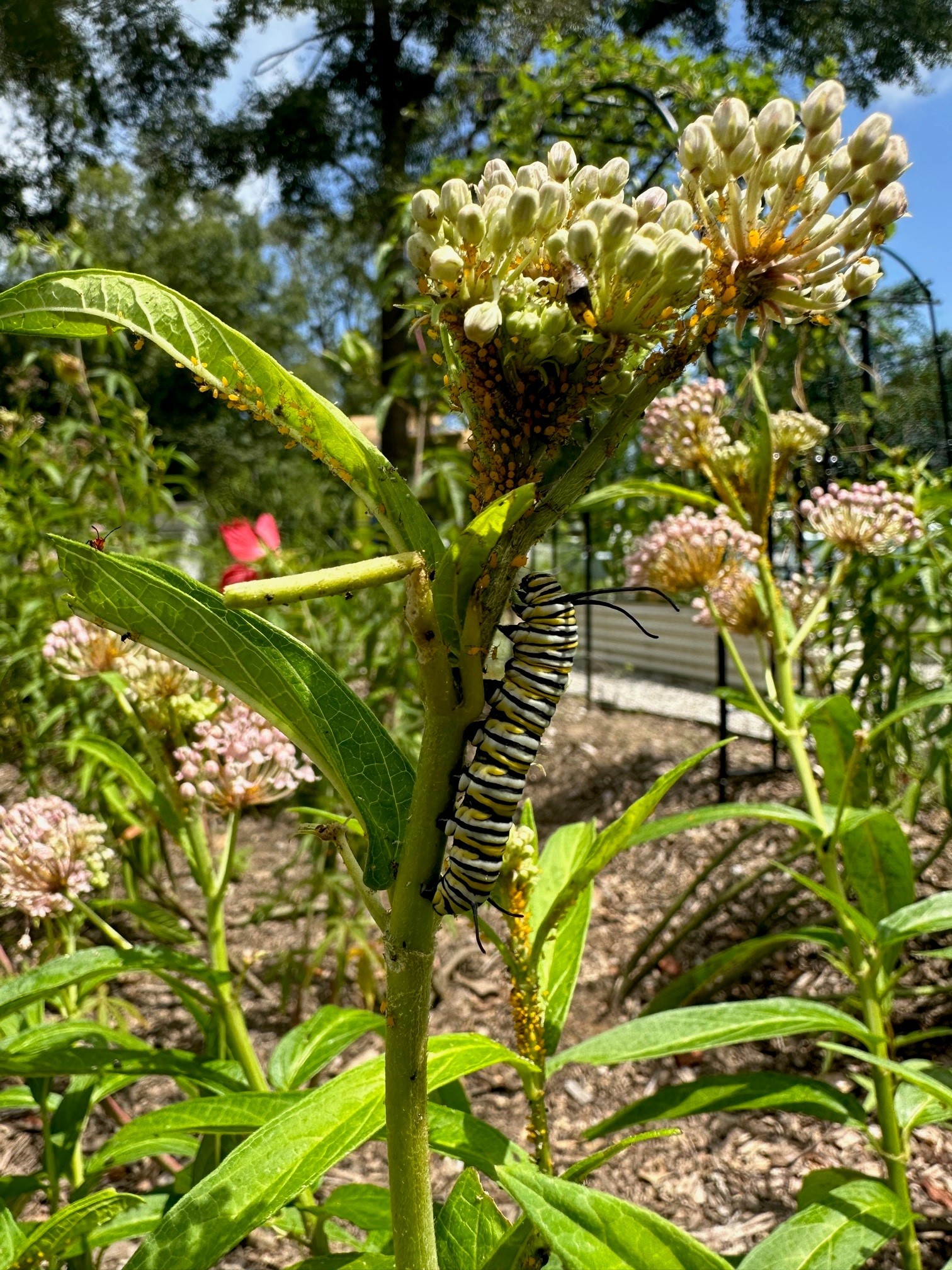
Mild oleander aphid (Aphis nerii) population on swamp milkweed (Asclepias incarnata).
Samantha Porzelt, ©2024, Clemson Extension
Oleander Aphids (Aphis nerii)
- Small, bright yellow insects with black legs and antennae
- Commonly found on milkweed
- In small numbers, they do not harm mature swamp milkweed plants
- Considered a food source for beneficial insects like ladybugs
Large infestations of oleander aphids can damage young seedlings through excessive feeding on the sap.
Aphids can be managed by:
- Manually squishing them
- Using a strong blast of water from a garden hose to remove them
Avoid using soapy water or chemical pesticides, as these may harm beneficial insects, including caterpillars.
Milkweed Bugs (Oncopeltus fasciatus)
- Feed on seed pods of swamp milkweed by sucking out the seed contents
- Can be a nuisance, but generally not considered a serious pest
Why Plant Swamp Milkweed in South Carolina Landscapes?
Swamp milkweed is a beneficial, native plant that is easy to grow in South Carolina landscapes, making it a valuable addition to butterfly, rain, or wetland gardens.
It offers essential nectar and pollen for pollinators, serves as a host plant for butterfly larvae, and provides food and shelter for various insects, amphibians, and small reptiles.
While pests like oleander aphids and milkweed bugs may occasionally appear, they typically don’t pose significant threats if appropriately managed.
Swamp milkweed’s vibrant flowers and ecological benefits make it an attractive and sustainable choice for enhancing the beauty and diversity of home landscapes or community gardens.
Originally publishes 3/26


