Coastal Region – Glen Payne
- This year’s drought in the SC Lowcountry is still present, even with the few days of rain that we have received. Turfgrass requires 1” of irrigation per week to look its best. Zoysia lawns are showing increased nematode activity, with large areas of leaf blade curling and some dieback, in no specific pattern.
- Annual summer flowers are being attacked in high numbers by aphids, which can be washed off using high water pressure, and whitefly infestations are being reported to the extension office, seeking recommendations for treatment. Regular weekly scouting to monitor insect populations and checking flowerbed moisture levels with a moisture meter will pay dividends as temperatures increase. Careful not to overfertilize, as this can increase insect activity as they search for food sources.
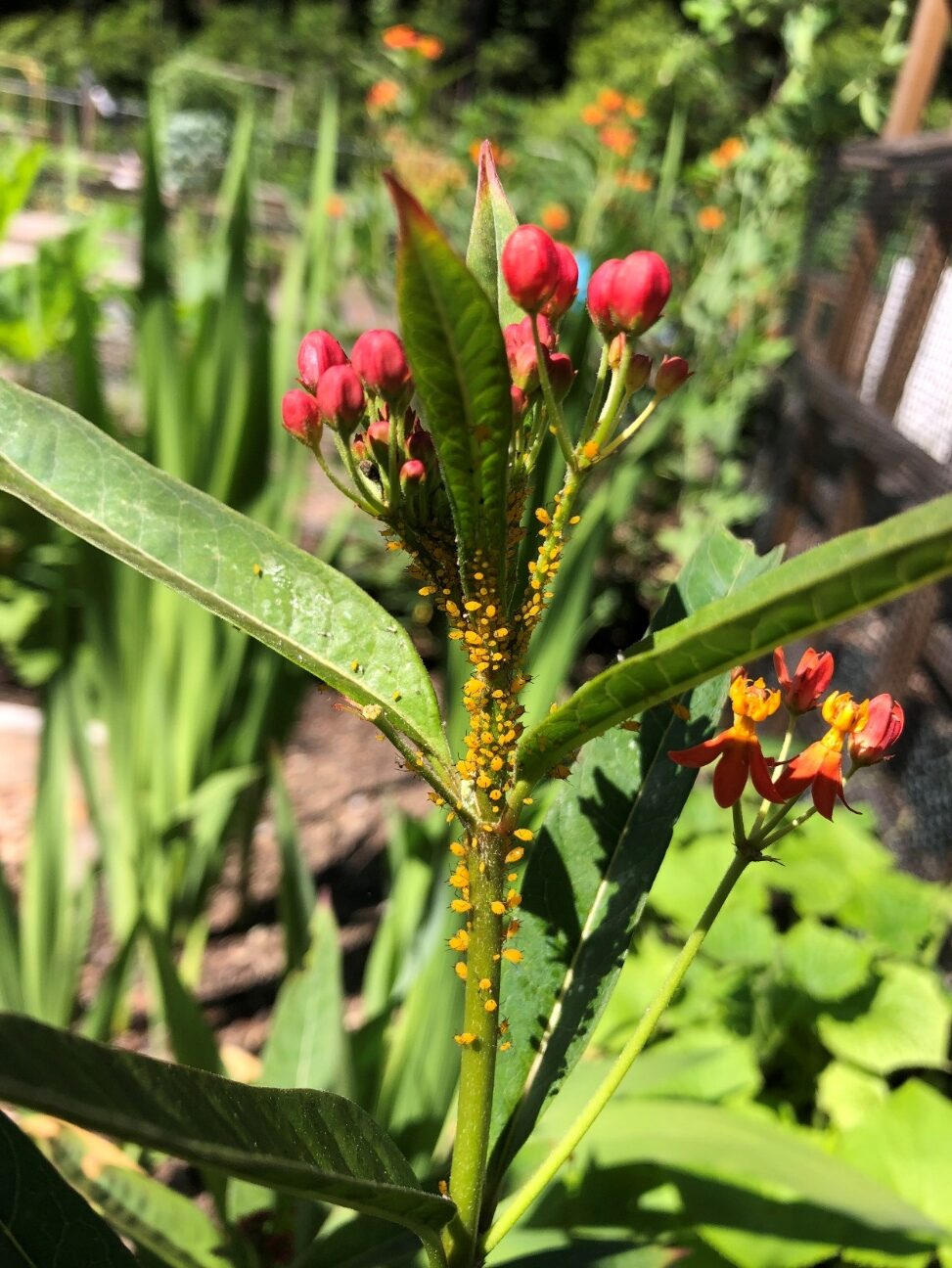
Oleander Aphids on Milkweed.
Glen Payne, © 2026, Clemson Extension
- Tropical plants such as Colocasia, Alocasia, and palms have recovered well from the winter snow damage back in late January. Palms may need to be pruned starting in late July once all lower fronds have turned completely brown. Any brown leaves damaged by the cold should now be completely removed. Monitor soil samples to ensure Magnesium, Manganese, & Zinc levels are in the target range.
- In the garden, blueberries, blackberries, nectarines & peaches are benefiting from a drier than most years from a disease point of view. Continue to supplement with 1” of water per week as fruits are starting to size up as harvest time is upon us now. Continue to monitor diseases favoring dry weather, such as bacterial leaf spot on blueberries, anthracnose on leaves, and drought stress of plants due to environmental conditions appearing in the garden during the summer months.
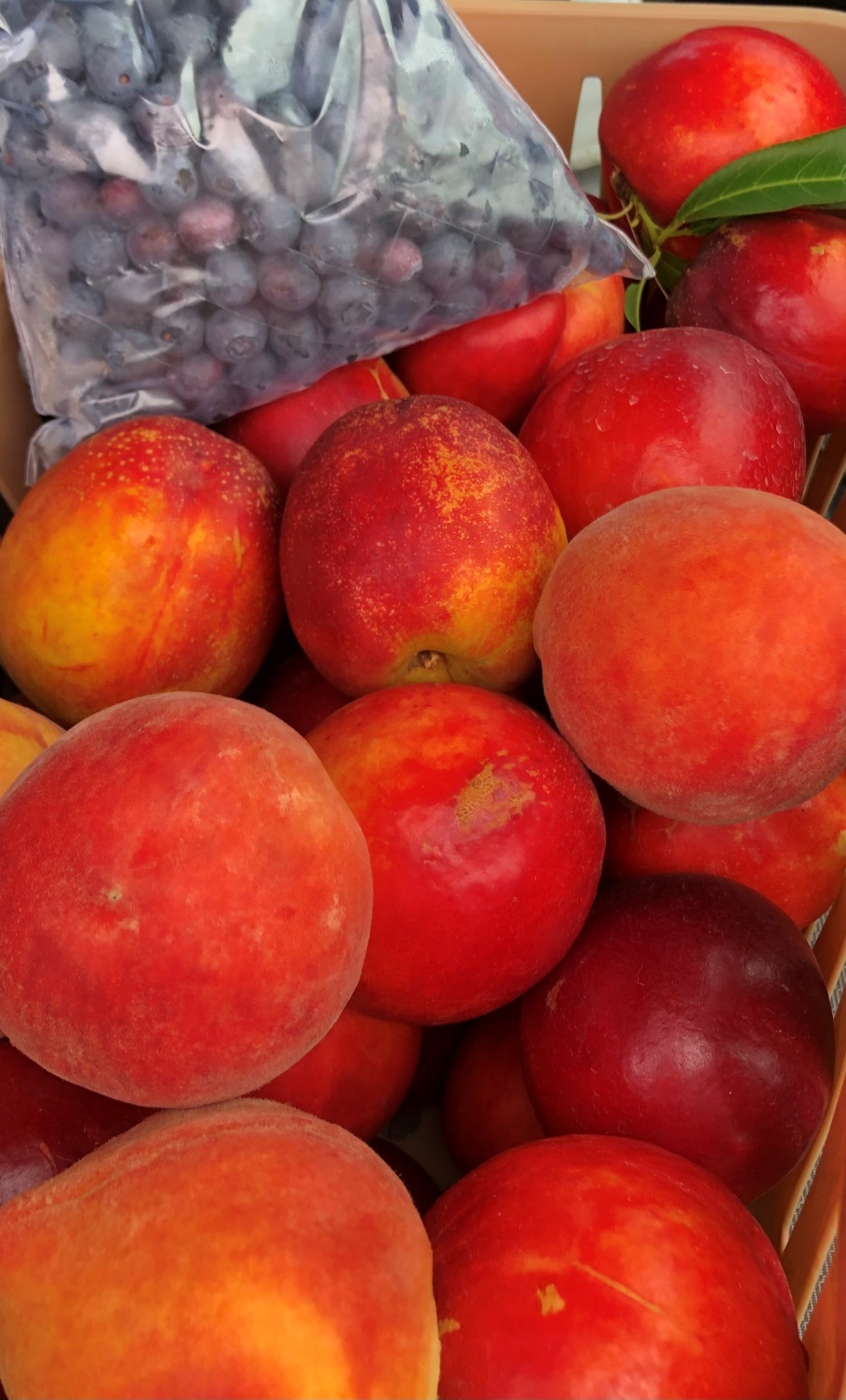
Blueberries, Nectarines, & Peaches
Glen Payne, © 2026, Clemson Extension
- Orchids will do well when placed outside in the high humidity of summer. Some diseases, such as leaf spots, leaf yellowing, and bacterial spot, should be monitored. Overwatering and excessive sunlight may prevent orchids from blooming. These tropical beauties will appreciate part shade and a well-ventilated spot for peak performance.
Midlands Region – Jennifer Weaver
Growing Herbs
If you are growing herbs this summer in containers or as an attractive and fragrant
addition to your landscape, make sure to harvest just before they bloom, when
essential oils are most concentrated. Purchase seeds or plants rather than harvesting herbs from the woods.
- Prune back perennial herbs to encourage new growth. When you cut your herbs, they will produce more throughout the season.
- Culinary herbs such as basil, mint, thyme, dill, lemon balm and oregano can be added to season food when cooking to boost flavor.
- Some herbs, such as nasturtium, French marigolds, mints and garlic, can attract beneficials helping with pest management.
Add herbs to your existing landscape:
- Lavenders, artemisias, and lamb’s ear offer soft, gray-green or white foliage to the border. Heavy summer rains or irrigation can cause the lower leaves of lamb’s ear to die and form ugly mats. This may rot stems and roots. Pull these leaves away from the base of the plant to increase air circulation.
- Pineapple sage is a hummingbird favorite with its tubular, scarlet-red flowers. It adds a splash of beautiful red color, and the leaves smell like pineapple when crushed.
- Yarrows can have fernlike or silvery foliage with red, pink, yellow, or white flowers. Their long stalks make them great cut flowers.
- Lemon verbena releases a wonderful scent just from brushing by the foliage and is an ideal plant for potpourri.
- Sweet woodruff makes an attractive perennial ground cover for the shade.

Pineapple sage (Salvia elegans) has pineapple scented leaves, and the flowers are nectar sources for butterflies and hummingbirds.
Barbara H. Smith, ©2017 HGIC, Clemson Extension
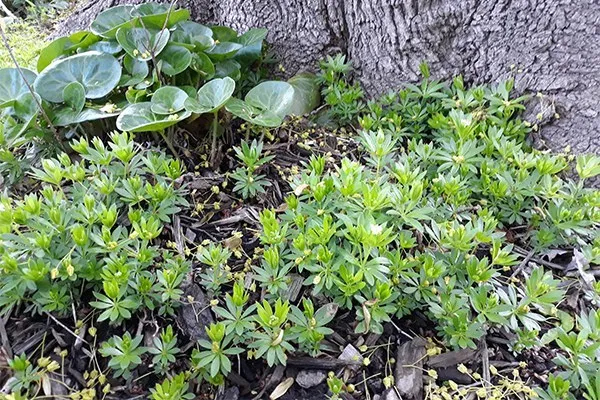
Sweet woodruff as a groundcover.
Susan Marquesen, Penn State Master Gardener
https://extension.psu.edu/sweet-woodruff-in-the-garden-and-the-kitchen
Care of Landscape Plants
- Pinch chrysanthemums to encourage a fuller plant every 4-6 weeks until the end of July, when buds begin to form.
- Prune or pinch 2-4 inches of the tender new growth from vegetative canes on blackberries to stimulate lateral growth, increasing the surface area where fruit can be produced.
- Remove faded rose flowers to encourage repeat bloom.
- Prune azaleas in late spring or early summer (good rule of thumb – before July 4) since they set their flower buds for next year during the summer.
- Continue to water newly planted shrubs and trees (especially during the summer months) until they can survive in the landscape without supplemental water. If you cannot hand water, use tree watering bags as a temporary watering aid. Remove the bag from the tree when not in use.

Blackberries should be tip-pruned periodically throughout the year to increase production.
Zack Snipes, ©2023, Clemson Extension
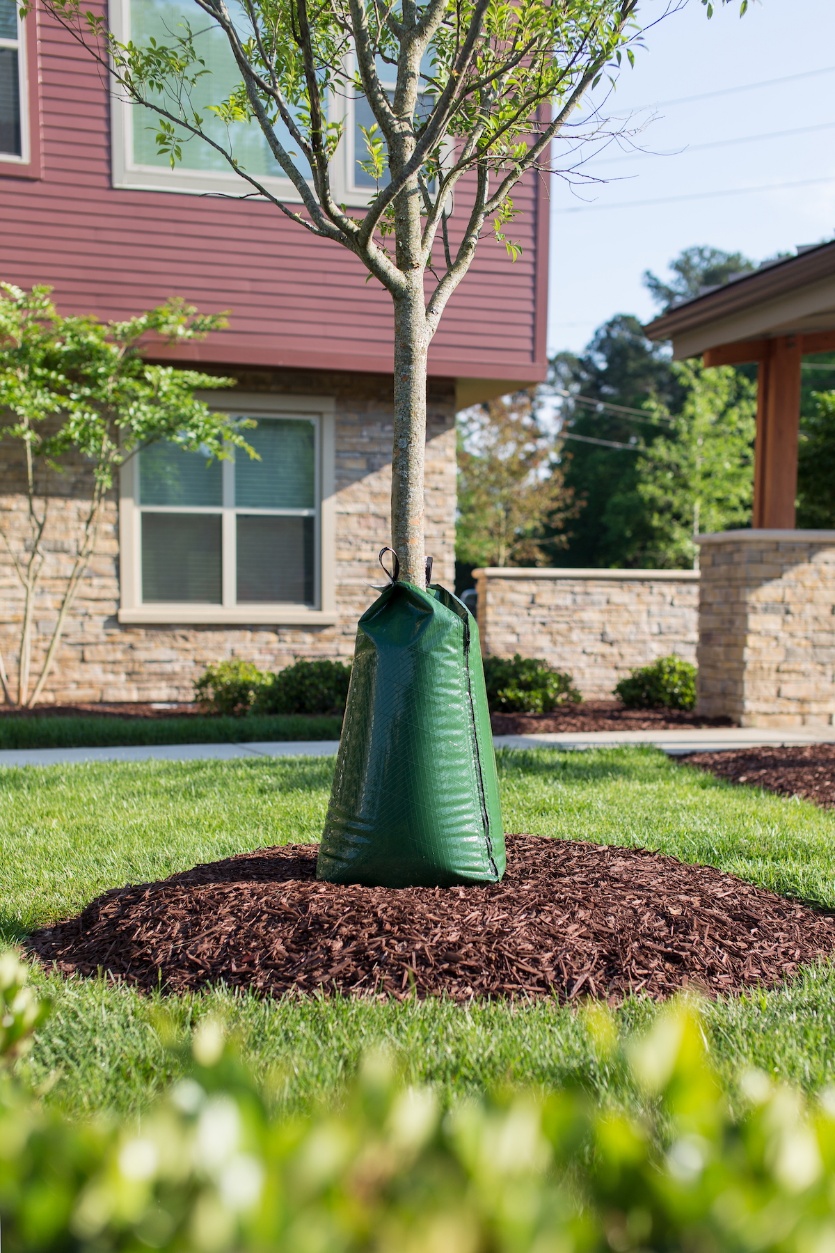
Treegator® Original Slow-Release Watering Bags.
Image provided by Spectrum Products Inc. (TREEGATOR®)2026
Upstate Region – Nicole Goodman
Chasing Rain – Every Drop Counts
Lawn
- Watch your lawn closely for drought stress and adjust your watering schedule as needed.
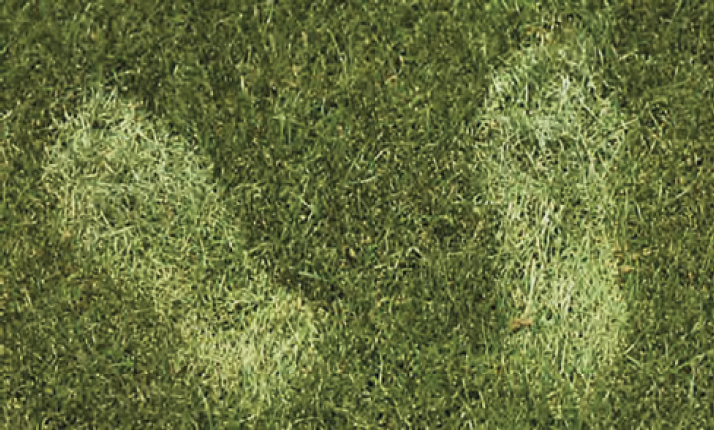
The Footprint Test: a simple test to see if your lawn needs more water)
Lambert McCarty, ©Clemson University
- To support your lawn’s resistance to drought stress, keep the blades longer to shade out the soil beneath
- Watch out for the moth of the armyworm caterpillar and their egg masses.
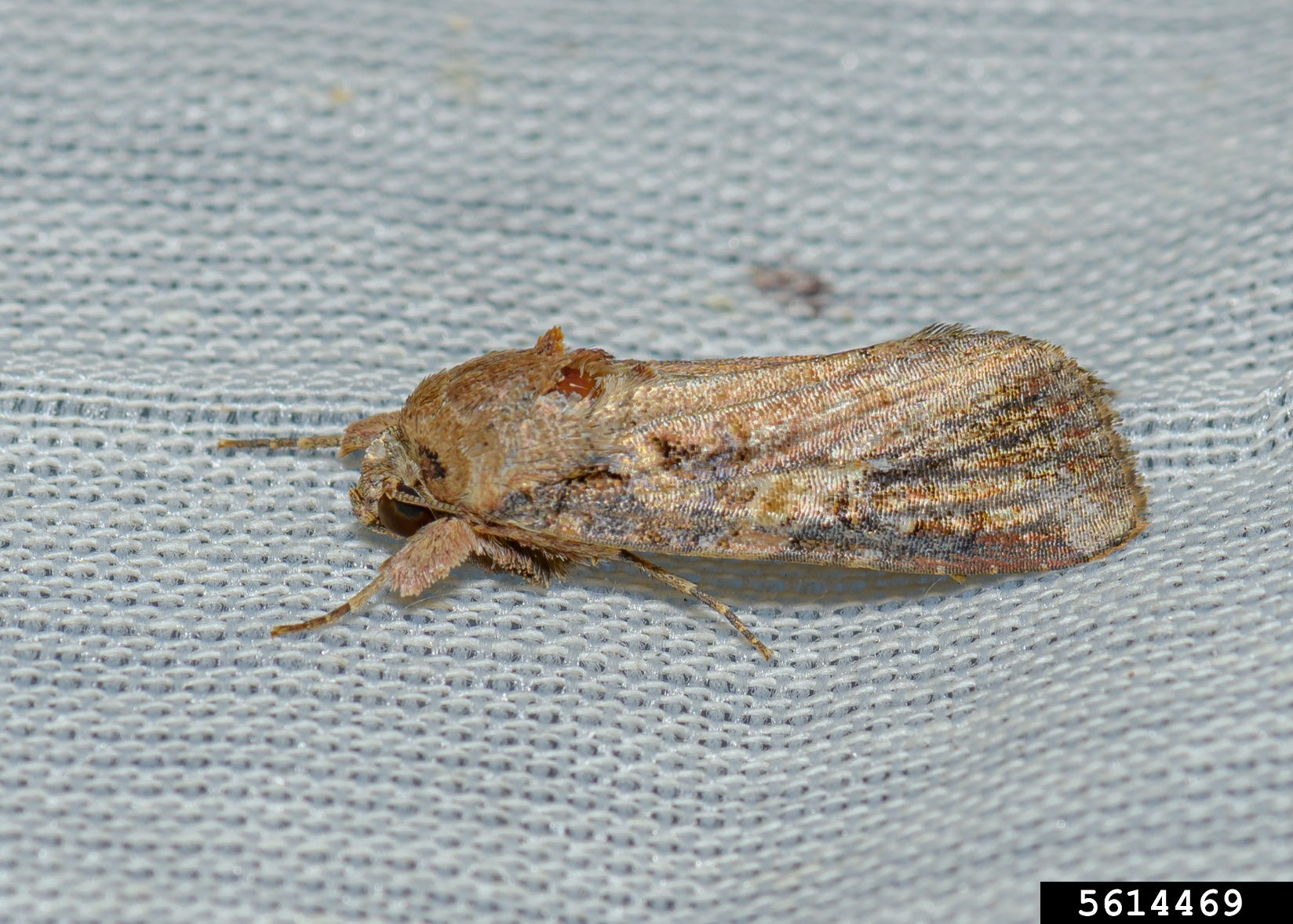
“From tiny moth to struggling lawn”)
Keshava Mysore, Bugwood.org
- Especially for those with St. Augustinegrass, scout for signs of chinch bugs. To scout for terrestrial pests in lawns, perform the flotation test
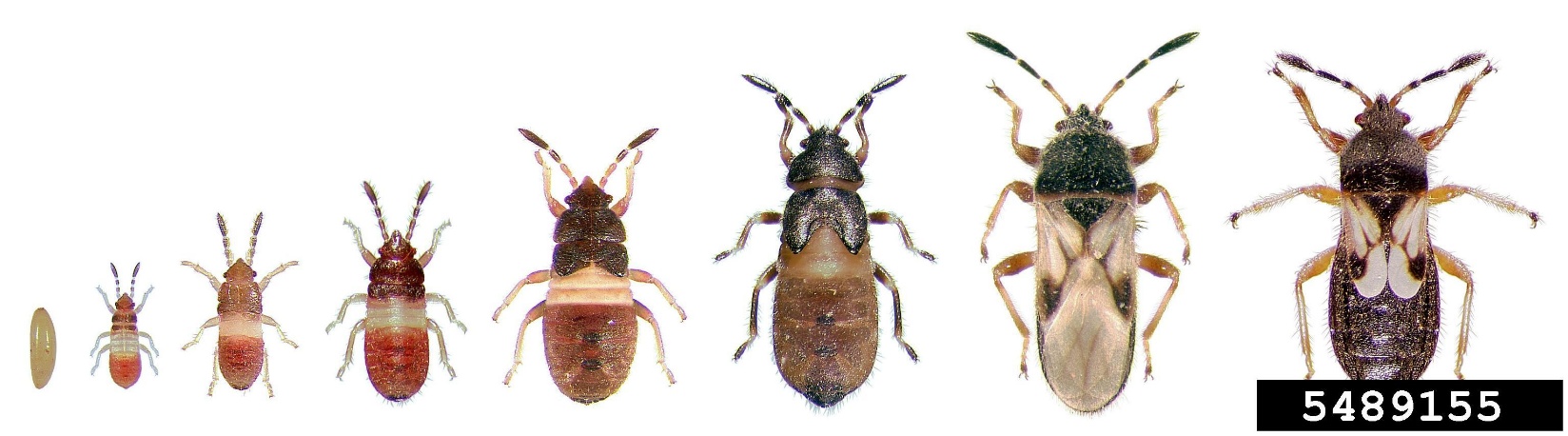
Small but mighty foe to St. Augustine and other turf grasses.
David Shetlar, The Ohio State University, Bugwood.org
- If you start seeing brown spots in your lawn, it is best to submit a turf diagnostic sample to the lab to test for summer active pathogens
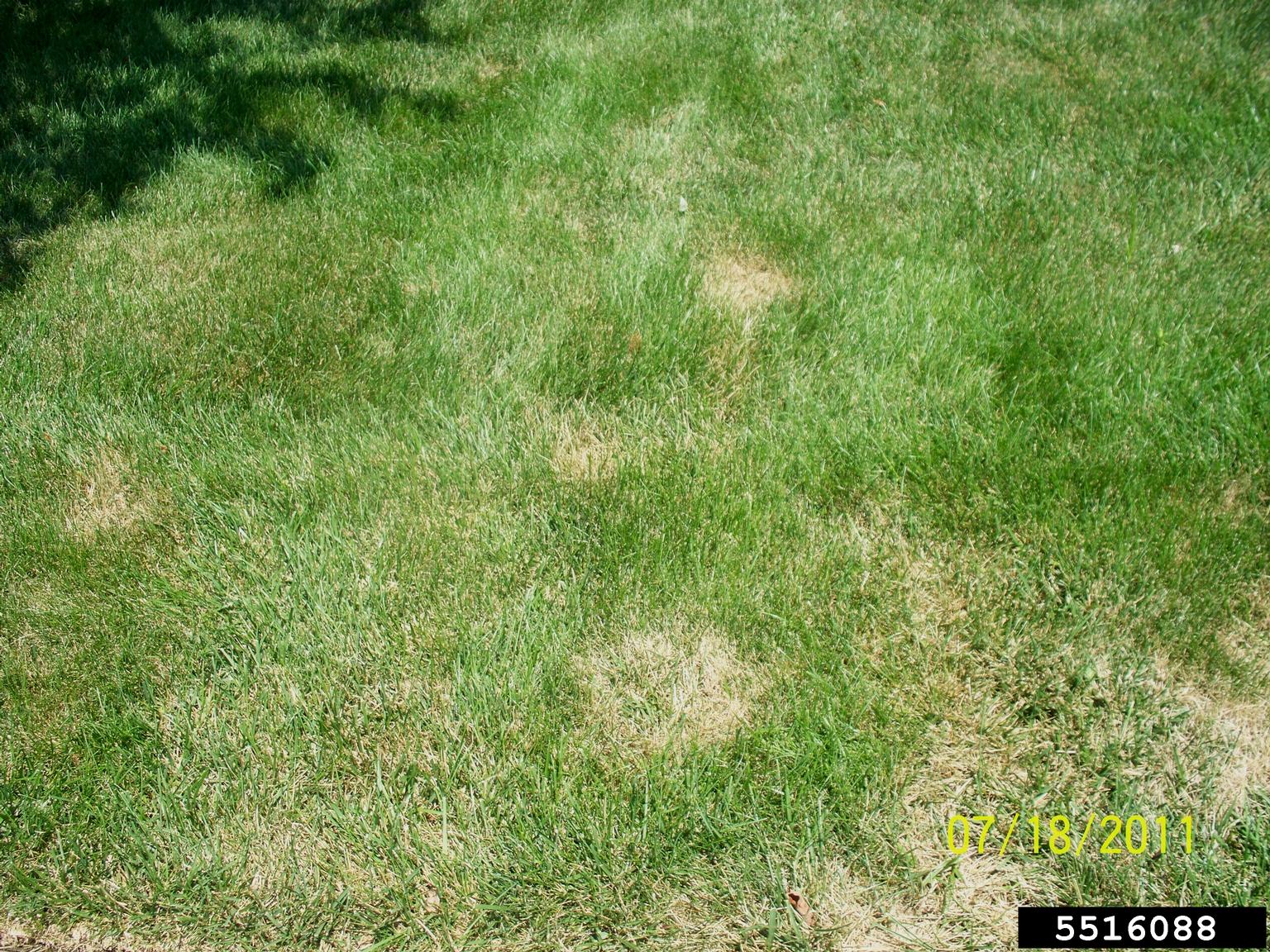
Is it drought stress, pet urine stain, disease or pest?? – a test takes the guessing out of the equation.
Lee Miller, University of Missouri, Bugwood.org
Ornamentals
- Ornamentals planted this spring need special attention during this heat and drought. Water them deeply but infrequently to encourage the root system to grow deep in search of water.
- Ornamentals grown in containers need to be watered at least once daily in this heat. Some situations require as many as 2 or 3 waterings per day. To check the soil moisture in your containers, simply push your index finger into the soil up to the knuckle. Pull your finger back out. If dark soil sticks to your hand, the soil has sufficient water reserves. If no soil sticks to your finger, or if it is a light brown color, it is time to water
- Weed your flower beds before weeds go to seed to prevent even more weeds. While pulling weeds, deadhead your flowering perennials to encourage a second flush.
Edibles
- Your vegetable garden is now producing in abundance. Keep up with consistent moisture to avoid blossom end rot.
- It is already time to start thinking about our fall and cool-season crops. Think about what you want to grow this fall, because some cool-season vegetables can be started from seeds this month. Check the planting calendar in our “Planning a Garden” factsheet to see which plants can be started from seed in July.
- Not only can cool-season crops be started now, but there is also still time to replant some of our summer crops that may have succumbed to disease or pests (hint: squash vine borers!).
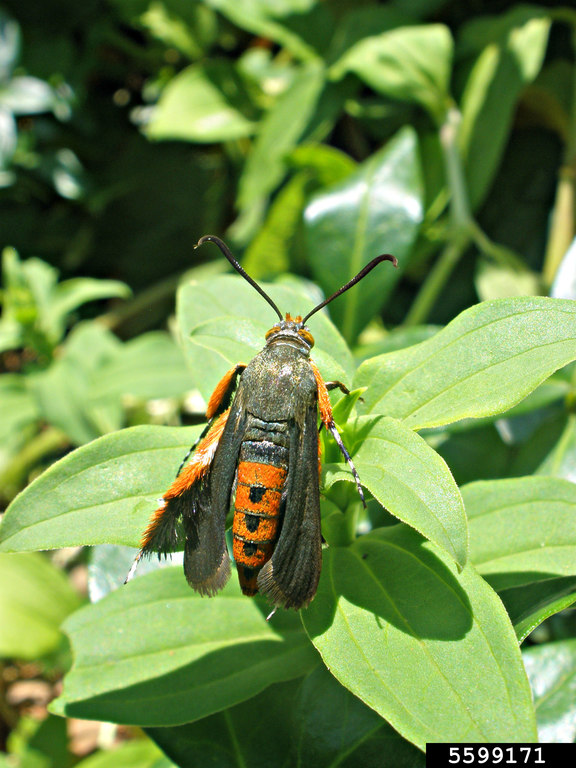
The Vine Reaper sure looks pretty.
Ansel Oommen, Bugwood.org
Beyond the Beds
- For those applying pesticides (organic and conventional), keep an eye on the high temperatures. Oil can burn your plants, and chemicals can turn from liquid to gas and cause great damage as they drift off the property. Read the product label to understand temperature restrictions – keep yourself, your loved ones, and your environment safe.
- Clean and sanitize your bird feeders at least every other week, and your hummingbird feeders once a week to prevent fatal fungal infections.
- To help out wildlife, place shallow watering stations around the garden. Box turtles, lizards, and squirrels alike will be grateful to get a sip in this heat.
- Check your composting pile and ensure they stay moist in this heat.
- Keep yourself hydrated, take breaks, apply sun protection and wear a hat. Healthy Gardens start with Healthy Gardeners.